

Fille Au Citronnier
“Fille Au Citronnier (Zitronenbaummädchen),” erstellt in 1913 by the French artist Emile Vernon (1872-1919), is an exquisite portrayal of feminine beauty, Unschuld, and natural harmony. As one of Vernon’s signature works, this painting showcases a young woman against a serene backdrop of a lemon tree, capturing the essence of French romanticism through rich colors, delicate brushwork, and a tender, intimate subject. The scene is idyllic, imbued with the charm and vibrancy of the early 20th century, a period characterized by a growing fascination with both idealized beauty and nature’s simple pleasures.
Inhaltsverzeichnis
Subjekt und Komposition
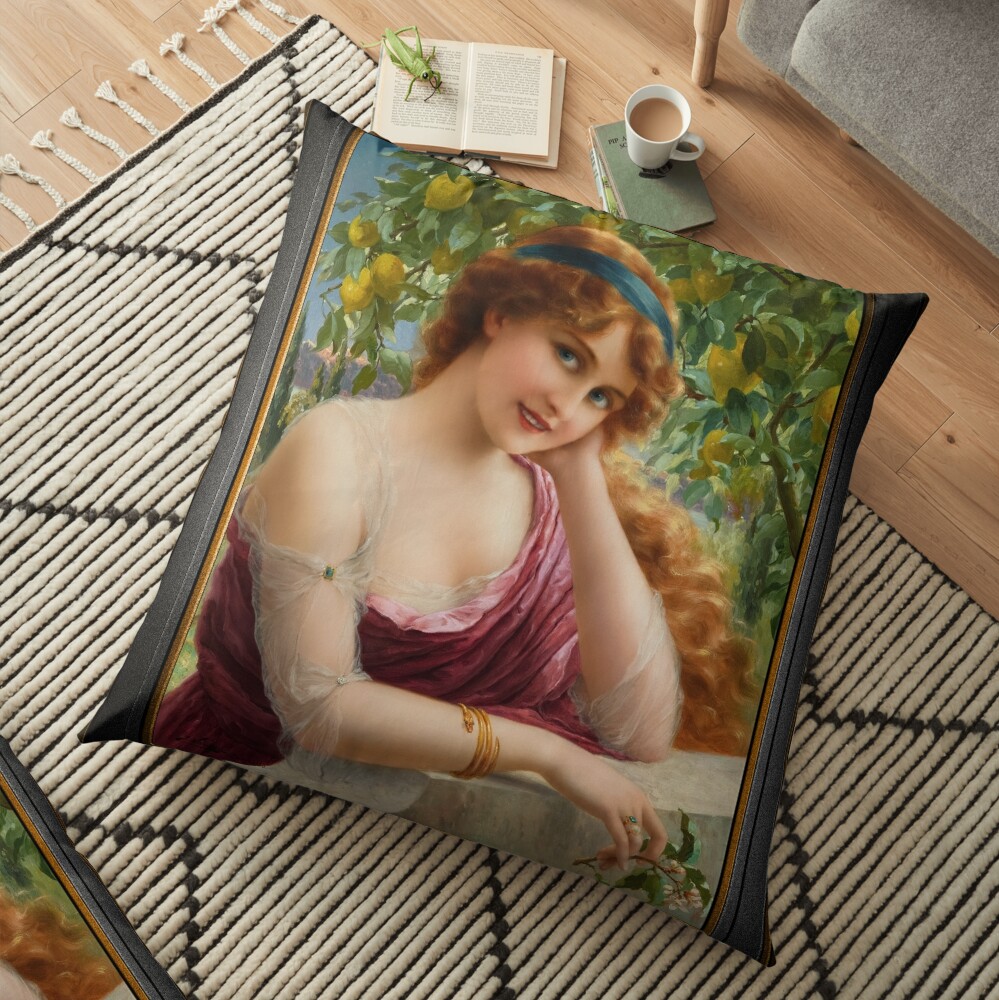
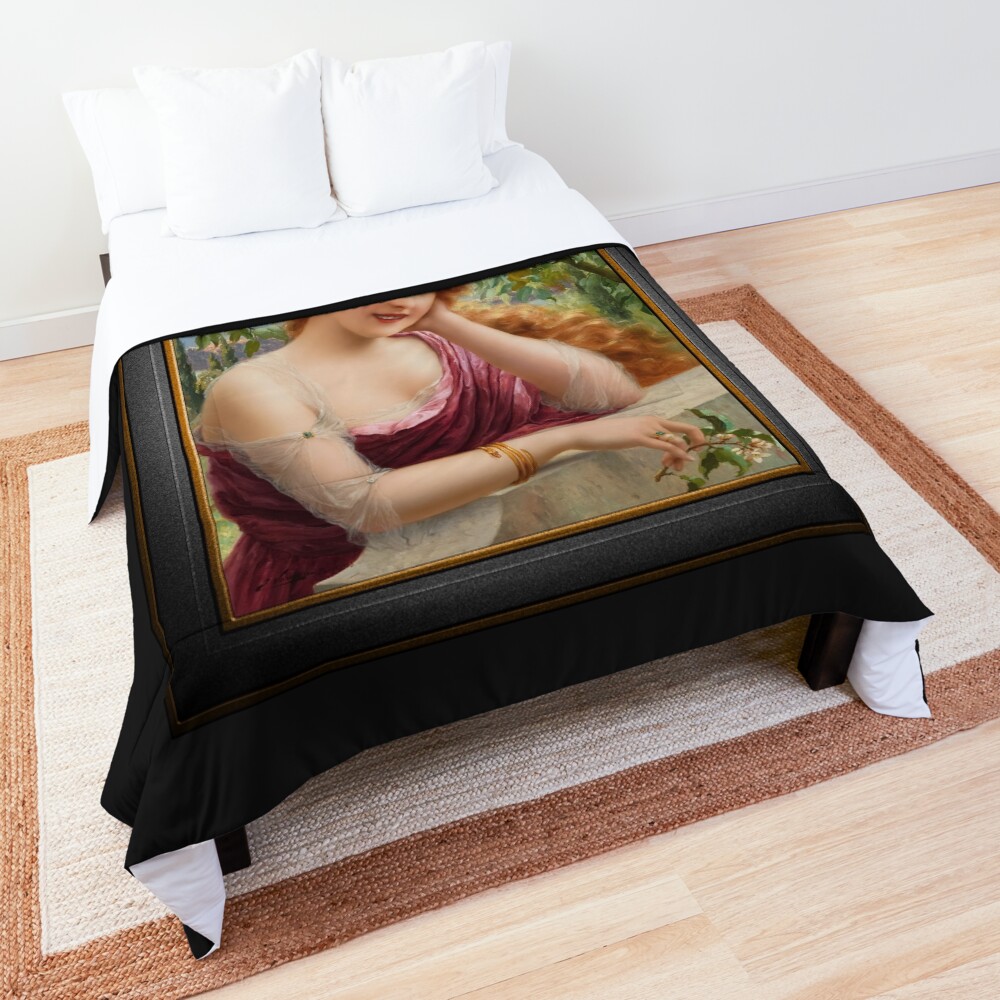
At the heart of the artwork is the figure of a young woman, whose soft features and graceful posture immediately captivate the viewer. She is dressed in a flowing gown of deep, muted red, which contrasts beautifully with her light, fair complexion. Ihr lang, auburn hair, cascading in loose waves, is softly framed by a dark blue ribbon that adds a subtle touch of elegance to her overall appearance. The woman is seated, her right hand gently resting on a stone ledge, while her left hand supports her chin, her expression thoughtful yet serene.
Her gaze is directed slightly to the side, suggesting a moment of quiet contemplation. She seems lost in the tranquility of her surroundings, which include the lush green foliage of the lemon tree that frames her figure. This relaxed yet graceful pose enhances the atmosphere of peacefulness, inviting the viewer to become immersed in the scene. The facial features of the young woman, notably her wide, expressive eyes and the slight hint of a smile, convey a sense of youthful innocence, delicacy, und zeitlose Schönheit.
Hintergrund und Einstellung
Behind the central figure is the lush landscape that complements the mood of the painting. The lemon tree, with its vibrant green leaves and yellow fruit, stands out as a prominent feature. The lemons symbolize both freshness and fertility, their bright color providing a lively contrast to the soft pastels of the woman’s attire and the surrounding foliage. The tree is placed in the foreground, creating a harmonious balance between the subject and the natural elements of the scene.
The background features rolling hills, fading into a soft, almost dreamlike horizon that suggests a Mediterranean setting, characteristic of the French Riviera or southern France. Das ist üppig, sunlit landscape adds to the overall sense of peace and natural beauty. Das Weiche, distant mountain ranges, bathed in warm sunlight, contribute to the serene, tranquil mood of the painting. The gentle colors of the foliage, together with the warm golden light illuminating the scene, evoke feelings of calm, contentment, and nostalgia.
Stil und Technik
Émile Vernon’s painting style is emblematic of the Post-Impressionist and Belle Époque movements. His brushwork is both detailed and fluid, capturing the fine textures of the woman’s gown and hair, as well as the soft, rippling leaves of the lemon tree. The rendering of light and shadow is particularly notable; Vernon uses a technique of delicate gradation to convey depth and warmth, subtly highlighting the woman’s skin and the contours of her face. The textures in the painting, such as the soft fabric of the woman’s dress and the smooth surfaces of the lemons, are meticulously detailed, showcasing the artist’s skillful ability to render both the figure and the environment.
The color palette of the painting is warm and inviting, dominated by soft hues of red, Gold, Grün, and pale blues. Vernon skillfully blends these tones to create a harmonious composition, where the bright, almost luminous yellows of the lemons contrast with the cooler shades of the woman’s clothing and the surrounding greenery. This interplay of colors not only enhances the natural beauty of the scene but also reflects the vibrancy of life and the quiet joy of being surrounded by nature.
The mood of the artwork is one of tranquility, Gelassenheit, und zeitlose Eleganz. There is an ethereal quality to the piece, as though the woman and her surroundings exist in a moment suspended in time. The subject’s poised yet relaxed demeanor evokes a sense of calm and contentment, while the natural setting further amplifies this mood. The entire composition speaks to a harmonious balance between human beauty and nature’s bounty, with the lemon tree acting as both a literal and symbolic anchor to the scene.
Symbolik und Thema
Das zentrale Thema von “Fille Au Citronnier” is the connection between woman and nature, a motif that was popular in late 19th and early 20th-century French art. The lemon tree, with its vibrant fruit and lush green leaves, is not just a decorative element; it serves as a symbol of fertility, abundance, and renewal. This tree, often associated with Mediterranean climates, also hints at themes of life’s cyclical nature, connecting the natural world with the cyclical beauty of the human experience.
Die junge Frau, with her innocence and gentle beauty, represents the purity and grace of youth. She seems to embody the qualities of the natural world around her — serene, untroubled, and in perfect harmony with her environment. The pairing of the woman with the lemon tree, a symbol of natural abundance, suggests themes of femininity and fertility, both of which were often explored in art during this period.
The interaction between the subject and her environment, captured in such a peaceful moment, conveys an overarching theme of simplicity and the joy found in life’s everyday pleasures. The painting reflects a romanticized vision of life where beauty and nature coexist in perfect harmony, a theme that resonated deeply with audiences of the Belle Époque era.
Abschluss
“Fille Au Citronnier (Zitronenbaummädchen)” is a masterpiece of French academic painting from the early 20th century, offering a stunning depiction of feminine beauty in the context of a peaceful, natürliche Umgebung. Émile Vernon’s meticulous attention to detail, his mastery of color, and his ability to capture both the physical and emotional essence of his subject make this work a true representation of the romanticism and elegance of the Belle Époque. The harmonious blending of figure and landscape, along with the symbolic use of the lemon tree, invites viewers to reflect on themes of beauty, Weiblichkeit, and the intimate connection between humanity and nature.
Dies ist eine remasterte digitale Kunst-Reproduktion alter Meister eines gemeinfreien Bildes, das als verfügbar ist Leinwanddruck online.
Diese digitale Kunstschöpfung, Wie alle Kunstwerke, die auf der Xzendor7-Website zu finden sind, können sie online in einer Vielzahl von Materialformaten einschließlich Leinwanddrucken erworben werden, Acryldrucke, Metalldrucke, Holzdrucke, gerahmte Drucke, Plakate, und als gerollte Leinwanddrucke in verschiedenen Größen von 12 Zoll zu 72 Zoll, abhängig von der Größe des tatsächlichen Kunstwerks und dem Print-on-Demand-Shop, in dem Sie das Kunstwerk kaufen möchten.
Das Kunstwerk ist auch auf einer breiten Palette von Herren- und Damenbekleidung erhältlich, Tassen, Tragetaschen, Schals, Notizbücher und Tagebücher sowie viele Heimdekorationsprodukte.
Über den Künstler
Info unten von Galerie und Jan
Émile Vernon war Schüler der Fine Arts School in Tours, wo er den ersten Preis für das Zeichnen gewann 1888; danach wurde er von William Bouguereau und Auguste Truphème . betreut.
Dann in 1898 er nahm an der Tours-Ausstellung für bildende Kunst und dekorative Kunst teil und später in diesem Jahr, in der französischen Künstlerausstellung und stellte dort regelmäßig seine Arbeiten aus 1898 zu 1913; Porträts präsentieren, Landschaften, Szenen aus der Bretagne, Stilllebensträuße, die er in Aquarell gemalt hat, sowie weibliche Figuren, was später zu einer Spezialität wurde.
Émile brillierte in seinen sanft beleuchteten Gemälden, entzückende Figuren von Kindern und eleganten jungen Frauen, mit denen er oft ein Haustier wie eine Katze verband, Hund oder Vogel, und schmückte seine Bilder mit Girlanden oder Blumensträußen, während seiner gesamten Karriere; aber er war auch ein sehr vielseitiger Künstler, der mit Strenge und Kraft malen konnte, wie in seinen Werken das Porträt von Madame Vernon und Sous la Lampe (Unter der Lampe).