

Neska Limoi Arbolarekin
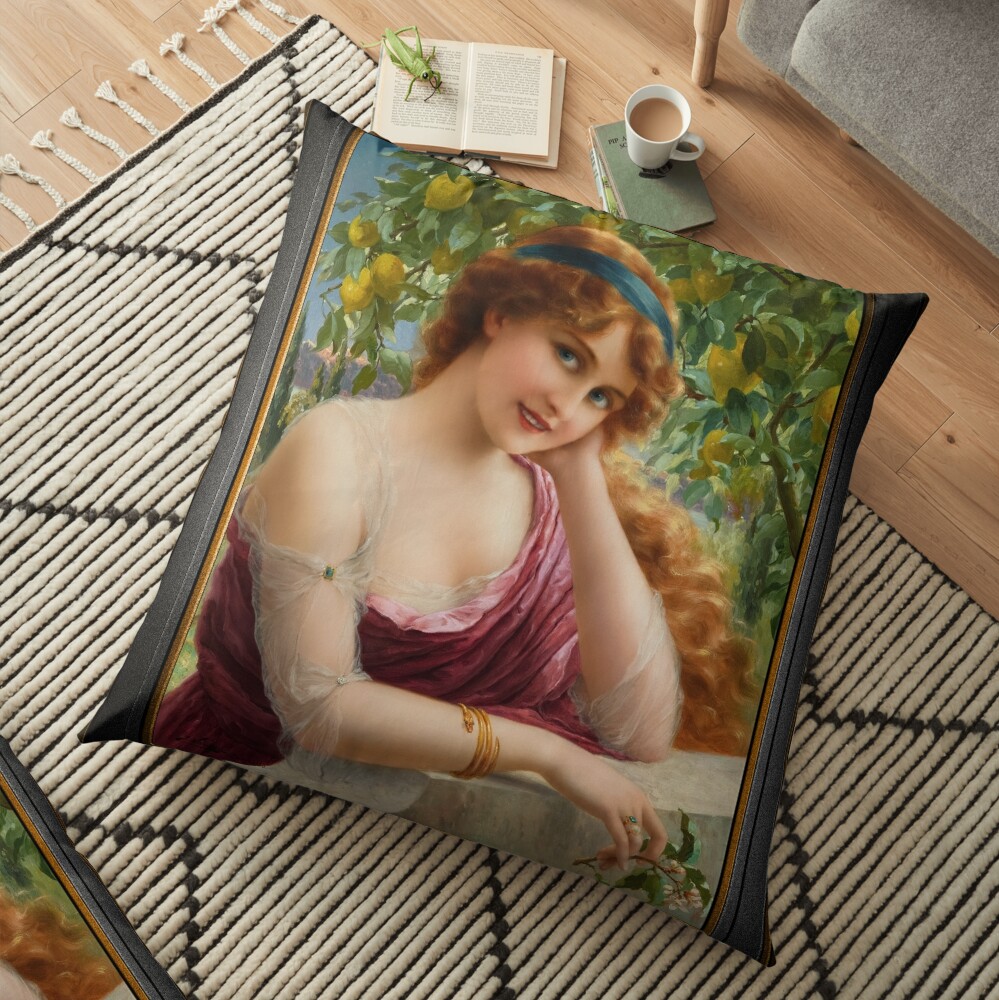
“Neska Limoi Arbolarekin (Limoi Arbola Neska),” sortua 1913 artista frantsesaren eskutik Emile Vernon (1872-1919), edertasun femeninoaren erretratu bikaina da, lañotasun, eta harmonia naturala. Vernonen sinadura lanetako bat bezala, koadro honek emakume gazte bat erakusten du limoi-arbol baten atzealde lasai baten aurrean, Frantziako erromantizismoaren esentzia kolore aberatsen bitartez jasoz, pintzel delikatua, eta samurra, gai intimoa. Eszena idilikoa da, mende hasierako xarma eta bizitasunaz beteta, edertasun idealizatuarekin eta naturaren plazer sinpleekin gero eta lilura handiagoak ezaugarritzen duen garaia.
Edukien taula
Gaia eta Osaera
Artelanaren muinean emakume gazte baten figura dago, zeinaren ezaugarri bigunak eta jarrera dotoreak ikuslea berehala liluratzen baitute. She is dressed in a flowing gown of deep, muted red, which contrasts beautifully with her light, fair complexion. Bere luzea, auburn hair, cascading in loose waves, is softly framed by a dark blue ribbon that adds a subtle touch of elegance to her overall appearance. The woman is seated, her right hand gently resting on a stone ledge, while her left hand supports her chin, her expression thoughtful yet serene.
Her gaze is directed slightly to the side, suggesting a moment of quiet contemplation. She seems lost in the tranquility of her surroundings, which include the lush green foliage of the lemon tree that frames her figure. This relaxed yet graceful pose enhances the atmosphere of peacefulness, inviting the viewer to become immersed in the scene. The facial features of the young woman, notably her wide, expressive eyes and the slight hint of a smile, convey a sense of youthful innocence, jaki, eta betiko edertasuna.
Atzeko planoa eta ezarpena
Behind the central figure is the lush landscape that complements the mood of the painting. The lemon tree, with its vibrant green leaves and yellow fruit, stands out as a prominent feature. The lemons symbolize both freshness and fertility, their bright color providing a lively contrast to the soft pastels of the woman’s attire and the surrounding foliage. The tree is placed in the foreground, creating a harmonious balance between the subject and the natural elements of the scene.
The background features rolling hills, fading into a soft, almost dreamlike horizon that suggests a Mediterranean setting, characteristic of the French Riviera or southern France. This lush, sunlit landscape adds to the overall sense of peace and natural beauty. Biguna, distant mountain ranges, bathed in warm sunlight, contribute to the serene, tranquil mood of the painting. The gentle colors of the foliage, together with the warm golden light illuminating the scene, evoke feelings of calm, contentment, and nostalgia.
Estiloa eta Teknika
Émile Vernon’s painting style is emblematic of the Post-Impressionist and Belle Époque movements. His brushwork is both detailed and fluid, capturing the fine textures of the woman’s gown and hair, as well as the soft, rippling leaves of the lemon tree. The rendering of light and shadow is particularly notable; Vernon uses a technique of delicate gradation to convey depth and warmth, subtly highlighting the woman’s skin and the contours of her face. The textures in the painting, such as the soft fabric of the woman’s dress and the smooth surfaces of the lemons, are meticulously detailed, showcasing the artist’s skillful ability to render both the figure and the environment.
The color palette of the painting is warm and inviting, dominated by soft hues of red, urrea, berdea, and pale blues. Vernon skillfully blends these tones to create a harmonious composition, where the bright, almost luminous yellows of the lemons contrast with the cooler shades of the woman’s clothing and the surrounding greenery. This interplay of colors not only enhances the natural beauty of the scene but also reflects the vibrancy of life and the quiet joy of being surrounded by nature.
The mood of the artwork is one of tranquility, lasaitasuna, eta betiko dotorezia. There is an ethereal quality to the piece, as though the woman and her surroundings exist in a moment suspended in time. The subject’s poised yet relaxed demeanor evokes a sense of calm and contentment, while the natural setting further amplifies this mood. The entire composition speaks to a harmonious balance between human beauty and nature’s bounty, with the lemon tree acting as both a literal and symbolic anchor to the scene.
Sinbolismoa eta Gaia
-ren gai nagusia “Neska Limoi Arbolarekin” is the connection between woman and nature, a motif that was popular in late 19th and early 20th-century French art. The lemon tree, with its vibrant fruit and lush green leaves, is not just a decorative element; it serves as a symbol of fertility, ugaritasuna, and renewal. This tree, often associated with Mediterranean climates, also hints at themes of life’s cyclical nature, connecting the natural world with the cyclical beauty of the human experience.
Emakume gaztea, with her innocence and gentle beauty, represents the purity and grace of youth. She seems to embody the qualities of the natural world around her — serene, untroubled, and in perfect harmony with her environment. The pairing of the woman with the lemon tree, a symbol of natural abundance, suggests themes of femininity and fertility, both of which were often explored in art during this period.
The interaction between the subject and her environment, captured in such a peaceful moment, conveys an overarching theme of simplicity and the joy found in life’s everyday pleasures. The painting reflects a romanticized vision of life where beauty and nature coexist in perfect harmony, a theme that resonated deeply with audiences of the Belle Époque era.

Bukaera
“Neska Limoi Arbolarekin (Limoi Arbola Neska)” is a masterpiece of French academic painting from the early 20th century, offering a stunning depiction of feminine beauty in the context of a peaceful, Ezarpen naturala. Émile Vernon’s meticulous attention to detail, his mastery of color, and his ability to capture both the physical and emotional essence of his subject make this work a true representation of the romanticism and elegance of the Belle Époque. The harmonious blending of figure and landscape, along with the symbolic use of the lemon tree, invites viewers to reflect on themes of beauty, intzamen, and the intimate connection between humanity and nature.
Domeinu publikoko irudi baten erreprodukzioa da mihise inprimatu sarean.
Arte digitalaren sorkuntza hau, Xzendor7 webgunean aurki daitezkeen artelan guztiak bezala sarean erosteko eskuragarri dago hainbat material formatutan, mihise inprimatuak barne., estanpatu akrilikoak, metal estanpatuak, egur estanpatuak, marko estanpatuak, kartelak, eta ijetzitako mihise estanpatu gisa hainbat tamainatan 12 zentimetroetara 72 hazbeteko artelanaren eta artea erosteko aukeratzen duzun eskaeraren arabera inprimatzeko dendaren tamainaren arabera.
Artelana gizonezkoen eta emakumezkoen arropa sorta zabal batean ere eskuragarri dago, katiluak, totes, zapiak, koadernoak eta aldizkariak eta etxeko dekorazio produktu ugari.
Artistari buruz
Beheko informazioa Galeria Ary Jan
Émile Vernon Tourseko Arte Ederren eskolan ikaslea zen eta bertan marrazketako lehen saria irabazi zuen 1888; ondoren, William Bouguereau eta Auguste Truphèmeren tutorea izan zen.
Gero sartu 1898 Arte Ederretako eta Arte Dekorazioko Tours erakusketan parte hartu zuen eta urte horretan bertan, Frantziako Artisten Erakusketan eta maiz bertan erakutsi zituen bere lanak 1898 to 1913; erretratuak aurkezten, paisaiak, Bretainiako eszenak, akuarelaz margotu zituen bodegoien sortak, baita figura femeninoak ere, gerora espezialitate bihurtu zena.
Émile nabarmendu zen argiztaturiko margolanetan, Haurren eta emakume gazte dotoreen figura adoragarriak, harekin maiz lotzen zuen maskota bat, adibidez, katua, txakurra edo txoria, eta bere irudiak garlandaz edo lore-sortaz apaindu zituen, bere ibilbide osoan; baina oso artista polifazetikoa ere bazen, zorroztasunez eta indarrez margo zezakeena, bere lanetan Madame Vernon eta Sous la Lamperen erretratua bezala. (Lanpara azpian).