

フローラ
“フローラ,” created by Austrian artist ハンス・ザツカ (1859 – 1945); Pとしても知られています. ロンサール, ピエール・ド・ロンサール, またはH. Zabateriと彼はJosephBernardとして彼の作品の多くに署名しました, J. バーナード, あるいはバーナード・ザツカが販売できる作品数を制限する契約を破るというペナルティを回避するためだ。. The artwork is a breathtaking example of 19th-century European Romanticism, a style that emphasizes the beauty of nature, the ethereal qualities of the human spirit, and the joyous celebration of femininity and innocence. The painting captures a serene and idyllic scene, where both mythological and natural elements are harmoniously interwoven to evoke a sense of peace and harmony.
目次
本題
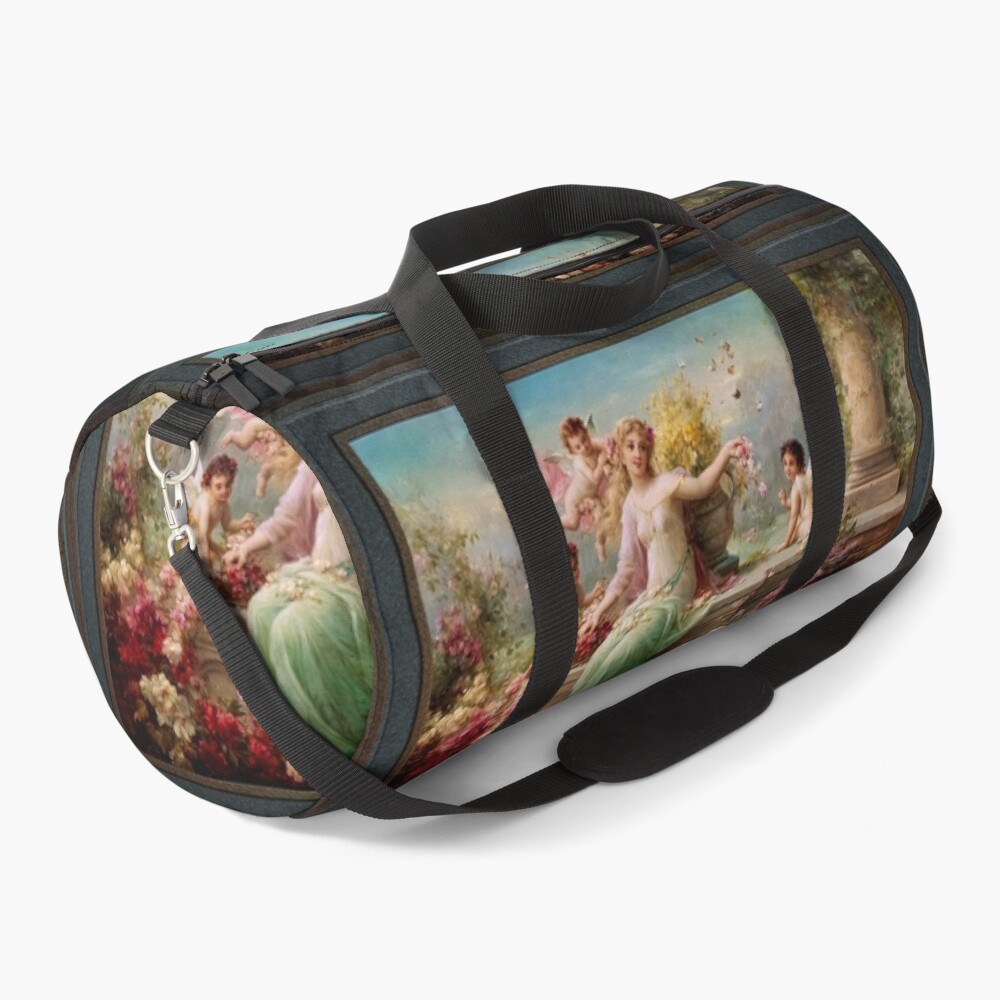
At the heart of the composition is a figure representing Flora, the Roman goddess of flowers and spring. She is depicted as an ethereal, young woman sitting serenely on a stone ledge, surrounded by an abundance of vibrant, blossoming flowers. Flora’s delicate, angelic figure is clad in a flowing gown made of soft pastel shades, predominantly green and pale pink, which complements the surrounding natural elements. The gown seems to ripple gently, as though caught in a soft breeze. Flora’s flowing hair is light, cascading down her back in loose, golden waves, further enhancing her connection to nature and the earth.
彼女の姿勢, graceful and relaxed, radiates serenity as she gently scatters flowers into the wind. A variety of blossoms tumble from her hands, carried away by a breeze that stirs the surrounding environment. Her gaze is soft and inviting, directed toward the small winged cherubs, or putti, who surround her. Flora’s expression conveys peace and the joyful energy of spring, exuding both the vitality of nature and the quiet gentleness of a goddess connected to the earth’s rebirth.
The Cherubs and their Interaction
The painting features two cherubic figures who interact with Flora in playful yet innocent ways. The first cherub is perched on a nearby stone column, holding a small bouquet of flowers. His wings are delicate and transparent, shimmering in the sunlight. He appears to be watching Flora with wide, innocent eyes, eagerly awaiting the flowers she scatters into the air. 彼の小さな, rounded form enhances the childlike purity and joy of the painting, adding a touch of innocence to the scene.
The second cherub, located nearer Flora, is seated on the ground, clutching a small cluster of flowers in one hand. His gaze is directed towards Flora, with a subtle, curious expression. Both figures are angelic in their appearance, with their wings spread out behind them, glowing as though illuminated by soft light. Their presence imbues the work with a sense of divine innocence, reinforcing the natural theme of birth and growth.
風景と地形
の背景 “フローラ” is bathed in the soft light of a late afternoon, with a vast, lush garden stretching into the distance. Surrounding Flora are a rich array of colorful flowers—roses, daisies, ユリ, and violets—all in full bloom. These vibrant colors are echoed throughout the painting, contributing to the lively yet harmonious atmosphere that dominates the composition.
A stone wall with a classical column on the right side of the painting creates a sense of depth, anchoring the figures in a defined space. The column’s intricate details—though not overtly emphasized—suggest a connection to classical architecture, a typical feature in Zatzka’s work, where mythological and historical references are often subtly integrated into the scene. The wall itself, which is covered in creeping ivy, evokes a timeless quality, blending both manmade and natural elements seamlessly.
The gentle rolling hills in the distance are bathed in soft, 黄金の光, suggesting the dawn of spring. The sky is filled with delicate, wispy clouds, further enhancing the tranquil, idyllic mood of the painting. There is a distinct sense of harmony between Flora, the cherubs, and the surrounding environment, as if all are part of a divine cycle of nature.
素材と技法
Hans Zatzka was known for his skillful use of oil paints, そして、この作品も例外ではありません. The artist’s meticulous attention to detail is evident in every element of the painting, from the fine texture of Flora’s gown to the soft rendering of the cherubs’ skin and delicate wings. Zatzka’s use of light and shadow is masterful, creating a sense of depth and dimension within the composition. 光, which seems to emanate from an unseen source, gently caresses the figures, illuminating their features and enhancing the ethereal atmosphere of the work.
Zatzka’s approach to color is also noteworthy. The soft pastel palette he employs is characteristic of the Romantic period, where naturalistic yet idealized colors were used to convey emotion and mood. The use of light greens, ソフトピンク, and pale yellows throughout the piece creates a warm, 魅力的な雰囲気, further emphasizing the spring theme. The vibrancy of the flowers contrasts with the more subtle tones of the sky and stonework, enhancing the focus on Flora and her companions.
The background landscape is painted with a softness that suggests a dreamlike quality. The flowers and ivy are rendered with both precision and an airy lightness, further emphasizing the contrast between the detailed foreground figures and the slightly more abstract background. The fine brushstrokes and layering of paint add texture to the flora and fauna, enhancing the sense of realism while maintaining the idealized qualities typical of Zatzka’s work.
スタイル, テーマ, と気分
“フローラ” is a quintessential example of the Symbolist and Romantic styles that characterized much of European art in the late 19th century. The painting embodies the era’s fascination with mythological themes, the idealization of nature, and the portrayal of feminine beauty as a symbol of purity and divine grace. The presence of Flora as the central figure emphasizes this connection to the natural world and the divine, while the cherubs, with their angelic innocence, reinforce the themes of rebirth and renewal.
The overall mood of the painting is one of tranquility and joy. ソフト, dreamlike atmosphere invites the viewer into a serene and harmonious world where nature, 美しさ, and mythological beings coexist peacefully. There is no sense of conflict or disturbance within the scene; その代わり, there is an overarching sense of calm and joy, capturing the timeless essence of spring and the cycle of life.
Zatzka’s “フローラ” offers a window into a world of idealized beauty, a world where nature’s rejuvenation is celebrated through the graceful figures of Flora and the cherubs who accompany her. The artwork is a perfect representation of the Romantic desire to capture the beauty of the natural world while also elevating it to a spiritual and timeless plane.
これは、リマスターされたデジタルアートのオールドマスターであり、パブリックドメインの画像を複製したものです。 キャンバス, アクリル, 金属と木のオンラインプリント.
アーティスト略歴の由来 Wikipedia.org
ハンス・ザツカは時々Pとして知られています. ロンサール, ピエール・ド・ロンサール, またはH. バッテリー, ジョセフ・バーナードとして彼の作品の多くに署名しました, J. バーナード, またはBernardZatzka.
Zatzkaの膨大な数の仮名の目的は、販売できるアートワークの量を制限する契約違反のペナルティを回避することでした。.
これにより、一部のアートデータベースでは、仮名ジョセフバーナードの下でのザツカの作品と同じ名前のフランスの彫刻家が混同されています。.
ハンス・ザツカは 8 行進 1859 ウィーンで. 彼の父バルトロマウスは建設労働者でした, 彼の母親はマリー・カルピシェク・ザツカでした.
間 1877 そして 1882, 彼は芸術アカデミーで学びました, クリスチャン・グリーペンケルの下で, カール・ウルツィンガー, とカールフォンブラース.
Zatzkaは、教会やその他の機関向けのフレスコ画を制作することで生計を立てることができました。.
に 1885, Zatzkaは、KurhausBadenで天井フレスコ画TheNaiadofBadenの作成を依頼されました.
Zatzkaの作品の多くは、オーストリアのさまざまな教会に捧げられた宗教画や祭壇画でした。.
しかしながら, 彼は女性の絵でもっと知られています, 妖精, と他の幻想的なシーン.
頻繁, 彼はリヒャルト・ワーグナーの作品とグリム兄弟のおとぎ話からインスピレーションを得ました.
19世紀後半から20世紀初頭に, Zatzkaによるいくつかの作品が写真に撮られ、商業的で収集可能なポストカードになりました.
1920年代, Zatzkaのスタイルは、ヨーロッパ全体で選ばれる装飾になりました. 加えて, 過去30年間はZatzkaの復活を開催しました.