

정원의 꽃
작품 소개
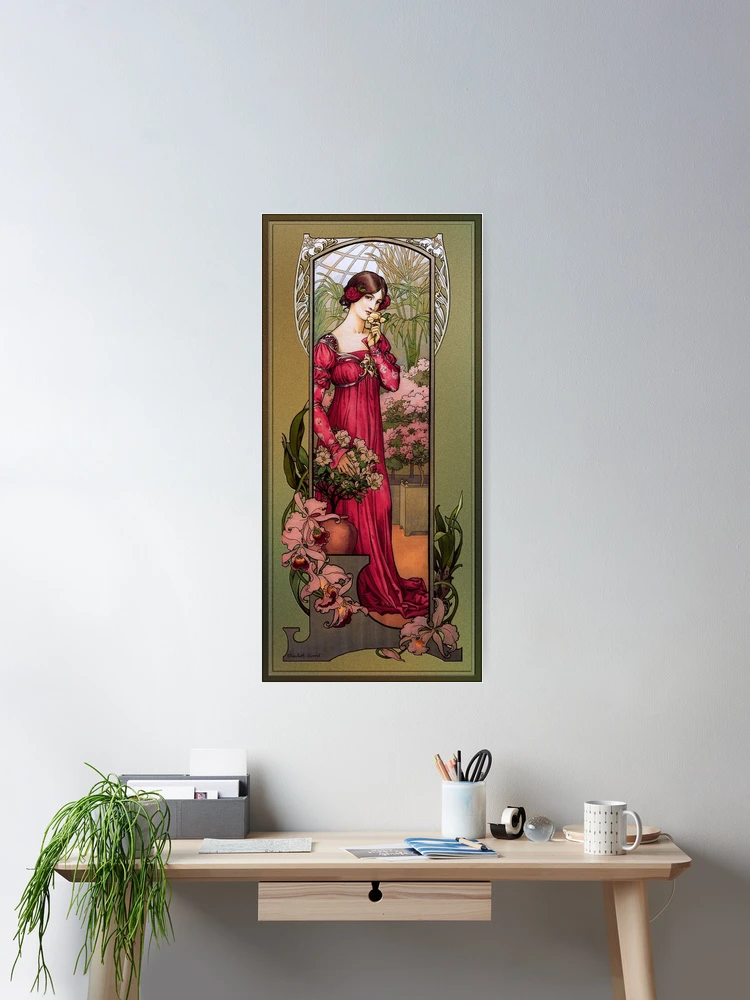
제목의 그림 정원의 꽃, 주위에 만들어졌습니다 1900 by French artist 엘리자베스 손렐, exemplifies the Art Nouveau style with its refined blend of nature and feminine grace. 엘리자베스 손렐 (1874–1953) was an accomplished painter who, much like other artists of her time, sought to integrate decorative arts and natural elements into her work, creating serene and idealized depictions of women in harmony with their surroundings. 정원의 꽃 stands as a testament to Sonrel’s mastery of capturing beauty, both in the human form and the natural world, within the confines of a highly stylized framework.
이 작품에서, the artist presents a young woman amidst a lush garden filled with blossoming flowers, creating a sense of peace, 연성, 그리고 시대를 초월한 우아함. The work belongs to the transition period of the late 19th and early 20th century, when artists began to experiment with more decorative elements in their work, setting the stage for the Art Nouveau movement to flourish.
목차
중심 인물: The Woman in the Garden
The focal point of the painting is the elegant woman, who stands poised amidst a garden of flourishing plants. She gazes slightly off to the side, gently holding a flower to her lips. Her expression is one of quiet contemplation, almost as if she is lost in thought, making the viewer ponder what she may be contemplating. The artist uses soft, fluid lines to create the delicate figure, accentuating her grace and beauty. Her posture is stately, yet relaxed, as though she is one with the flowers around her.
The woman is dressed in a flowing gown of deep pink, which enhances her romantic, almost ethereal appearance. 가운, with its intricate folds and soft fabric, 그녀의 섬세한 특징을 보완합니다. The long sleeves of her dress, which gather slightly at the wrists, suggest a gentle yet refined femininity, while the delicate rose-colored flowers in her hair add an extra layer of romanticism and connection to the floral surroundings. There is a sense of timelessness about her, as though she could exist in any era, embodying the ideal of beauty and serenity that Sonrel sought to portray.
The Floral and Botanical Setting
The garden setting in 정원의 꽃 is lush and detailed, and it plays a crucial role in enhancing the overall theme of the painting. Surrounding the central figure is a profusion of flowers in various stages of bloom. The woman’s proximity to these plants, coupled with her tender interaction with them, suggests a deep connection between the human and natural worlds. 꽃, though not named specifically, are painted with exquisite detail, and they seem to spring to life with every brushstroke. Their delicate petals, some of which are white or pale pink, contribute to the overall softness of the scene, reinforcing the tranquility of the moment.
The garden setting itself is depicted as a tranquil, slightly enclosed space, with the glass structure in the background resembling a greenhouse or garden conservatory. The latticework of the glass and the intertwining plants visible through it provide a sense of depth and structure within the composition. The background setting, with its muted greens and beiges, contrasts with the vibrant colors of the flowers and the woman’s gown, drawing attention to the central figure without overpowering the scene.
At the lower corners of the painting, large blooms—perhaps orchids—add another layer of complexity and interest to the piece. The intricate depiction of these flowers, with their sinuous curves and graceful form, echoes the flowing lines of the woman’s gown and hair, further blending human and natural elements.
재료 및 기술
Sonrel’s technique in 정원의 꽃 reflects her skill in creating harmony between color, 선, 그리고 형태. The painting is rendered with soft, flowing lines typical of the Art Nouveau style, which often favors organic shapes and an emphasis on decoration. The use of pastel tones—soft pinks, 푸성귀, and pale yellows—creates a serene, 거의 몽환적인 분위기. The lightness of the color palette adds to the feeling of delicacy and elegance, as if the entire composition exists in a peaceful reverie.
The artist’s handling of light and shadow is subtle but effective. The soft shading around the figure and the background flowers suggests a gentle, diffused light source, as though the woman is bathed in the glow of a late afternoon sun. The absence of harsh shadows gives the painting a soft, inviting quality, reinforcing the tranquil mood.
분위기와 테마
분위기 정원의 꽃 is one of harmony, 우아함, and reflection. The artist’s emphasis on a young woman in a peaceful garden, surrounded by blooming flowers, speaks to the broader themes of natural beauty and the idealization of femininity. Sonrel creates an environment that is not only visually pleasing but emotionally evocative. The viewer is invited to pause and reflect on the natural beauty of the world, and the way in which human beings can interact with and appreciate the natural world in a delicate, almost spiritual way.
The theme of femininity is prevalent throughout the artwork, with the woman portrayed as the central figure of beauty and grace. She is not merely a passive object of admiration but is instead actively engaged with her surroundings, holding a flower as if it were an extension of herself. This interaction suggests a deeper connection with nature, a theme often found in the works of Art Nouveau artists.
Sonrel’s painting also carries a timeless quality, as if the scene could belong to any era in which beauty and nature were revered. 정원, with its rich symbolism, alludes to themes of growth, 갱신, and the cycles of life, while the woman’s elegant pose conveys a sense of enduring beauty that transcends time.
결론
Élisabeth Sonrel’s 정원의 꽃 is a masterful representation of Art Nouveau’s emphasis on beauty, 자연, and the female form. The artist’s ability to capture the soft harmony between the woman and her floral surroundings speaks to her deep understanding of both the natural world and human grace. The painting evokes a mood of serenity and timeless elegance, offering the viewer a moment of reflection and appreciation for the simple yet profound beauty of nature. Through her skillful use of color, 선, 그리고 형태, Sonrel invites us to experience a world where beauty is both delicate and enduring, where humans and nature exist in a perfect, harmonious balance.
Flowers Of Gardens is a retouched digital art old masters reproduction of a public domain image.
아티스트 소개
아래 정보 제공 Wikipedia.org
엘리자베스 손렐 (1874 투어 – 1953 물개) 아르누보 스타일의 프랑스 화가이자 일러스트레이터였습니다.. 그녀의 작품에는 우화적인 주제가 포함되어 있습니다., 신비주의와 상징주의, 초상화와 풍경.
그녀는 Nicolas Stéphane Sonrel의 딸이었습니다., 투르의 화가, 그리고 그에게서 초기 훈련을 받았다.. 추가 연구를 위해 그녀는 Ecole des Beaux-Arts에서 Jules Lefebvre의 학생으로 파리로 갔다..
에 1892 그녀는 졸업장 작품을 그렸다, 팍스와 노동', Musée des Beaux-Arts de Tours에서 볼 작품. 그 이후로 그녀는 Salon des Artistes Français에서 전시했습니다. 1893 과 1941, 그녀의 시그니처 작품은 라파엘 전파 방식의 큰 수채화입니다., 피렌체와 로마를 여행한 후 입양한, 르네상스 화가의 발견 – 그녀의 작품 중 일부는 보티첼리의 명확한 배음이 있습니다.. 그녀의 그림은 종종 Arthurian 로맨스에서 영감을 받았습니다., 단테 알리기에리의 신곡’ 그리고 '더 뉴 라이프', 성경적 주제, 그리고 중세의 전설. 그녀의 신비로운 작품에는 'Ames errantes'가 포함됩니다.’ (살롱 1894) 그리고 '심연의 정령’ (살롱 1899) 그리고 "태피스트리를 든 젊은 여자".
박람회 Universelle에서 1900, 아르누보가 주 테마였던, 그녀의 1895 그림 '처녀의 잠'’ (처녀의 잠), 동메달을 수상했다, 그리고 Henri Lehmann 상 3000 미술 아카데미의 프랑.[3] 에서 1900 이후 그녀는 그림을 초상화로 제한했습니다., 아름다운 브르타뉴의 풍경, 그리고 가끔 꽃 공부.
그녀는 브르타뉴로 정기적으로 그림 여행을 갔다., Brocéliande의 숲에서 영감을 얻은, 그리고 ~에서 1910 Concarneau 등 해안의 다양한 곳으로, 플루가스텔, 퐁라베와 록투디, 1~2명의 학생과 함께 여관에 자주 머물다. 그녀는 1930년대에 La Baule에 별장을 짓기 전에 Le Faouët에서 여러 작품을 그렸습니다.. 주로 수채화와 구아슈 작업, 그녀는 그 지역의 어린 소녀들 사이에서 모델이 준비되어 있음을 발견했습니다., 브르타뉴가 일반적으로 우호적이라는 것을 발견했습니다., 정직하고 자신감 있는.
살롱에서의 그녀의 마지막 전시는 1941 세의 나이에 67. 리버풀에서 전시했다는 기록도 있다.. 어린 시절 Sonrel은 포스터를 제작했습니다., 엽서와 삽화, 아르누보 스타일로.