

산의 꽃
프랑스 화가의 산의 꽃 c1900 엘리자베스 손렐 (1874 – 1953); 아르누보 스타일의 일러스트레이터; Who's 작품에는 우화적인 주제가 포함되어 있습니다., 신비주의와 상징주의, 초상화와 풍경.
This exquisite artwork, Sonrel draws upon the allure of both mythology and nature, bringing together the two elements with a delicate balance of beauty, 우아함, and introspective solitude.
목차
주제
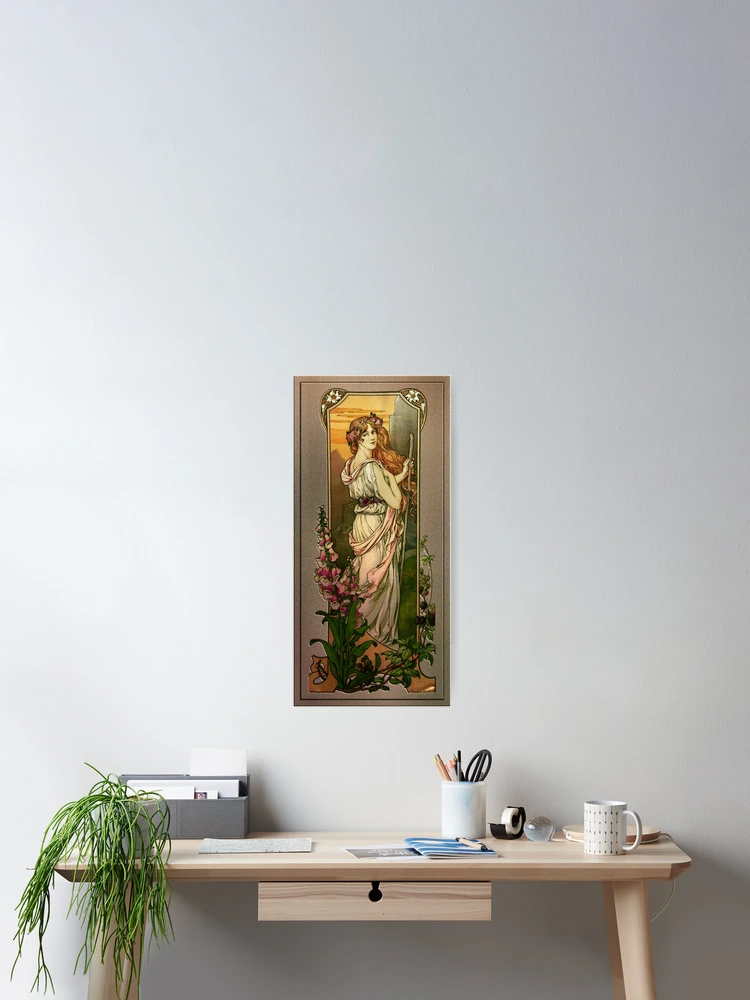
The central figure in this painting is a female figure of ethereal beauty, who stands tall and poised against a backdrop of towering mountains and a soft, warm sky. The figure is a young woman, draped in a flowing white gown that billows gently in the breeze, the fabric rendered with soft folds that add texture and depth. 가운, cinched at the waist with a simple yet elegant belt, enhances the fluidity of her form, emphasizing the harmony between the figure and nature.
그녀의 머리카락, a cascade of rich auburn locks, tumbles loosely over her shoulders, 시대를 초월한 그녀의 아름다움을 더욱 불러일으킵니다.. 그녀의 머리 위에는 꽃 한 송이가 놓여 있다, 그녀의 여성성에 야생적인 분위기를 더하는 섬세한 화관을 만들어냅니다.. 화환의 꽃은 작고 생기가 넘칩니다., 자연 세계와의 연결을 제안, 마치 그 여자가 자기 주변 식물의 화신인 것처럼요.. 이 꽃의 왕관은 그녀의 영묘함을 더욱 돋보이게 합니다, 거의 신성한 존재.
그녀의 오른손에, 그녀는 오랫동안 붙잡고 있다, 날씬한 직원, 지혜나 인도의 상징으로 해석될 수 있습니다.. 직원분들이 심플하면서도 늠름하게, 여성의 권위와 주변 지형과의 연결을 미묘하게 상기시키는 역할을 합니다.. 부드러운 그립과 편안한 자세는 그 인물이 그녀의 환경 속에서 편안하다는 것을 암시합니다., 자신의 역할에 대해 차분한 자신감을 발산.
객체와 세부 사항
Flanking the woman on either side are two prominent floral elements, one of foxglove flowers (Digitalis) on the left and a rich array of blackberry vines and leaves on the right. These plants serve to frame the central figure, drawing the viewer’s eye toward her while enhancing the narrative of nature’s embrace. The foxgloves, with their tall spires of bell-shaped flowers, are vibrant and reach towards the sky, creating a visual contrast to the woman’s grounded, earthbound posture. The blackberry vines, full of lush green leaves and dark, ripening berries, offer a sense of wildness and fertility, reinforcing the theme of the woman’s natural connection to the land.
배경의 산, though not dominant in their portrayal, provide a sense of scale and depth. They rise majestically in the distance, their peaks partially obscured by mist, giving them a mysterious and timeless quality. The sky above is awash in warm, golden tones, with hints of soft pink and orange, 새벽이나 황혼을 암시, times of transition and introspection. This choice of color palette infuses the work with a sense of tranquility and quiet contemplation.
지형과 재료
The terrain is rugged and unyielding, yet it complements the softness of the woman’s figure. It is a place where life flourishes despite its harshness, as seen in the surrounding flora. The colors used for the terrain and flowers are earthy and natural, suggesting that Sonrel was inspired by the rugged landscapes of the French countryside or perhaps the mythical landscapes of ancient Greece. The artist’s careful attention to detail in the plants and the mountains shows her deep understanding of both nature and the human form, blending them seamlessly in this piece.
스타일과 테마
The style of this artwork is deeply rooted in the Art Nouveau movement, which flourished in the late 19th and early 20th centuries. Characterized by its emphasis on organic forms, 흐르는 선, and harmonious integration of nature and human figures, the Art Nouveau style is exemplified here through the graceful curvature of the woman’s pose and the intricate floral details surrounding her. Sonrel’s use of soft, blended colors and flowing lines imbues the piece with a dreamlike quality, inviting the viewer into a world where nature and humanity coexist in perfect balance.
주제별로, Flowers of the Mountains explores the connection between the human figure and the natural world. The woman in the painting is not just a figure of beauty but also a symbol of nature itself. Her presence among the flowers, her wreath, and the connection to the mountains all suggest a deeper bond between humanity and the earth, perhaps drawing from ancient mythologies where women often represented the earth, 비옥, or nature’s vitality. The use of flowers, especially those associated with healing and growth like foxglove, suggests that the figure is not just passive in her environment but an active participant in the life force of nature.
분위기와 분위기
The mood of the painting is one of serene contemplation. There is no rush in the figure’s posture, no urgency in her gaze, which is directed off to the side, as if she is lost in thought or in quiet communion with the natural world around her. 색상 팔레트, with its soft pinks, 보라색, 그리고 채소, further contributes to the tranquil atmosphere. The mountains, while present, are distant and unobtrusive, further adding to the sense of solitude and peace. The entire piece invites the viewer to pause and reflect, offering a moment of stillness in the midst of a busy world.
결론
에 Flowers of the Mountains, Elisabeth Sonrel has created not just a portrait of a woman but a celebration of nature’s beauty and its eternal connection to the human spirit. The blending of the figure with the flowers, the gentle, flowing lines of her form, and the serene landscape all convey a message of harmony, 평온, and reverence for the natural world. Through her delicate use of color, 빛, 그리고 구성, Sonrel has produced a work that stands as a timeless reflection of the beauty of nature and the human soul’s connection to it.
Flowers Of Mountains는 공개 도메인 이미지를 수정한 디지털 아트입니다..
아래 정보 제공 Wikipedia.org
엘리자베스 손렐 (1874 투어 – 1953 물개) 아르누보 스타일의 프랑스 화가이자 일러스트레이터였습니다.. 그녀의 작품에는 우화적인 주제가 포함되어 있습니다., 신비주의와 상징주의, 초상화와 풍경.
그녀는 Nicolas Stéphane Sonrel의 딸이었습니다., 투르의 화가, 그리고 그에게서 초기 훈련을 받았다.. 추가 연구를 위해 그녀는 Ecole des Beaux-Arts에서 Jules Lefebvre의 학생으로 파리로 갔다..
에 1892 그녀는 졸업장 작품을 그렸다, 팍스와 노동', Musée des Beaux-Arts de Tours에서 볼 작품. 그 이후로 그녀는 Salon des Artistes Français에서 전시했습니다. 1893 과 1941, 그녀의 시그니처 작품은 라파엘 전파 방식의 큰 수채화입니다., 피렌체와 로마를 여행한 후 입양한, 르네상스 화가의 발견 – 그녀의 작품 중 일부는 보티첼리의 명확한 배음이 있습니다.. 그녀의 그림은 종종 Arthurian 로맨스에서 영감을 받았습니다., 단테 알리기에리의 신곡’ 그리고 '더 뉴 라이프', 성경적 주제, 그리고 중세의 전설. 그녀의 신비로운 작품에는 'Ames errantes'가 포함됩니다.’ (살롱 1894) 그리고 '심연의 정령’ (살롱 1899) 그리고 "태피스트리를 든 젊은 여자".
박람회 Universelle에서 1900, 아르누보가 주 테마였던, 그녀의 1895 그림 '처녀의 잠'’ (처녀의 잠), 동메달을 수상했다, 그리고 Henri Lehmann 상 3000 미술 아카데미의 프랑.[3] 에서 1900 이후 그녀는 그림을 초상화로 제한했습니다., 아름다운 브르타뉴의 풍경, 그리고 가끔 꽃 공부.
그녀는 브르타뉴로 정기적으로 그림 여행을 갔다., Brocéliande의 숲에서 영감을 얻은, 그리고 ~에서 1910 Concarneau 등 해안의 다양한 곳으로, 플루가스텔, 퐁라베와 록투디, 1~2명의 학생과 함께 여관에 자주 머물다. 그녀는 1930년대에 La Baule에 별장을 짓기 전에 Le Faouët에서 여러 작품을 그렸습니다.. 주로 수채화와 구아슈 작업, 그녀는 그 지역의 어린 소녀들 사이에서 모델이 준비되어 있음을 발견했습니다., 브르타뉴가 일반적으로 우호적이라는 것을 발견했습니다., 정직하고 자신감 있는.
살롱에서의 그녀의 마지막 전시는 1941 세의 나이에 67. 리버풀에서 전시했다는 기록도 있다.. 어린 시절 Sonrel은 포스터를 제작했습니다., 엽서와 삽화, 아르누보 스타일로.