

Flùraichean nan Gàrraidhean
Ro-ràdh don obair ealain
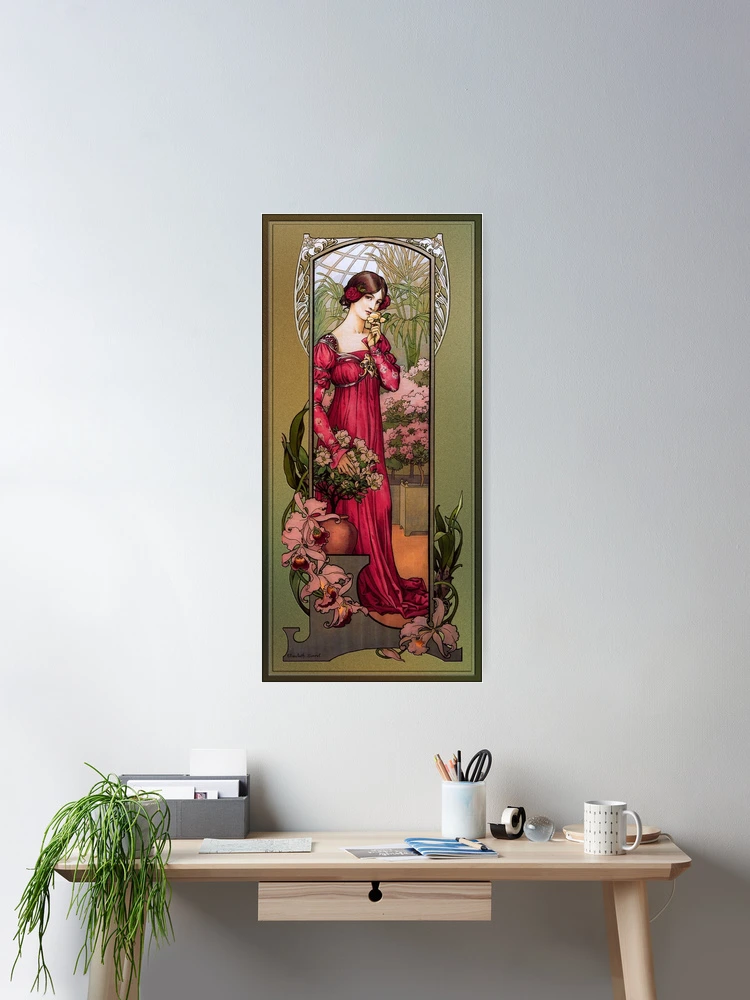
An dealbh leis an tiotal Flùraichean nan Gàrraidhean, air a chruthachadh timcheall 1900 le neach-ealain Frangach Ealasaid Sonrel, na eisimpleir de stoidhle Art Nouveau leis a’ mheasgachadh ath-leasaichte de nàdar agus gràs boireann. Ealasaid Sonrel (1874-1953) bha e na pheantair sgileil a bha, glè choltach ri luchd-ealain eile na h-ùine aice, ag iarraidh ealain sgeadachaidh agus eileamaidean nàdarra a thoirt a-steach don obair aice, a’ cruthachadh dhealbhan sàmhach agus air leth freagarrach de bhoireannaich ann an co-chòrdadh ris an àrainneachd mun cuairt orra. Flùraichean nan Gàrraidhean a’ seasamh mar theisteanas air maighstireachd Sonrel air a bhith a’ glacadh bòidhchead, an dà chuid ann an cruth daonna agus ann an saoghal nàdair, taobh a-staigh frèam fìor stoidhle.
Anns a 'phìos seo, tha an neach-ealain a 'toirt seachad boireannach òg am measg gàrradh lusach làn flùraichean blàth, a’ cruthachadh faireachdainn de shìth, bogachd, agus an eireachdas gun ùine. Buinidh an obair don ùine eadar-ghluasaid aig deireadh an 19mh linn agus tràth san 20mh linn, nuair a thòisich luchd-ealain a’ feuchainn a-mach barrachd eileamaidean sgeadachaidh san obair aca, a’ suidheachadh an àrd-ùrlar airson gluasad Art Nouveau a shoirbheachadh.
Clàr-innse
Am prìomh fhigear: A' Bhean anns a' Ghàrradh
Is e cridhe an deilbh am boireannach eireachdail, a sheasas am measg gàradh de lusan a tha fàs. Bidh i ag amharc beagan chun an taobh, gu socair a' cumail blàth ri a bilean. Tha an abairt aice mar aon de mheòrachadh sàmhach, cha mhòr mar gu bheil i air chall ann an smuain, a’ toirt air an neach-coimhead a bhith a’ beachdachadh air na tha i a’ smaoineachadh. Bidh an neach-ealain a 'cleachdadh bog, loidhnichean siùbhlach gus am figear fìnealta a chruthachadh, a' neartachadh a ghràis agus a maise. Tha an suidheachadh aice stàiteil, gidheadh fois, mar gum biodh i mar aon leis na flùraichean mun cuairt oirre.
Tha am boireannach air a sgeadachadh ann an dreasa làn de phinc domhainn, a tha ag àrdachadh a romansachd, coltas cha mhòr ethereal. An gùn, le a phillidhean toinnte agus aodach bog, a’ cur ris na feartan fìnealta aice. Sleibhtean fada na h-èideadh, a chruinnicheas beagan aig na dùirn, moladh boireannachd ciùin ach ath-leasaichte, fhad ‘s a tha na flùraichean fìnealta dath ròs na falt a’ cur sreath a bharrachd de romansaidheachd agus ceangal ris an àrainneachd fhlùraichean. Tha mothachadh air gun ùine mu deidhinn, mar gum biodh i ann an àm sam bith, a’ gabhail a-steach an fhìor bhòidhchead agus serenity a bha Sonrel airson a riochdachadh.
An suidheachadh Floral agus Luibh-eòlais
Suidheachadh a’ ghàrraidh a-staigh Flùraichean nan Gàrraidhean tha e blàth agus mionaideach, agus tha pàirt deatamach aige ann a bhith ag àrdachadh cuspair iomlan an deilbh. Timcheall air an fhigear sa mheadhan tha pailteas fhlùraichean ann an diofar ìrean de bhlàth. Cho faisg ‘s a tha am boireannach air na lusan sin, còmhla ris an eadar-obrachadh tairgse aice leotha, a’ moladh ceangal domhainn eadar saoghal daonna agus saoghal nàdair. Na flùraichean, ged nach eil e air ainmeachadh gu sònraichte, air am peantadh le mion-fhiosrachadh eireachdail, agus tha e coltach gu bheil iad beò leis a h-uile bruis. Na bileagan fìnealta aca, cuid dhiubh pinc bàn no bàn, cur ri bogachd iomlan an t-seallaidh, a’ daingneachadh suaimhneas na h-ùine.
Tha suidheachadh a’ ghàrraidh fhèin air a nochdadh mar shàmhchair, àite beagan dùinte, leis an structar glainne air a 'chùl coltach ri taigh-glainne no seòmar-grèine gàrraidh. Tha obair-ghrèis na glainne agus na lusan eadar-fhighte a chithear troimhe a’ toirt mothachadh air doimhneachd agus structar taobh a-staigh an t-suidheachaidh.. An suidheachadh cùl-fhiosrachaidh, le a uainean ciùin agus beige, eadar-dhealaichte bho dhhathan beòthail nam flùraichean agus an dreasa boireannaich, tarraing aire don fhigear sa mheadhan gun a bhith a’ faighinn cus cumhachd air an t-sealladh.
Aig oiseanan ìosal an dealbh, large blooms—perhaps orchids—add another layer of complexity and interest to the piece. The intricate depiction of these flowers, with their sinuous curves and graceful form, echoes the flowing lines of the woman’s gown and hair, further blending human and natural elements.
Stuthan agus innleachd
Sonrel’s technique in Flùraichean nan Gàrraidhean reflects her skill in creating harmony between color, loidhne, agus cruth. The painting is rendered with soft, flowing lines typical of the Art Nouveau style, which often favors organic shapes and an emphasis on decoration. The use of pastel tones—soft pinks, greens, and pale yellows—creates a serene, àile cha mhòr bruadar. The lightness of the color palette adds to the feeling of delicacy and elegance, as if the entire composition exists in a peaceful reverie.
The artist’s handling of light and shadow is subtle but effective. Tha an dubhar bog timcheall an fhigear agus na flùraichean cùil a’ nochdadh socair, stòr solais sgaoilte, mar gu'm biodh am boirionnach air a ionnlaid ann an deàrrsadh grian feasgar. Tha dìth dubhar cruaidh a’ toirt an dealbh bog, a 'toirt cuireadh càileachd, a' neartachadh an t-suaimhneis.
Am faireachdainn agus an cuspair
Faireachdainn de Flùraichean nan Gàrraidhean tha aon de cho-sheirm, gràs, agus meòrachadh. Tha cuideam an neach-ealain air boireannach òg ann an gàrradh sìtheil, air a chuairteachadh le flùraichean blàth, a’ bruidhinn ri cuspairean nas fharsainge de bhòidhchead nàdurrach agus foirfeachd boireannachd. Bidh Sonrel a’ cruthachadh àrainneachd a tha chan ann a-mhàin taitneach gu fradharcach ach a tha tarraingeach gu faireachdail. Thathas a’ toirt cuireadh don neach-coimhead stad agus meòrachadh air bòidhchead nàdurrach an t-saoghail, agus an dòigh anns am faod mac an duine eadar-obrachadh leis an t-saoghal nàdarra agus meas a thoirt air ann an dòigh fhìnealta, dòigh spioradail cha mhòr.
Tha cuspair boireannachd cumanta air feadh an obair-ealain, leis a 'bhoireannach air a riochdachadh mar phrìomh ìomhaigh bòidhchead agus gràs. Chan e dìreach cuspair fulangach a th’ innte ach tha i gu gnìomhach an sàs anns na tha timcheall oirre, a' cumail flùr mar gum b' e leudachadh dhith fhèin. Tha an eadar-obrachadh seo a’ nochdadh ceangal nas doimhne ri nàdar, cuspair a lorgar gu tric ann an obair luchd-ealain Art Nouveau.
Tha càileachd gun ùine aig peantadh Sonrel cuideachd, mar gu'm buineadh an sealladh do linn sam bith anns an robh maise agus nàdur air an urramachadh. An gàradh, le a shamhlachas beairteach, a’ toirt iomradh air cuspairean fàis, ath-nuadhachadh, agus cearcallan na beatha, fhad ‘s a tha suidheachadh eireachdail a’ bhoireannaich a ’nochdadh faireachdainn de bhòidhchead maireannach a tha a’ dol thairis air ùine.
Co-dhùnadh
aig Ealasaid Sonrel Flùraichean nan Gàrraidhean is a masterful representation of Art Nouveau’s emphasis on beauty, nàdur, and the female form. The artist’s ability to capture the soft harmony between the woman and her floral surroundings speaks to her deep understanding of both the natural world and human grace. The painting evokes a mood of serenity and timeless elegance, offering the viewer a moment of reflection and appreciation for the simple yet profound beauty of nature. Through her skillful use of color, loidhne, agus cruth, Sonrel invites us to experience a world where beauty is both delicate and enduring, where humans and nature exist in a perfect, harmonious balance.
Tha Flowers Of Gardens na seann mhaighstirean ealain didseatach ath-dhealbhaichte de ìomhaigh àrainn phoblach.
Mu dheidhinn an Neach-ealain
Fiosrachadh gu h-ìosal le cead Wikipedia.org
Ealasaid Sonrel (1874 Tursan - 1953 Ròin) na pheantair agus dealbhadair Frangach ann an stoidhle Art Nouveau. Am measg na rinn i bha cuspairean allegorical, ana-cainnt agus samhlachas, dealbhan agus cruthan-tìre.
Bha i na nighean aig Nicolas Stéphane Sonrel, peantair bho Tours, agus fhuair i an trèanadh tràth bhuaithe. Airson tuilleadh ionnsachaidh chaidh i air adhart gu Paris mar oileanach aig Jules Lefebvre aig an Ecole des Beaux-Arts.
Ann an 1892 pheant i an obair dioplòma aice, ‘Pax et Làbarach’, obair ri fhaicinn aig na Musée des Beaux-Arts de Tours. Bhon uairsin bha i a ’taisbeanadh aig an Salon des Artistes Français eadar 1893 agus 1941, na pìosan ainm-sgrìobhte aice le dathan uisge mòr ann an dòigh Ro-Raphaelite, a ghabh i ris às deidh turas gu Florence agus an Ròimh, faighinn a-mach peantairean an Ath-bheothachadh – cuid den obair aice le overtones soilleir de Botticelli. Bha na dealbhan aice gu tric air am brosnachadh le romansa Artair, Comadaidh Diadhaidh Dante Alighieri’ agus 'Am Beatha Ùr', cuspairean a ’Bhìobaill, agus uirsgeulan meadhan-aoiseil. Am measg nan obraichean dìomhair aice tha ‘Ames errantes’ (Salon de 1894) agus ‘spioradan an Abyss’ (Salon de 1899) agus "Boireannach òg leis a’ ghrèis-bhrat ".
Aig an Exposition Universelle de 1900, b ’e Art Nouveau am prìomh chuspair, rithe 1895 a ’peantadh‘ Cadal na Maighdinn’ (Cadal na Maighdinn), fhuair e bonn umha, agus duais Henri Lehmann de 3000 francs le Acadamaidh nan Ealan Fine.[3] Bho 1900 air adhart chuir i an dealbh aice ri dealbhan, seallaidhean-tìre breagha sa Bhreatainn Bhig, agus corra sgrùdadh fhlùraichean.
Bhiodh i a ’dèanamh tursan peantaidh cunbhalach don Bhreatainn Bhig, air a bhrosnachadh le coille Brocéliande, agus bho 1910 gu diofar àiteachan air an oirthir leithid Concarneau, Plougastel, Pont-l'Abbé agus Loctudy, glè thric a ’fuireach aig taighean-seinnse agus còmhla ri oileanach no dhà. Pheant i grunn obraichean ann an Le Faouët mus do thog i baile ann an La Baule anns na 1930an. Ag obair mar as trice ann an dathan uisge agus gouache, fhuair i a-mach solar deiseil de mhodalan am measg nigheanan òga san sgìre, agus fhuair iad Bretons càirdeil san fharsaingeachd, onarach agus fèin-mhisneachail.
Bha an taisbeanadh mu dheireadh aice aig an Salon a-staigh 1941 aig aois 67. Tha clàr ann cuideachd gun do rinn i taisbeanadh ann an Liverpool. Nuair a bha i òg, rinn Sonrel postairean, cairtean-puist agus dealbhan, ann an stoidhle Art Nouveau.