

庭の花
作品紹介
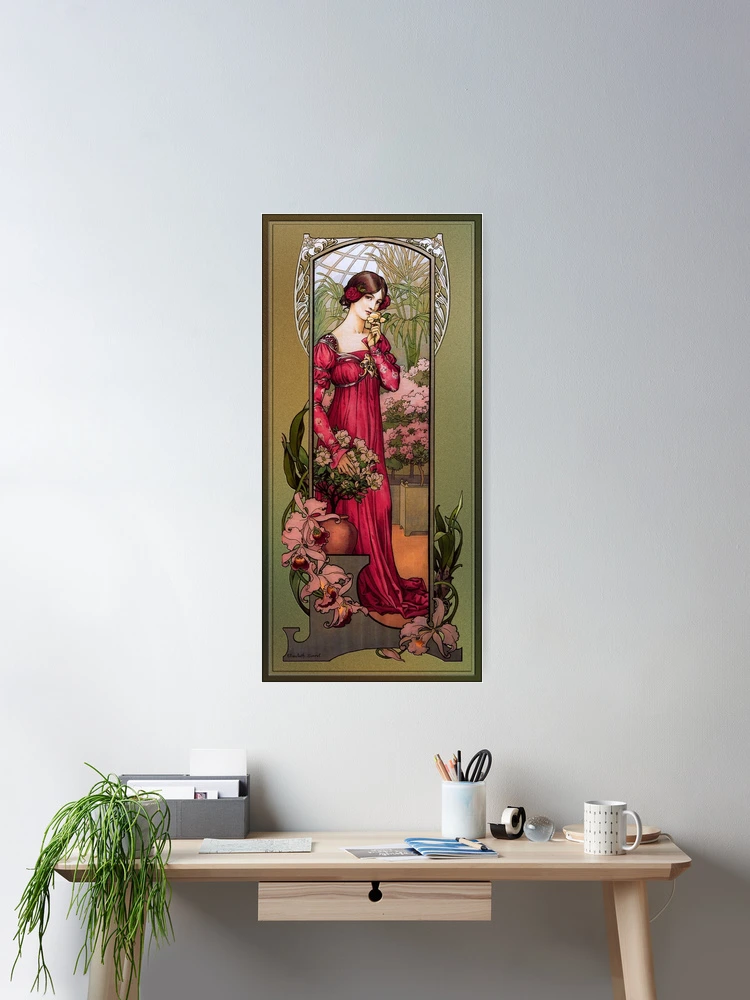
タイトルの絵 庭の花, 周りに作成されます 1900 フランスのアーティストによって エリザベス・ソンレル, exemplifies the Art Nouveau style with its refined blend of nature and feminine grace. エリザベス・ソンレル (1874–1953) was an accomplished painter who, much like other artists of her time, sought to integrate decorative arts and natural elements into her work, creating serene and idealized depictions of women in harmony with their surroundings. 庭の花 stands as a testament to Sonrel’s mastery of capturing beauty, both in the human form and the natural world, within the confines of a highly stylized framework.
この作品では, the artist presents a young woman amidst a lush garden filled with blossoming flowers, creating a sense of peace, softness, そして時代を超えたエレガンス. The work belongs to the transition period of the late 19th and early 20th century, when artists began to experiment with more decorative elements in their work, setting the stage for the Art Nouveau movement to flourish.
目次
中央の人物: The Woman in the Garden
The focal point of the painting is the elegant woman, who stands poised amidst a garden of flourishing plants. She gazes slightly off to the side, gently holding a flower to her lips. Her expression is one of quiet contemplation, almost as if she is lost in thought, making the viewer ponder what she may be contemplating. アーティストはソフトを使用します, fluid lines to create the delicate figure, accentuating her grace and beauty. Her posture is stately, yet relaxed, as though she is one with the flowers around her.
The woman is dressed in a flowing gown of deep pink, which enhances her romantic, almost ethereal appearance. ガウン, with its intricate folds and soft fabric, 彼女の繊細な機能を補完します. The long sleeves of her dress, which gather slightly at the wrists, suggest a gentle yet refined femininity, while the delicate rose-colored flowers in her hair add an extra layer of romanticism and connection to the floral surroundings. There is a sense of timelessness about her, as though she could exist in any era, embodying the ideal of beauty and serenity that Sonrel sought to portray.
The Floral and Botanical Setting
The garden setting in 庭の花 is lush and detailed, and it plays a crucial role in enhancing the overall theme of the painting. Surrounding the central figure is a profusion of flowers in various stages of bloom. The woman’s proximity to these plants, coupled with her tender interaction with them, suggests a deep connection between the human and natural worlds. 花, though not named specifically, are painted with exquisite detail, and they seem to spring to life with every brushstroke. Their delicate petals, some of which are white or pale pink, contribute to the overall softness of the scene, reinforcing the tranquility of the moment.
The garden setting itself is depicted as a tranquil, slightly enclosed space, with the glass structure in the background resembling a greenhouse or garden conservatory. The latticework of the glass and the intertwining plants visible through it provide a sense of depth and structure within the composition. The background setting, with its muted greens and beiges, contrasts with the vibrant colors of the flowers and the woman’s gown, drawing attention to the central figure without overpowering the scene.
At the lower corners of the painting, large blooms—perhaps orchids—add another layer of complexity and interest to the piece. The intricate depiction of these flowers, with their sinuous curves and graceful form, echoes the flowing lines of the woman’s gown and hair, further blending human and natural elements.
素材と技法
Sonrel’s technique in 庭の花 reflects her skill in creating harmony between color, ライン, そして形を整える. The painting is rendered with soft, flowing lines typical of the Art Nouveau style, which often favors organic shapes and an emphasis on decoration. The use of pastel tones—soft pinks, グリーン, and pale yellows—creates a serene, almost dreamlike atmosphere. The lightness of the color palette adds to the feeling of delicacy and elegance, as if the entire composition exists in a peaceful reverie.
The artist’s handling of light and shadow is subtle but effective. The soft shading around the figure and the background flowers suggests a gentle, diffused light source, as though the woman is bathed in the glow of a late afternoon sun. The absence of harsh shadows gives the painting a soft, inviting quality, reinforcing the tranquil mood.
ムードとテーマ
の気分 庭の花 is one of harmony, 恵み, and reflection. The artist’s emphasis on a young woman in a peaceful garden, surrounded by blooming flowers, speaks to the broader themes of natural beauty and the idealization of femininity. Sonrel creates an environment that is not only visually pleasing but emotionally evocative. The viewer is invited to pause and reflect on the natural beauty of the world, and the way in which human beings can interact with and appreciate the natural world in a delicate, almost spiritual way.
The theme of femininity is prevalent throughout the artwork, with the woman portrayed as the central figure of beauty and grace. She is not merely a passive object of admiration but is instead actively engaged with her surroundings, holding a flower as if it were an extension of herself. This interaction suggests a deeper connection with nature, a theme often found in the works of Art Nouveau artists.
Sonrel’s painting also carries a timeless quality, as if the scene could belong to any era in which beauty and nature were revered. 庭園, with its rich symbolism, alludes to themes of growth, リニューアル, and the cycles of life, while the woman’s elegant pose conveys a sense of enduring beauty that transcends time.
結論
Élisabeth Sonrel’s 庭の花 is a masterful representation of Art Nouveau’s emphasis on beauty, 自然, and the female form. The artist’s ability to capture the soft harmony between the woman and her floral surroundings speaks to her deep understanding of both the natural world and human grace. The painting evokes a mood of serenity and timeless elegance, offering the viewer a moment of reflection and appreciation for the simple yet profound beauty of nature. Through her skillful use of color, ライン, そして形を整える, Sonrel invites us to experience a world where beauty is both delicate and enduring, where humans and nature exist in a perfect, harmonious balance.
フラワーズオブガーデンズは、パブリックドメインの画像を複製したデジタルアートのオールドマスターです。.
アーティストについて
礼儀以下の情報 Wikipedia.org
エリザベス・ソンレル (1874 ツアー– 1953 アザラシ) アールヌーボー様式のフランスの画家兼イラストレーターでした. 彼女の作品には寓話的な主題が含まれていました, 神秘主義と象徴主義, 肖像画と風景.
彼女はニコラス・ステファン・ソンレルの娘でした, ツアーの画家, 彼から彼女の初期の訓練を受けました. さらなる研究のために、彼女はエコールデボザールでジュールルフェーブルの学生としてパリに行きました.
に 1892 彼女は卒業証書の仕事を描いた, 「パックスとレイバー」, トゥール美術館で見られる作品. それ以来、彼女はサロン・デ・アルティスト・フランセに展示しました。 1893 そして 1941, 彼女の署名作品は、ラファエル前派の方法で大きな水彩画です, 彼女はフィレンツェとローマへの旅行の後にそれを採用しました, ルネッサンスの画家を発見する – ボッティチェッリの明確な倍音を持っている彼女の作品のいくつか. 彼女の絵はしばしばアーサーニュのロマンスに触発されました, ダンテアリギエーリの神曲’ と「新生活」, 聖書のテーマ, と中世の伝説. 彼女の神秘的な作品には、「エイムズ・エランテス’ (のサロン 1894) と「深淵の精神’ (のサロン 1899) と「タペストリーの若い女性」.
博覧会で 1900, その主なテーマはアールヌーボーでした, 彼女 1895 絵画「処女の眠り」’ (処女の眠り), 銅メダルを受賞, とアンリ・レーマン賞 3000 美術アカデミーによるフラン。[3] から 1900 その後、彼女は自分の絵を肖像画に限定しました, 風光明媚なブルターニュの風景, そして時折花の研究.
彼女はブルターニュへの定期的な絵画旅行をしました, Brocéliandeの森に触発された, とから 1910 コンカルノーなどの海岸のさまざまな場所に, プルガステル, ポンラベとロクテュディ, 多くの場合、旅館に滞在し、1人または2人の学生が同行します. 彼女は1930年代にラ・ボールに別荘を建設する前に、ル・ファウエでいくつかの作品を描きました. 主に水彩とガッシュでの作業, 彼女はその地域の若い女の子の間でモデルの準備ができていることを発見しました, ブルトン人は一般的に友好的であることがわかりました, 正直で自信がある.
サロンでの彼女の最後の展示は 1941 歳の時に 67. 彼女がリバプールに出展したという記録もあります. 彼女の初期の頃、ソンレルはポスターを制作しました, はがきやイラスト, アールヌーボー様式.