

山の花
フランスの画家による山の花c1900 エリザベス・ソンレル (1874 – 1953); アールヌーボースタイルのイラストレーター; 寓話的な主題を含む作品, 神秘主義と象徴主義, 肖像画と風景.
This exquisite artwork, Sonrel draws upon the allure of both mythology and nature, bringing together the two elements with a delicate balance of beauty, 恵み, and introspective solitude.
目次
主な主題
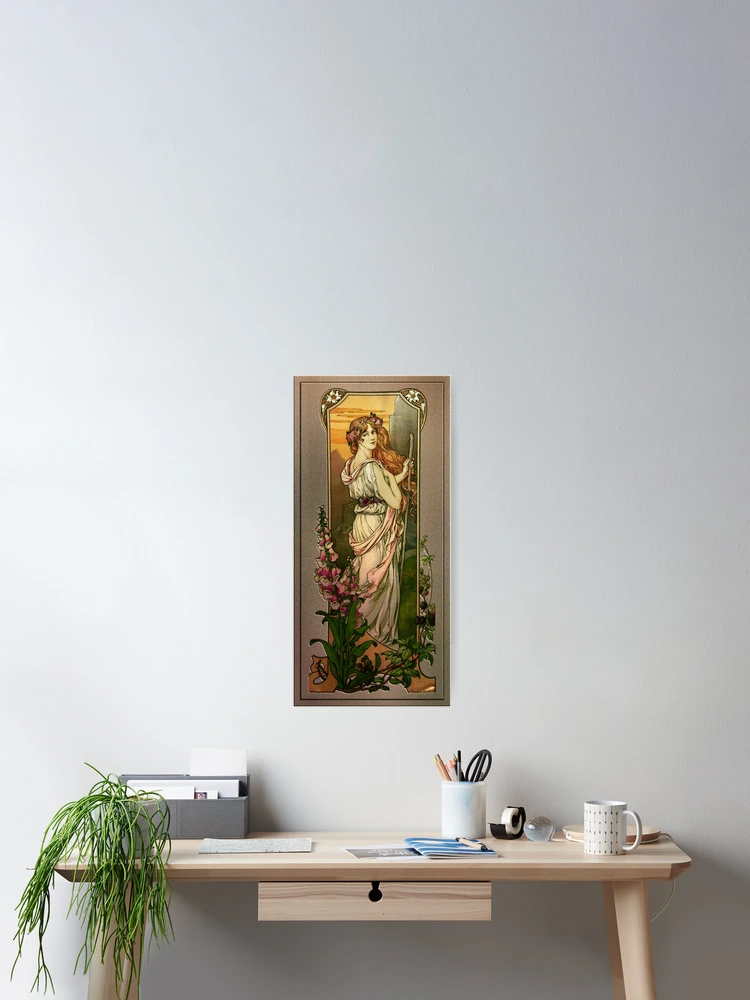
The central figure in this painting is a female figure of ethereal beauty, who stands tall and poised against a backdrop of towering mountains and a soft, warm sky. The figure is a young woman, draped in a flowing white gown that billows gently in the breeze, the fabric rendered with soft folds that add texture and depth. ガウン, cinched at the waist with a simple yet elegant belt, enhances the fluidity of her form, emphasizing the harmony between the figure and nature.
彼女の髪, a cascade of rich auburn locks, tumbles loosely over her shoulders, further evoking the timeless quality of her beauty. A wreath of flowers rests atop her head, creating a delicate coronet that brings an air of wildness to her femininity. The flowers in the wreath are small and vibrant, suggesting a connection to the natural world, as though the woman is an embodiment of the flora around her. This crown of blossoms enhances her ethereal, almost divine presence.
彼女の右手で, she holds a long, slender staff, which could be interpreted as a symbol of wisdom or guidance. The staff is simple yet dignified, acting as a subtle reminder of the woman’s authority and connection to the surrounding terrain. The gentle grip and relaxed posture suggest that the figure is at ease within her environment, exuding a calm confidence in her role.
オブジェクトと詳細
Flanking the woman on either side are two prominent floral elements, one of foxglove flowers (Digitalis) on the left and a rich array of blackberry vines and leaves on the right. These plants serve to frame the central figure, drawing the viewer’s eye toward her while enhancing the narrative of nature’s embrace. The foxgloves, with their tall spires of bell-shaped flowers, are vibrant and reach towards the sky, creating a visual contrast to the woman’s grounded, earthbound posture. The blackberry vines, full of lush green leaves and dark, ripening berries, offer a sense of wildness and fertility, reinforcing the theme of the woman’s natural connection to the land.
背景の山々, though not dominant in their portrayal, provide a sense of scale and depth. They rise majestically in the distance, their peaks partially obscured by mist, giving them a mysterious and timeless quality. The sky above is awash in warm, golden tones, with hints of soft pink and orange, 夜明けか夕暮れを示唆する, times of transition and introspection. This choice of color palette infuses the work with a sense of tranquility and quiet contemplation.
地形と材質
The terrain is rugged and unyielding, yet it complements the softness of the woman’s figure. It is a place where life flourishes despite its harshness, as seen in the surrounding flora. The colors used for the terrain and flowers are earthy and natural, suggesting that Sonrel was inspired by the rugged landscapes of the French countryside or perhaps the mythical landscapes of ancient Greece. The artist’s careful attention to detail in the plants and the mountains shows her deep understanding of both nature and the human form, blending them seamlessly in this piece.
スタイルとテーマ
The style of this artwork is deeply rooted in the Art Nouveau movement, which flourished in the late 19th and early 20th centuries. Characterized by its emphasis on organic forms, 流れるようなライン, and harmonious integration of nature and human figures, the Art Nouveau style is exemplified here through the graceful curvature of the woman’s pose and the intricate floral details surrounding her. Sonrel’s use of soft, blended colors and flowing lines imbues the piece with a dreamlike quality, inviting the viewer into a world where nature and humanity coexist in perfect balance.
テーマ的に, Flowers of the Mountains explores the connection between the human figure and the natural world. The woman in the painting is not just a figure of beauty but also a symbol of nature itself. Her presence among the flowers, her wreath, and the connection to the mountains all suggest a deeper bond between humanity and the earth, perhaps drawing from ancient mythologies where women often represented the earth, 受胎能力, or nature’s vitality. The use of flowers, especially those associated with healing and growth like foxglove, suggests that the figure is not just passive in her environment but an active participant in the life force of nature.
気分と雰囲気
絵画の気分は穏やかな熟考の一つです. There is no rush in the figure’s posture, no urgency in her gaze, which is directed off to the side, as if she is lost in thought or in quiet communion with the natural world around her. The color palette, with its soft pinks, 紫, そして緑, further contributes to the tranquil atmosphere. The mountains, while present, are distant and unobtrusive, further adding to the sense of solitude and peace. The entire piece invites the viewer to pause and reflect, offering a moment of stillness in the midst of a busy world.
結論
に Flowers of the Mountains, Elisabeth Sonrel has created not just a portrait of a woman but a celebration of nature’s beauty and its eternal connection to the human spirit. The blending of the figure with the flowers, the gentle, flowing lines of her form, and the serene landscape all convey a message of harmony, 静けさ, and reverence for the natural world. Through her delicate use of color, ライト, そして構成, Sonrel has produced a work that stands as a timeless reflection of the beauty of nature and the human soul’s connection to it.
「山の花」は、パブリック ドメインの画像を修正したデジタル アートの古い巨匠の複製です。.
礼儀以下の情報 Wikipedia.org
エリザベス・ソンレル (1874 ツアー– 1953 アザラシ) アールヌーボー様式のフランスの画家兼イラストレーターでした. 彼女の作品には寓話的な主題が含まれていました, 神秘主義と象徴主義, 肖像画と風景.
彼女はニコラス・ステファン・ソンレルの娘でした, ツアーの画家, 彼から彼女の初期の訓練を受けました. さらなる研究のために、彼女はエコールデボザールでジュールルフェーブルの学生としてパリに行きました.
に 1892 彼女は卒業証書の仕事を描いた, 「パックスとレイバー」, トゥール美術館で見られる作品. それ以来、彼女はサロン・デ・アルティスト・フランセに展示しました。 1893 そして 1941, 彼女の署名作品は、ラファエル前派の方法で大きな水彩画です, 彼女はフィレンツェとローマへの旅行の後にそれを採用しました, ルネッサンスの画家を発見する – ボッティチェッリの明確な倍音を持っている彼女の作品のいくつか. 彼女の絵はしばしばアーサーニュのロマンスに触発されました, ダンテアリギエーリの神曲’ と「新生活」, 聖書のテーマ, と中世の伝説. 彼女の神秘的な作品には、「エイムズ・エランテス’ (のサロン 1894) と「深淵の精神’ (のサロン 1899) と「タペストリーの若い女性」.
博覧会で 1900, その主なテーマはアールヌーボーでした, 彼女 1895 絵画「処女の眠り」’ (処女の眠り), 銅メダルを受賞, とアンリ・レーマン賞 3000 美術アカデミーによるフラン。[3] から 1900 その後、彼女は自分の絵を肖像画に限定しました, 風光明媚なブルターニュの風景, そして時折花の研究.
彼女はブルターニュへの定期的な絵画旅行をしました, Brocéliandeの森に触発された, とから 1910 コンカルノーなどの海岸のさまざまな場所に, プルガステル, ポンラベとロクテュディ, 多くの場合、旅館に滞在し、1人または2人の学生が同行します. 彼女は1930年代にラ・ボールに別荘を建設する前に、ル・ファウエでいくつかの作品を描きました. 主に水彩とガッシュでの作業, 彼女はその地域の若い女の子の間でモデルの準備ができていることを発見しました, ブルトン人は一般的に友好的であることがわかりました, 正直で自信がある.
サロンでの彼女の最後の展示は 1941 歳の時に 67. 彼女がリバプールに出展したという記録もあります. 彼女の初期の頃、ソンレルはポスターを制作しました, はがきやイラスト, アールヌーボー様式.