

Flors De Muntanyes
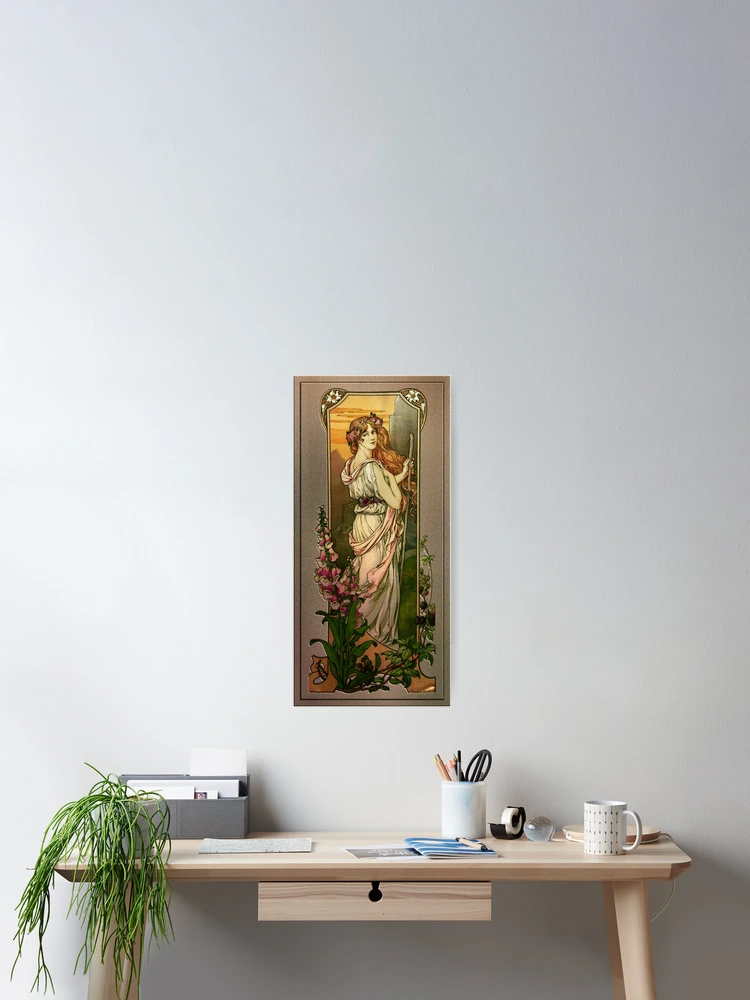
Flowers Of Mountains c1900 de French Painter Elisabeth Sonrel (1874 – 1953); i il·lustrador de l'estil Art Nouveau; les obres de qui inclouen temes al·legòrics, misticisme i simbolisme, retrats i paisatges.
Aquesta obra d'art exquisida, Sonrel es basa en l'atractiu tant de la mitologia com de la natura, unint els dos elements amb un delicat equilibri de bellesa, gràcia, i la solitud introspectiva.
Taula de continguts
Tema principal
La figura central d'aquest quadre és una figura femenina de bellesa etèria, que s'aixeca alt i equilibrat sobre un teló de fons de muntanyes altíssimes i un suau, cel càlid. La figura és una dona jove, envoltat d'un vestit blanc fluid que flueix suaument amb la brisa, la tela presentada amb plecs suaus que afegeixen textura i profunditat. El vestit, cenyit a la cintura amb un cinturó senzill però elegant, millora la fluïdesa de la seva forma, destacant l'harmonia entre la figura i la natura.
Els seus cabells, una cascada de rics panys castanys, cau fluix sobre les seves espatlles, further evoking the timeless quality of her beauty. A wreath of flowers rests atop her head, creating a delicate coronet that brings an air of wildness to her femininity. The flowers in the wreath are small and vibrant, suggesting a connection to the natural world, as though the woman is an embodiment of the flora around her. This crown of blossoms enhances her ethereal, almost divine presence.
A la seva mà dreta, she holds a long, slender staff, which could be interpreted as a symbol of wisdom or guidance. The staff is simple yet dignified, acting as a subtle reminder of the woman’s authority and connection to the surrounding terrain. The gentle grip and relaxed posture suggest that the figure is at ease within her environment, exuding a calm confidence in her role.
Objectes i detalls
Flanking the woman on either side are two prominent floral elements, one of foxglove flowers (Digitalis) on the left and a rich array of blackberry vines and leaves on the right. These plants serve to frame the central figure, drawing the viewer’s eye toward her while enhancing the narrative of nature’s embrace. The foxgloves, with their tall spires of bell-shaped flowers, are vibrant and reach towards the sky, creating a visual contrast to the woman’s grounded, earthbound posture. The blackberry vines, full of lush green leaves and dark, ripening berries, offer a sense of wildness and fertility, reinforcing the theme of the woman’s natural connection to the land.
The mountains in the background, though not dominant in their portrayal, provide a sense of scale and depth. They rise majestically in the distance, their peaks partially obscured by mist, giving them a mysterious and timeless quality. The sky above is awash in warm, golden tones, with hints of soft pink and orange, suggesting either dawn or dusk, times of transition and introspection. This choice of color palette infuses the work with a sense of tranquility and quiet contemplation.
Terreny i Materials
The terrain is rugged and unyielding, yet it complements the softness of the woman’s figure. It is a place where life flourishes despite its harshness, as seen in the surrounding flora. The colors used for the terrain and flowers are earthy and natural, suggesting that Sonrel was inspired by the rugged landscapes of the French countryside or perhaps the mythical landscapes of ancient Greece. L'atenció acurada de l'artista als detalls de les plantes i les muntanyes mostra la seva profunda comprensió tant de la natura com de la forma humana., combinant-los perfectament en aquesta peça.
Estil i Tema
L'estil d'aquesta obra d'art està profundament arrelat en el moviment modernista, que va florir a finals del segle XIX i principis del XX. Es caracteritza pel seu èmfasi en les formes orgàniques, línies fluides, i la integració harmònica de la natura i les figures humanes, l'estil modernista s'exemplifica aquí a través de la graciosa curvatura de la postura de la dona i els complexos detalls florals que l'envolten.. Ús de soft per part de Sonrel, La barreja de colors i línies fluides dota la peça d'una qualitat onírica, convidant l'espectador a un món on la natura i la humanitat conviuen en perfecte equilibri.
Temàticament, Flors de les Muntanyes explores the connection between the human figure and the natural world. The woman in the painting is not just a figure of beauty but also a symbol of nature itself. Her presence among the flowers, her wreath, and the connection to the mountains all suggest a deeper bond between humanity and the earth, perhaps drawing from ancient mythologies where women often represented the earth, fertilitat, or nature’s vitality. L'ús de flors, especially those associated with healing and growth like foxglove, suggests that the figure is not just passive in her environment but an active participant in the life force of nature.
Estat d'ànim i atmosfera
The mood of the painting is one of serene contemplation. There is no rush in the figure’s posture, no urgency in her gaze, which is directed off to the side, as if she is lost in thought or in quiet communion with the natural world around her. La paleta de colors, with its soft pinks, morats, and greens, further contributes to the tranquil atmosphere. The mountains, while present, are distant and unobtrusive, further adding to the sense of solitude and peace. The entire piece invites the viewer to pause and reflect, offering a moment of stillness in the midst of a busy world.
Conclusió
En Flors de les Muntanyes, Elisabeth Sonrel has created not just a portrait of a woman but a celebration of nature’s beauty and its eternal connection to the human spirit. The blending of the figure with the flowers, the gentle, flowing lines of her form, and the serene landscape all convey a message of harmony, tranquil·litat, and reverence for the natural world. Through her delicate use of color, llum, i composició, Sonrel ha produït una obra que es presenta com un reflex atemporal de la bellesa de la natura i la connexió de l'ànima humana amb ella..
Flowers Of Mountains és una reproducció d'art digital retocada d'una imatge de domini públic.
Informació per sota de cortesia Wikipedia.org
Elisabeth Sonrel (1874 Tours - 1953 Segells) va ser un pintor i il·lustrador francès d’estil Art Nouveau. Les seves obres incloïen temes al·legòrics, misticisme i simbolisme, retrats i paisatges.
Era filla de Nicolas Stéphane Sonrel, un pintor de Tours, i va rebre la seva formació primerenca d’ell. Per continuar estudis, va anar a París com a estudiant de Jules Lefebvre a l’Escola de Belles Arts.
En 1892 va pintar el seu treball de diploma, "Pax et Labor", una obra que es podrà veure al Musée des Beaux-Arts de Tours. A partir de llavors va exposar al Salon des Artistes Français entre 1893 i 1941, les seves peces d’autor eren grans aquarel·les de manera prerafaelita, que va adoptar després d'un viatge a Florència i Roma, descobrint els pintors renaixentistes – alguns dels seus treballs tenen clares notes de Botticelli. Les seves pintures sovint s’inspiraven en el romanç artúric, La divina comèdia de Dante Alighieri’ i "La nova vida", temes bíblics, i llegendes medievals. Entre les seves obres místiques destaquen ‘Ames errantes’ (Saló de 1894) i ‘Esperits de l’abisme’ (Saló de 1899) i "Dona jove amb el tapís".
A l 'Exposició Universal de Barcelona 1900, el tema principal del qual era el Modernisme, ella 1895 pintura ‘El son de la Mare de Déu’ (Son de la Verge), va rebre una medalla de bronze, i el premi Henri Lehmann de 3000 francs per l'Acadèmia de Belles Arts.[3] Des de 1900 en endavant, va limitar la seva pintura als retrats, paisatges escènics de Bretanya, i algun que altre estudi de les flors.
Va fer viatges regulars de pintura a Bretanya, inspirat en el bosc de Brocéliande, i de 1910 a diversos llocs de la costa com Concarneau, Plougastel, Pont-l'Abbé i Loctudy, sovint allotjats a fondes i acompanyats d’un o dos estudiants. Va pintar diverses obres a Le Faouët abans de construir una vil·la a La Baule als anys trenta. Treballant principalment en aquarel·la i guaix, va descobrir un subministrament de models entre noies joves de la zona, i va trobar que els bretons eren generalment amistosos, honest i segur de si mateix.
La seva última exposició al saló va ser a 1941 a l'edat de 67. També hi ha constància d’haver exposat a Liverpool. En els seus primers anys, Sonrel va produir pòsters, postals i il·lustracions, d’estil Art Nouveau.