

The Innocent Swan (Le Cygne; Innocència)
“The Innocent Swan (Le Cygne; Innocència)” is a remarkable work created by Elisabeth Sonrel (1874 – 1953), dins 1905, encapsulating the graceful and serene qualities associated with the Symbolist movement that defined much of the late 19th and early 20th centuries. Nascut a 1874 i morir en 1953, Sonrel was a French artist whose works often blended the ethereal and the earthly, producing dreamlike scenes that were deeply influenced by mythology and the natural world. This specific piece, infused with both tranquility and delicate beauty, perfectly exemplifies Sonrel’s ability to combine the elegance of natural forms with symbolic richness.
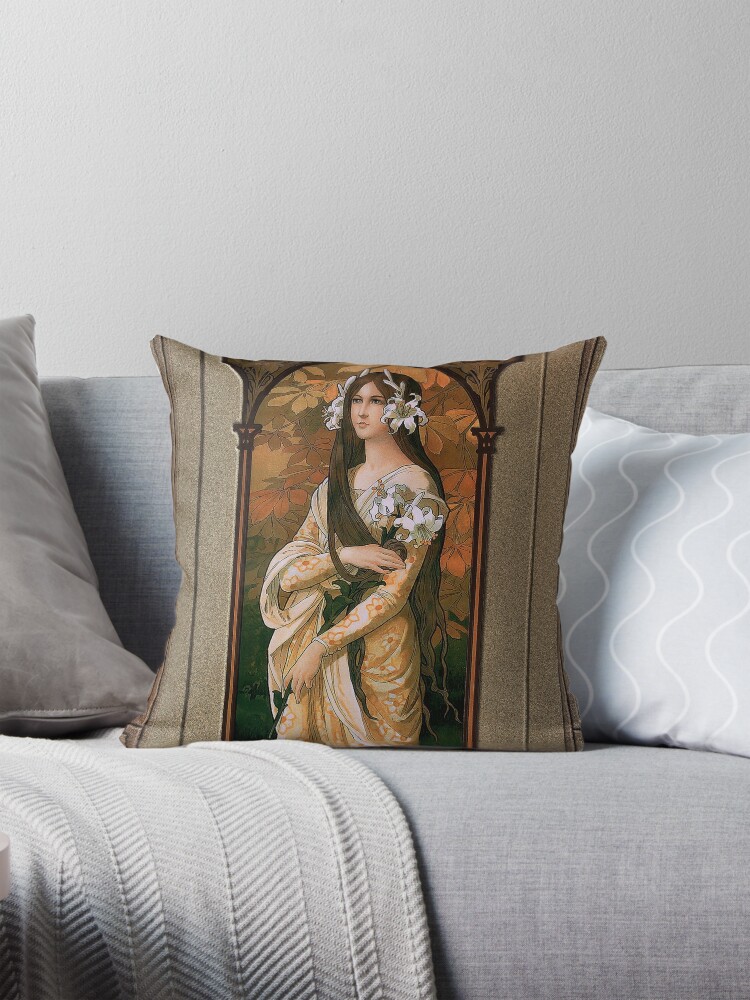
The central figure of the painting is a young woman dressed in an opulent yellow gown adorned with soft floral patterns. Her long brown hair cascades past her shoulders, entwined with white lilies that give her a pure and almost mystical appearance. She stands in a calm, poised stance with a swan at her feet, symbolizing the innocence and grace attributed to both the bird and the figure she represents. The soft rendering of her face, with an expression of contemplation, invites the viewer to ponder her thoughts while gazing upon the tranquil setting that surrounds her.
Taula de continguts
Composition and Surroundings
The composition of the painting is characterized by a harmonious blend of the natural and the human, with the figure of the woman placed in a vertical format that emphasizes the elongated style of the subject. She is situated against a lush, verdant background, where delicate autumn leaves in shades of orange, or, and green suggest the time of year and create a backdrop that contrasts beautifully with the pale, luminous gown she wears. The subtle inclusion of the swan further elevates the symbolic aspect of the work, as swans are traditionally linked with themes of purity, innocència, i bellesa, reinforcing the title of the piece.
The swan, which rests at the woman’s feet, seems to mirror her own graceful posture. Its neck curves delicately, almost as if echoing the lines of her figure. This visual connection between the human and the bird further deepens the symbolism of the painting, suggesting a harmonious relationship between humanity and nature. The swan’s white feathers reflect the woman’s innocence, offering a serene presence that balances the vibrancy of the autumn leaves in the background.
Color Palette and Technique
Sonrel’s use of color is one of the most striking aspects of the painting. The soft pastel tones of the yellow gown are balanced by the earthier tones of the foliage behind the figure, creating a warm and inviting ambiance. The yellows, ors, and subtle greens of the dress blend with the oranges and reds of the autumn leaves, evoking a sense of calm serenity that is further reflected in the softness of the background. The subdued hues work together to draw attention to the figure of the woman, allowing her to remain the focal point of the piece.
The technique employed by Sonrel showcases her skill in using soft brushstrokes and a gentle application of light and shadow. La pinzellada, though precise, retains an air of fluidity that enhances the overall delicacy of the scene. There is an almost translucent quality to the woman’s skin, suggesting her ethereal nature, while the details in the gown, flors, and leaves are rendered with a subtle yet deliberate attention to texture and form. This blending of realism with a dreamy, almost otherworldly quality is characteristic of Sonrel’s approach to painting.
Symbolism and Meaning
The swan in “The Innocent Swan” is not just a decorative element, but rather a powerful symbol. In various cultures, the swan is associated with purity, transformation, i el diví. In Greek mythology, per exemple, swans were often connected to gods and goddesses, embodying both grace and the higher realms of beauty. Aquí, the swan’s purity is reflected in the figure of the young woman, who is portrayed with an expression of innocence and calm. The lily flowers, which intertwine with her hair, further reinforce this symbolism of purity and innocence.
The combination of the woman’s serene posture, the swan’s graceful presence, and the natural elements around them creates a timeless scene of tranquility, emphasizing the connection between humanity and nature. The autumnal setting could be seen as a representation of the fleeting nature of innocence and beauty, reminding the viewer of the transient moments in life. The gentle curve of the woman’s figure and the soft tones of the piece give the painting a nostalgic quality, evoking a sense of longing for a simpler, purer time.
Style and Artistic Influence
“The Innocent Swan” is a prime example of the Symbolist style, which was marked by an emphasis on emotions, the imagination, and an exploration of the mystical and metaphysical realms. Sonrel’s work is deeply embedded in this tradition, capturing moments that evoke a sense of reverie and contemplation. Les línies fines, attention to detail, and use of symbolic imagery also tie her work to the Art Nouveau movement, which was flourishing in France during her time. The floral motifs, línies fluides, and organic forms in the painting align it with the decorative and ornamental elements that defined Art Nouveau.
In terms of mood, the painting exudes a quiet, peaceful atmosphere, filled with an air of timeless grace. The subject’s expression, the soft light, and the harmonious relationship between the figure and the swan all contribute to a sense of calm and purity. It is a work that encourages the viewer to pause, to appreciate the subtle beauty of the scene, and to reflect on the deeper symbolism that lies beneath the surface.
Conclusió
En “The Innocent Swan (Le Cygne; Innocència),” Élisabeth Sonrel captures the delicate beauty of innocence through the portrayal of a young woman in a serene, dreamlike setting. The careful composition, combined with the symbolic imagery of the swan and the soft palette, creates a work that is both visually captivating and emotionally resonant. Through her meticulous rendering of natural forms and the symbolic interplay between the human and the animal, Sonrel invites the viewer into a world of tranquil reverie, where innocence, puresa, and beauty are forever preserved in time.
The Innocent Swan (Le Cygne; Innocència) de French Painter Elisabeth Sonrel (1874 – 1953); i il·lustrador de l'estil Art Nouveau; les obres de qui inclouen temes al·legòrics, misticisme i simbolisme, retrats i paisatges.
The Innocent Swan is a retouched digital art old masters reproduction of a public domain image.
Aquesta creació d'art digital, com amb totes les obres d'art que es poden trobar al lloc web de Xzendor7, es poden comprar en línia en una varietat de formats de material, incloses impressions de llenç, impressions acríliques, estampes de metall, estampes de fusta, impressions emmarcades, cartells, i com impressions de llenços enrotllats en una varietat de mides de 12 polzades a 72 polzades depenent de la mida de l'obra d'art real i de la botiga d'impressió sota demanda on trieu comprar l'art.
L'obra d'art també està disponible en una àmplia gamma de roba d'home i dona, tasses, bosses, mocadors, quaderns i revistes i molts productes de decoració de la llar.
Artista Bio
Informació per sota de cortesia Wikipedia.org
Elisabeth Sonrel (1874 Tours - 1953 Segells) va ser un pintor i il·lustrador francès d’estil Art Nouveau. Les seves obres incloïen temes al·legòrics, misticisme i simbolisme, retrats i paisatges.
Era filla de Nicolas Stéphane Sonrel, un pintor de Tours, i va rebre la seva formació primerenca d’ell. Per continuar estudis, va anar a París com a estudiant de Jules Lefebvre a l’Escola de Belles Arts.
En 1892 va pintar el seu treball de diploma, "Pax et Labor", una obra que es podrà veure al Musée des Beaux-Arts de Tours. A partir de llavors va exposar al Salon des Artistes Français entre 1893 i 1941, les seves peces d’autor eren grans aquarel·les de manera prerafaelita, que va adoptar després d'un viatge a Florència i Roma, descobrint els pintors renaixentistes – alguns dels seus treballs tenen clares notes de Botticelli. Les seves pintures sovint s’inspiraven en el romanç artúric, La divina comèdia de Dante Alighieri’ i "La nova vida", temes bíblics, i llegendes medievals. Entre les seves obres místiques destaquen ‘Ames errantes’ (Saló de 1894) i ‘Esperits de l’abisme’ (Saló de 1899) i "Dona jove amb el tapís".
A l 'Exposició Universal de Barcelona 1900, el tema principal del qual era el Modernisme, ella 1895 pintura ‘El son de la Mare de Déu’ (Son de la Verge), va rebre una medalla de bronze, i el premi Henri Lehmann de 3000 francs per l'Acadèmia de Belles Arts.[3] Des de 1900 en endavant, va limitar la seva pintura als retrats, paisatges escènics de Bretanya, i algun que altre estudi de les flors.
Va fer viatges regulars de pintura a Bretanya, inspirat en el bosc de Brocéliande, i de 1910 a diversos llocs de la costa com Concarneau, Plougastel, Pont-l'Abbé i Loctudy, sovint allotjats a fondes i acompanyats d’un o dos estudiants. Va pintar diverses obres a Le Faouët abans de construir una vil·la a La Baule als anys trenta. Treballant principalment en aquarel·la i guaix, va descobrir un subministrament de models entre noies joves de la zona, i va trobar que els bretons eren generalment amistosos, honest i segur de si mateix.
La seva última exposició al saló va ser a 1941 a l'edat de 67. També hi ha constància d’haver exposat a Liverpool. En els seus primers anys, Sonrel va produir pòsters, postals i il·lustracions, d’estil Art Nouveau.