

Flowers Of Mountains
Flowers Of Mountains c1900 by French Painter Elisabeth Sonrel (1874 – 1953); kaj ilustristo de la art -nouveau -stilo; La verkoj de Who inkluzivis alegoriajn temojn, mistikismo kaj simbolismo, portretoj kaj pejzaĝoj.
This exquisite artwork, Sonrel draws upon the allure of both mythology and nature, bringing together the two elements with a delicate balance of beauty, Graco, and introspective solitude.
Enhavtabelo
Ĉefa temo
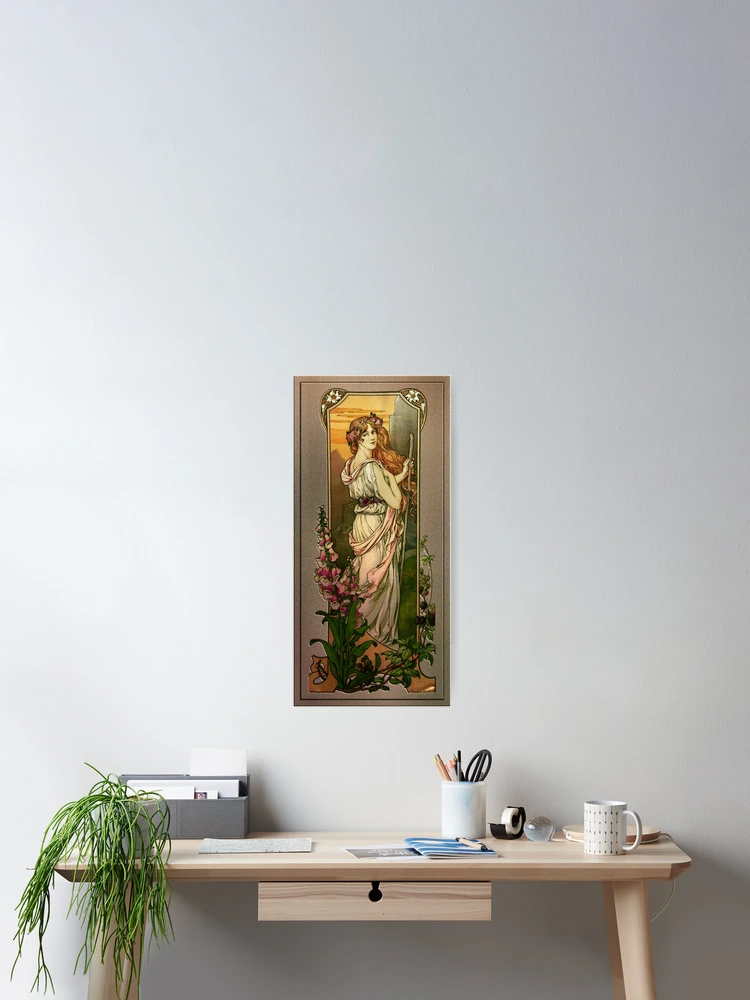
The central figure in this painting is a female figure of ethereal beauty, who stands tall and poised against a backdrop of towering mountains and a soft, warm sky. The figure is a young woman, draped in a flowing white gown that billows gently in the breeze, the fabric rendered with soft folds that add texture and depth. La robo, cinched at the waist with a simple yet elegant belt, enhances the fluidity of her form, emphasizing the harmony between the figure and nature.
Ŝiaj haroj, a cascade of rich auburn locks, tumbles loosely over her shoulders, further evoking the timeless quality of her beauty. A wreath of flowers rests atop her head, creating a delicate coronet that brings an air of wildness to her femininity. The flowers in the wreath are small and vibrant, suggesting a connection to the natural world, as though the woman is an embodiment of the flora around her. This crown of blossoms enhances her ethereal, almost divine presence.
En ŝia dekstra mano, she holds a long, slender staff, which could be interpreted as a symbol of wisdom or guidance. The staff is simple yet dignified, acting as a subtle reminder of the woman’s authority and connection to the surrounding terrain. The gentle grip and relaxed posture suggest that the figure is at ease within her environment, exuding a calm confidence in her role.
Objektoj kaj Detaloj
Flanking the woman on either side are two prominent floral elements, one of foxglove flowers (Digitalis) on the left and a rich array of blackberry vines and leaves on the right. These plants serve to frame the central figure, drawing the viewer’s eye toward her while enhancing the narrative of nature’s embrace. The foxgloves, with their tall spires of bell-shaped flowers, are vibrant and reach towards the sky, creating a visual contrast to the woman’s grounded, earthbound posture. The blackberry vines, full of lush green leaves and dark, ripening berries, offer a sense of wildness and fertility, reinforcing the theme of the woman’s natural connection to the land.
The mountains in the background, though not dominant in their portrayal, provide a sense of scale and depth. They rise majestically in the distance, their peaks partially obscured by mist, giving them a mysterious and timeless quality. The sky above is awash in warm, oraj tonoj, with hints of soft pink and orange, suggesting either dawn or dusk, times of transition and introspection. This choice of color palette infuses the work with a sense of tranquility and quiet contemplation.
Tereno kaj Materialoj
The terrain is rugged and unyielding, yet it complements the softness of the woman’s figure. It is a place where life flourishes despite its harshness, as seen in the surrounding flora. The colors used for the terrain and flowers are earthy and natural, suggesting that Sonrel was inspired by the rugged landscapes of the French countryside or perhaps the mythical landscapes of ancient Greece. The artist’s careful attention to detail in the plants and the mountains shows her deep understanding of both nature and the human form, blending them seamlessly in this piece.
Stilo kaj Temo
The style of this artwork is deeply rooted in the Art Nouveau movement, which flourished in the late 19th and early 20th centuries. Characterized by its emphasis on organic forms, fluantaj linioj, and harmonious integration of nature and human figures, the Art Nouveau style is exemplified here through the graceful curvature of the woman’s pose and the intricate floral details surrounding her. Sonrel’s use of soft, blended colors and flowing lines imbues the piece with a dreamlike quality, inviting the viewer into a world where nature and humanity coexist in perfect balance.
Thematically, Flowers of the Mountains explores the connection between the human figure and the natural world. The woman in the painting is not just a figure of beauty but also a symbol of nature itself. Her presence among the flowers, her wreath, and the connection to the mountains all suggest a deeper bond between humanity and the earth, perhaps drawing from ancient mythologies where women often represented the earth, fekundeco, or nature’s vitality. The use of flowers, especially those associated with healing and growth like foxglove, suggests that the figure is not just passive in her environment but an active participant in the life force of nature.
Humoro kaj Atmosfero
La humoro de la pentraĵo estas unu el serena kontemplado. There is no rush in the figure’s posture, no urgency in her gaze, which is directed off to the side, as if she is lost in thought or in quiet communion with the natural world around her. La kolora paletro, with its soft pinks, purpuroj, and greens, further contributes to the tranquil atmosphere. The mountains, while present, are distant and unobtrusive, further adding to the sense of solitude and peace. The entire piece invites the viewer to pause and reflect, offering a moment of stillness in the midst of a busy world.
Konkludo
En Flowers of the Mountains, Elisabeth Sonrel has created not just a portrait of a woman but a celebration of nature’s beauty and its eternal connection to the human spirit. The blending of the figure with the flowers, the gentle, flowing lines of her form, and the serene landscape all convey a message of harmony, trankvilo, and reverence for the natural world. Through her delicate use of color, lumo, kaj komponado, Sonrel has produced a work that stands as a timeless reflection of the beauty of nature and the human soul’s connection to it.
Flowers Of Mountains is a retouched digital art old masters reproduction of a public domain image.
Informoj Sub Ĝentileco Vikipedio.org
Elisabeth Sonrel (1874 Turneoj - 1953 fokoj) estis franca pentristo kaj ilustristo en la Secesio-stilo. Ŝiaj verkoj inkludis alegoriajn temojn, mistikismo kaj simbolismo, portretoj kaj pejzaĝoj.
Ŝi estis la filino de Nicolas Stéphane Sonrel, pentristo el Tours, kaj ricevis ŝian fruan trejnadon de li. Por plua studo ŝi daŭriĝis al Parizo kiel studento de Jules Lefebvre ĉe la Ecole des Beaux-Arts..
En 1892 ŝi pentris sian diplomverkon, "Paco kaj laboro", verko vidota ĉe la Musée des Beaux-Arts de Tours. De tiam ŝi ekspoziciis ĉe la Salon des Artistes Français inter 1893 kaj 1941, ŝiaj signaturpecoj estante grandaj akvareloj en Antaŭrafaelita maniero, kiun ŝi adoptis post vojaĝo al Florenco kaj Romo, malkovrante la renesancan pentristojn – iuj el ŝia laboro havanta klarajn nuancojn de Botticelli. Ŝiaj pentraĵoj ofte estis inspiritaj per artura enamiĝo, La dia komedio de Dante Alighieri’ Kaj 'La Nova Vivo', bibliaj temoj, kaj mezepokaj legendoj. Ŝiaj mistikaj verkoj inkluzivas 'Ames eraras’ (Salono de 1894) kaj 'la spiritoj de la abismo’ (Salono de 1899) Kaj "Juna Virino Havas Tapiŝon".
Ĉe la Universala Ekspozicio de 1900, kies primara temo estis Secesio, ŝia 1895 Pentrante 'la dormon de la virgulino’ (Dormo de la Virgulino), ricevis bronzan medalon, kaj la Henri Lehmann-premio de 3000 Francanoj de la Akademio de Belartoj.[3] De 1900 pluen ŝi limigis sian pentraĵon al portretoj, pitoreskaj Bretoniaj pejzaĝoj, kaj la foja studo de floroj.
Ŝi faris regulajn pentrovojaĝojn al Bretonio, inspirite de la arbaro de Brocéliande, kaj de 1910 al diversaj lokoj sur la marbordo kiel ekzemple Concarneau, Plougastel, Pont-l´abbé kaj Lorudy, ofte loĝante en gastejoj kaj akompanate de unu aŭ du studentoj. Ŝi pentris plurajn verkojn en Le Faouët antaŭ konstruado de vilao en La Baule en la 1930-aj jaroj.. Laborante ĉefe en akvarelo kaj guaŝo, ŝi malkovris pretan provizon de modeloj inter junaj knabinoj en la areo, kaj trovis bretonojn ĝenerale amikemaj, honesta kaj memfida.
Ŝia fina ekspoziciaĵo ĉe la Salono estis en 1941 en la aĝo de 67. Ekzistas ankaŭ noto pri ŝi ekspoziciis en Liverpool. En ŝiaj fruaj jaroj Sonrel produktis afiŝojn, poŝtkartoj kaj ilustraĵoj, en Secesio-stilo.