

Kukkia Vuoria
Ranskan maalarin Flowers Of Mountains c1900 Elisabeth Sonrel (1874 – 1953); ja jugendtyylin kuvittaja; kuka työskentelee, sisälsi allegorisia aiheita, mystiikka ja symboliikka, muotokuvia ja maisemia.
Tämä upea taideteos, Sonrel hyödyntää sekä mytologian että luonnon viehätystä, yhdistää nämä kaksi elementtiä kauneuden herkällä tasapainolla, armo, ja introspektiivinen yksinäisyys.
Sisällysluettelo
Pääaihe
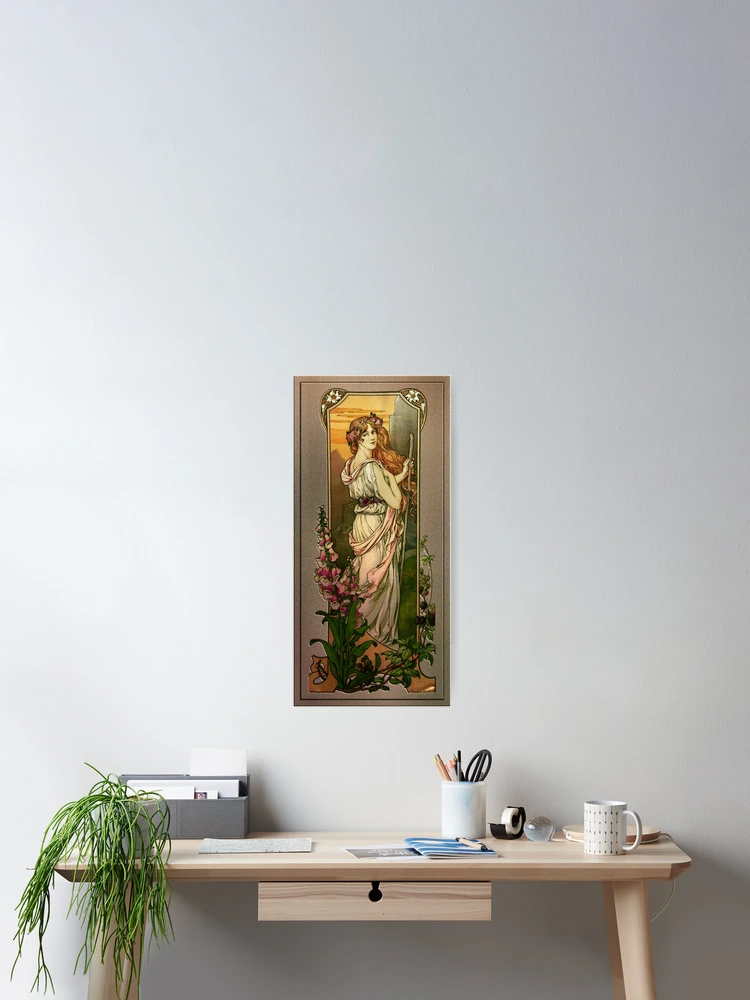
Tämän maalauksen keskeinen hahmo on eteerisen kauneuden naishahmo, joka seisoo korkeana ja pystyssä kohoavien vuorten ja pehmeän taustaa vasten, lämmin taivas. Figuuri on nuori nainen, päällystetty levenevään valkoiseen mekkoon, joka heiluu lempeästi tuulessa, kangas renderoitu pehmeillä taiteilla, jotka lisäävät tekstuuria ja syvyyttä. Puku, vyötäröllä kiristetty yksinkertainen mutta tyylikäs vyö, parantaa muodon sujuvuutta, korostaa harmoniaa hahmon ja luonnon välillä.
Hänen hiuksensa, rikkaiden kastanjanruskeiden lukkojen kaskadi, kaatuu löyhästi hartioilleen, herättää entisestään hänen kauneutensa ajatonta laatua. Kukkaseppele lepää hänen päänsä päällä, luomalla herkän koronetin, joka tuo hänen naiseuteensa villiä ilmaa. Seppeleen kukat ovat pieniä ja eloisia, viittaa yhteyden luontoon, ikään kuin nainen olisi häntä ympäröivän kasviston ruumiillistuma. Tämä kukkakruunu vahvistaa sen eteeristä, melkein jumalallinen läsnäolo.
Hänen oikeassa kädessään, hänellä on pitkä, hoikka henkilökunta, joka voitaisiin tulkita viisauden tai opastuksen symboliksi. Henkilökunta on yksinkertainen mutta arvokas, toimii hienovaraisena muistutuksena naisen arvovallasta ja yhteydestä ympäröivään maastoon. Lempeä ote ja rento asento viittaavat siihen, että hahmo viihtyy ympäristössään, huokuu rauhallista luottamusta rooliinsa.
Objektit ja yksityiskohdat
Flanking the woman on either side are two prominent floral elements, one of foxglove flowers (Digitalis) on the left and a rich array of blackberry vines and leaves on the right. These plants serve to frame the central figure, drawing the viewer’s eye toward her while enhancing the narrative of nature’s embrace. The foxgloves, with their tall spires of bell-shaped flowers, are vibrant and reach towards the sky, creating a visual contrast to the woman’s grounded, earthbound posture. The blackberry vines, full of lush green leaves and dark, ripening berries, offer a sense of wildness and fertility, reinforcing the theme of the woman’s natural connection to the land.
The mountains in the background, though not dominant in their portrayal, provide a sense of scale and depth. Ne kohoavat majesteettisesti kaukaisuuteen, niiden huiput ovat osittain sumun peitossa, antaa heille salaperäisen ja ajattoman laadun. Yläpuolella taivas on täynnä lämpöä, kultaiset sävyt, pehmeän vaaleanpunaisen ja oranssin vivahteilla, viittaa joko aamunkoittoon tai hämärään, siirtymäajan ja itsetutkiskelun aikoja. Tämä väripaletti antaa työhön rauhallisuuden ja hiljaisen mietiskelyn tunteen.
Maasto ja materiaalit
Maasto on karua ja periksiantamatonta, silti se täydentää naisen vartalon pehmeyttä. Se on paikka, jossa elämä kukoistaa ankaruudestaan huolimatta, kuten näkyy ympäröivässä kasvistossa. Maaston ja kukkien värit ovat maanläheisiä ja luonnollisia, viittaa siihen, että Sonrel oli saanut inspiraationsa Ranskan maaseudun karuista maisemista tai ehkä muinaisen Kreikan myyttisista maisemista. Taiteilijan huolellinen huomio yksityiskohtiin kasveissa ja vuorissa osoittaa hänen syvän ymmärryksensä sekä luonnosta että ihmismuodosta, sekoittamalla ne saumattomasti tässä kappaleessa.
Tyyli ja teema
Tämän taideteoksen tyyli on juurtunut syvälle jugendliikkeeseen, joka kukoisti 1800-luvun lopulla ja 1900-luvun alussa. Orgaanisten muotojen korostaminen, virtaavat viivat, sekä luonnon ja ihmishahmojen harmoninen yhdistäminen, Art nouveau -tyyli näkyy tässä naisen asennon siron kaarevuuden ja häntä ympäröivien monimutkaisten kukkayksityiskohtien kautta.. Sonrel käyttää pehmeää, sekoitetut värit ja sulavat linjat täyttävät kappaleen unenomaisen laadun, kutsuu katsojan maailmaan, jossa luonto ja ihmiskunta elävät rinnakkain täydellisessä tasapainossa.
Temaattisesti, Vuorten kukat tutkii ihmishahmon ja luonnon välistä yhteyttä. Maalauksen nainen ei ole vain kauneushahmo, vaan myös itse luonnon symboli. Hänen läsnäolonsa kukkien joukossa, hänen seppeleensä, ja yhteys vuoriin viittaavat syvempään siteeseen ihmiskunnan ja maan välillä, ehkä muinaisista mytologioista, joissa naiset edustivat usein maata, hedelmällisyyttä, tai luonnon elinvoimaa. Kukkien käyttö, erityisesti ne, jotka liittyvät paranemiseen ja kasvuun, kuten kettukäsine, viittaa siihen, että hahmo ei ole vain passiivinen ympäristössään, vaan aktiivinen osallistuja luonnon elämänvoimaan.
Mieliala ja ilmapiiri
Maalauksen tunnelma on rauhallista mietiskelyä. Figuurin asennossa ei ole kiirettä, hänen katseessaan ei ole kiirettä, joka on suunnattu sivuun, as if she is lost in thought or in quiet communion with the natural world around her. Väripaletti, with its soft pinks, violetit, ja vihreitä, further contributes to the tranquil atmosphere. The mountains, while present, are distant and unobtrusive, further adding to the sense of solitude and peace. The entire piece invites the viewer to pause and reflect, offering a moment of stillness in the midst of a busy world.
Johtopäätös
Sisään Vuorten kukat, Elisabeth Sonrel has created not just a portrait of a woman but a celebration of nature’s beauty and its eternal connection to the human spirit. The blending of the figure with the flowers, the gentle, flowing lines of her form, and the serene landscape all convey a message of harmony, rauhallisuus, and reverence for the natural world. Through her delicate use of color, valaistus, ja koostumus, Sonrel on tuottanut teoksen, joka on ajaton heijastus luonnon kauneudesta ja ihmissielun yhteydestä siihen.
Flowers Of Mountains on retusoitu digitaalisen taiteen vanhojen mestarien kopio julkisesta kuvasta.
Tiedot alla Kohteliaisuus Wikipedia.org
Elisabeth Sonrel (1874 Retket - 1953 Tiivisteet) oli ranskalainen taidemaalari ja kuvittaja jugendtyyliin. Hänen teoksiinsa sisältyi allegorisia aiheita, mystiikka ja symboliikka, muotokuvia ja maisemia.
Hän oli Nicolas Stéphane Sonrelin tytär, Toursin taidemaalari, ja hän sai varhaisen koulutuksen häneltä. Jatko-opintoja varten hän jatkoi Pariisiin Jules Lefebvren opiskelijana Ecole des Beaux-Artsissa.
Sisään 1892 hän maalasi diplomityönsä, "Pax et Labor", teos Musée des Beaux-Arts de Toursissa. Siitä lähtien hän esitteli näyttelyitä Salon des Artistes Françaisissa 1893 ja 1941, hänen allekirjoituksensa ovat suuria vesivärejä prerafaeliitti-tavalla, jonka hän hyväksyi Firenzeen ja Roomaan tehdyn matkan jälkeen, löytää renessanssin maalarit – Joissakin hänen töissään on selkeä Botticellin sävy. Hänen maalauksensa ovat usein innoittaneet arthurilaista romantiikkaa, Dante Alighierin jumalallinen komedia’ ja "Uusi elämä", raamatullisia teemoja, ja keskiaikaisia legendoja. Hänen mystisiin teoksiinsa kuuluu Ames errantes’ (Salonki 1894) ja ”Kuilun henget’ (Salonki 1899) ja "Nuori nainen kuvakudoksella".
Näyttely Universelle of 1900, jonka pääteema oli jugend, hänen 1895 maalaus 'Neitsyt uni’ (Neitsyt uni), sai pronssia, ja Henri Lehmann -palkinnon 3000 frangia, Kuvataideakatemia.[3] Alkaen 1900 siitä lähtien hän rajoitti maalauksensa muotokuviin, luonnonkauniita Bretagnen maisemia, ja satunnainen kukkatutkimus.
Hän teki säännöllisiä maalausmatkoja Bretagneen, Brocélianden metsän innoittamana, ja alkaen 1910 eri paikkoihin rannikolla, kuten Concarneau, Plougastel, Pont-l'Abbé ja Loctudy, usein majoittuessaan yhden tai kahden opiskelijan seurassa. Hän maalasi useita teoksia Le Faouët'ssa ennen kuin rakensi huvilan La Bauleen 1930 -luvulla. Työskentelee pääasiassa vesiväreillä ja guasilla, hän löysi mallivalikoiman alueen nuorten tyttöjen joukosta, ja piti Bretonit yleensä ystävällisinä, rehellinen ja itsevarma.
Hänen viimeinen näyttely Salonissa oli 1941 iässä 67. Hänellä on myös kirjaa näyttelystä Liverpoolissa. Varhaisina vuosina Sonrel tuotti julisteita, postikortteja ja kuvituksia, jugendtyyliin.