

Viaton joutsen (Joutsen; Viattomuus)
“Viaton joutsen (Joutsen; Viattomuus)” is a remarkable work created by Elisabeth Sonrel (1874 – 1953), sisään 1905, encapsulating the graceful and serene qualities associated with the Symbolist movement that defined much of the late 19th and early 20th centuries. Syntynyt vuonna 1874 ja kuolee sisään 1953, Sonrel was a French artist whose works often blended the ethereal and the earthly, producing dreamlike scenes that were deeply influenced by mythology and the natural world. Tämä tietty kappale, infused with both tranquility and delicate beauty, perfectly exemplifies Sonrel’s ability to combine the elegance of natural forms with symbolic richness.
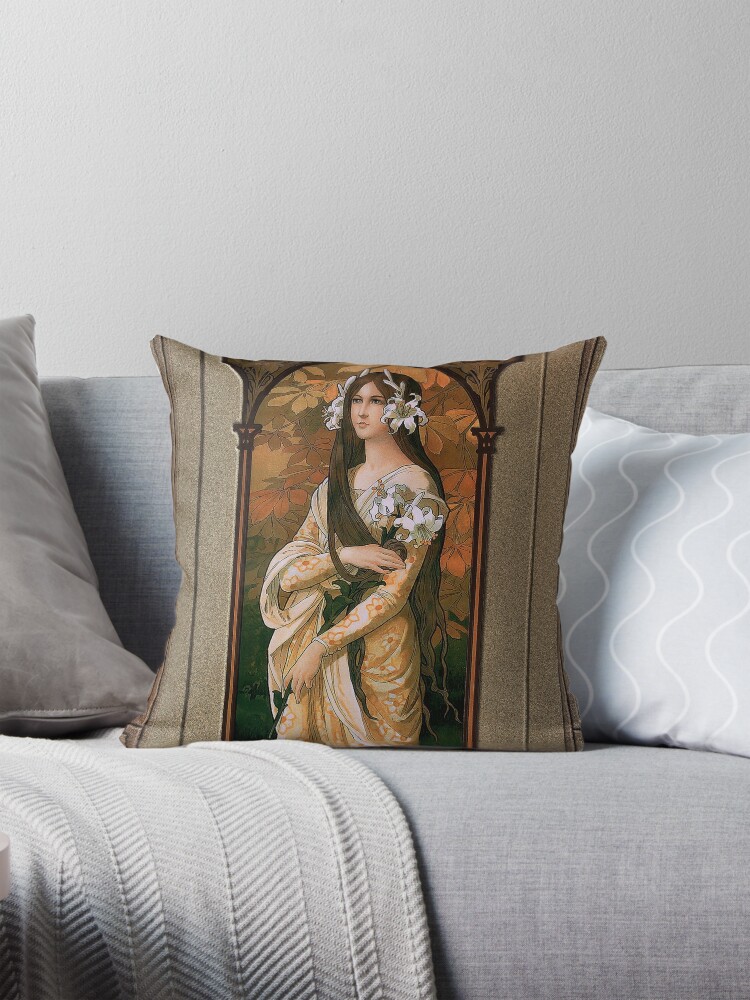
The central figure of the painting is a young woman dressed in an opulent yellow gown adorned with soft floral patterns. Her long brown hair cascades past her shoulders, entwined with white lilies that give her a pure and almost mystical appearance. She stands in a calm, poised stance with a swan at her feet, symbolizing the innocence and grace attributed to both the bird and the figure she represents. The soft rendering of her face, with an expression of contemplation, invites the viewer to ponder her thoughts while gazing upon the tranquil setting that surrounds her.
Sisällysluettelo
Composition and Surroundings
The composition of the painting is characterized by a harmonious blend of the natural and the human, with the figure of the woman placed in a vertical format that emphasizes the elongated style of the subject. She is situated against a lush, verdant background, where delicate autumn leaves in shades of orange, kulta, and green suggest the time of year and create a backdrop that contrasts beautifully with the pale, luminous gown she wears. The subtle inclusion of the swan further elevates the symbolic aspect of the work, as swans are traditionally linked with themes of purity, viattomuus, and beauty, reinforcing the title of the piece.
The swan, which rests at the woman’s feet, seems to mirror her own graceful posture. Its neck curves delicately, almost as if echoing the lines of her figure. This visual connection between the human and the bird further deepens the symbolism of the painting, suggesting a harmonious relationship between humanity and nature. The swan’s white feathers reflect the woman’s innocence, offering a serene presence that balances the vibrancy of the autumn leaves in the background.
Color Palette and Technique
Sonrel’s use of color is one of the most striking aspects of the painting. The soft pastel tones of the yellow gown are balanced by the earthier tones of the foliage behind the figure, creating a warm and inviting ambiance. The yellows, kultaa, and subtle greens of the dress blend with the oranges and reds of the autumn leaves, evoking a sense of calm serenity that is further reflected in the softness of the background. The subdued hues work together to draw attention to the figure of the woman, allowing her to remain the focal point of the piece.
The technique employed by Sonrel showcases her skill in using soft brushstrokes and a gentle application of light and shadow. Sivellintyö, though precise, retains an air of fluidity that enhances the overall delicacy of the scene. There is an almost translucent quality to the woman’s skin, suggesting her ethereal nature, while the details in the gown, kukat, and leaves are rendered with a subtle yet deliberate attention to texture and form. This blending of realism with a dreamy, almost otherworldly quality is characteristic of Sonrel’s approach to painting.
Symbolism and Meaning
The swan in “Viaton joutsen” is not just a decorative element, but rather a powerful symbol. In various cultures, the swan is associated with purity, muunnos, and the divine. In Greek mythology, esimerkiksi, swans were often connected to gods and goddesses, embodying both grace and the higher realms of beauty. Tässä, the swan’s purity is reflected in the figure of the young woman, who is portrayed with an expression of innocence and calm. The lily flowers, which intertwine with her hair, further reinforce this symbolism of purity and innocence.
The combination of the woman’s serene posture, the swan’s graceful presence, and the natural elements around them creates a timeless scene of tranquility, emphasizing the connection between humanity and nature. The autumnal setting could be seen as a representation of the fleeting nature of innocence and beauty, reminding the viewer of the transient moments in life. The gentle curve of the woman’s figure and the soft tones of the piece give the painting a nostalgic quality, evoking a sense of longing for a simpler, purer time.
Style and Artistic Influence
“Viaton joutsen” is a prime example of the Symbolist style, which was marked by an emphasis on emotions, the imagination, and an exploration of the mystical and metaphysical realms. Sonrel’s work is deeply embedded in this tradition, capturing moments that evoke a sense of reverie and contemplation. The fine lines, Huomio yksityiskohtiin, and use of symbolic imagery also tie her work to the Art Nouveau movement, which was flourishing in France during her time. Kukka-aiheet, virtaavat viivat, and organic forms in the painting align it with the decorative and ornamental elements that defined Art Nouveau.
In terms of mood, the painting exudes a quiet, rauhallinen tunnelma, filled with an air of timeless grace. Kohteen ilme, the soft light, and the harmonious relationship between the figure and the swan all contribute to a sense of calm and purity. It is a work that encourages the viewer to pause, to appreciate the subtle beauty of the scene, and to reflect on the deeper symbolism that lies beneath the surface.
Johtopäätös
Sisään “Viaton joutsen (Joutsen; Viattomuus),” Élisabeth Sonrel captures the delicate beauty of innocence through the portrayal of a young woman in a serene, dreamlike setting. The careful composition, combined with the symbolic imagery of the swan and the soft palette, creates a work that is both visually captivating and emotionally resonant. Through her meticulous rendering of natural forms and the symbolic interplay between the human and the animal, Sonrel invites the viewer into a world of tranquil reverie, where innocence, puhtaus, and beauty are forever preserved in time.
Viaton joutsen (Joutsen; Viattomuus) Kirjailija: French Painter Elisabeth Sonrel (1874 – 1953); ja jugendtyylin kuvittaja; kuka työskentelee, sisälsi allegorisia aiheita, mystiikka ja symboliikka, muotokuvia ja maisemia.
Innocent Swan on retusoitu digitaalisen taiteen vanhojen mestarien kopio julkisesta kuvasta.
Tämä digitaalisen taiteen luomus, Kuten kaikki taideteokset, jotka löytyvät Xzendor7-verkkosivustolta, ovat ostettavissa verkosta useissa eri materiaalimuodoissa, mukaan lukien kanvasvedokset, akryyliprintit, metalliprintit, puu tulosteita, kehystetyt printit, julisteita, ja kun valssatut kangastulosteet ovat erikokoisia 12 tuumaa 72 tuumaa riippuen todellisen taideteoksen koosta ja tilauspainatusliikkeestä, josta haluat ostaa taiteen.
Taideteoksia on saatavana myös laajassa valikoimassa miesten ja naisten vaatteita, mukeja, totes, huivit, muistikirjat ja päiväkirjat sekä monet kodin sisustustuotteet.
Taiteilijabio
Tiedot alla Kohteliaisuus Wikipedia.org
Elisabeth Sonrel (1874 Retket - 1953 Tiivisteet) oli ranskalainen taidemaalari ja kuvittaja jugendtyyliin. Hänen teoksiinsa sisältyi allegorisia aiheita, mystiikka ja symboliikka, muotokuvia ja maisemia.
Hän oli Nicolas Stéphane Sonrelin tytär, Toursin taidemaalari, ja hän sai varhaisen koulutuksen häneltä. Jatko-opintoja varten hän jatkoi Pariisiin Jules Lefebvren opiskelijana Ecole des Beaux-Artsissa.
Sisään 1892 hän maalasi diplomityönsä, "Pax et Labor", teos Musée des Beaux-Arts de Toursissa. Siitä lähtien hän esitteli näyttelyitä Salon des Artistes Françaisissa 1893 ja 1941, hänen allekirjoituksensa ovat suuria vesivärejä prerafaeliitti-tavalla, jonka hän hyväksyi Firenzeen ja Roomaan tehdyn matkan jälkeen, löytää renessanssin maalarit – Joissakin hänen töissään on selkeä Botticellin sävy. Hänen maalauksensa ovat usein innoittaneet arthurilaista romantiikkaa, Dante Alighierin jumalallinen komedia’ ja "Uusi elämä", raamatullisia teemoja, ja keskiaikaisia legendoja. Hänen mystisiin teoksiinsa kuuluu Ames errantes’ (Salonki 1894) ja ”Kuilun henget’ (Salonki 1899) ja "Nuori nainen kuvakudoksella".
Näyttely Universelle of 1900, jonka pääteema oli jugend, hänen 1895 maalaus 'Neitsyt uni’ (Neitsyt uni), sai pronssia, ja Henri Lehmann -palkinnon 3000 frangia, Kuvataideakatemia.[3] Alkaen 1900 siitä lähtien hän rajoitti maalauksensa muotokuviin, luonnonkauniita Bretagnen maisemia, ja satunnainen kukkatutkimus.
Hän teki säännöllisiä maalausmatkoja Bretagneen, Brocélianden metsän innoittamana, ja alkaen 1910 eri paikkoihin rannikolla, kuten Concarneau, Plougastel, Pont-l'Abbé ja Loctudy, usein majoittuessaan yhden tai kahden opiskelijan seurassa. Hän maalasi useita teoksia Le Faouët'ssa ennen kuin rakensi huvilan La Bauleen 1930 -luvulla. Työskentelee pääasiassa vesiväreillä ja guasilla, hän löysi mallivalikoiman alueen nuorten tyttöjen joukosta, ja piti Bretonit yleensä ystävällisinä, rehellinen ja itsevarma.
Hänen viimeinen näyttely Salonissa oli 1941 iässä 67. Hänellä on myös kirjaa näyttelystä Liverpoolissa. Varhaisina vuosina Sonrel tuotti julisteita, postikortteja ja kuvituksia, jugendtyyliin.