

Kwiaty Gór
Kwiaty gór c1900 przez francuskiego malarza Elisabeth Sonrel (1874 – 1953); i ilustrator stylu Art Nouveau; czyje prace zawierały tematy alegoryczne?, mistycyzm i symbolika, portrety i pejzaże.
This exquisite artwork, Sonrel draws upon the allure of both mythology and nature, bringing together the two elements with a delicate balance of beauty, łaska, and introspective solitude.
Spis treści
Główny temat
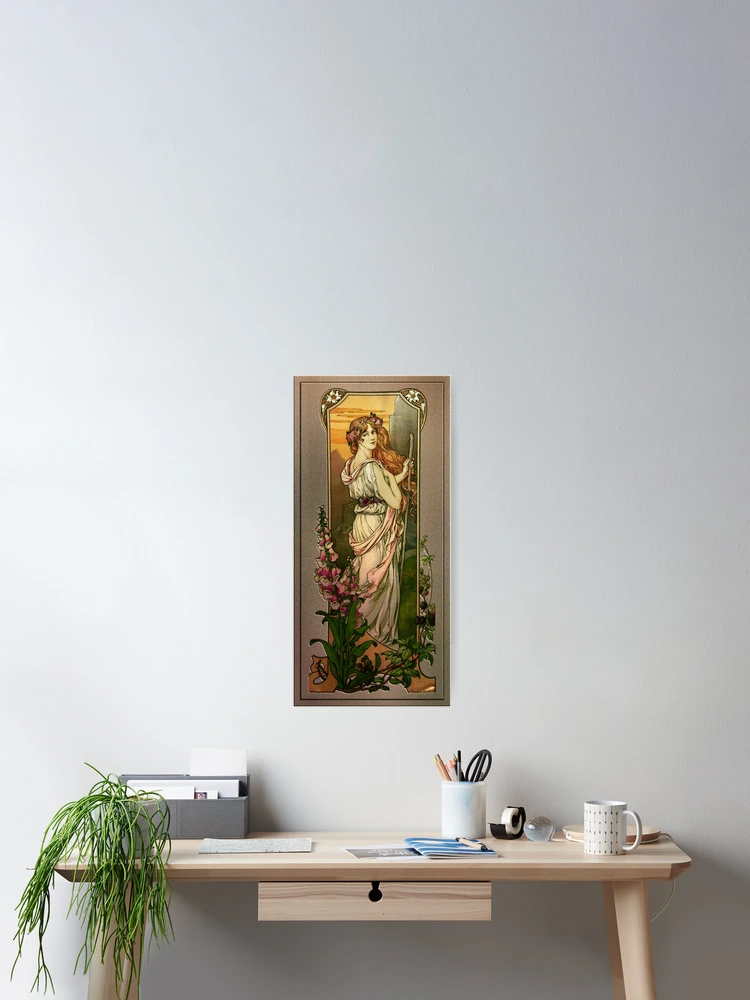
The central figure in this painting is a female figure of ethereal beauty, who stands tall and poised against a backdrop of towering mountains and a soft, warm sky. The figure is a young woman, draped in a flowing white gown that billows gently in the breeze, the fabric rendered with soft folds that add texture and depth. Suknia, cinched at the waist with a simple yet elegant belt, enhances the fluidity of her form, emphasizing the harmony between the figure and nature.
Jej włosy, a cascade of rich auburn locks, tumbles loosely over her shoulders, further evoking the timeless quality of her beauty. A wreath of flowers rests atop her head, creating a delicate coronet that brings an air of wildness to her femininity. The flowers in the wreath are small and vibrant, suggesting a connection to the natural world, as though the woman is an embodiment of the flora around her. This crown of blossoms enhances her ethereal, almost divine presence.
W jej prawej ręce, she holds a long, slender staff, which could be interpreted as a symbol of wisdom or guidance. The staff is simple yet dignified, acting as a subtle reminder of the woman’s authority and connection to the surrounding terrain. The gentle grip and relaxed posture suggest that the figure is at ease within her environment, exuding a calm confidence in her role.
Obiekty i szczegóły
Flanking the woman on either side are two prominent floral elements, one of foxglove flowers (Digitalis) on the left and a rich array of blackberry vines and leaves on the right. These plants serve to frame the central figure, drawing the viewer’s eye toward her while enhancing the narrative of nature’s embrace. The foxgloves, with their tall spires of bell-shaped flowers, are vibrant and reach towards the sky, creating a visual contrast to the woman’s grounded, earthbound posture. The blackberry vines, full of lush green leaves and dark, ripening berries, offer a sense of wildness and fertility, reinforcing the theme of the woman’s natural connection to the land.
The mountains in the background, though not dominant in their portrayal, provide a sense of scale and depth. They rise majestically in the distance, their peaks partially obscured by mist, giving them a mysterious and timeless quality. The sky above is awash in warm, golden tones, with hints of soft pink and orange, suggesting either dawn or dusk, times of transition and introspection. This choice of color palette infuses the work with a sense of tranquility and quiet contemplation.
Teren i materiały
The terrain is rugged and unyielding, yet it complements the softness of the woman’s figure. It is a place where life flourishes despite its harshness, as seen in the surrounding flora. The colors used for the terrain and flowers are earthy and natural, suggesting that Sonrel was inspired by the rugged landscapes of the French countryside or perhaps the mythical landscapes of ancient Greece. The artist’s careful attention to detail in the plants and the mountains shows her deep understanding of both nature and the human form, blending them seamlessly in this piece.
Styl i motyw
The style of this artwork is deeply rooted in the Art Nouveau movement, which flourished in the late 19th and early 20th centuries. Characterized by its emphasis on organic forms, płynne linie, and harmonious integration of nature and human figures, the Art Nouveau style is exemplified here through the graceful curvature of the woman’s pose and the intricate floral details surrounding her. Sonrel’s use of soft, blended colors and flowing lines imbues the piece with a dreamlike quality, inviting the viewer into a world where nature and humanity coexist in perfect balance.
Tematycznie, Flowers of the Mountains explores the connection between the human figure and the natural world. The woman in the painting is not just a figure of beauty but also a symbol of nature itself. Her presence among the flowers, her wreath, and the connection to the mountains all suggest a deeper bond between humanity and the earth, perhaps drawing from ancient mythologies where women often represented the earth, płodność, or nature’s vitality. The use of flowers, especially those associated with healing and growth like foxglove, suggests that the figure is not just passive in her environment but an active participant in the life force of nature.
Nastrój i atmosfera
The mood of the painting is one of serene contemplation. There is no rush in the figure’s posture, no urgency in her gaze, which is directed off to the side, as if she is lost in thought or in quiet communion with the natural world around her. The color palette, with its soft pinks, purples, and greens, further contributes to the tranquil atmosphere. The mountains, while present, are distant and unobtrusive, further adding to the sense of solitude and peace. The entire piece invites the viewer to pause and reflect, offering a moment of stillness in the midst of a busy world.
Wniosek
W Flowers of the Mountains, Elisabeth Sonrel has created not just a portrait of a woman but a celebration of nature’s beauty and its eternal connection to the human spirit. The blending of the figure with the flowers, the gentle, flowing lines of her form, and the serene landscape all convey a message of harmony, spokój, and reverence for the natural world. Through her delicate use of color, światło, i skład, Sonrel has produced a work that stands as a timeless reflection of the beauty of nature and the human soul’s connection to it.
Kwiaty Gór to wyretuszowana cyfrowa reprodukcja starych mistrzów obrazu z domeny publicznej.
Informacje poniżej dzięki uprzejmości Wikipedia.org
Elisabeth Sonrel (1874 Wycieczki – 1953 Uszczelki) był francuskim malarzem i ilustratorem w stylu Art Nouveau. Jej prace zawierały tematy alegoryczne, mistycyzm i symbolika, portrety i pejzaże.
Była córką Nicolasa Stéphane'a Sonrel, malarz z Tours, i otrzymała od niego wczesne szkolenie. Na dalsze studia wyjechała do Paryża jako uczennica Julesa Lefebvre'a w Ecole des Beaux-Arts.
W 1892 namalowała swoją pracę dyplomową, „Pax i praca”, dzieło do obejrzenia w Musée des Beaux-Arts de Tours. Od tego czasu wystawiała w Salon des Artistes Français między 1893 i 1941, jej charakterystyczne dzieła to duże akwarele w stylu prerafaelickim, którą adoptowała po podróży do Florencji i Rzymu, odkrywanie malarzy renesansowych – niektóre z jej prac mają wyraźny wydźwięk Botticellego. Jej obrazy były często inspirowane romansami arturiańskimi, Boska komedia Dantego Alighieri’ i „Nowe życie”, motywy biblijne, i średniowieczne legendy. Jej mistyczne prace to „Ames errantes”’ (Salon 1894) i „Duchy Otchłani”’ (Salon 1899) i „Młoda kobieta z gobelinem”.
Na Wystawie Universelle of 1900, której głównym tematem była secesja, ją 1895 obraz „Sen Dziewicy”’ (Sen Dziewicy), otrzymał brązowy medal, oraz nagrodę im. Henriego Lehmanna 3000 franków Akademii Sztuk Pięknych.[3] Od 1900 odtąd swoje malarstwo ograniczyła do portretów, malownicze krajobrazy Bretanii, i okazjonalne badanie kwiatów.
Regularnie odbywała malarskie wycieczki do Bretanii, inspirowany lasem Brocéliande, i od 1910 do różnych miejsc na wybrzeżu, takich jak Concarneau, Plougastel, Pont-l'Abbé i Loctudy, często przebywają w karczmach w towarzystwie jednego lub dwóch uczniów. Namalowała kilka prac w Le Faouet przed wybudowaniem willi w La Baule w latach 30. XX wieku. Pracuje głównie w akwareli i gwaszu, odkryła gotową dostawę modeli wśród młodych dziewcząt w okolicy, i ogólnie Bretonowie byli przyjaźni, szczery i pewny siebie.
Jej ostatnia wystawa w Salonie była in 1941 w wieku 67. Istnieje również zapis jej wystawiania w Liverpoolu. W młodości Sonrel produkowała plakaty, pocztówki i ilustracje, w stylu Art Nouveau.