

Flores das montanhas
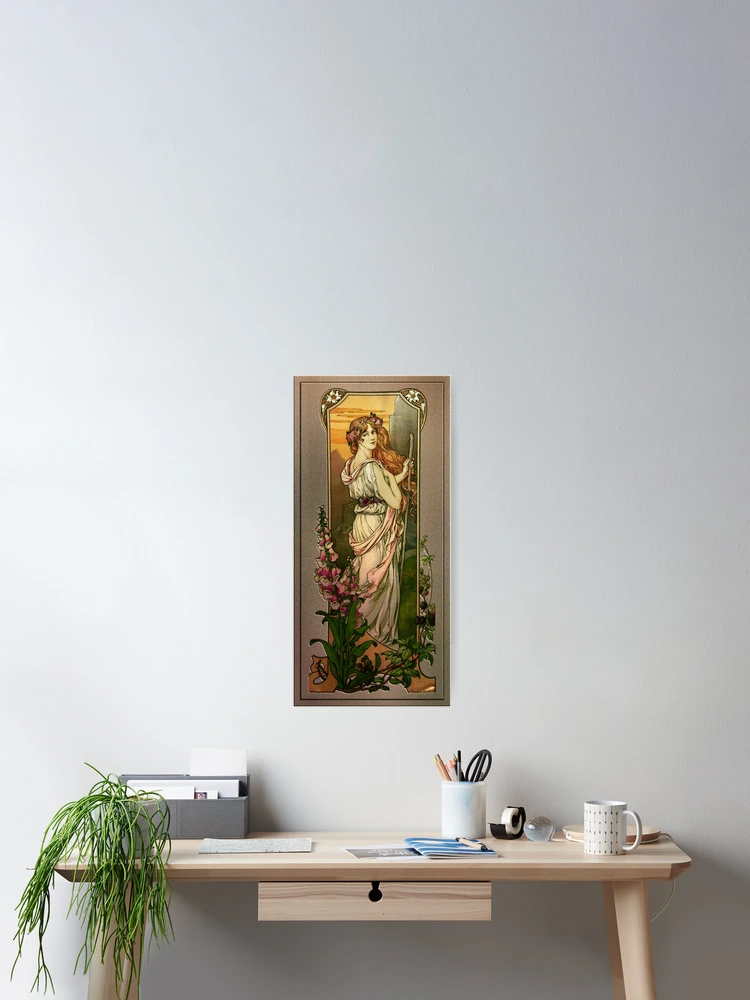
Flores das montanhas c1900 por pintor francês Elisabeth Sonrel (1874 – 1953); e ilustrador do estilo Art Nouveau; cujas obras incluíam assuntos alegóricos, misticismo e simbolismo, retratos e paisagens.
Esta obra de arte requintada, Sonrel baseia-se no fascínio da mitologia e da natureza, reunindo os dois elementos com um delicado equilíbrio de beleza, graça, e solidão introspectiva.
Índice
Assunto principal
A figura central desta pintura é uma figura feminina de beleza etérea, que se ergue alto e equilibrado contra um cenário de montanhas imponentes e uma suave, céu quente. A figura é uma jovem, envolta em um vestido branco esvoaçante que ondula suavemente com a brisa, o tecido renderizado com dobras suaves que adicionam textura e profundidade. O vestido, cinched at the waist with a simple yet elegant belt, enhances the fluidity of her form, emphasizing the harmony between the figure and nature.
O cabelo dela, a cascade of rich auburn locks, tumbles loosely over her shoulders, further evoking the timeless quality of her beauty. A wreath of flowers rests atop her head, creating a delicate coronet that brings an air of wildness to her femininity. The flowers in the wreath are small and vibrant, suggesting a connection to the natural world, as though the woman is an embodiment of the flora around her. This crown of blossoms enhances her ethereal, almost divine presence.
Na mão direita, she holds a long, slender staff, which could be interpreted as a symbol of wisdom or guidance. The staff is simple yet dignified, agindo como um lembrete sutil da autoridade da mulher e da conexão com o terreno circundante. O aperto suave e a postura relaxada sugerem que a figura se sente à vontade em seu ambiente, exalando uma confiança calma em seu papel.
Objetos e detalhes
Flanqueando a mulher de cada lado estão dois elementos florais proeminentes, uma das flores de dedaleira (Digital) à esquerda e uma rica variedade de vinhas e folhas de amora à direita. Essas plantas servem para emoldurar a figura central, atraindo o olhar do espectador para ela enquanto realça a narrativa do abraço da natureza. As dedaleiras, com suas altas torres de flores em forma de sino, são vibrantes e alcançam o céu, criando um contraste visual com os fundamentos da mulher, postura terrestre. As vinhas de amora, cheio de folhas verdes exuberantes e escuro, bagas amadurecendo, oferecem uma sensação de selvageria e fertilidade, reforçando o tema da ligação natural da mulher com a terra.
As montanhas ao fundo, embora não seja dominante em sua representação, fornecer uma sensação de escala e profundidade. Eles se erguem majestosamente à distância, seus picos parcialmente obscurecidos pela névoa, dando-lhes uma qualidade misteriosa e atemporal. O céu acima está inundado de calor, tons dourados, com toques de rosa suave e laranja, sugerindo amanhecer ou anoitecer, tempos de transição e introspecção. Esta escolha de paleta de cores infunde no trabalho uma sensação de tranquilidade e contemplação tranquila.
Terreno e Materiais
O terreno é acidentado e inflexível, no entanto, complementa a suavidade da figura da mulher. É um lugar onde a vida floresce apesar de sua dureza, como visto na flora circundante. As cores utilizadas no terreno e nas flores são terrosas e naturais, sugerindo que Sonrel foi inspirado nas paisagens acidentadas do interior da França ou talvez nas paisagens míticas da Grécia antiga. A cuidadosa atenção da artista aos detalhes das plantas e das montanhas mostra sua profunda compreensão da natureza e da forma humana., misturando-os perfeitamente nesta peça.
Estilo e Tema
O estilo desta obra de arte está profundamente enraizado no movimento Art Nouveau, que floresceu no final do século XIX e início do século XX. Caracterizado por sua ênfase em formas orgânicas, linhas fluidas, e integração harmoniosa da natureza e das figuras humanas, o estilo Art Nouveau é exemplificado aqui através da curvatura graciosa da pose da mulher e dos intrincados detalhes florais que a rodeiam. O uso de soft por Sonrel, blended colors and flowing lines imbues the piece with a dreamlike quality, inviting the viewer into a world where nature and humanity coexist in perfect balance.
Tematicamente, Flowers of the Mountains explores the connection between the human figure and the natural world. The woman in the painting is not just a figure of beauty but also a symbol of nature itself. Her presence among the flowers, her wreath, and the connection to the mountains all suggest a deeper bond between humanity and the earth, perhaps drawing from ancient mythologies where women often represented the earth, fertility, or nature’s vitality. The use of flowers, especially those associated with healing and growth like foxglove, suggests that the figure is not just passive in her environment but an active participant in the life force of nature.
Humor e atmosfera
The mood of the painting is one of serene contemplation. There is no rush in the figure’s posture, no urgency in her gaze, which is directed off to the side, as if she is lost in thought or in quiet communion with the natural world around her. A paleta de cores, with its soft pinks, purples, e verdes, further contributes to the tranquil atmosphere. The mountains, while present, are distant and unobtrusive, further adding to the sense of solitude and peace. The entire piece invites the viewer to pause and reflect, offering a moment of stillness in the midst of a busy world.
Conclusão
Em Flowers of the Mountains, Elisabeth Sonrel has created not just a portrait of a woman but a celebration of nature’s beauty and its eternal connection to the human spirit. The blending of the figure with the flowers, the gentle, flowing lines of her form, and the serene landscape all convey a message of harmony, tranqüilidade, and reverence for the natural world. Through her delicate use of color, luz, and composition, Sonrel has produced a work that stands as a timeless reflection of the beauty of nature and the human soul’s connection to it.
Flowers Of Mountains is a retouched digital art old masters reproduction of a public domain image.
Info Below Courtesy Wikipédia.org
Elisabeth Sonrel (1874 Tours – 1953 Sceaux) was a French painter and illustrator in the Art Nouveau style. Her works included allegorical subjects, misticismo e simbolismo, retratos e paisagens.
She was the daughter of Nicolas Stéphane Sonrel, a painter from Tours, and received her early training from him. For further study she went on to Paris as a student of Jules Lefebvre at the Ecole des Beaux-Arts.
Em 1892 she painted her diploma work, ‘Pax et Labor’, a work to be seen at the Musée des Beaux-Arts de Tours. From then on she exhibited at the Salon des Artistes Français between 1893 e 1941, her signature pieces being large watercolors in a Pre-Raphaelite manner, which she adopted after a trip to Florence and Rome, discovering the Renaissance painters – some of her work having clear overtones of Botticelli. Her paintings were often inspired by Arthurian romance, Dante Alighieri’s ‘Divine Comedy’ and ‘La Vita Nuova’, biblical themes, and medieval legends. Her mystical works include ‘Ames errantes’ (Salon of 1894) and ‘Les Esprits de l’abime’ (Salon of 1899) and ‘Jeune femme a la tapisserie’.
At the Exposition Universelle of 1900, the primary theme of which was Art Nouveau, her 1895 painting ‘Le Sommeil de la Vierge’ (Sleep of the Virgin), was awarded a bronze medal, and the Henri Lehmann prize of 3000 francs by L’académie des Beaux-Arts.[3] De 1900 onwards she confined her painting to portraits, scenic Brittany landscapes, and the occasional flower study.
She made regular painting trips to Brittany, inspired by the forest of Brocéliande, e de 1910 to various places on the coast such as Concarneau, Plougastel, Pont-l’Abbé and Loctudy, often staying at inns and accompanied by one or two students. She painted several works in Le Faouët before constructing a villa in La Baule in the 1930s. Working mainly in watercolour and gouache, she discovered a ready supply of models among young girls in the area, and found Bretons generally to be friendly, honest and self-confident.
Her final exhibit at the Salon was in 1941 com a idade de 67. There is also a record of her having exhibited at Liverpool. In her early years Sonrel produced posters, postcards and illustrations, in Art Nouveau style.