

Цветы гор
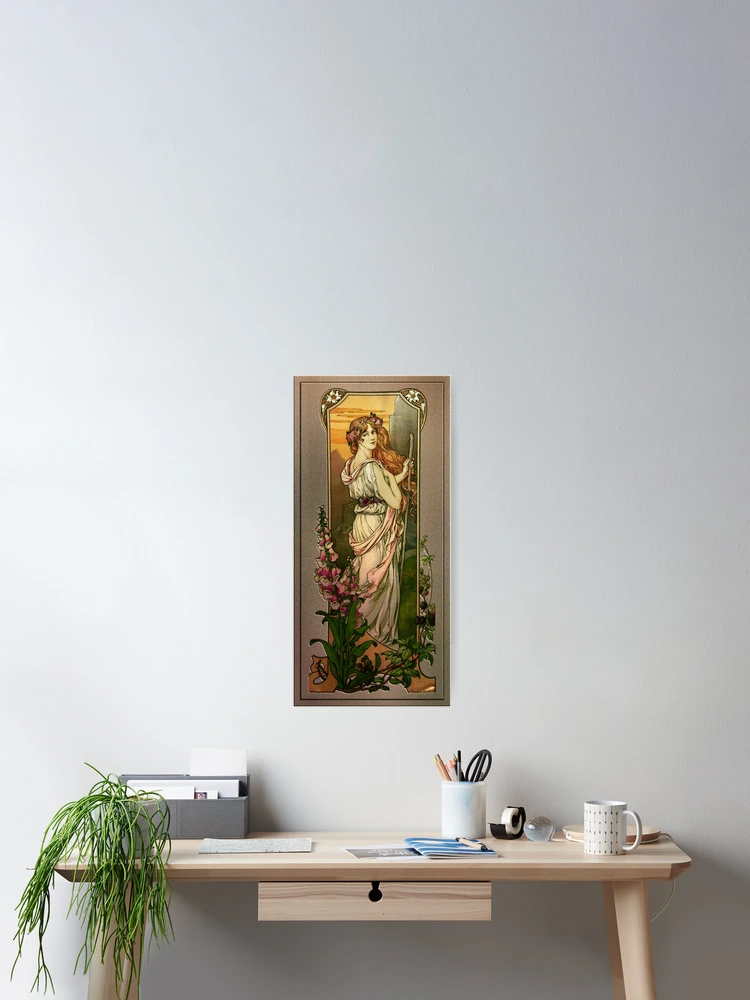
Цветы гор c1900 французского художника Элизабет Сонрель (1874 – 1953); Молодая женщина с гортензиями; чьи работы включали аллегорические сюжеты, мистицизм и символизм, портреты и пейзажи.
This exquisite artwork, Sonrel draws upon the allure of both mythology and nature, bringing together the two elements with a delicate balance of beauty, милость, and introspective solitude.
Оглавление
Основная тема
The central figure in this painting is a female figure of ethereal beauty, who stands tall and poised against a backdrop of towering mountains and a soft, warm sky. The figure is a young woman, draped in a flowing white gown that billows gently in the breeze, the fabric rendered with soft folds that add texture and depth. Платье, cinched at the waist with a simple yet elegant belt, enhances the fluidity of her form, emphasizing the harmony between the figure and nature.
Ее волосы, a cascade of rich auburn locks, tumbles loosely over her shoulders, further evoking the timeless quality of her beauty. A wreath of flowers rests atop her head, creating a delicate coronet that brings an air of wildness to her femininity. The flowers in the wreath are small and vibrant, suggesting a connection to the natural world, as though the woman is an embodiment of the flora around her. This crown of blossoms enhances her ethereal, almost divine presence.
В ее правой руке, she holds a long, slender staff, which could be interpreted as a symbol of wisdom or guidance. The staff is simple yet dignified, acting as a subtle reminder of the woman’s authority and connection to the surrounding terrain. The gentle grip and relaxed posture suggest that the figure is at ease within her environment, exuding a calm confidence in her role.
Объекты и детали
Flanking the woman on either side are two prominent floral elements, one of foxglove flowers (Digitalis) on the left and a rich array of blackberry vines and leaves on the right. These plants serve to frame the central figure, drawing the viewer’s eye toward her while enhancing the narrative of nature’s embrace. The foxgloves, with their tall spires of bell-shaped flowers, are vibrant and reach towards the sky, creating a visual contrast to the woman’s grounded, earthbound posture. The blackberry vines, full of lush green leaves and dark, ripening berries, offer a sense of wildness and fertility, reinforcing the theme of the woman’s natural connection to the land.
The mountains in the background, though not dominant in their portrayal, provide a sense of scale and depth. They rise majestically in the distance, their peaks partially obscured by mist, giving them a mysterious and timeless quality. The sky above is awash in warm, golden tones, with hints of soft pink and orange, предлагая либо рассвет, либо закат, times of transition and introspection. This choice of color palette infuses the work with a sense of tranquility and quiet contemplation.
Рельеф и материалы
The terrain is rugged and unyielding, yet it complements the softness of the woman’s figure. It is a place where life flourishes despite its harshness, as seen in the surrounding flora. The colors used for the terrain and flowers are earthy and natural, suggesting that Sonrel was inspired by the rugged landscapes of the French countryside or perhaps the mythical landscapes of ancient Greece. The artist’s careful attention to detail in the plants and the mountains shows her deep understanding of both nature and the human form, blending them seamlessly in this piece.
Стиль и тема
The style of this artwork is deeply rooted in the Art Nouveau movement, which flourished in the late 19th and early 20th centuries. Characterized by its emphasis on organic forms, плавные линии, and harmonious integration of nature and human figures, the Art Nouveau style is exemplified here through the graceful curvature of the woman’s pose and the intricate floral details surrounding her. Sonrel’s use of soft, blended colors and flowing lines imbues the piece with a dreamlike quality, inviting the viewer into a world where nature and humanity coexist in perfect balance.
Тематически, Flowers of the Mountains explores the connection between the human figure and the natural world. The woman in the painting is not just a figure of beauty but also a symbol of nature itself. Her presence among the flowers, her wreath, and the connection to the mountains all suggest a deeper bond between humanity and the earth, perhaps drawing from ancient mythologies where women often represented the earth, плодородие, or nature’s vitality. Использование цветов, especially those associated with healing and growth like foxglove, suggests that the figure is not just passive in her environment but an active participant in the life force of nature.
Настроение и атмосфера
Настроение картины - одно из безмятежных созерцаний. There is no rush in the figure’s posture, no urgency in her gaze, which is directed off to the side, as if she is lost in thought or in quiet communion with the natural world around her. Цветовая палитра, with its soft pinks, пурпурный, и зелень, further contributes to the tranquil atmosphere. Горы, while present, are distant and unobtrusive, further adding to the sense of solitude and peace. The entire piece invites the viewer to pause and reflect, offering a moment of stillness in the midst of a busy world.
Заключение
В Flowers of the Mountains, Elisabeth Sonrel has created not just a portrait of a woman but a celebration of nature’s beauty and its eternal connection to the human spirit. The blending of the figure with the flowers, the gentle, flowing lines of her form, and the serene landscape all convey a message of harmony, спокойствие, and reverence for the natural world. Through her delicate use of color, свет, и состав, Sonrel has produced a work that stands as a timeless reflection of the beauty of nature and the human soul’s connection to it.
«Цветы гор» — это отретушированная цифровая художественная репродукция старых мастеров изображения, являющегося общественным достоянием..
Информация ниже любезно предоставлена Wikipedia.org
Элизабет Сонрель (1874 Туры - 1953 Уплотнения) был французским художником и иллюстратором в стиле модерн.. Ее работы включали аллегорические сюжеты., мистицизм и символизм, портреты и пейзажи.
Она была дочерью Николаса Стефана Сонреля., художник из Тура, и получила от него раннее обучение. Для дальнейшего обучения она отправилась в Париж в качестве ученицы Жюля Лефевра в Ecole des Beaux-Arts..
В 1892 она нарисовала свою дипломную работу, «Pax et Labor», работа, которую можно увидеть в Musée des Beaux-Arts de Tours. С тех пор она выставлялась в Salon des Artistes Français между 1893 и 1941, ее фирменные работы - большие акварели в прерафаэлитской манере., которую она приняла после поездки во Флоренцию и Рим, открытие художников эпохи Возрождения – некоторые из ее работ с явным подтекстом Боттичелли. Ее картины часто были вдохновлены романами о короле Артуре., "Божественная комедия" Данте Алигьери’ и "Новая жизнь", библейские темы, и средневековые легенды. Среди ее мистических работ «Эймс эрантес»’ (Салон 1894) и «Духи бездны»’ (Салон 1899) и "Молодая женщина с гобеленом".
На Всемирной выставке 1900, основной темой которого был модерн, ее 1895 картина «Сон Богородицы»’ (Сон Богородицы), был награжден бронзовой медалью, и премию Анри Лемана 3000 франков Академии художеств.[3] Из 1900 Впоследствии она ограничилась своей живописью портретами, живописные пейзажи Бретани, и случайное цветочное исследование.
Она совершала регулярные поездки в Бретань для рисования., вдохновленный лесом Brocéliande, и из 1910 в различные места на побережье, такие как Конкарно, Plougastel, Пон-л'Аббе и Локтуди, часто останавливаются в гостиницах в сопровождении одного или двух студентов. Она написала несколько работ в Le Faouët, прежде чем построить виллу в La Baule в 1930-х годах.. Работаю в основном акварелью и гуашью., она обнаружила готовый набор моделей среди молодых девушек в этом районе, и обнаружил, что бретонцы в целом дружелюбны, честный и уверенный в себе.
Ее последняя выставка в Салоне была в 1941 в возрасте 67. Есть также запись о том, что она выставлялась в Ливерпуле.. В ранние годы Сонрель выпускала плакаты., открытки и иллюстрации, в стиле модерн.