

Hären léiwer Blonden c1948
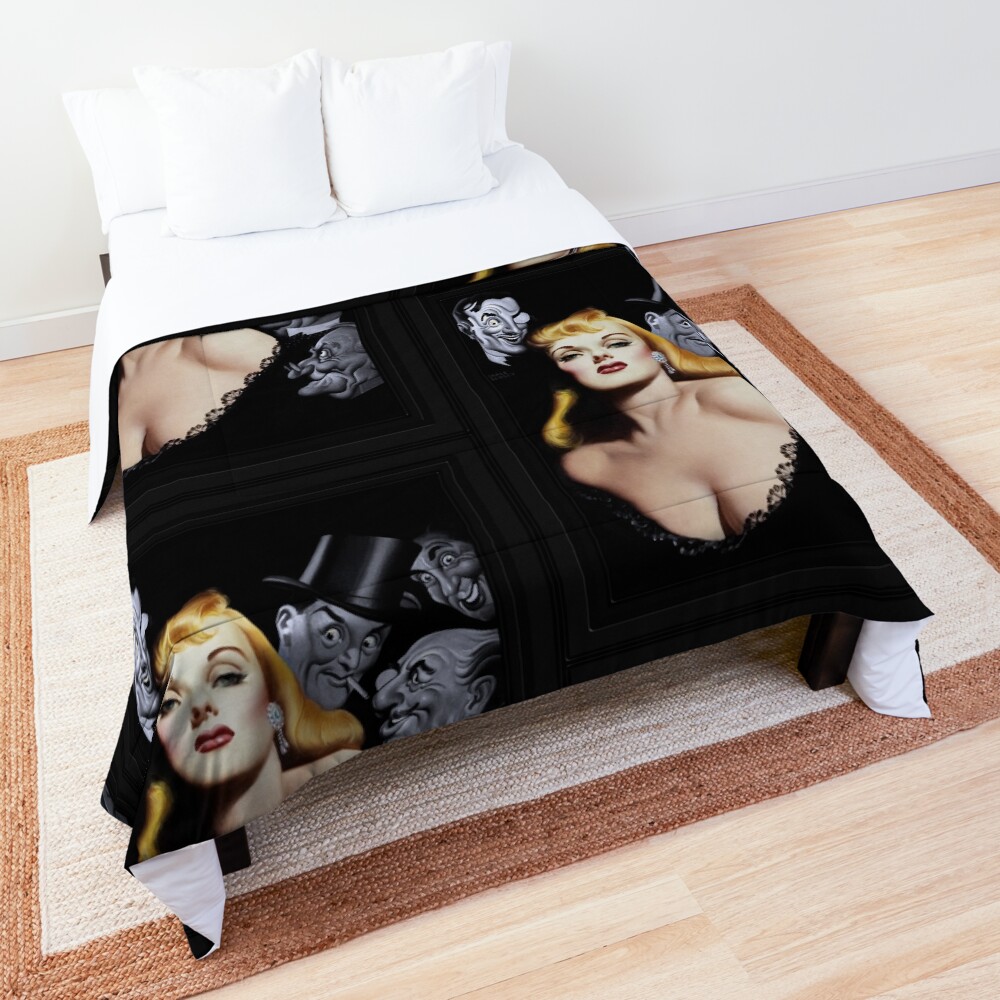
“Hären léiwer Blonden,” erstallt an 1948 vum renomméierten amerikaneschen Illustrator Earle Kulp Bergey (1901 – 1952), erfaasst d'Allure vun der amerikanescher Popkultur vun der Mëtt vum Joerhonnert an dem gëllenen Zäitalter vum Hollywood Glamour. Bergey, bekannt fir seng sultry an evokativ Biller vu Fraen, kanaliséiert de Geescht vun der Ära duerch dëst ikonescht Stéck, déi de klassesche Pin-up Stil vun der Post-Weltkrich Ära epitomizes. D'Konschtwierk huet e glamouröse, fett Figur am Kär, flankéiert vun enger Rei vu charismatesche Männer, de Geescht vum Titel an dem Thema verkierpert. D'Kompositioun reflektéiert eng Ära vu Sensualitéit, witzeg, an liichtfäerteg ofgeschloss Romance, charakteristesch vun der Mëtt vum 20. Joerhonnert.
Inhaltsverzeechnes
D'Haaptthema
Déi zentral Figur an “Hären léiwer Blonden” ass eng opfälleg schéin Fra, hir Haltung suggeréiert vu Vertrauen an Allure. Si kuckt direkt op den Zuschauer, hir voll, plumpe Lippen liicht getrennt, gëtt hir eng Loft vu Geheimnis a Kommando. Hir platinblond Hoer kaskaden a mëlle Wellen, seng Textur glat a fléissend, zum weiblechen bäidroen, bal ätheresch Qualitéit vun hirem Optrëtt. E Paar dangling Ouerréng blénken ënner hirem delikaten Ouer, d'Ae vum Betrachter opfänken, d'Notioun vun Opulenz a Schéinheet verstäerken.
Hirem Kleedung, en déif schwaarz Kleed mat Spëtzekleeder ofgeschnidden, accentuéiert hir Kéiren an cadréiert hir Décolleté op eng Manéier déi souwuel elegant wéi provokativ ass. D'Héich Halsausschnëtt vum Kleed kontrastéiert mat der schwaacher Schëpp virun, hir fair verroden, Porzellan-ähnlech Haut. Dëse Gläichgewiicht tëscht Bescheidenheet a Sensualitéit schaaft eng verlockend Juxtapositioun déi e Markenzeeche vun der Pin-up Konscht an dëser Period war.
Am staarke Kontrast zum poléierten, statuesch Schéinheet vun der Fra, eng Sammlung vun mischieous, bal karikaturähnlech Männer ëmkreest si. Dës Zuele sinn, mat iwwerdriwwe Gesiichtsausdréck, déi spilleresch opruffen, heiansdo mischievous Natur vun männlech Opmierksamkeet Richtung weiblech Sujet. All Mann gëtt mat iwwerdriwwenen Features gezeechent - breet, bal cartoonish Aen, eropgedréint Lippen a schlau Grinsen, an arched Brows, ginn hinnen eng witzeg, liicht béise Bléck. D'Erscheinung vun de Männer ass bewosst stiliséiert, entworf der verführeresch Aura vun der zentraler Fra ze verbesseren iwwerdeems en Element vun Humor a Farce sprëtzen.
Objeten a Symbolismus
Bergey’s use of minimal yet impactful objects within the composition serves both to elevate the central figure and to add a sense of narrative depth. The woman is adorned with sparkling diamond earrings, signifying wealth, allur ewéi, and status. These accessories, though small, function as symbols of desirability, further emphasizing the woman’s exalted position in society. Hirem Kleed, with its fine lace details, hints at the sophistication of the time, a time when women’s fashion was both a form of self-expression and a tool for empowerment.
The men surrounding the woman, though depicted with exaggerated features, seem to be captivated by her presence. They lean in toward her, each trying to attract her attention in their own exaggerated manner. Their various expressions—from the coy, almost shy smile of one to the playful, knowing grin of another—evoke the humor and complexity of romantic dynamics. This interaction between the woman and her male admirers is emblematic of the playful flirtation that often defined the post-war era’s art, reflecting a world where women were both objects of admiration and, at times, the arbiters of their own fate.
Styl an Technik
Earle Kulp Bergey’s artistic style in this piece reflects his mastery of the pin-up genre, a style known for its vibrant use of color, dramatesch Beliichtung, and exaggerated forms. Bergey employs a combination of realism and stylization, creating figures that are at once recognizable yet idealized. The smooth contours of the woman’s face and body are rendered with soft, almost ethereal shading, contributing to the sensuality of her form. D'Männer, awer, are depicted with more caricatured, Wénkel Fonctiounen, a stark contrast that emphasizes their roles as playful bystanders to the woman’s commanding presence.
The artist’s use of deep, contrasting shadows heightens the drama of the piece. The background is dark, a subtle gradient of blacks and greys, providing the ideal backdrop to highlight the illuminated woman in the foreground. This contrast between light and dark adds depth to the painting, creating a sense of both intimacy and drama. The lighting itself is warm and soft, giving the entire composition a slightly dreamlike quality, as if the viewer is witnessing a moment suspended in time, frozen in a world of fantasy.
Thema a Stëmmung
D'Thema vun “Hären léiwer Blonden” is unmistakably tied to the notion of beauty, Charm gehir, and the dynamics of attraction. The title itself alludes to the cultural perception of blonde women as desirable, an idea that was perpetuated by media and cinema during the time. The artwork plays with this perception, offering a playful yet biting commentary on how women, particularly those fitting the ideal of the time, were revered and sought after. The exaggerated expressions of the men around the woman reveal both their admiration and the absurdity of their pursuit, making the piece a light-hearted yet pointed commentary on the dynamics of flirtation and romantic attention.
The mood of the artwork is a blend of sensuality, humor, a Geheimnis. The central woman exudes confidence and allure, yet her expression remains somewhat distant, léisst de Betrachter sech froen ob si wierklech mat de Männer ronderëm hatt engagéiert ass oder nëmmen hir Opmierksamkeet verwinnt. D'Männer, am Tour, sinn an engem Zoustand vun animéierten Erwaardung gefaangen, suggeréiert eng witzeg Verfollegung déi onwahrscheinlech zu enger seriöer Conclusioun kënnt. Dëse spillereschen Austausch tëscht de Geschlechter gëtt dem Stéck e Gefill vu Freed a Geckegkeet, reflektéiert déi suergfälteg Natur vun der Ära an d'Iddi vun der onerreechbarer awer wënschenswäerter Schéinheet.
Dëst ass eng retouchéiert digital Konscht al Meeschterreproduktioun vun engem ëffentleche Domain Bild.
Dës digital Konscht Kreatioun, wéi mat all de Konschtwierker, déi op der Xzendor7 Websäit fonnt kënne ginn, ass online a verschiddene Materialformater ze kafen, dorënner Canvas Prints, acryl Prints, Metallofdréck, Holzdrécker, cadréiert Printen, Plakater, a wéi gewalzt Canvas Printen a ville Gréissten vun 12 Zoll zu 72 Zoll ofhängeg vun der Gréisst vum aktuellen Konschtwierk an dem Print-on-Demande Buttek vun deem Dir gewielt hutt d'Konscht ze kafen.
D'Konschtwierk ass och op eng breet Palette vu Männer- a Fraekleedung verfügbar, Becher, totes, Schal, Notizbicher an Zäitschrëften a vill Heemdekoratiounsprodukter.
Iwwer de Kënschtler
Info Ënnen Vun Wikipedia.org
Earle K. Bergey (August 26, 1901 - September 30, 1952) war en amerikanesche Kënschtler an Illustrator, deen Cover Art fir Dausende vu Pulp Fiction Zäitschrëften a Pabeierbicher gemoolt huet. Ee vun de produktivste Pulp Fiction Kënschtler vum 20. Joerhonnert, Bergey gëtt unerkannt fir den ikonesche Cover vun Gentlemen Prefer Blondes fir Popular Library op der Héicht vu senger Carrière ze kreéieren 1948.
Marking the start of Bergey’s highly influential run as an American paperback illustrator, this bombshell painting made the mass paperback cover of Anita Loos’s blockbuster, Hären léiwer Blonden (published as Popular Library #221).
Earle K. Bergey’s cover painting for Gentlemen Prefer Blondes, ëm 1948.
Bergey was born in Philadelphia, Pennsylvania to A. Frank and Ella Kulp Bergey. He attended Pennsylvania Academy of the Fine Arts from 1921 an 1926, finishing formal Academy studies in the spring of 1926. He initially went to work in the art departments of Philadelphia newspapers including Public Ledger, and he drew the comic strip Deb Days in 1927. Early in his career, Bergey contributed many covers to the pulp magazines of publisher Fiction House.
By the mid-1930s, Bergey made a home and studio in Bucks County, Pennsylvania, and he married in 1935.
Throughout the 1930s, Bergey worked freelance for a number of publishing houses.
His eye-catching paintings were predominantly featured as covers on a wide array of pulp magazines, including romance (Thrilling Love, Popular Love, Love Romances) as well as detective, Erliefnes, aviation, and Westerns. Bergey illustrated mainstream publications, such as The Saturday Evening Post, during this time.
During the 1940s, Bergey continued to paint covers for romance, Sport, and detective pulp magazines, and he began working on a number of science fiction magazines, including Standard Publications’ Strange Stories, Startling Stories, and Captain Future, and later for Fantastic Story Magazine.
Bergey’s fine art training and salient gift for depicting anatomy made him a go-to artist across a diversity of genres that required scenes with dramatic movement, from photo-realistic sports portraits of famous athletes including Mickey Cochrane, Lou Gehrig, an den Jim Thorpe zu senger Ënnerschrëft Bergey Girls, déi op risque Pulps uechter d'Depressioun opgetaucht sinn an a Science Fiction Szenarie vum Zweete Weltkrich.
Dem Kënschtler seng Illustratioune vu knapp gekleete Fraen, déi am Weltraum iwwerlieft hunn, hunn als Inspiratioun fir dem Prinzessin Leia säi Sklave-Meedchen Outfit am Return of the Jedi gedéngt, souguer seng Faarf a Schnëtt, an dem Madonna seng konisch Messing Brassière. Dem Bergey seng Science Fiction deckt, heiansdo beschriwwen als “Bim, GUTT, Bum,” normalerweis huet eng Fra vun engem Bug-Eyed Monster menacéiert, auslännesch, oder Roboter, mat engem heroeschen männlechen Astronaut, deen hir Hëllef kënnt.
Bikini-Tops, déi vu Bergey Meedercher gedroe ginn, hunn dacks ähnlech wéi e Kupfer Metal, déi Ausdrock entsteet “d'Meedchen an der Brass BH,” benotzt a Bezuch op dës Art vu Konscht. Visionären am Fernseh a Film goufen vum Bergey senger Aarbecht beaflosst; Gene Roddenberry, zum Beispill, huet säi Produktiounsdesigner fir Star Trek Beispiller vu Bergey's futuristesche Pulpdeckelen zur Verfügung gestallt.
An 1948, De Bergey huet den Iwwergank zu der séier erweiderter Paperback Buchindustrie zesumme mat qualifizéierten Pulp Kënschtler wéi Rudolph Belarski gemaach, deem seng Aarbecht dacks mat Bergey verwiesselt gëtt. Iwwerdeems weider Pulp deckt molen bis zu sengem Doud.