

Kaliforniako Redwood zuhaitz erraldoiak c1874
“Kaliforniako Redwood zuhaitz erraldoiak c1874” American Painterren eskutik Albert Bierstadt (1830 – 1902) naturaren handitasun ikaragarriaren erretratu dotorea da, Hudson River Schooleko artista nabarmen baten trebetasunaren bidez harrapatua. Margotuta 1874, artelanak ukitu gabeko paisaia naturala irudikatzen du, mundu naturalarekiko harridura eta begirune sentimendua pizten duten zuhaitz zaharrak. Eszena biziak ikuslea Kaliforniako basamortuaren zabaltasunean murgiltzen du, non sekuoi kolosalak sentinel isil gisa gelditzen dira lasai batean, itzalpeko basoa. Bierstadten lanak ingurune natural izugarriaren barruan dauden giza irudi txikien arteko kontrastea azpimarratzen du., ikusleak paisaiaren tamaina monumentalaz eta denboraz kanpokotasunaz duen pertzepzioa hobetzea.
Edukien taula
Gaia eta Osaera
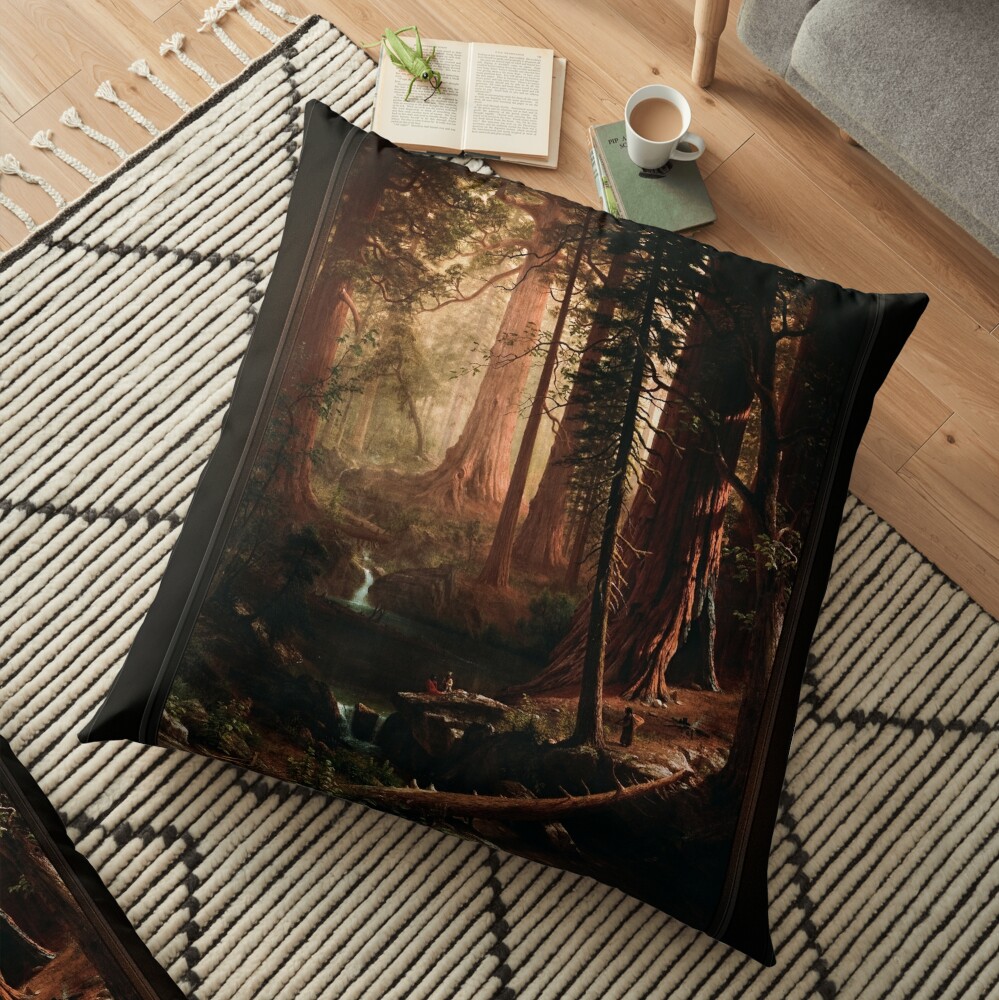
Bierstadten koadroaren gai nagusia Sekuoi erraldoi erraldoiak dira, haien enbor eta adar izugarriak dramatiko bat sortuz, ikuslearen begia gorantz erakartzen duen konposizio bertikala, haien tamaina kolosala azpimarratuz. Zuhaitzak, batzuk markoaren goialdetik haratago iristen dira, eszena nagusitu, errealismo ikaragarriz euren garaiera itzela erakutsiz. Azalaren tonu aberatsak, marroi sakonetatik laranja sutsuetara igaroz, bigunak nabarmentzen dira, argi zipriztindua goiko koipetik iragazten zen. Argi-itzalen jokoak zuhaitzen ehundurak handitzeko balio du, which are rendered with remarkable attention to detail.
At the base of the redwoods, the dense undergrowth of ferns, moss, and smaller vegetation adds depth to the painting, creating a lush foreground that contrasts with the towering trees behind. In the lower left corner, two human figures are present, dressed in period-appropriate attire, perhaps indicating the presence of explorers or settlers, adding scale and narrative to the natural scene. Their small size against the backdrop of the towering trees emphasizes the immensity of nature, a common theme in Bierstadt’s works. The figures’ peaceful interaction with the environment also suggests a harmonious coexistence with the wild, untouched world they inhabit.
Lurra eta Paisaia Ezaugarriak
Bierstadt’s depiction of the terrain in “Giant Redwood Trees of California” is an idyllic and serene wilderness, dominated by towering redwoods that define the composition. The artist’s meticulous brushwork captures the undulating terrain of the forest floor, which is filled with rocks, fallen branches, and verdant undergrowth. A creek meanders through the center, adding movement and life to the otherwise still landscape. The water’s reflection mirrors the vibrant colors of the surrounding trees, enhancing the overall sense of tranquility and connection within the ecosystem.
The composition is further enriched by the interplay between light and shadow, as the sun filters through the canopy above, casting a soft glow over the terrain. This light not only highlights the redwood trees but also illuminates the creek, giving it a shimmering quality that contrasts beautifully with the darker, shaded areas of the painting. Atzealdean, the forest extends into a distant horizon, with more towering trees fading into the mist, suggesting the vastness and mystery of the wilderness.
Materialak eta Teknika
Albert Bierstadt was known for his mastery of light and his ability to create vivid, almost photographic renditions of natural landscapes. Pieza honetan, his technique is evident in the careful rendering of the trees, the play of light across the forest floor, and the delicate balance of shadow and illumination. The artist’s use of color, particularly in the rich hues of the redwood bark and the verdant green of the foliage, kontraste deigarria sortzen du, zuhaitzen izugarritasunari arreta erakartzen diona, eta, aldi berean, mundu naturalaren bake eta harmonia sentsazioa deitzen du..
Bierstadten argiaren erabilera bereziki nabarmena da. Epela, Paisaian zehar isurtzen diren urrezko tonuek giro ia etereoa sortzen dute, non zuhaitzek bizitza propioz distira egiten dutela dirudi. Lehen planoko figurak bainatzen dituen distira leunak paisaiaren parte direla iradokitzen du, ingurune garbi honetan sartuak baino. Argiaren erabilera honek koadroaren aldartea hobetzen du, mundu naturalarekiko harridura eta begirune sentimendua sorraraziz. Zuhaitzen azalaren xehetasun finak, zimur-urak, and the subtle textures of the foliage showcase Bierstadt’s technical prowess and his ability to imbue a scene with a sense of grandeur.
Estiloa eta aldartea
Estiloa “Giant Redwood Trees of California” is firmly rooted in the tradition of the Hudson River School, a movement known for its romanticized depictions of the American wilderness. Bierstadt was a key figure within this school, and his work often featured vast, untouched landscapes that conveyed a sense of the sublime. Margolan honetan, the mood is one of awe and reverence. The towering redwoods, bathed in soft light, evoke a sense of quiet majesty and timelessness. The figures in the painting, while small, seem to be in harmony with their surroundings, as if they are part of this vast, eternal world.
The mood is also reflective of the era in which Bierstadt painted—the mid-19th century, when the American public was becoming increasingly fascinated with the natural beauty of the country. The redwood trees, symbols of both natural wonder and the American frontier, were a subject that resonated deeply with contemporary audiences. The painting captures not only the physical grandeur of the redwoods but also the emotional power of the landscape, making it a fitting tribute to the untouched wilderness of the West.
Bukaera
Albert Bierstadtena “Giant Redwood Trees of California” is a breathtaking and masterful rendering of one of nature’s most awe-inspiring wonders. Through his intricate brushwork, careful attention to light, and profound respect for the natural world, Bierstadt invites the viewer to step into a serene and monumental wilderness, where the timeless presence of the redwoods is both humbling and inspiring. The painting’s mood of reverence and awe is as relevant today as it was in the 19th century, reminding us of the enduring beauty of the natural world and our place within it.
“Kaliforniako Redwood zuhaitz erraldoiak c1874” American Painterren eskutik Albert Bierstadt (1830 – 1902) naturaren handitasun ikaragarriaren erretratu dotorea da, Hudson River Schooleko artista nabarmen baten trebetasunaren bidez harrapatua. Margotuta 1874, artelanak ukitu gabeko paisaia naturala irudikatzen du, mundu naturalarekiko harridura eta begirune sentimendua pizten duten zuhaitz zaharrak. Eszena biziak ikuslea Kaliforniako basamortuaren zabaltasunean murgiltzen du, non sekuoi kolosalak sentinel isil gisa gelditzen dira lasai batean, itzalpeko basoa. Bierstadten lanak ingurune natural izugarriaren barruan dauden giza irudi txikien arteko kontrastea azpimarratzen du., ikusleak paisaiaren tamaina monumentalaz eta denboraz kanpokotasunaz duen pertzepzioa hobetzea.
Gaia eta Osaera
Bierstadten koadroaren gai nagusia Sekuoi erraldoi erraldoiak dira, haien enbor eta adar izugarriak dramatiko bat sortuz, ikuslearen begia gorantz erakartzen duen konposizio bertikala, haien tamaina kolosala azpimarratuz. Zuhaitzak, batzuk markoaren goialdetik haratago iristen dira, eszena nagusitu, errealismo ikaragarriz euren garaiera itzela erakutsiz. Azalaren tonu aberatsak, marroi sakonetatik laranja sutsuetara igaroz, bigunak nabarmentzen dira, argi zipriztindua goiko koipetik iragazten zen. Argi-itzalen jokoak zuhaitzen ehundurak handitzeko balio du, which are rendered with remarkable attention to detail.
At the base of the redwoods, the dense undergrowth of ferns, moss, and smaller vegetation adds depth to the painting, creating a lush foreground that contrasts with the towering trees behind. In the lower left corner, two human figures are present, dressed in period-appropriate attire, perhaps indicating the presence of explorers or settlers, adding scale and narrative to the natural scene. Their small size against the backdrop of the towering trees emphasizes the immensity of nature, a common theme in Bierstadt’s works. The figures’ peaceful interaction with the environment also suggests a harmonious coexistence with the wild, untouched world they inhabit.
Lurra eta Paisaia Ezaugarriak
Bierstadt’s depiction of the terrain in “Giant Redwood Trees of California” is an idyllic and serene wilderness, dominated by towering redwoods that define the composition. The artist’s meticulous brushwork captures the undulating terrain of the forest floor, which is filled with rocks, fallen branches, and verdant undergrowth. A creek meanders through the center, adding movement and life to the otherwise still landscape. The water’s reflection mirrors the vibrant colors of the surrounding trees, enhancing the overall sense of tranquility and connection within the ecosystem.
The composition is further enriched by the interplay between light and shadow, as the sun filters through the canopy above, casting a soft glow over the terrain. This light not only highlights the redwood trees but also illuminates the creek, giving it a shimmering quality that contrasts beautifully with the darker, shaded areas of the painting. Atzealdean, the forest extends into a distant horizon, with more towering trees fading into the mist, suggesting the vastness and mystery of the wilderness.
Materialak eta Teknika
Albert Bierstadt was known for his mastery of light and his ability to create vivid, almost photographic renditions of natural landscapes. Pieza honetan, his technique is evident in the careful rendering of the trees, the play of light across the forest floor, and the delicate balance of shadow and illumination. The artist’s use of color, particularly in the rich hues of the redwood bark and the verdant green of the foliage, kontraste deigarria sortzen du, zuhaitzen izugarritasunari arreta erakartzen diona, eta, aldi berean, mundu naturalaren bake eta harmonia sentsazioa deitzen du..
Bierstadten argiaren erabilera bereziki nabarmena da. Epela, Paisaian zehar isurtzen diren urrezko tonuek giro ia etereoa sortzen dute, non zuhaitzek bizitza propioz distira egiten dutela dirudi. Lehen planoko figurak bainatzen dituen distira leunak paisaiaren parte direla iradokitzen du, ingurune garbi honetan sartuak baino. Argiaren erabilera honek koadroaren aldartea hobetzen du, mundu naturalarekiko harridura eta begirune sentimendua sorraraziz. Zuhaitzen azalaren xehetasun finak, zimur-urak, and the subtle textures of the foliage showcase Bierstadt’s technical prowess and his ability to imbue a scene with a sense of grandeur.
Estiloa eta aldartea
Estiloa “Giant Redwood Trees of California” is firmly rooted in the tradition of the Hudson River School, a movement known for its romanticized depictions of the American wilderness. Bierstadt was a key figure within this school, and his work often featured vast, untouched landscapes that conveyed a sense of the sublime. Margolan honetan, the mood is one of awe and reverence. The towering redwoods, bathed in soft light, evoke a sense of quiet majesty and timelessness. The figures in the painting, while small, seem to be in harmony with their surroundings, as if they are part of this vast, eternal world.
The mood is also reflective of the era in which Bierstadt painted—the mid-19th century, when the American public was becoming increasingly fascinated with the natural beauty of the country. The redwood trees, symbols of both natural wonder and the American frontier, were a subject that resonated deeply with contemporary audiences. The painting captures not only the physical grandeur of the redwoods but also the emotional power of the landscape, making it a fitting tribute to the untouched wilderness of the West.
Bukaera
Albert Bierstadtena “Giant Redwood Trees of California” is a breathtaking and masterful rendering of one of nature’s most awe-inspiring wonders. Through his intricate brushwork, careful attention to light, and profound respect for the natural world, Bierstadt invites the viewer to step into a serene and monumental wilderness, where the timeless presence of the redwoods is both humbling and inspiring. The painting’s mood of reverence and awe is as relevant today as it was in the 19th century, reminding us of the enduring beauty of the natural world and our place within it.
Giant Redwood Trees of California is a retouched digital art old masters reproduction of a public domain image that is available for purchase as a mihise inprimatu sarean.
Arte digitalaren sorkuntza hau, Xzendor7 webgunean aurki daitezkeen artelan guztiak bezala sarean erosteko eskuragarri dago hainbat material formatutan, mihise inprimatuak barne., estanpatu akrilikoak, metal estanpatuak, egur estanpatuak, marko estanpatuak, kartelak, eta ijetzitako mihise estanpatu gisa hainbat tamainatan 12 zentimetroetara 72 hazbeteko artelanaren eta artea erosteko aukeratzen duzun eskaeraren arabera inprimatzeko dendaren tamainaren arabera.
Artelana gizonezkoen eta emakumezkoen arropa sorta zabal batean ere eskuragarri dago, katiluak, totes, zapiak, koadernoak eta aldizkariak eta etxeko dekorazio produktu ugari.
Artistaren biografia
Informazioa Behean Deribatua Wikipedia.org
Albert Bierstadt Solingen jaio zen, Alemania, Christina M-ren semea. (Tillmans) eta Henry Bierstadt, tonelero bat; his brother was prominent photographer Edward Bierstadt.
Albert was just one year old, when his family immigrated to New Bedford, Massachusetts in 1831. Early in his youth he showed a talent and taste for creating clever crayon sketches.
Urtean 21, Albert began to paint in oils and in 1853 he returned to Germany and began studying painting for several years in Düsseldorf; with members of its informal school of painting.
Gero sartu 1857 he returned to New Bedford Massachusetts, where he taught drawing and painting briefly before devoting himself full-time to painting, and taking several journeys of the Westward Expansion to paint scenes of the exploit.
Though other artist had done the same recording the sites of their adventure, Bierstadt was the most prominent painter among them, and remained so for the rest of the 19th century, with imagery like the Sierra Nevada.
In 1858, Bierstadt exhibited a large painting of a Swiss landscape at the National Academy of Design, which gained him positive critical reception and honorary membership in the Academy.
Bierstadt began painting scenes in New England and upstate New York, including in the Hudson River valley. He was part of a group of artists known as the Hudson River School.
In 1859, Bierstadt traveled westward in the company of Frederick W. Lander, a land surveyor for the U.S. government, to see those western American landscapes for his work.
He returned to a studio he had taken at the Tenth Street Studio Building in New York with sketches for numerous paintings he then finished. In 1860, Diseinu Akademia Nazionaleko kide hautatu zuten; he received medals in Austria, Bavaria, Belgika, and Germany.
In 1863, Bierstadt traveled West again, this time in the company of the author Fitz Hugh Ludlow, whose wife he later married. The pair spent seven weeks in the Yosemite Valley.
Throughout the 1860s, Bierstadt used studies from this trip as the source for large-scale paintings for exhibition and he continued to visit the American West throughout his career.
The immense canvases he produced after his trips with Lander and Ludlow established him as the preeminent painter of the western American landscape.
Bierstadt’s technical proficiency proficiency (which can be seen in the Sierra Nevada), earned through his study of European landscape, was crucial to his success as a painter of the American West and accounted for his popularity in disseminating views of the Rocky Mountains to those who had not seen them.