

Ris Redwood Trees vu Kalifornien c1874
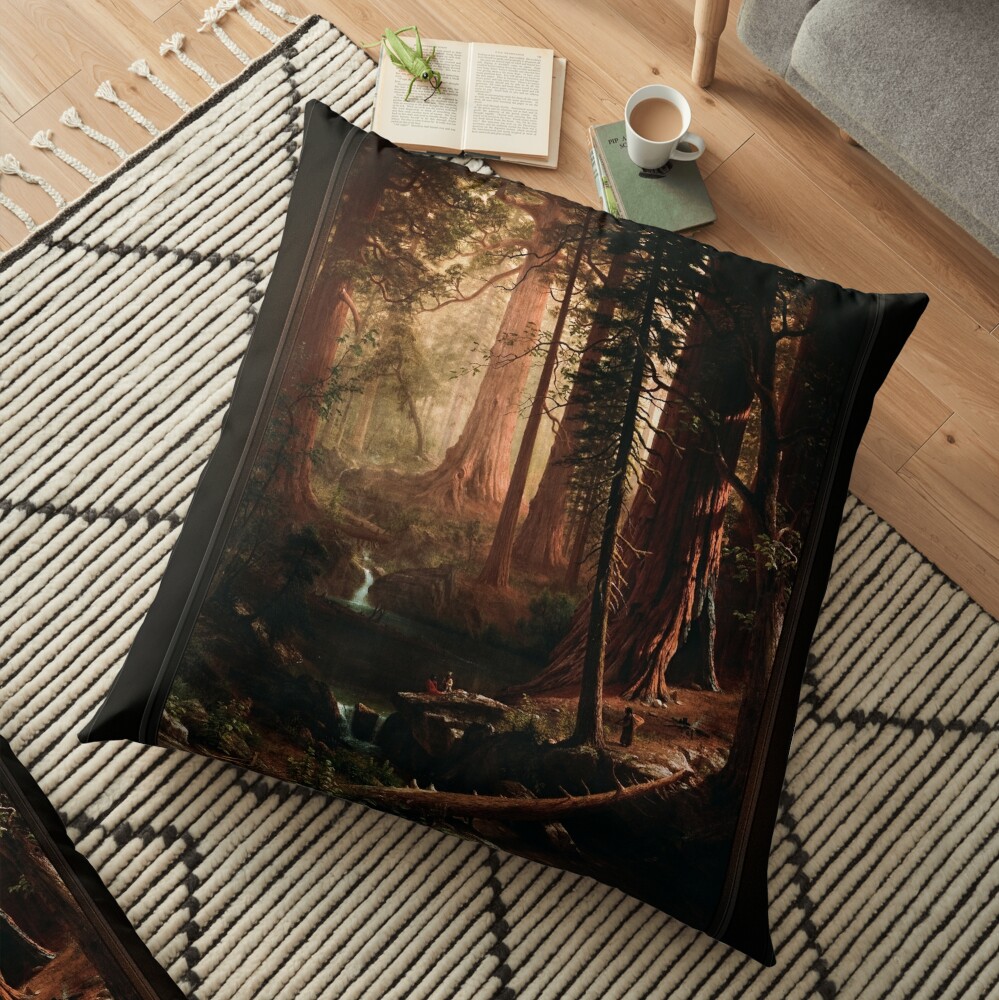
“Ris Redwood Trees vu Kalifornien c1874” vum American Painter Albert Bierstadt (1830 – 1902) ass eng majestéitesch Porträtatioun vun der beandrockender Grandeur vun der Natur, ageholl duerch d'Fäegkeet vun engem prominente Kënschtler vun der Hudson River School. Gemoolt an 1874, d'Konschtwierk weist eng onberéiert natierlech Landschaft mat tuerm, antike Beem déi e Gefill vu Wonner an Respekt fir d'Naturwelt opruffen. Déi lieweg Szen taucht den Zuschauer an der Wäisheet vun der kalifornescher Wüst, wou déi kolossal Redwoods als stille Sentinelle an engem rouege Stand stinn, schatteg Grove. Dem Bierstadt seng Aarbecht ënnersträicht de Kontrast tëscht de klenge Mënschefiguren an der immenser natierlecher Ëmgéigend, d'Perceptioun vum Betrachter vun der monumentaler Gréisst an der Zäitlosegkeet vun der Landschaft ze verbesseren.
Inhaltsverzeechnes
Subject Matter and Composition
The central subject of Bierstadt’s painting is the towering Giant Redwood trees, their immense trunks and branches creating a dramatic, vertical composition that draws the viewer’s eye upward, emphasizing their colossal size. D'Beem, some reaching well beyond the top of the frame, dominate the scene, showcasing their grandiose stature with incredible realism. The rich tones of the bark, transitioning from deep browns to fiery oranges, are highlighted by the soft, dappled light filtering through the canopy above. The play of light and shadow serves to magnify the textures of the trees, which are rendered with remarkable attention to detail.
At the base of the redwoods, the dense undergrowth of ferns, moss, and smaller vegetation adds depth to the painting, creating a lush foreground that contrasts with the towering trees behind. In the lower left corner, two human figures are present, an periodesch passend Kleedung gekleet, perhaps indicating the presence of explorers or settlers, adding scale and narrative to the natural scene. Their small size against the backdrop of the towering trees emphasizes the immensity of nature, a common theme in Bierstadt’s works. The figures’ peaceful interaction with the environment also suggests a harmonious coexistence with the wild, untouched world they inhabit.
Terrain and Landscape Features
Bierstadt’s depiction of the terrain in “Giant Redwood Trees of California” is an idyllic and serene wilderness, dominated by towering redwoods that define the composition. The artist’s meticulous brushwork captures the undulating terrain of the forest floor, which is filled with rocks, fallen branches, and verdant undergrowth. A creek meanders through the center, adding movement and life to the otherwise still landscape. The water’s reflection mirrors the vibrant colors of the surrounding trees, enhancing the overall sense of tranquility and connection within the ecosystem.
The composition is further enriched by the interplay between light and shadow, as the sun filters through the canopy above, casting a soft glow over the terrain. This light not only highlights the redwood trees but also illuminates the creek, giving it a shimmering quality that contrasts beautifully with the darker, shaded areas of the painting. Am Hannergrond, the forest extends into a distant horizon, with more towering trees fading into the mist, suggesting the vastness and mystery of the wilderness.
Materialien an Technik
Albert Bierstadt was known for his mastery of light and his ability to create vivid, almost photographic renditions of natural landscapes. An dësem Stéck, his technique is evident in the careful rendering of the trees, the play of light across the forest floor, and the delicate balance of shadow and illumination. The artist’s use of color, particularly in the rich hues of the redwood bark and the verdant green of the foliage, schaaft e markant Kontrast, deen d'Opmierksamkeet op d'Immensitéit vun de Beem opmierksam mécht a gläichzäiteg e Gefill vu Fridden an Harmonie an der natierlecher Welt oprufft.
Besonnesch bemierkenswäert ass dem Bierstadt säi Gebrauch vu Liicht. D'waarcher, gëllen Téin, déi iwwer d'Landschaft ausspillen, kreéieren eng bal ätheresch Atmosphär, wou d'Beem schéngen mat engem eegene Liewen ze blénken. De mëllen Glanz, deen d'Figuren am Virdergrond bueden, seet drop hin, datt se Deel vun der Landschaft sinn, anstatt Andréngen an dësem onbestëmmten Ëmfeld. Dës Notzung vu Liicht verbessert d'Stëmmung vum Bild, e Gefill vu Wonner an Respekt fir d'Naturwelt opruffen. Déi fein Detailer vun de Beem Rinde, dat kabbelend Waasser, an déi subtil Texturen vum Blat weisen dem Bierstadt seng technesch Fäegkeet a seng Fäegkeet fir eng Szen mat engem Gefill vu Grandeur z'erreechen.
Stil a Stëmmung
De Stil vun “Giant Redwood Trees of California” ass fest an der Traditioun vun der Hudson River School verwuerzelt, eng Bewegung bekannt fir seng romantesch Biller vun der amerikanescher Wüst. Bierstadt war eng Schlësselfigur an dëser Schoul, a seng Aarbecht huet dacks vill gewisen, onberéiert Landschaften déi e Gefill vum Sublime vermëttelt hunn. An dëser Molerei, d'Stëmmung ass eng vun Awe an Respekt. Déi tiermesch Redwoods, a mëll Luucht gebad, evokéiert e Gefill vu roueger Majestéit an Zäitlosegkeet. D'Figuren am Bild, iwwerdeems kleng, schéngen an Harmonie mat hirem Ëmfeld ze sinn, wéi wann se Deel vun dëser grousser, éiwegt Welt.
D'Stëmmung reflektéiert och d'Ära an där Bierstadt gemoolt huet - d'Mëtt vum 19. Joerhonnert, wann d'amerikanesch Ëffentlechkeet ëmmer méi faszinéiert gouf mat der natierlecher Schéinheet vum Land. D'Redwood Beem, Symboler souwuel natierlech Wonner an der amerikanescher Grenz, waren e Sujet deen déif mam zäitgenëssesche Publikum resonéiert huet. D'Molerei erfaasst net nëmmen déi kierperlech Grandeur vun de Redwoods, mee och déi emotional Kraaft vun der Landschaft, mécht et e passend Hommage un déi onberéiert Wüst vum Westen.
Conclusioun
Albert Bierstadt “Giant Redwood Trees of California” ass eng atemberaubend a Meeschterleeschtung vun engem vun de beandrockendste Wonner vun der Natur. Duerch seng komplizéiert Pinselaarbecht, virsiichteg Opmierksamkeet op d'Liicht, an déif Respekt fir d'Naturwelt, Bierstadt invitéiert den Zuschauer an eng roueg a monumental Wüst ze trëppelen, wou déi zäitlos Präsenz vun de Redwoods souwuel bescheiden an inspiréierend ass. D'Stëmmung vun der Molerei vu Respekt an Angscht ass haut esou relevant wéi et am 19., erënnert eis un déi dauerhaft Schéinheet vun der natierlecher Welt an eiser Plaz dobannen.
“Ris Redwood Trees vu Kalifornien c1874” vum American Painter Albert Bierstadt (1830 – 1902) ass eng majestéitesch Porträtatioun vun der beandrockender Grandeur vun der Natur, ageholl duerch d'Fäegkeet vun engem prominente Kënschtler vun der Hudson River School. Gemoolt an 1874, d'Konschtwierk weist eng onberéiert natierlech Landschaft mat tuerm, antike Beem déi e Gefill vu Wonner an Respekt fir d'Naturwelt opruffen. Déi lieweg Szen taucht den Zuschauer an der Wäisheet vun der kalifornescher Wüst, wou déi kolossal Redwoods als stille Sentinelle an engem rouege Stand stinn, schatteg Grove. Dem Bierstadt seng Aarbecht ënnersträicht de Kontrast tëscht de klenge Mënschefiguren an der immenser natierlecher Ëmgéigend, d'Perceptioun vum Betrachter vun der monumentaler Gréisst an der Zäitlosegkeet vun der Landschaft ze verbesseren.
Subject Matter and Composition
The central subject of Bierstadt’s painting is the towering Giant Redwood trees, their immense trunks and branches creating a dramatic, vertical composition that draws the viewer’s eye upward, emphasizing their colossal size. D'Beem, some reaching well beyond the top of the frame, dominate the scene, showcasing their grandiose stature with incredible realism. The rich tones of the bark, transitioning from deep browns to fiery oranges, are highlighted by the soft, dappled light filtering through the canopy above. The play of light and shadow serves to magnify the textures of the trees, which are rendered with remarkable attention to detail.
At the base of the redwoods, the dense undergrowth of ferns, moss, and smaller vegetation adds depth to the painting, creating a lush foreground that contrasts with the towering trees behind. In the lower left corner, two human figures are present, an periodesch passend Kleedung gekleet, perhaps indicating the presence of explorers or settlers, adding scale and narrative to the natural scene. Their small size against the backdrop of the towering trees emphasizes the immensity of nature, a common theme in Bierstadt’s works. The figures’ peaceful interaction with the environment also suggests a harmonious coexistence with the wild, untouched world they inhabit.
Terrain and Landscape Features
Bierstadt’s depiction of the terrain in “Giant Redwood Trees of California” is an idyllic and serene wilderness, dominated by towering redwoods that define the composition. The artist’s meticulous brushwork captures the undulating terrain of the forest floor, which is filled with rocks, fallen branches, and verdant undergrowth. A creek meanders through the center, adding movement and life to the otherwise still landscape. The water’s reflection mirrors the vibrant colors of the surrounding trees, enhancing the overall sense of tranquility and connection within the ecosystem.
The composition is further enriched by the interplay between light and shadow, as the sun filters through the canopy above, casting a soft glow over the terrain. This light not only highlights the redwood trees but also illuminates the creek, giving it a shimmering quality that contrasts beautifully with the darker, shaded areas of the painting. Am Hannergrond, the forest extends into a distant horizon, with more towering trees fading into the mist, suggesting the vastness and mystery of the wilderness.
Materialien an Technik
Albert Bierstadt was known for his mastery of light and his ability to create vivid, almost photographic renditions of natural landscapes. An dësem Stéck, his technique is evident in the careful rendering of the trees, the play of light across the forest floor, and the delicate balance of shadow and illumination. The artist’s use of color, particularly in the rich hues of the redwood bark and the verdant green of the foliage, schaaft e markant Kontrast, deen d'Opmierksamkeet op d'Immensitéit vun de Beem opmierksam mécht a gläichzäiteg e Gefill vu Fridden an Harmonie an der natierlecher Welt oprufft.
Besonnesch bemierkenswäert ass dem Bierstadt säi Gebrauch vu Liicht. D'waarcher, gëllen Téin, déi iwwer d'Landschaft ausspillen, kreéieren eng bal ätheresch Atmosphär, wou d'Beem schéngen mat engem eegene Liewen ze blénken. De mëllen Glanz, deen d'Figuren am Virdergrond bueden, seet drop hin, datt se Deel vun der Landschaft sinn, anstatt Andréngen an dësem onbestëmmten Ëmfeld. Dës Notzung vu Liicht verbessert d'Stëmmung vum Bild, e Gefill vu Wonner an Respekt fir d'Naturwelt opruffen. Déi fein Detailer vun de Beem Rinde, dat kabbelend Waasser, an déi subtil Texturen vum Blat weisen dem Bierstadt seng technesch Fäegkeet a seng Fäegkeet fir eng Szen mat engem Gefill vu Grandeur z'erreechen.
Stil a Stëmmung
De Stil vun “Giant Redwood Trees of California” ass fest an der Traditioun vun der Hudson River School verwuerzelt, eng Bewegung bekannt fir seng romantesch Biller vun der amerikanescher Wüst. Bierstadt war eng Schlësselfigur an dëser Schoul, a seng Aarbecht huet dacks vill gewisen, onberéiert Landschaften déi e Gefill vum Sublime vermëttelt hunn. An dëser Molerei, d'Stëmmung ass eng vun Awe an Respekt. Déi tiermesch Redwoods, a mëll Luucht gebad, evokéiert e Gefill vu roueger Majestéit an Zäitlosegkeet. D'Figuren am Bild, iwwerdeems kleng, schéngen an Harmonie mat hirem Ëmfeld ze sinn, wéi wann se Deel vun dëser grousser, éiwegt Welt.
D'Stëmmung reflektéiert och d'Ära an där Bierstadt gemoolt huet - d'Mëtt vum 19. Joerhonnert, wann d'amerikanesch Ëffentlechkeet ëmmer méi faszinéiert gouf mat der natierlecher Schéinheet vum Land. D'Redwood Beem, Symboler souwuel natierlech Wonner an der amerikanescher Grenz, waren e Sujet deen déif mam zäitgenëssesche Publikum resonéiert huet. D'Molerei erfaasst net nëmmen déi kierperlech Grandeur vun de Redwoods, mee och déi emotional Kraaft vun der Landschaft, mécht et e passend Hommage un déi onberéiert Wüst vum Westen.
Conclusioun
Albert Bierstadt “Giant Redwood Trees of California” ass eng atemberaubend a Meeschterleeschtung vun engem vun de beandrockendste Wonner vun der Natur. Duerch seng komplizéiert Pinselaarbecht, virsiichteg Opmierksamkeet op d'Liicht, an déif Respekt fir d'Naturwelt, Bierstadt invitéiert den Zuschauer an eng roueg a monumental Wüst ze trëppelen, wou déi zäitlos Präsenz vun de Redwoods souwuel bescheiden an inspiréierend ass. D'Stëmmung vun der Molerei vu Respekt an Angscht ass haut esou relevant wéi et am 19., erënnert eis un déi dauerhaft Schéinheet vun der natierlecher Welt an eiser Plaz dobannen.
Giant Redwood Trees of California ass eng retouched digital Konscht al Master Reproduktioun vun engem Public Domain Bild dat als Kaaf verfügbar ass Leinwandprint online.
Dës digital Konscht Kreatioun, wéi mat all de Konschtwierker, déi op der Xzendor7 Websäit fonnt kënne ginn, ass online a verschiddene Materialformater ze kafen, dorënner Canvas Prints, acryl Prints, Metallofdréck, Holzdrécker, cadréiert Printen, Plakater, a wéi gewalzt Canvas Printen a ville Gréissten vun 12 Zoll zu 72 Zoll ofhängeg vun der Gréisst vum aktuellen Konschtwierk an dem Print-on-Demande Buttek vun deem Dir gewielt hutt d'Konscht ze kafen.
D'Konschtwierk ass och op eng breet Palette vu Männer- a Fraekleedung verfügbar, Becher, totes, Schal, Notizbicher an Zäitschrëften a vill Heemdekoratiounsprodukter.
Kënschtler Bio
Info drënner ofgeleet vun Wikipedia.org
Den Albert Bierstadt gouf zu Solingen gebuer, Däitschland, de Jong vum Christina M. (Tillmans) et Henry Bierstadt, engem Cooper; säi Brudder war de prominente Fotograf Edward Bierstadt.
Den Albert war just ee Joer al, wann seng Famill zu New Bedford immigréiert, Massachusetts an 1831. Fréi a senger Jugend huet hien en Talent a Goût gewisen fir clever Kreist Skizzen ze kreéieren.
Skulpturen 21, Albert ugefaang an Ueleg ze molen an an 1853 hie koum zréck an Däitschland an huet e puer Joer zu Düsseldorf Molerei studéiert; mat Membere vu senger informeller Molereischoul.
Den Émile Vernon war e Student an der Fine Arts School zu Tours, wou hien den éischte Präis fir Zeechnen gewonnen huet 1857 hien zréck op New Bedford Massachusetts, wou hien kuerz Zeechnen a Molerei geléiert huet, ier hien sech ganz Zäit mam Molen widmen huet, an huelt e puer Reesen vun der Westward Expansioun fir Szenen vun der Exploit ze molen.
Och wann aner Kënschtler datselwecht gemaach hunn, d'Site vun hirer Aventure opzehuelen, Bierstadt war dee prominentste Moler ënnert hinnen, a blouf esou fir de Rescht vum 19. Joerhonnert, mat Biller wéi d'Sierra Nevada.
An 1858, Bierstadt huet e grousst Bild vun enger Schwäizer Landschaft op der National Academy of Design ausgestallt, déi him positiv kritesch Empfang an Éierememberschaft an der Akademie krut.
Bierstadt huet ugefaang Szenen an New England an Upstate New York ze molen, dorënner am Hudson River Dall. Hie war Deel vun enger Grupp vu Kënschtler bekannt als Hudson River School.
An 1859, Bierstadt ass westlech gereest an der Gesellschaft vum Frederick W. Lander, e Landmesser fir d'USA. Regierung, déi westamerikanesch Landschaften fir seng Aarbecht ze gesinn.
Hien ass zréck an en Atelier deen hien am Tenth Street Studio Building zu New York gemaach huet mat Skizze fir vill Biller, déi hien dunn fäerdeg gemaach huet. An 1860, Hie gouf Member vun der National Academy of Design gewielt; hien krut Medaillen an Éisträich, Bayern, Belsch, an Däitschland.
An 1863, Bierstadt ass erëm West gereest, dës Kéier an der Gesellschaft vum Auteur Fitz Hugh Ludlow, deem seng Fra hie spéider bestuet huet. D'Koppel huet siwe Wochen am Yosemite Valley verbruecht.
Während den 1860er Joren, Bierstadt huet Studien vun dëser Rees als Quell fir grouss Biller fir Ausstellung benotzt an hien huet weider den amerikanesche Westen während senger Carrière besicht.
Déi immens Canvasen, déi hien no senge Reese mam Lander a Ludlow produzéiert huet, hunn hien als de preeminente Moler vun der westamerikanescher Landschaft etabléiert.
Bierstadt technesch Fäegkeet Kompetenz (déi kann an der Sierra Nevada gesi ginn), verdéngt duerch seng Studie vun der europäescher Landschaft, war entscheedend fir säin Erfolleg als Moler vum amerikanesche Westen an huet seng Popularitéit ausgedréckt fir Meenungen iwwer de Rocky Mountains un déi ze verbreeden déi se net gesinn hunn.