

Kraka c1862
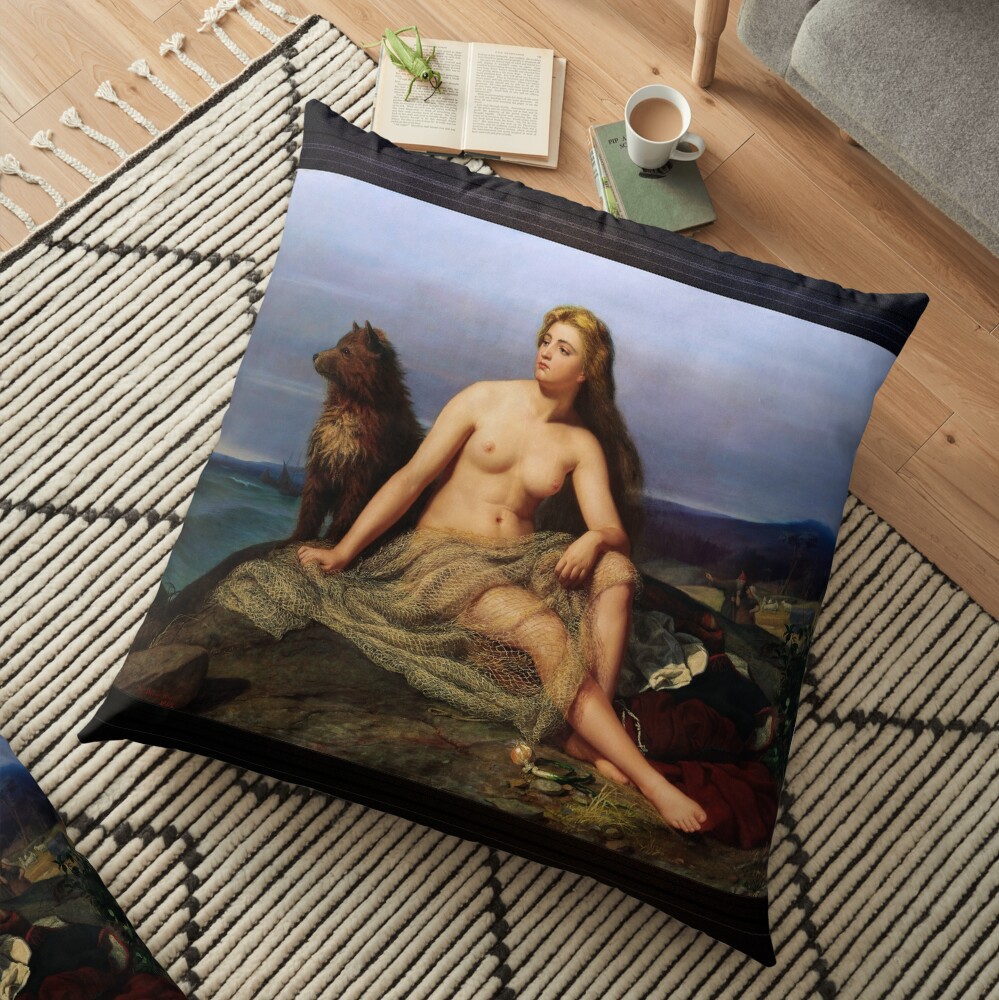
“Arm,” erstallt an 1862 vum schwedesche Kënschtler Marten Eskil Winge (1825 – 1896), steet als mächtegt Beispill vum romantesche Realismus am 19. Joerhonnert. Dëst Bild erfaasst eng mythologesch Szen déi d'mystesch mat der natierlecher Welt kombinéiert, mat enger jonker Fra begleet vun engem wilde Wollef. Dem Winge seng Fäegkeet fir déi mënschlech Form mat Elementer vun der Natur ze fusionéieren weist säin déiwe Verständnis vu klassesche Themen a romanteschen Idealer., e Gefill vu Harmonie an Solitude opruffen.
Inhaltsverzeechnes
D'Sujet
Um Häerz vun “Crow” läit d'Figur vun enger jonker Fra, sëtzt graziéis op engem Fiels um Ufer. Si gëtt an engem Moment vu roueger Iwwerleeung duergestallt, hire Bléck liicht op d'Distanz riicht, perhaps lost in thought or in reverence to the natural landscape before her. D'Fra, named Kráka, is portrayed in the nude, draped only by a fishing net that loosely covers her lower body. The delicacy of her pose and the naturalistic rendering of her form suggest a purity of connection between humanity and nature.
Her pale skin contrasts strikingly against the rich tones of the landscape, while the wildness of the net around her forms an immediate link to the natural world and the primal force of the untamed. She does not seem overtly sexualized; éischter, she represents a mythological archetype, perhaps a goddess or a spirit of the wilderness, closely tied to the earth, its creatures, and the unbridled power of nature. D'Fra hir entspaant Haltung a roueg Ausdrock evokéiert e Gefill vu friddleche Zesummeliewe mat der natierlecher Welt.
De Wollef
Vun hirer Säit, de Wollef steet souwuel als Begleeder a Schutzpatroun. D'Déier gëtt mat virsiichteg Opmierksamkeet op Detailer gemaach, säi Pelz texturéiert a seng Haltung alert. D'Positioun vum Wollef nieft Kráka implizéiert eng déif, symbiotesch Verbindung tëscht der Fra an der Kreatur, déi allebéid schéngen zu der ongetemem Wüst ze gehéieren. D'Präsenz vum Wollef ass net eng vun Agressioun mee vu Loyalitéit a Vigilance, wat d'Thema vun der Harmonie tëscht Mënschen an der natierlecher Welt erhéicht.
Dem Winge seng Porträtatioun vum Wollef ass mat engem Sënn vu mythologesche Symbolismus duerchgesat. A ville Kulturen, Wëllef ginn als Protecteur geéiert, Symboler vu Courage, a Vertrieder vun de wilde Kräfte vun der Natur. The animal’s role here seems to emphasize Kráka’s deep-rooted connection to the primal and untamable aspects of the world, reinforcing the mythic tone of the scene.
Landschaft an Terrain
The landscape surrounding Kráka and the wolf is expansive, adding to the painting’s sense of isolation and remoteness. A dramatic coastline unfolds in the background, where jagged rocks line the shore and the sea stretches out to the horizon. The waves appear calm yet assertive, gently lapping against the shore, while the fading light of the setting or rising sun casts a warm, golden glow over the scene.
Op der rietser, the distant view reveals a sparse, rugged terrain with trees and hills that evoke a northern wilderness, possibly representative of Sweden’s natural beauty. D'Kombinatioun vu Waasser, land, an den Himmel am Bild suggeréiert eng Welt déi souwuel roueg a wëll ass, wou d'Kräfte vun der Natur gläichzäiteg ernärend an untambar sinn. Déi natierlech Elementer sinn net nëmmen Kuliss, mee éischter integral Komponenten déi hëllefen d'Relatioun tëscht der mënschlecher Figur an der Welt ze definéieren déi se bewunnt.
Materialien an Technik
Winge Technik an “Crow” gëtt duerch räich markéiert, detailléiert Pinselwierk, déi d'Figuren an d'Landschaft eng lieweg Qualitéit gëtt. D'Textur vun der Fra Haut an dem Wollef Pelz gëtt duerch delikat Schichten vu Lack erreecht, déi nuancéiert Schatten an Highlights erlaben. Dem Kënschtler seng Opmierksamkeet op naturalistesch Detailer ass evident an der Aart a Weis wéi d'Liicht iwwer dem Kráka säi Kierper fällt, subtil hir Fonctiounen beliichten an Déift un d'Kompositioun bäidroen.
Déi rau Textur vum Fëschnetz gëtt qualifizéiert ausgedréckt, schaaft en zousätzleche Kontrast tëscht der Weichheet vun der Figur an dem Grof, rau Natur vum Netz. D'Waasser an den Himmel si mat Flëssegkeet gemoolt, iwwerflësseg Pinselstécker déi e Gefill vu Bewegung a Liewen un d'Szen ginn, d'Thema vun der ëmmer verännerlecher Kraaft vun der Natur verstäerken.
D'Palette déi Winge beschäftegt ass räich awer gedämpft, dominéiert vun Äerdtéin a subtile Faarwen. Déi Blo a Gréng vum Waasser an der Ëmgéigend Landschaft sinn duerch déi waarm ausgeglach, gëllent Liicht, datt d'Zeen bueden, eng harmonesch Mëschung vu Faarf an Atmosphär kreéieren. Dës virsiichteg Kontroll vun der Faarf hëlleft der Stëmmung vum Bild ze etabléieren, dat ass eng vu roueger Iwwerleeung a roueger Kraaft.
Stil, Thema, a Stëmmung
D'Bild hält dem romanteschen Stil, charakteriséiert duerch eng déif Unerkennung fir d'Natur, mythos, an emotional Ausdrock. Dem Winge seng Opmierksamkeet op Realismus gëtt mat engem Sënn vun der idealiséierter temperéiert, bréngt e Gefill vun Awe an Respekt op d'Szen. D'Thema vun “Crow” ass eng mystesch Harmonie tëscht Mënschheet an der Wüst, e widderhuelend Motiv an der romantescher Konscht, wou d'Naturwelt als Plaz vu spiritueller Kraaft an zäitloser Schéinheet duergestallt gëtt.
D'Stëmmung vum Bild ass kontemplativ a roueg, awer ënnersträicht vun engem onverkennbaren Sënn vun der Urkraaft. Crow an de Wollef, obwuel vun der friddlecher Schéinheet vun der Landschaft ëmgi, sinn och verbonne mat eppes onheemlech, representéiert eng Verbindung mat de Kräfte vun der Natur, déi iwwer mënschlech Kontroll bleiwen. D'Molerei invitéiert de Betrachter fir d'Schéinheet an déi rau Kraaft vun der natierlecher Welt ze berücksichtegen, wéi och d'Mënschheet senger Plaz dobannen. Der mëller, dreemlech Qualitéit vun der Szen kontrastéiert mam robusten, onheemlech Wüst, eng Spannung ze kreéieren déi d'Erzielung vum Bild beräichert.
Conclusioun
“Crow” vum Mårten Eskil Winge ass eng schrecklech Reflexioun vun der Faszinatioun vun der romantescher Ära mam sublimeschen an dem mythologesche. De Kënschtler vermëscht mythologesch Themen mat der natierlecher Schéinheet, eng Aarbecht ze kreéieren déi souwuel intim a grouss ass a sengem Ëmfang. Duerch Crow, de Wollef, an déi grouss Landschaft, De Winge entdeckt déi dauerhaft Verbindung tëscht Mënschheet an der Wëld, feieren déi onheemlech Schéinheet vun der natierlecher Welt a seng déif Afloss op de mënschleche Geescht.
Dëst ass eng remastered digital Konscht al Master Reproduktioun vun engem Public Domain Bild dat als Canvas Print online verfügbar ass.
Dës digital Konscht Kreatioun, wéi mat all de Konschtwierker, déi op der Xzendor7 Websäit fonnt kënne ginn, ass online a verschiddene Materialformater ze kafen, dorënner Canvas Prints, acryl Prints, Metallofdréck, Holzdrécker, cadréiert Printen, Plakater, a wéi gewalzt Canvas Printen a ville Gréissten vun 12 Zoll zu 72 Zoll ofhängeg vun der Gréisst vum aktuellen Konschtwierk an dem Print-on-Demande Buttek vun deem Dir gewielt hutt d'Konscht ze kafen.
D'Konschtwierk ass och op eng breet Palette vu Männer- a Fraekleedung verfügbar, Becher, totes, Schal, Notizbicher an Zäitschrëften a vill Heemdekoratiounsprodukter.