

Nighean le crom-lus
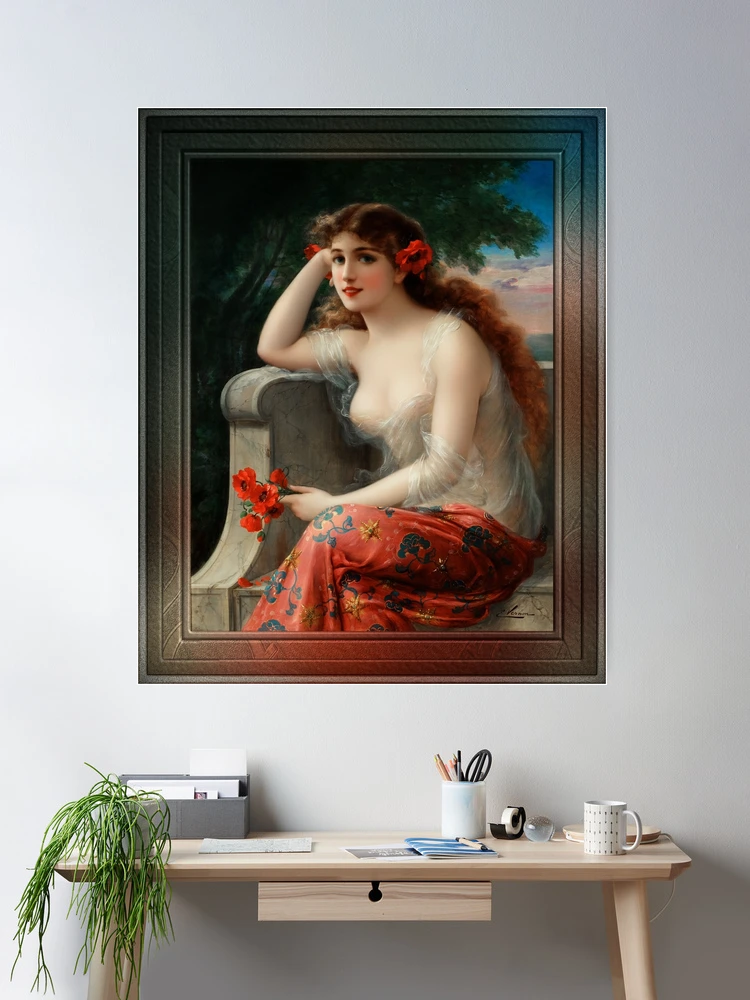
“Nighean le crom-lus” na dhealbh gun ùine leis a’ pheantair Frangach Emile vernon, Cò bha beò 1872 gu 1919. Tha an obair-ealain a' sealltainn boireannach òg air a sgeadachadh le crom-lusan, cuspair a tha gu tric co-cheangailte ri bòidhchead agus neo-ghluasadachd. Tha e ainmeil airson a sgil ann a bhith a’ glacadh fìnealta, bòidhchead nàdair, Chleachd Vernon stoidhle mionaideach agus mionaideach a tha coltach ri eireachdas tràth san 20mh linn. Tha an dealbh seo a’ taisbeanadh cho math sa tha Vernon ann a bhith a’ cleachdadh dath agus solas gus measgachadh co-chòrdail de fhìor-eòlas agus romansachd a chruthachadh..
Clàr-innse
Prìomh chuspair: Bean Ghràsda
Aig cridhe a’ phìos seo tha am boireannach le a feartan radanta agus a faireachdainn ciùin. Tha a falt beairteach auburn air a stialladh le curls fìnealta a tha a’ frèamadh a h-aodann, le dà chrom-lus dearg dàna ceangailte anns na sreathan sgaoilte, a’ cur eadar-dhealachadh soilleir ris an dreach bàn aice.
Bidh am boireannach a’ coimhead gu socair a dh’ ionnsaigh an neach-coimhead, bha a faireachdainn socair ach air a lìonadh le dìomhaireachd seòlta. An suidheachadh aice, beagan ag aomadh chun an taobh fhad ‘s a tha i na laighe air being cloiche, a' toirt àile de introspection, agus tha a suidheachadh a' nochdadh an dà chuid gràs agus eireachdas.
A h-èideadh, fhad 'sa tha e sìmplidh, air a lionadh le bog sòghalachd. Bidh i a’ caitheamh solas, aodach follaiseach a tha a 'nochdadh cha mhòr ethereal, a 'sruthadh thairis air a gualainn agus a' sìneadh ann am pìosan sgaoilte. Tha mion-fhiosrachadh mu aodach an aodaich aice a’ nochdadh aire an neach-ealain gu inneach agus doimhneachd, gu sònraichte san dòigh anns a bheil solas a’ glacadh air an stuth tar-shoilleir. Tha na crom-lusan a tha aice na làimh chlì beothail agus beò, coimeas ri bog a craiceann agus a h-aodach, a’ samhlachadh bòidhchead cabhlach agus gluasad ùine.
Rudan agus Eileamaidean mun cuairt
Tha am fòcas air figear na boireannach òg air a chuairteachadh le grunn phrìomh eileamaidean a chuireas ri faireachdainn romansach agus meòrachail an deilbh. Tha i na suidhe air being marmoir, cuir an aghaidh lus, sealladh-tìre uaine a tha a’ nochdadh gàrradh no àite a-muigh. Tha an cùl air a lìonadh le duilleach tiugh, a’ gabhail a-steach craobhan a tha a’ ruigsinn suas gu neamh. Tha an àrainneachd nàdarra seo a’ cur cuideam air a’ cho-sheirm eadar an cuspair agus an saoghal mun cuairt oirre, mar gum biodh i mar aon le bòidhchead ciùin na tìre.
Air a 'chùl, bidh an speur a’ gluasad bho ghorm bhog gu socair, dath blàth pinc faisg air fàire, 's dòcha a' comharrachadh tràth sa mhadainn no anmoch feasgar. Tha an cleachdadh fìnealta seo de dhhathan ag adhbhrachadh faireachdainn de shàmhchair, a’ leigeil leis an neach-amharc a bhith a’ faireachdainn socair an t-seallaidh agus a’ tarraing aire air ais chun chuspair a tha air thoiseach. An suidheachadh, le mion-fhiosrachadh nàdarra agus solais bog, a’ cruthachadh saoghal air leth freagarrach a chuireas ri cuspair bòidhchead gun ùine agus boireannachd.
Stoidhle agus innleachd: Realism Impressionistic
Tha an dà chuid reul-eòlas agus beachd-bheachd a’ toirt buaidh mhòr air stoidhle ealain Vernon. Fhad ‘s a tha an cuspair aige air a nochdadh le mionaideachd beatha, tha bog sònraichte anns an obair bhruis a leigeas leis an t-solas dannsa gu socair air uachdar a craiceann agus a h-aodach. Tha a 'bhuaidh seo a' cur ri bruadar, àile cha mhòr eile, anns a bheil a h-uile mion-fhiosrachadh, bho chumadh seòlta an fhigear gu dealbh-chluich an t-solais air an aodach aice, a’ nochdadh caoimhneas na h-ùine.
Tha dòigh-obrach an neach-ealain a thaobh inneach gu sònraichte sònraichte, oir tha am mion-fhiosrachadh grinn ann an èideadh na boireannaich agus na flùraichean a th’ aice gan toirt beò. Tha e coltach gu bheil aodach gluasaid an dreasa aice a’ gluasad le faileas solais, a' toirt iasachd dha, càileachd cha mhòr gun cuideam. Na crom-lusan, beòthail an taca ri tònaichean ciùin a h-aodach agus an bog, àrainneachd nàdarra, a’ samhlachadh nàdar gluasadach òigridh agus bòidhchead, a’ nochdadh cuspairean neo-sheasmhachd sa phìos.
Tha structar an dealbh air a structaradh gu faiceallach, a’ tarraing sùil an neach-coimhead o aodann a’ bhoireannaich gu a làmh, far a bheil i a’ cumail na crom-lusan, agus an uairsin a-mach gu cùl-raon lusach. An mothachadh air doimhneachd anns a 'phìos, gu h-àraidh a thaobh mar a tha an duilleach a' dol sìos air falbh, a’ neartachadh faireachdainn de shàmhchair agus de shàmhchair. An dòigh anns a bheil Vernon a’ cleachdadh solas gus am figear a mhodaladh gu fo-thalamh, còmhla ris an aire gu mion-fhiosrachadh anns na flùraichean agus an nàdar mun cuairt, a’ moladh tuigse dhomhainn air gach cuid cruthan nàdarra agus anatomy daonna.
Mood agus cuspair: Gluasad agus Bòidhchead
An fhaireachdainn iomlan de “Nighean le crom-lus” tha e na aon de mhothachadh agus de shocair. Sloinneadh bog na boireannach òig, còmhla ri caoimhneas an t-solais agus na h-eileamaidean nàdarra timcheall oirre, a’ toirt cuireadh don neach-coimhead a-steach do shaoghal a tha coltach gu bheil e air falbh bho dhraghan beatha an latha an-diugh. Tha àile de dhìomhaireachd mu deidhinn, mar gu'm biodh i air a call ann an smuain, no air a glacadh ann am mionaid sèimh de shàmhchair.
Tha àite samhlachail cudromach aig cleachdadh chrom-lusan san obair-ealain. Bidh crom-lusan gu tric co-cheangailte ri cuspairean bòidhchead agus neo-ghluasadachd, oir tha iad nan flùraichean fìnealta a bhios a’ fàs gu soilleir airson ùine ghoirid mus fàs iad. Dh’ fhaodadh an samhlaidheachd seo a bhith air fhaicinn mar mheòrachadh air nàdar cabhlach òigridh agus bòidhchead, cuspair cumanta ann an ealain agus litreachas an ama. Tha càileachd sàmhach ach neo-sheasmhach a’ phìos a’ nochdadh gu bheil bòidhchead a’ chuspair, mar na crom-lusan a tha aice, tha mionaideach, ach tha e fìor bhrìghmhor ann fhèin.
A bharrachd air, tha coltas gu bheil an suidheachadh nàdarrach agus suidheachadh socair a’ chuspair a’ nochdadh ceangal gun ùine ris an talamh, cuspair air a sgrùdadh gu tric ann an ealain mar mheòrachadh air a’ cheangal eadar daonnachd agus an saoghal nàdarrach. Le bhith a 'cur a' bhoireannach òg ann an leithid de shàmhchair, cruth-tìre cha mhòr idealized, Tha Vernon a’ glacadh faireachdainn uile-choitcheann de cho-sheirm eadar beatha dhaoine agus bòidhchead an t-saoghail nàdarra.
Stuthan agus dhòighean
Tha cleachdadh sgileil Émile Vernon de pheant ola sa phìos seo ri fhaicinn ann an doimhneachd agus beairteas nan dathan, gu sònraichte an eadar-dhealachadh eadar tòna craiceann bog na boireannaich agus na crom-lusan dearga beòthail. Bhiodh na buillean bruis ghrinn a chleachdar gus inneach fìnealta a craiceann a ghlacadh, falt, agus tha aodach mar chomharra air aire mhionaideach an neach-ealain gu mion-fhiosrachadh. Cleachdadh an t-solais, an dà chuid gus am figear a shoilleireachadh agus gus faileasan bog a chruthachadh, a’ cur meud ris an dealbh, ga dhèanamh chan e a-mhàin cuirm lèirsinneach ach eòlas tòcail tòcail.
Diofar ìrean dathach, bhon t-solas bog pincach air a’ chùl gu doimhneachd, tònaichean talmhaidh a’ bheing marmoir, cur ri faireachdainn de chothromachadh agus serenity. Tha innleachd an neach-ealain a’ cur cuideam air inneach agus eadar-chluiche solais is dubhar, a’ cruthachadh pìos gun ùine a tharraingeas sùil an neach-coimhead agus a bhrosnaicheas meòrachadh nas doimhne air cuspairean bòidhchead agus neo-ghluasadachd.
Nighean le crom-lus le Peantair Frangach Emile vernon (1872 – 1919); a bha gu sònraichte a ’peantadh dathan-uisge, leis a ’phrìomh chuspair aige bha boireannaich is clann ann an suidheachaidhean dùthchail soilleir agus dathach. Rinn e trèanadh fo Uilleam Bouguereau agus Auguste Trouphème ann an Sgoil nan Ealain Fine ann am Paris san Fhraing.
Is e dealbh eireachdail eireachdail a tha seo de bhoireannach òg bhrèagha na suidhe air being màrmoir ann an gàrradh le blobhsa sìoda geal fìor shoilleir agus sgiort dhearg le flùraichean gorm le obair-ghrèis agus sràcan rionnag òir.
Tha flùraichean crom-lus na falt air gach taobh de a cinn agus i a’ cumail taic ri taobh deas a cinn le a gàirdean fillte air leac àrd na beinne; agus a’ cumail cruinneachadh de fhlùraichean crom-lus na làimh chlì a tha na laighe air a cas chlì a tha air a phasgadh thairis air a cas dheas.
Air a' chùl chì sinn craobhan mòra air a làimh dheis agus dìreach air a cùlaibh, cho math ri abhainn air fàire air a ceangal le coille ro mhòr agus gorm àlainn, geal, dathan pinc is orains.
Is e seo ath-riochdachadh seann mhaighstirean ealain didseatach ath-riochdachadh de ìomhaigh raon poblach.
Neach-ealain Bio
Fiosrachadh gu h-ìosal bho Gailearaidh Ary Jan
Bha Émile Vernon na oileanach aig sgoil Fine Arts ann an Tours far an do choisinn e a’ chiad duais airson tarraing a-steach 1888; an dèidh sin fhuair e taic bho Uilleam Bouguereau agus Auguste Truphème.
An uairsin a-steach 1898 ghabh e pàirt ann an taisbeanadh Tours de Fine Arts agus Decorative Arts agus nas fhaide air adhart air a’ bhliadhna sin, ann an Taisbeanadh Luchd-ealain na Frainge agus a’ taisbeanadh obair hie gu cunbhalach an sin bho 1898 gu 1913; a’ taisbeanadh dhealbhan, cruthan-tìre, seallaidhean às a’ Bhreatainn Bhig, bouquets de bheatha fhathast a pheant e ann an dath-uisge, a bharrachd air figearan boireann, a thàinig gu bhith na speisealachadh nas fhaide air adhart.
Bha Émile air leth math anns na dealbhan aige le solas bog, figearan ionmholta de chlann agus boireannaich òga eireachdail, ris an robh e tric a' ceangal peata mar cat, cù no eun, agus sgeadaich e a dhealbhan le blàth-fhleasg, no bouquets de bhlàthan, fad a bheatha; ach bha e cuideachd na neach-ealain air leth ioma-chruthach a b’ urrainn peantadh le dian agus cumhachd mar a bha anns na h-obraichean aige an dealbh de Madame Vernon agus Sous la Lampe (Fon lampa).