

Bòidhchead fon Chraobh Orains
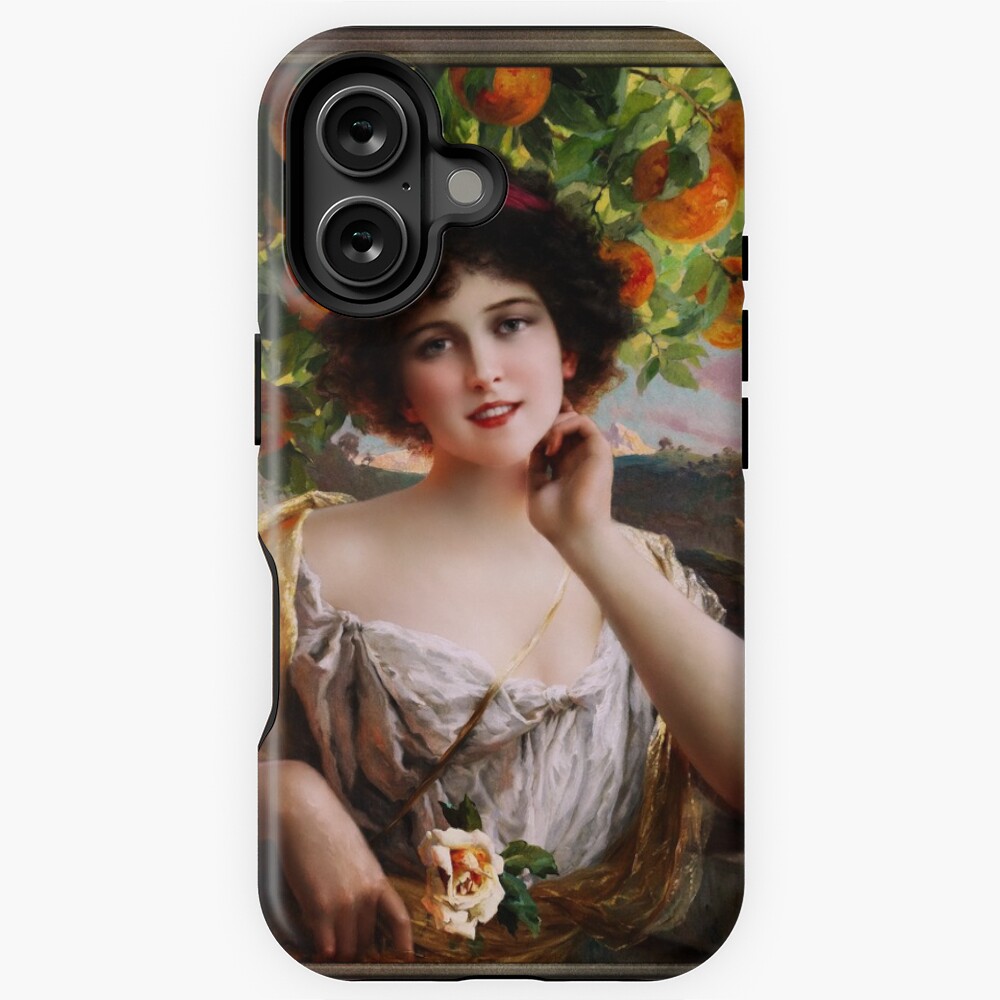
“Bòidhchead fon Chraobh Orains” na obair ealain iongantach a chruthaich am peantair Frangach Emile vernon a-steach 1910. Tha e ainmeil airson na chuir e ri àm Belle Époque, Bha Vernon sgileil ann a bhith a’ glacadh eireachdas an fhoirm boireann le deagh aire gu mion-fhiosrachadh. An dealbh seo, coltach ri mòran de na h-obraichean eile aige, taisbeanadh boireannach òg ann an sàmhchair, suidheachadh làn nàdar. Tha bòidhchead a’ chuspair air a neartachadh leis an t-suidheachadh shàmhach aice agus an àrainneachd thlachdmhor a tha a’ toirt taic foirfe dha a gràs nàdarra.. Le fòcas mòr air solas agus inneach, Bidh Vernon a’ cruthachadh measgachadh co-chòrdail de fhìor-eòlas agus bòidhchead air leth, caractar na h-ùine.
Clàr-innse
Am Prìomh Chuspair
Aig cridhe na h-sgrìobhaidh tha am boireannach òg, bha neo-chiontachd a h-òige air a toirt seachad tro a feartan bog agus a faireachdainn ciùin. Tha an tòn aotrom craiceann aice gu math eadar-dhealaichte bho chùl-raon beothail nan craobhan orains. A falt, air a sgeadachadh ann an curls bog, air a chrùnadh le rioban domhainn dearg a chuireas ri tònaichean beairteach an t-seallaidh mun cuairt. Tha sealladh a’ bhoireannaich dìreach beagan air falbh bhon mheadhan, mar gu'm biodh e caillte ann an smuain, a’ togail faireachdainn de shàmhchair agus de shàmhchair. Tha a guailnean rùisgte agus a craiceann fosgailte a’ cur cuideam air a’ ghlanachd agus air a’ bhòidhchead nàdarra a bha Vernon airson a chomharrachadh san obair aige.
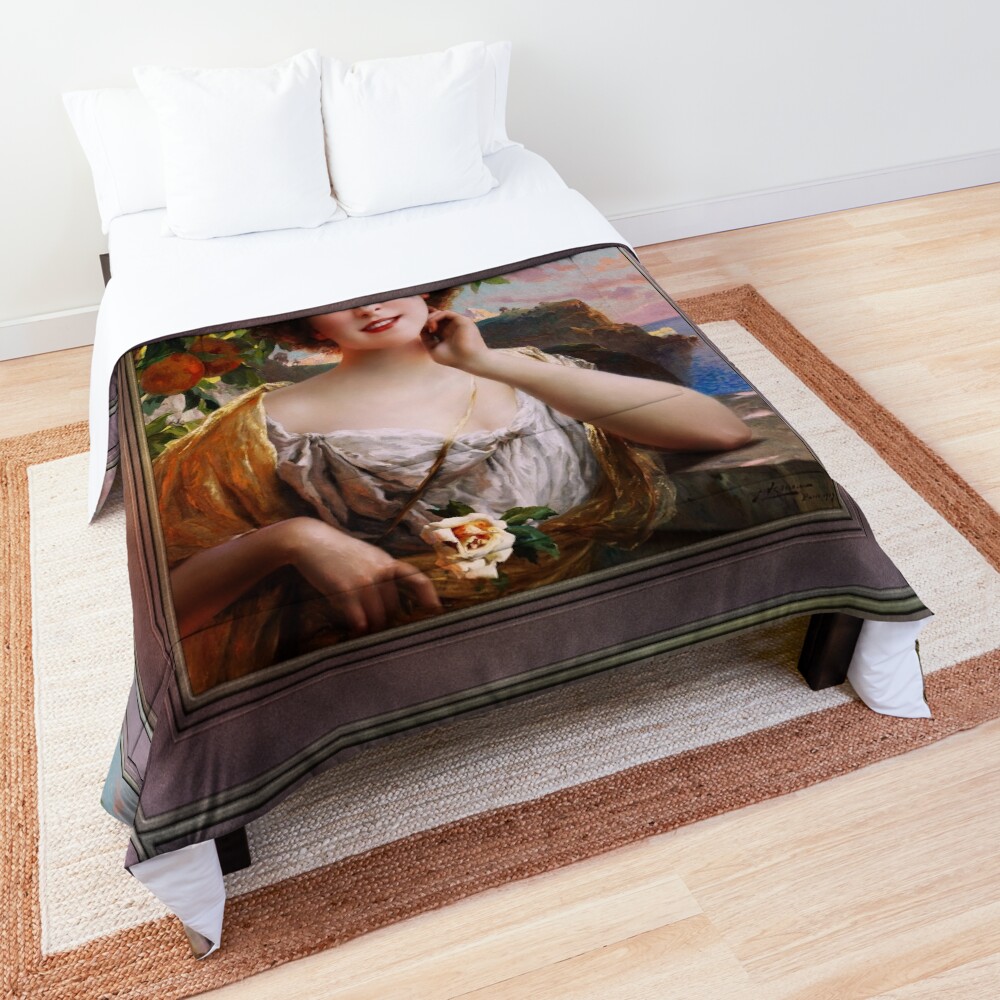
Tha i air a sgeadachadh ann an gùn sìmplidh ach eireachdail, air a dhèanamh le aodach geal sruthadh a ghlacas an solas ann am bog, pasgain radiantach. Tha sash òir air a pasgadh timcheall a meadhan a’ cur blas de shòlas ris, tha a dath deàrrsach a’ nochdadh soilleireachd nan orain a tha crochte bhon chraoibh os a chionn. The gown’s soft material contrasts with the vivid oranges in the background, which seem to symbolize abundance and vitality, themes often found in works of this period. The woman’s soft smile and the gentle manner in which she touches her neck contribute to her portrayal as a delicate, almost ethereal figure within this idyllic scene.
An Cruth-tìre agus an suidheachadh
The backdrop of this painting is equally important, setting the tone and mood of the piece. A lush orange tree, heavy with fruit, arches over the woman, framing her in a natural embrace. The leaves of the tree are painted with fine attention to detail, their deep green color providing a striking contrast to the warm oranges, which glow with an almost lifelike intensity. These oranges not only contribute to the painting’s vibrant color palette but also add to the overall sense of calm and bounty that permeates the work. The tree’s canopy seems to provide both shade and shelter, creating a space of peace for the subject.
Beyond the tree, the terrain transitions into a soft, rocky landscape leading toward the ocean. The horizon is painted with a subtle gradient of pastel hues, from soft pinks and purples to the cool blues of the distant water. The light from the setting or rising sun casts a warm glow on the scene, lending the entire piece a romantic and peaceful atmosphere. The artist’s masterful use of light not only highlights the subject but also enhances the feeling of tranquility that flows through the work.
The scene is bathed in the soft glow of daylight, which pours through the canopy, casting dappled shadows onto the ground. The artist’s choice to include the seaside in the background adds depth and a sense of vastness to the scene. The water’s calm, almost reflective surface mirrors the stillness of the subject, reinforcing the theme of serenity that dominates the painting.
Am faireachdainn agus an àile
Faireachdainn de “Bòidhchead fon Chraobh Orains” is one of quiet contemplation and natural beauty. Am boireannach òg, at ease in her surroundings, embodies the ideals of femininity that were celebrated during the Belle Époque period. Her pose is relaxed, suggesting that she is both at peace with herself and in harmony with the environment. Am bog, almost pastel-like colors used throughout the composition further emphasize the peaceful, serene mood. The gentle play of light on the woman’s skin and the natural surroundings invites the viewer to experience a sense of calm and admiration.
This mood is also enhanced by the soft textures used throughout the painting. Vernon’s careful attention to detail in the rendering of the fabrics of the woman’s gown, the leaves of the tree, and the waves of the distant ocean, creates an overall sense of softness and tranquility. The scene evokes a timeless beauty, one that could belong to any period but is uniquely tied to the turn-of-the-century fascination with idealized beauty and harmony with nature.
Stoidhle is innleachd ealanta
Émile Vernon’s painting exemplifies the style of the late 19th and early 20th centuries, where artists sought to bridge the gap between realism and idealism. His ability to blend these two approaches allows the viewer to experience both the realism of the natural world and the idealized vision of beauty. The fine details of the painting, especially in the portrayal of the woman’s skin, falt, and clothing, demonstrate Vernon’s mastery of texture and light.
Vernon uses rich, saturated colors that give depth to the figures and natural elements in the scene. The oranges of the tree, Gu sònraichte, seem to leap from the canvas, bringing a vibrant energy to the otherwise tranquil composition. The soft blending of colors, especially in the sky and water, reflects the artist’s skill in capturing light, creating a harmonious balance between the figure, the tree, and the distant landscape.
The brushwork is subtle yet deliberate, with gentle strokes that form a cohesive whole. Am measgachadh bog, muted tones in the background contrasts with the more defined, radiant forms of the subject and the fruit-laden tree. This contrast further emphasizes the central figure, making her the focal point of the composition.
Co-dhùnadh
“Bòidhchead fon Chraobh Orains” by Émile Vernon is a painting that celebrates the natural world, feminine beauty, agus suaimhneas. Through his careful use of light, dath, agus inneach, Vernon creates a scene that is at once intimate and expansive, inviting the viewer to pause and appreciate the simplicity and peace found within nature. The painting captures an idealized moment of serenity, offering a window into a world where beauty and nature exist in perfect harmony.
Is e seo ath-riochdachadh seann mhaighstirean ealain didseatach de dh ’ìomhaigh poblach a dh’ fhaodas tu a cheannach mar sheilbh clò-bhualadh canabhas air-loidhne.
An cruthachadh ealain didseatach seo, mar a tha leis a h-uile obair-ealain a gheibhear air làrach-lìn Xzendor7 ri fhaighinn airson a cheannach air-loidhne ann an grunn chruthan stuth a’ gabhail a-steach clò-bhualaidhean canabhas, dealbhan acrylic, clò-bhualaidhean meatailt, clò-bhualaidhean fiodha, lèileagan frèam, postairean, agus mar chlò-bhualadh canabhas air a roiligeadh ann an grunn mheudan bho 12 òirlich gu 72 òirlich a rèir meud an fhìor obair-ealain agus a’ bhùth clò-bhualaidh air iarrtas a thaghas tu airson an ealain a cheannach.
Tha an obair-ealain cuideachd ri fhaighinn air raon farsaing de dh’ aodach fireannaich is boireannaich, mugaichean, toitean, sgarfaichean, leabhraichean notaichean agus irisean agus mòran stuthan sgeadachaidh dachaigh.
Mu dheidhinn an Neach-ealain
Fiosrachadh gu h-ìosal bho Gailearaidh Ary Jan
Bha Émile Vernon na oileanach aig sgoil Fine Arts ann an Tours far an do choisinn e a’ chiad duais airson tarraing a-steach 1888; an dèidh sin fhuair e taic bho Uilleam Bouguereau agus Auguste Truphème.
An uairsin a-steach 1898 ghabh e pàirt ann an taisbeanadh Tours de Fine Arts agus Decorative Arts agus nas fhaide air adhart air a’ bhliadhna sin, ann an Taisbeanadh Luchd-ealain na Frainge agus a’ taisbeanadh obair hie gu cunbhalach an sin bho 1898 gu 1913; a’ taisbeanadh dhealbhan, cruthan-tìre, seallaidhean às a’ Bhreatainn Bhig, bouquets de bheatha fhathast a pheant e ann an dath-uisge, a bharrachd air figearan boireann, a thàinig gu bhith na speisealachadh nas fhaide air adhart.
Bha Émile air leth math anns na dealbhan aige le solas bog, figearan ionmholta de chlann agus boireannaich òga eireachdail, ris an robh e tric a' ceangal peata mar cat, cù no eun, agus sgeadaich e a dhealbhan le blàth-fhleasg, no bouquets de bhlàthan, fad a bheatha; ach bha e cuideachd na neach-ealain air leth ioma-chruthach a b’ urrainn peantadh le dian agus cumhachd mar a bha anns na h-obraichean aige an dealbh de Madame Vernon agus Sous la Lampe (Fon lampa).