

Goddess of Water
Goddess of Water by Russian Painter Konstantin Makovski (1839 – 1915); especialitzat en pintures històriques russes que mostren una visió idealitzada de la vida russa dels segles passats.
La pintura “Goddess of Water” is a masterful depiction of the divine beauty and power of water through classical mythology. The artist’s rich use of color, il·luminació dramàtica, and careful attention to detail create a vivid and serene representation of the goddess of water as she is transported by swans across a vast oceanic expanse.
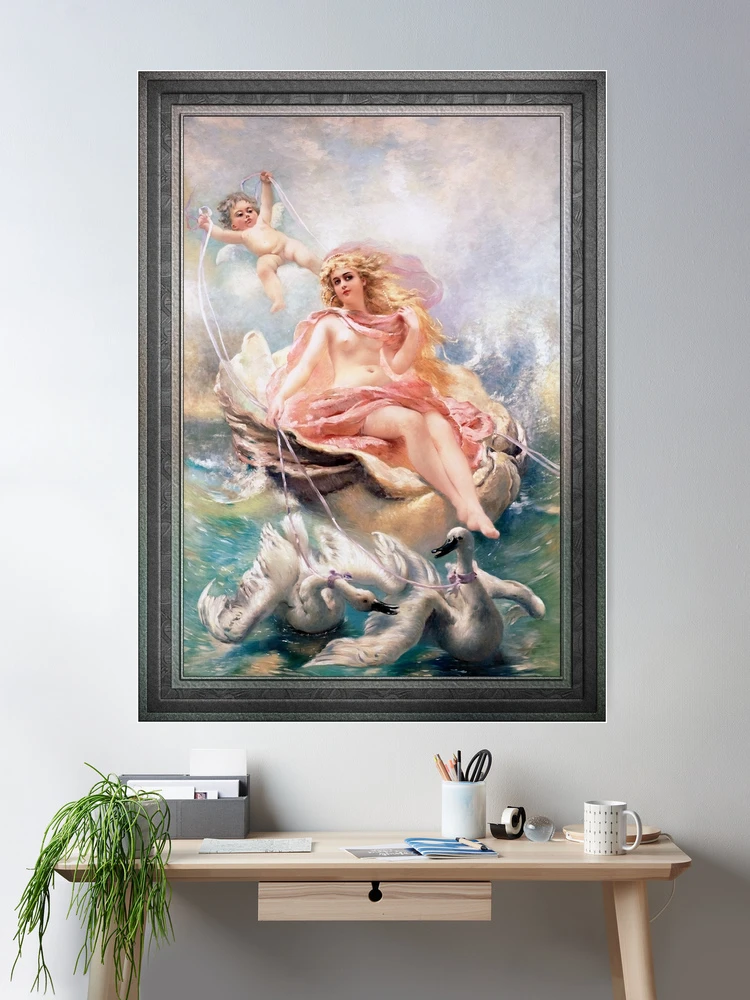
The central figure in the artwork is the goddess herself, a beautiful woman with flowing golden locks, her body partially draped in a pink and soft mauve sheer cloth that clings delicately to her form, revealing the curves of her body.
The goddess is seated serenely in a boat-like structure made of what appears to be soft seashells, floating on undulating waves, with a faint glow surrounding her, symbolizing her divine nature. La seva cara, calm and composed, carries an air of grace and timeless beauty, reinforcing the ethereal nature of her character.
Darrere d'ella, a cherubic figure, a child-like angel, is tethered to the goddess by ribbons, symbolizing a divine connection between the mortal and the immortal. This child, whose face expresses innocence and purity, seems to guide or assist in the goddess’s journey across the waters.
The angel holds onto ribbons that extend out into the air, tethering the goddess to the swans pulling her vessel. The gentle hands of the cherub grasp the flowing ribbons with precision, and his childlike features lend a sense of playful innocence to the otherwise tranquil scene.
The swans, regal and powerful, are the carriers of the goddess, their long necks extending gracefully through the scene, and their white feathers rendered with a soft, almost glowing light, enhancing their majestic appearance.
The swans pull the boat forward, seemingly in motion as the ripples of water, shown through the smooth, soft waves, reflect the calmness of the scene. The swans’ presence in mythology often symbolizes purity and spiritual grace, which complements the goddess’s serene and powerful nature.
The background of the painting is a vast and dreamy oceanic landscape, bathed in soft, warm light, as if the sun itself is fading into the horizon. L'aigua, although calm and peaceful, seems to ripple with the movement of the swans, adding life and a sense of motion to the otherwise still moment. The sky above is filled with soft, billowy clouds, reminiscent of a serene and timeless world where the goddess’s presence is natural and eternal.
The mood of the painting is peaceful, serena, and divine. The soft pastel colors used in the piece lend a sense of tranquility, while the glowing light surrounding the goddess and the angel enhances the mystical nature of the scene. There is a harmony in the painting that speaks to the balance of the elements—water, air, and earth—through the goddess’s gentle interaction with the swans, the water, and the sky.
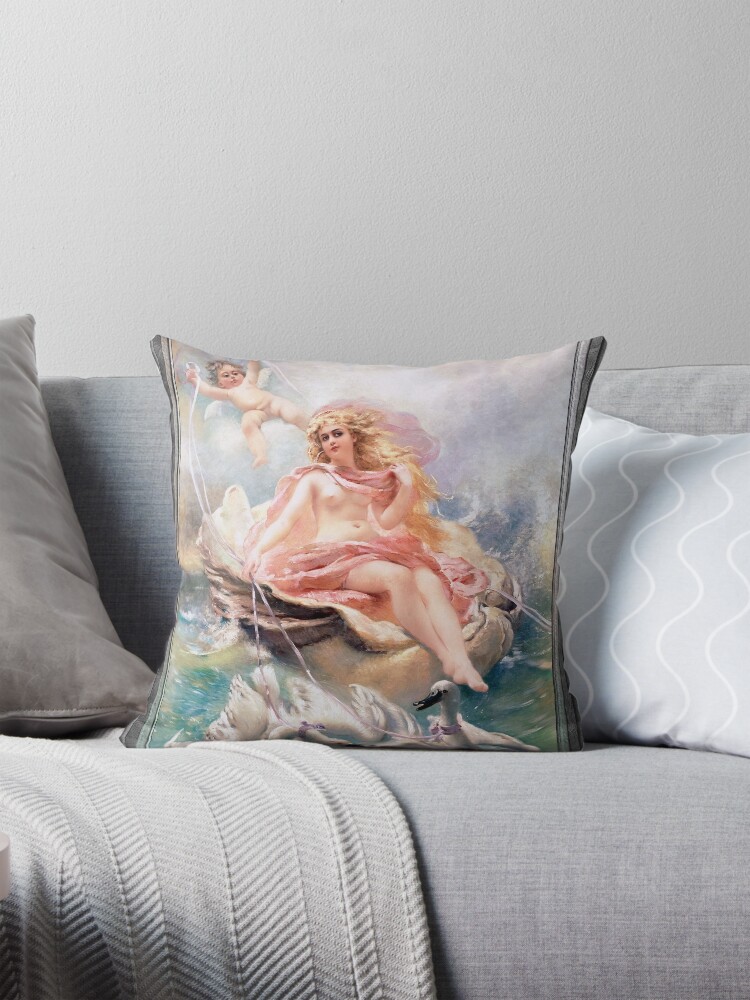
Makovsky’s mastery of classical techniques shines through in the detailed depiction of the figures, textures, and natural elements. The soft texture of the goddess’s flowing hair, the delicate folds of her clothing, and the smoothness of the swans’ feathers all demonstrate his skill in bringing the ethereal into the visual realm. La llum, radiant atmosphere throughout the artwork communicates the theme of purity, divinitat, and the eternal cycle of nature.
The theme of water as a symbol of life, puresa, and fertility is prevalent in the painting. The goddess of water, accompanied by the cherubic guide and the swans, creates a powerful and harmonious image of nature’s beauty and divine intervention.
Water in mythological contexts often represents fluidity, canvi, and the nurturing aspects of life, all of which are conveyed through the painting’s serene depiction of the goddess as she floats effortlessly across the waters.
This painting embodies the 19th-century Russian fascination with classical themes, blending mythological subjects with a refined and sophisticated approach to realism. It showcases a period of artistic exploration that was both romantic and idealized, drawing on ancient mythological figures to embody ideals of beauty, gràcia, and divine connection with nature.
En conclusió, “Goddess of Water” is a masterpiece that combines the beauty of nature with the divine, creating a serene, mystical atmosphere that is both timeless and transcendent. The detailed execution, the symbolic presence of the goddess, angel, and swans, i el tou, flowing colors make this piece a vivid representation of classical mythology, encapsulating the quiet power of water as an eternal, life-giving force.
Informació a continuació derivada de Wikipedia.org
Konstantin Makovsky va ser un influent pintor rus, afiliat a la “Peredvizhniki (Vagabunds)”. Moltes de les seves pintures històriques, com Sota la corona (1889) també conegut com The Russian Bride's Attire i Before the Wedding, mostrava una visió idealitzada de la vida russa dels segles anteriors. Sovint és considerat un representant de l'art acadèmic.
Konstantin Makovsky va néixer a Moscou. El seu pare era la figura de l'art rus i un pintor aficionat, Iégor Ivanovich Makovsky. La seva mare era compositora, i esperava que el seu fill algun dia seguís els seus passos. Els seus germans petits Vladimir i Nikolay i la seva germana Alexandra també es van convertir en pintors.
En 1851 Makovsky va ingressar a l'Escola de Pintura de Moscou, Escultura i Arquitectura on esdevingué el millor estudiant, aconseguir fàcilment tots els premis disponibles. Els seus professors van ser Karl Bryullov i Vasily Tropinin. Les inclinacions de Makovsky pel romanticisme i els efectes decoratius es poden explicar per la influència de Bryullov.
Encara que l'art era la seva passió, també va considerar el que la seva mare havia volgut que fes. Va marxar a buscar compositors als quals pogués referir-se, i primer va anar a França. Abans, sempre havia estat un amant de la música clàssica, i va escoltar moltes peces. Sovint desitjava poder canviar la melodia, o estil d'alguns d'ells per fer-los més agradables. Més tard a la seva vida es va fer realitat.
En 1858 Makovsky va ingressar a l'Acadèmia Imperial de les Arts de Sant Petersburg. Des de 1860 va participar a les exposicions de l'Acadèmia amb pintures com Curing of the Blind (1860) i Agents del Fals Dmitry maten el fill de Boris Godunov (1862). En 1863 Makovsky i tretze estudiants més van fer una protesta contra la configuració de l'Acadèmia de temes de la mitologia escandinava en el concurs per a la Gran Medalla d'Or de l'Acadèmia; tots van deixar l'acadèmia sense un diploma formal.
Makovski es va convertir en membre d'una cooperativa (artel) d'artistes liderats per Ivan Kramskoi, típicament produint pintures de Wanderers sobre la vida quotidiana (Viuda 1865, Venedor d'arengades 1867, etc.). Des de 1870 va ser membre fundador de la Society for Traveling Art Exhibitions i va continuar treballant en quadres dedicats a la vida quotidiana.. Va exposar les seves obres tant a les exposicions de l'Acadèmia com a les Exposicions itinerants d'art dels errants.
Un canvi significatiu en el seu estil es va produir després de viatjar a Egipte i Sèrbia a mitjans de la dècada de 1870. Els seus interessos van canviar dels problemes socials i psicològics als problemes artístics dels colors i la forma.
A la dècada de 1880 es va convertir en un autor de moda de retrats i pintures històriques. A la Fira Mundial de 1889 a París va rebre la Gran Medalla d'Or pels seus quadres La mort d'Ivan el Terrible, El judici de París, i Dimoni i Tamara. Va ser un dels artistes russos més apreciats i ben pagats de l'època. Molts crítics demòcrates el consideraven com un renegat dels Wanderers’ ideals, produint (com Henryk Siemiradzki) obres sorprenents però poc profundes,[2] mentre que altres el veuen com un precursor de l'impressionisme rus.
Makovski va ser assassinat 1915 quan el seu carruatge de cavalls va ser atropellat per un tramvia elèctric a Sant Petersburg.