

bandia an Uisce
An bandia uisce ag péintéir na rúise Konstantin Makovsky (1839 – 1915); ag speisialú i bpictiúir Stairiúla na Rúise a thaispeánann radharc idéalach ar shaol na Rúise sna céadta bliain a chuaigh thart.
An phéintéireacht “bandia an Uisce” is léiriú máistreachta é ar áilleacht dhiaga agus cumhacht an uisce trí mhiotaseolaíocht chlasaiceach. Úsáid shaibhir dathanna an ealaíontóra, soilsiú drámatúil, agus aird chúramach ar mhionsonraí cruthaítear léiriú beoga agus suaimhneach de bhandia an uisce agus í á hiompar ag ealaí trasna fairsinge aigéanach..
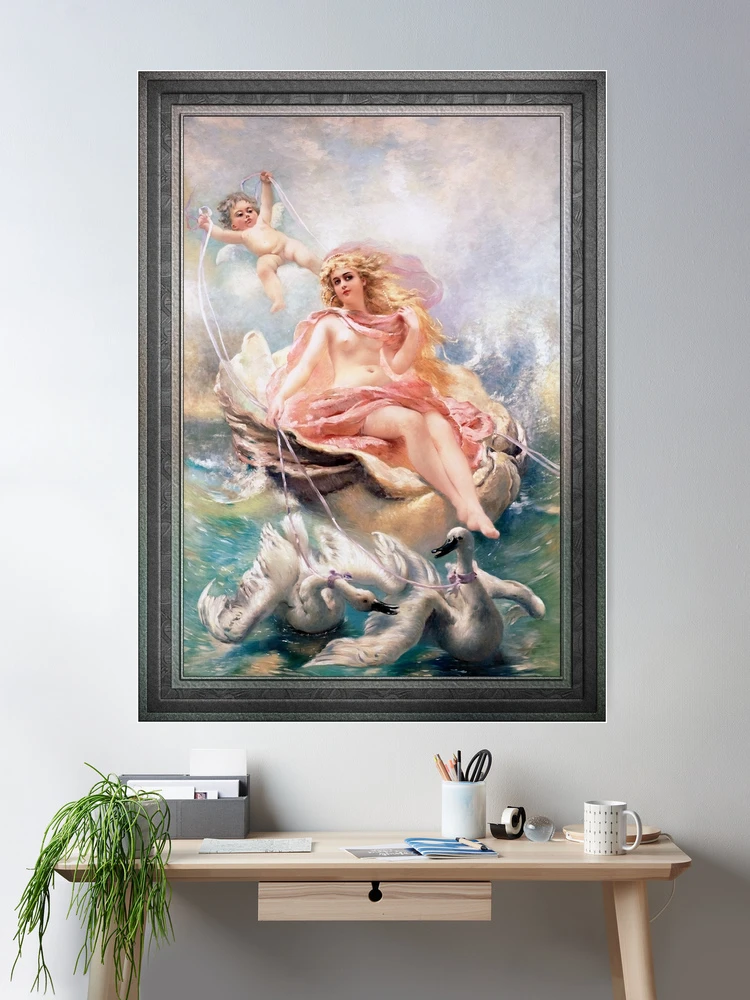
Is é an figiúr lárnach sa saothar ealaíne an bandia í féin, bean álainn le glas órga ag sileadh, a corp draped go páirteach i bándearg agus bog mauve éadach fórsa a cloí go delicately lena foirm, ag nochtadh cuair a colainne.
The goddess is seated serenely in a boat-like structure made of what appears to be soft seashells, floating on undulating waves, with a faint glow surrounding her, symbolizing her divine nature. A aghaidh, calm and composed, carries an air of grace and timeless beauty, reinforcing the ethereal nature of her character.
Taobh thiar di, a cherubic figure, a child-like angel, is tethered to the goddess by ribbons, symbolizing a divine connection between the mortal and the immortal. This child, whose face expresses innocence and purity, seems to guide or assist in the goddess’s journey across the waters.
The angel holds onto ribbons that extend out into the air, tethering the goddess to the swans pulling her vessel. The gentle hands of the cherub grasp the flowing ribbons with precision, and his childlike features lend a sense of playful innocence to the otherwise tranquil scene.
The swans, regal and powerful, are the carriers of the goddess, their long necks extending gracefully through the scene, and their white feathers rendered with a soft, almost glowing light, enhancing their majestic appearance.
The swans pull the boat forward, seemingly in motion as the ripples of water, shown through the smooth, soft waves, reflect the calmness of the scene. The swans’ presence in mythology often symbolizes purity and spiritual grace, which complements the goddess’s serene and powerful nature.
The background of the painting is a vast and dreamy oceanic landscape, bathed in soft, warm light, as if the sun itself is fading into the horizon. An t-uisce, although calm and peaceful, seems to ripple with the movement of the swans, adding life and a sense of motion to the otherwise still moment. The sky above is filled with soft, billowy clouds, reminiscent of a serene and timeless world where the goddess’s presence is natural and eternal.
The mood of the painting is peaceful, suaimhneach, and divine. The soft pastel colors used in the piece lend a sense of tranquility, while the glowing light surrounding the goddess and the angel enhances the mystical nature of the scene. There is a harmony in the painting that speaks to the balance of the elements—water, air, and earth—through the goddess’s gentle interaction with the swans, the water, and the sky.
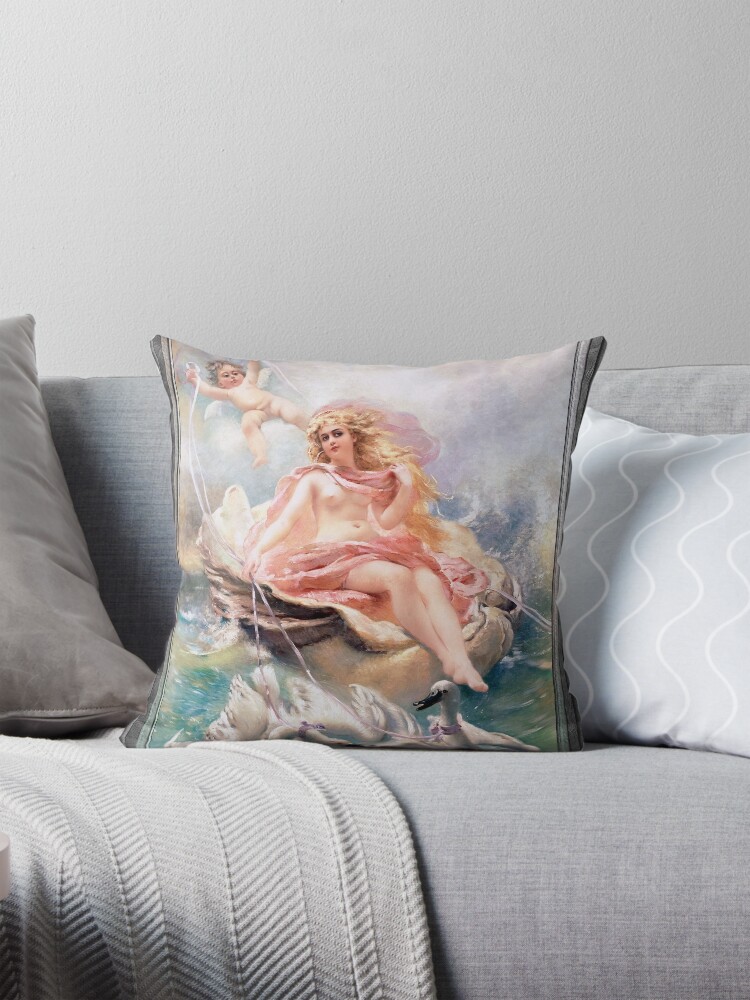
Makovsky’s mastery of classical techniques shines through in the detailed depiction of the figures, uigeachtaí, agus eilimintí nádúrtha. The soft texture of the goddess’s flowing hair, the delicate folds of her clothing, and the smoothness of the swans’ feathers all demonstrate his skill in bringing the ethereal into the visual realm. An solas, radiant atmosphere throughout the artwork communicates the theme of purity, divinity, and the eternal cycle of nature.
The theme of water as a symbol of life, íonachta, and fertility is prevalent in the painting. The goddess of water, accompanied by the cherubic guide and the swans, creates a powerful and harmonious image of nature’s beauty and divine intervention.
Water in mythological contexts often represents fluidity, change, and the nurturing aspects of life, all of which are conveyed through the painting’s serene depiction of the goddess as she floats effortlessly across the waters.
This painting embodies the 19th-century Russian fascination with classical themes, blending mythological subjects with a refined and sophisticated approach to realism. It showcases a period of artistic exploration that was both romantic and idealized, drawing on ancient mythological figures to embody ideals of beauty, grásta, and divine connection with nature.
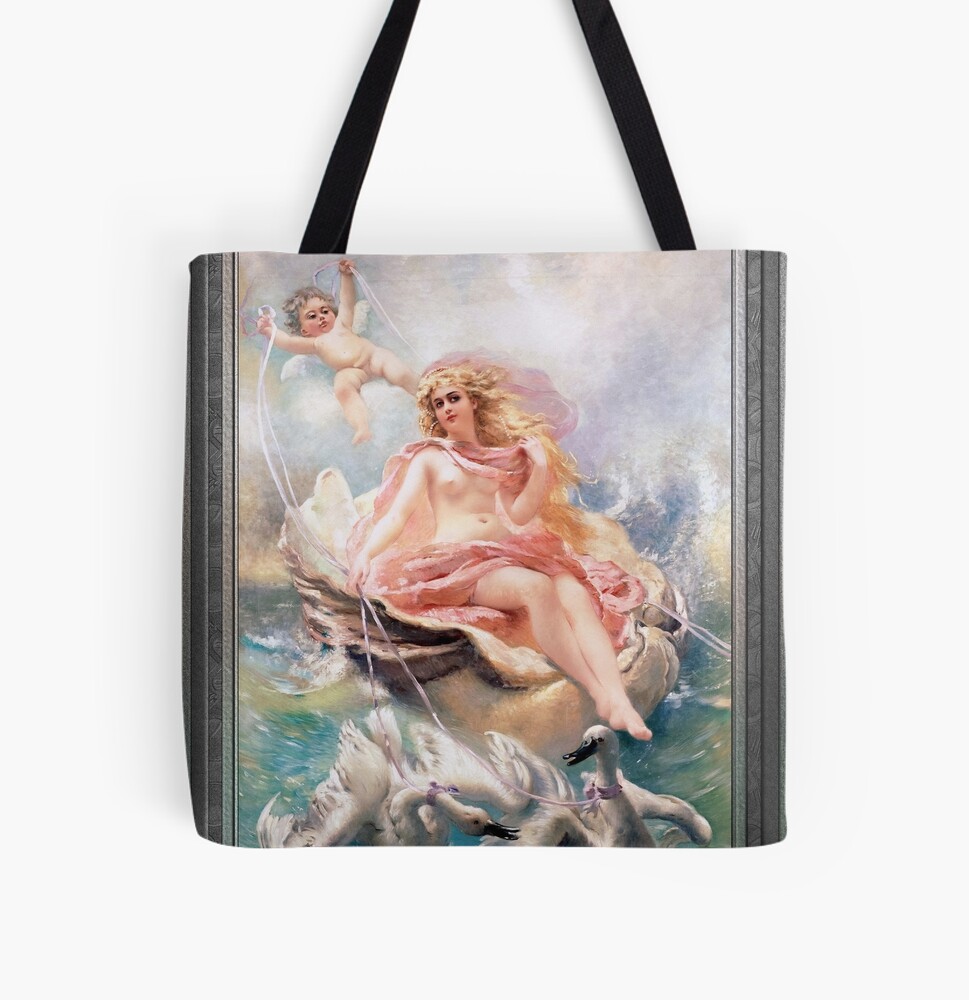
Mar fhocal scoir, “bandia an Uisce” is a masterpiece that combines the beauty of nature with the divine, creating a serene, mystical atmosphere that is both timeless and transcendent. The detailed execution, the symbolic presence of the goddess, angel, and swans, agus an bog, flowing colors make this piece a vivid representation of classical mythology, encapsulating the quiet power of water as an eternal, life-giving force.
Faisnéis Thíos Díorthaithe ó Wikipedia.org
Bhí Konstantin Makovsky ina phéintéir Rúiseach a raibh tionchar aige, cleamhnaithe leis an “Peredvizhniki (Fánaithe)”. Go leor dá phictiúir stairiúla, ar nós Faoi bhun na Corónach (1889) ar a dtugtar freisin The Russian Bride's Attire and Before the Wedding, léirigh radharc idéalach ar shaol na Rúise na gcéadta bliain roimhe sin. Is minic a mheastar é mar ionadaí d’ealaín Acadúil.
Rugadh Konstantin Makovsky i Moscó. Ba é a athair an figiúr ealaíne Rúiseach agus péintéir amaitéarach, Yegor Ivanovich Makovsky. Cumadóir ab ea a mháthair, agus bhí súil aici go leanfadh a mac lá amháin ina cois. Chuaigh a dheartháireacha níos óige Vladimir agus Nikolay agus a dheirfiúr Alexandra ar aghaidh chun bheith ina bpéintéirí freisin.
I 1851 Chuaigh Makovsky isteach i Scoil Péinteála Moscó, Dealbhóireacht agus Ailtireacht áit a raibh sé ar an mac léinn ab fhearr, na dámhachtainí uile atá ar fáil a fháil go héasca. Ba iad a mhúinteoirí Karl Bryullov agus Vasily Tropinin. Is féidir claontaí Makovsky ar an Rómánsachas agus éifeachtaí maisiúla a mhíniú trí thionchar Bryullov.
Cé gurbh í an ealaín a paisean, rinne sé machnamh freisin ar a raibh a mháthair ag iarraidh air a dhéanamh. D'imigh sé ar lorg cumadóirí a bhféadfadh sé tagairt a dhéanamh dóibh, agus chuaigh sé chun na Fraince ar dtús. Roimh, bhí grá riamh aige don cheol clasaiceach, agus d’éist sé le go leor píosaí. Ba mhinic a theastaigh uaidh go bhféadfadh sé an fonn a athrú, nó stíl cuid acu chun iad a dhéanamh níos taitneamhaí. Níos déanaí ina shaol tháinig sé i gcrích.
I 1858 Chuaigh Makovsky isteach san Acadamh Ealaíon Impiriúil i Saint Petersburg. Ó 1860 ghlac sé páirt i dtaispeántais an Acadaimh le pictiúir mar Curing of the Blind (1860) Maraíonn Gníomhairí an False Dmitry mac Boris Godunov (1862). I 1863 Bhí agóid ar siúl ag Makovsky agus trí mhac léinn déag eile in aghaidh shuíomh an Acadaimh d’ábhair ó mhiotaseolaíocht Chríoch Lochlann sa chomórtas do Bhonn Mór Óir an Acadaimh.; d'fhág siad go léir an acadamh gan dioplóma foirmiúil.
Tháinig Makovsky ina bhall de chomharchumann (airteil) ealaíontóirí faoi stiúir Ivan Kramskoi, go tipiciúil ag táirgeadh pictiúir Wanderers ar an saol laethúil (baintreach 1865, Díoltóir Scadán 1867, srl.). Ó 1870 bhí sé ar dhuine de bhunaitheoirí an Chumainn Taispeántais Ealaíne Taistil agus lean sé ag obair ar phictiúir a bhí dírithe ar an saol laethúil.. Thaispeáin sé a shaothair ag taispeántais an Acadaimh agus ag Taispeántais Ealaíne Taistil na nDaoine Wanderers.
Tháinig athrú suntasach ar a stíl tar éis taisteal go dtí an Éigipt agus an tSeirbia i lár na 1870idí. D'athraigh a spéiseanna ó fhadhbanna sóisialta agus síceolaíochta go fadhbanna ealaíne dathanna agus cruth.
Sna 1880idí rinneadh údar faiseanta de phortráidí agus de phictiúir stairiúla de. Ag Aonach an Domhain de 1889 i bPáras fuair sé an Bonn Óir Mór as a phictiúir Death of Ivan the Terrible, Breithiúnas Pháras, agus Demon agus Tamara. Bhí sé ar dhuine de na healaíontóirí Rúiseacha is mó a raibh meas agus ard-íoc air ag an am. Mheas go leor criticeoirí daonlathacha é mar renegade de na Wanderers’ idéalacha, ag táirgeadh (cosúil le Henryk Siemiradzki) oibreacha buailte ach éadomhain,[2] agus feiceann daoine eile é mar réamhtheachtaí de chuid Impriseanachas na Rúise.
Maraíodh Makovsky i 1915 nuair a bhuail tram leictreach a charráiste capall i St Petersburg.