

Vatnsgyðja
Vatnsgyðja eftir rússneskan málara Konstantin Makovsky (1839 – 1915); sem sérhæfir sig í rússneskum sögulegum málverkum sem sýna hugsjónamynd af rússnesku lífi á liðnum öldum.
Málverkið “Vatnsgyðja” er meistaraleg lýsing á guðlegri fegurð og krafti vatnsins í gegnum klassíska goðafræði. Rík litanotkun listamannsins, dramatísk lýsing, og vandlega athygli á smáatriðum skapar skæra og kyrrláta mynd af gyðju vatnsins þegar hún er flutt af álftum yfir víðáttumikið úthaf.
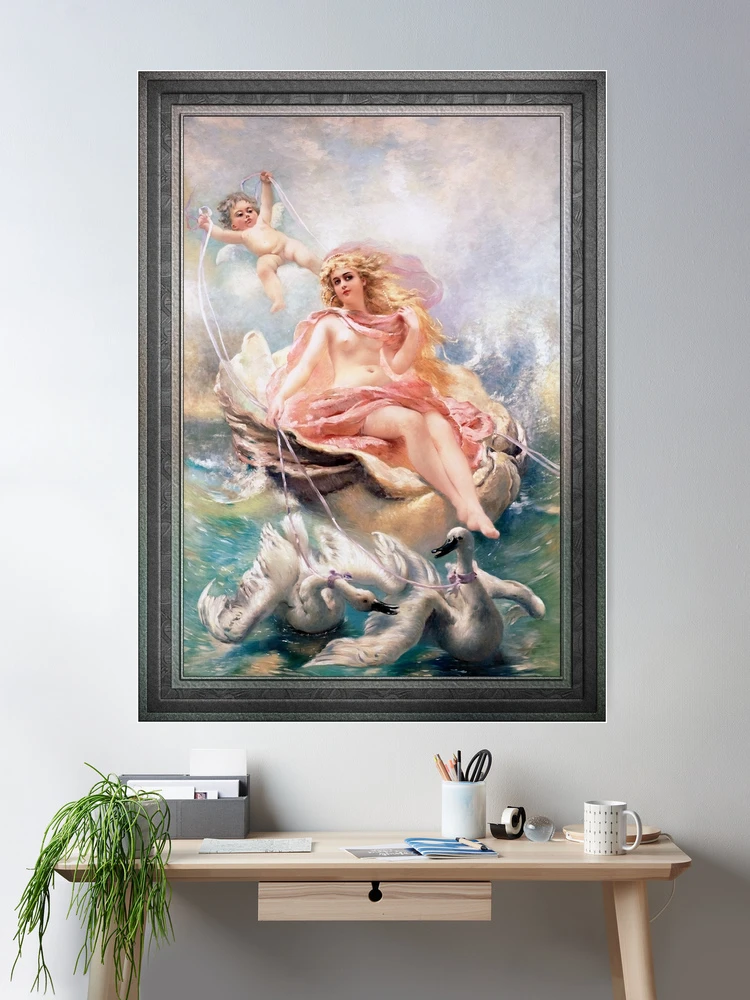
Aðalpersónan í listaverkinu er gyðjan sjálf, falleg kona með flæðandi gyllta lokka, líkami hennar að hluta til dáður í bleikum og mjúkum ljósum ljósum klút sem loðir fínlega við form hennar, sýna sveigjur líkama hennar.
Gyðjan situr kyrrlát í bátalíkri byggingu úr því sem virðist vera mjúkar skeljar, floating on undulating waves, with a faint glow surrounding her, symbolizing her divine nature. Andlit hennar, calm and composed, carries an air of grace and timeless beauty, reinforcing the ethereal nature of her character.
Fyrir aftan hana, a cherubic figure, a child-like angel, is tethered to the goddess by ribbons, symbolizing a divine connection between the mortal and the immortal. This child, whose face expresses innocence and purity, seems to guide or assist in the goddess’s journey across the waters.
The angel holds onto ribbons that extend out into the air, tethering the goddess to the swans pulling her vessel. The gentle hands of the cherub grasp the flowing ribbons with precision, and his childlike features lend a sense of playful innocence to the otherwise tranquil scene.
The swans, regal and powerful, are the carriers of the goddess, langir hálsar þeirra teygja sig tignarlega í gegnum vettvanginn, og hvítar fjaðrir þeirra mjúkar, næstum glóandi ljós, auka tignarlegt útlit þeirra.
Svanirnir draga bátinn áfram, virðist á hreyfingu eins og gára vatnsins, sýnt í gegnum sléttuna, mjúkar öldur, endurspegla rólegheitin á vettvangi. Nærvera svana í goðafræði táknar oft hreinleika og andlega náð, sem bætir við hið kyrrláta og kraftmikla eðli gyðjunnar.
Bakgrunnur málverksins er víðáttumikið og draumkennt úthafslandslag, baðaður í mjúku, heitt ljós, eins og sólin sjálf sé að hverfa inn í sjóndeildarhringinn. Vatnið, þó rólegt og friðsælt, virðist gára við hreyfingu álftanna, að bæta lífi og tilfinningu fyrir hreyfingu við annars kyrrt augnablik. Himinninn fyrir ofan er fullur af mjúku, bylgjandi ský, reminiscent of a serene and timeless world where the goddess’s presence is natural and eternal.
The mood of the painting is peaceful, kyrrlátur, and divine. The soft pastel colors used in the piece lend a sense of tranquility, while the glowing light surrounding the goddess and the angel enhances the mystical nature of the scene. There is a harmony in the painting that speaks to the balance of the elements—water, air, and earth—through the goddess’s gentle interaction with the swans, vatnið, and the sky.
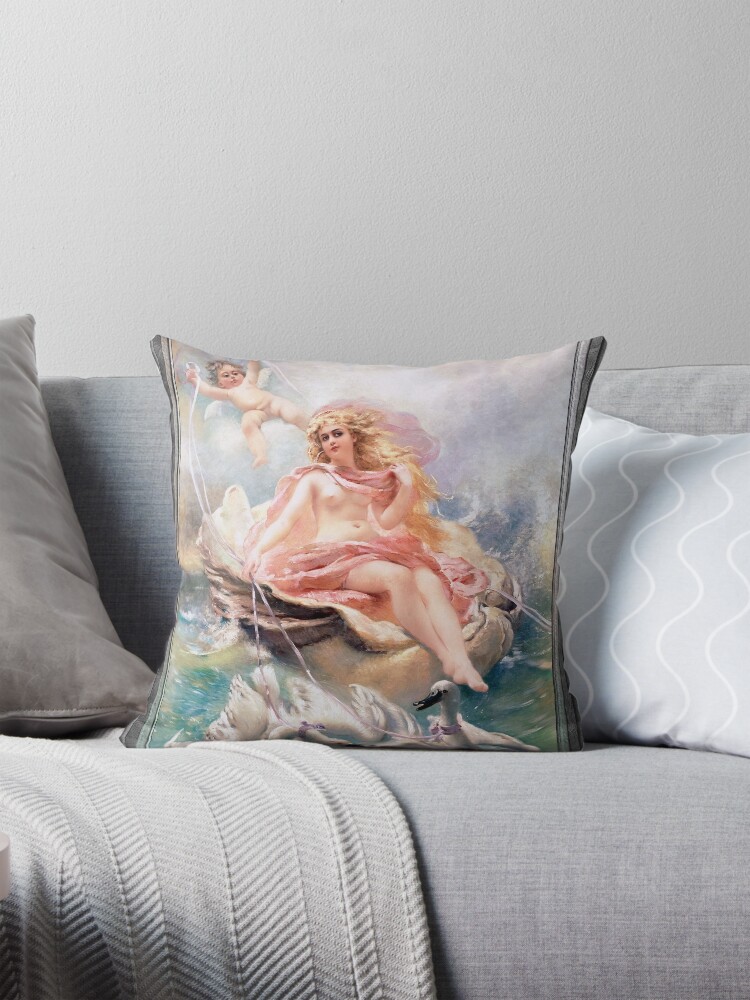
Makovsky’s mastery of classical techniques shines through in the detailed depiction of the figures, áferð, and natural elements. The soft texture of the goddess’s flowing hair, fíngerðar fellingar á klæðnaði hennar, og sléttur fjaðranna álftanna sýnir öll kunnáttu hans í að koma hinu himneska inn í sjónrænt svið.. Ljósið, geislandi andrúmsloft í gegnum listaverkið miðlar þema hreinleika, guðdómleika, og eilífa hringrás náttúrunnar.
Þemað vatn sem tákn um lífið, hreinleiki, og frjósemi er ríkjandi í málverkinu. Gyðja vatnsins, í fylgd með kerúbaleiðsögumanninum og álftunum, skapar kraftmikla og samræmda mynd af fegurð náttúrunnar og guðdómlegu inngripi.
Vatn í goðafræðilegu samhengi táknar oft flæði, breyta, og nærandi þætti lífsins, sem allt er miðlað í gegnum kyrrláta lýsingu málverksins af gyðjunni þar sem hún svífur áreynslulaust yfir vötnin.
Þetta málverk sýnir rússneska hrifningu 19. aldar af klassískum þemum, blanda saman goðsögulegum viðfangsefnum við fágaða og fágaða nálgun á raunsæi. Það sýnir tímabil listrænnar könnunar sem var bæði rómantískt og hugsjónakennt, teiknað er á fornar goðsagnakenndar fígúrur til að fela í sér fegurðarhugsjónir, Grace, og guðleg tengsl við náttúruna.
Að lokum, “Vatnsgyðja” er meistaraverk sem sameinar fegurð náttúrunnar við hið guðlega, skapa friðsælt, dulrænt andrúmsloft sem er bæði tímalaust og yfirgengilegt. Nákvæm framkvæmd, táknræna nærveru gyðjunnar, engill, og álftir, og það mjúka, Fljótandi litir gera þetta verk að skærri framsetningu klassískrar goðafræði, umlykja hljóðlátan kraft vatnsins sem eilífð, lífgefandi kraftur.
Upplýsingar hér að neðan fengnar af Wikipedia.org
Konstantin Makovsky var áhrifamikill rússneskur málari, tengd við “Peredvizhniki (Flakkarar)”. Margar af sögulegum málverkum hans, eins og Beneath the Crown (1889) einnig þekkt sem The Russian Bride's Attire og Before the Wedding, sýndi hugsjónasýn á rússneskt líf fyrri alda. Hann er oft talinn fulltrúi akademískrar listar.
Konstantin Makovsky fæddist í Moskvu. Faðir hans var rússneskur listamaður og áhugamálari, Yegor Ivanovich Makovsky. Móðir hans var tónskáld, og hún vonaði að sonur hennar myndi einn daginn feta í fótspor hennar. Yngri bræður hans Vladimir og Nikolay og systir hans Alexandra fóru einnig að verða málarar.
Í 1851 Makovsky gekk inn í Moskvu málaraskólann, Skúlptúr og arkitektúr þar sem hann varð efsti nemandi, fá auðveldlega öll tiltæk verðlaun. Kennarar hans voru Karl Bryullov og Vasily Tropinin. Hneigðir Makovsky til rómantíkur og skreytingar má skýra með áhrifum Bryullov.
Þó listin væri hans ástríðu, hann hugleiddi líka hvað móðir hans hafði viljað að hann gerði. Hann lagði af stað til að leita að tónskáldum sem hann gæti átt við, og fór fyrst til Frakklands. Áður, hann hafði alltaf verið unnandi klassískrar tónlistar, og hlustaði á marga þætti. Hann óskaði þess oft að hann gæti skipt um lag, eða stíl sumra þeirra til að gera þá skemmtilegri. Síðar á ævinni rættist það.
Í 1858 Makovsky gekk inn í Imperial Academy of Arts í Sankti Pétursborg. Frá 1860 hann tók þátt í sýningum akademíunnar með málverkum eins og Curing of the Blind (1860) og Agents of the False Dmitry drepa son Boris Godunov (1862). Í 1863 Makovsky og þrettán aðrir nemendur efndu til mótmæla gegn uppsetningu akademíunnar á efni úr skandinavísku goðafræðinni í samkeppninni um Stóru gullverðlaun háskólans.; allir fóru úr akademíunni án formlegs prófskírteinis.
Makovsky gerðist meðlimur í samvinnufélagi (artel) listamanna undir forystu Ivan Kramskoi, framleiðir venjulega Wanderers málverk í daglegu lífi (Ekkja 1865, Síldarsala 1867, o.s.frv.). Frá 1870 hann var stofnfélagi Félags um farandlistasýningar og hélt áfram að vinna að málverkum tileinkað daglegu lífi. Hann sýndi verk sín bæði á Academia sýningum og farandlistasýningum flakkara..
Veruleg breyting á stíl hans varð eftir að hafa ferðast til Egyptalands og Serbíu um miðjan áttunda áratuginn. Áhugamál hans breyttust úr félagslegum og sálrænum vandamálum yfir í listræn vandamál lita og forms.
Á níunda áratugnum varð hann tískuhöfundur portrettmynda og sögulegra málverka. Á heimssýningunni í 1889 í París hlaut hann Stóra gullverðlaunin fyrir málverk sín Dauði Ívans hræðilega, Parísardómurinn, og Demon og Tamara. Hann var einn af virtustu og hálaunuðustu rússneskum listamönnum þess tíma. Margir lýðræðislegir gagnrýnendur töldu hann vera fráfalla flakkara’ hugsjónir, framleiða (eins og Henryk Siemiradzki) sláandi en grunnt verk,[2] á meðan aðrir líta á hann sem forvera rússneska impressjónismans.
Makovsky var drepinn í 1915 þegar hestvagn hans varð fyrir rafmagnssporvagni í Sankti Pétursborg.