

Grand Gallery of the Louvre in Ruins c1796
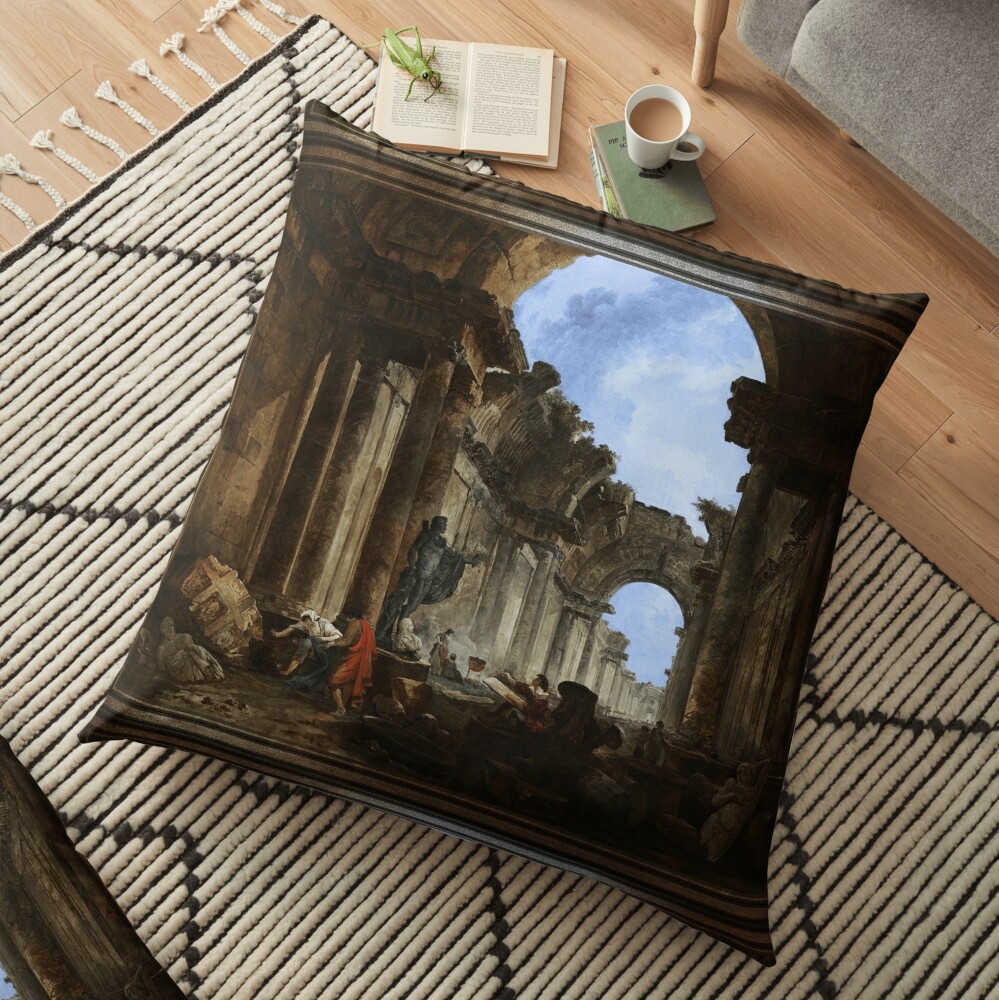
Robert Hubert‘s “Imaginary View of the Grand Gallery of the Louvre in Ruins,” painted circa 1796, is a stunning and dramatic depiction of the famed Louvre Gallery in Paris, envisioned as a ruin. The artist, renowned for his imaginative landscapes and depictions of architectural grandeur, presents an evocative and somber vision of the Louvre in a state of decay, playing on the theme of time’s power to both create and destroy.
Nascut a 1733 i morir en 1808, Robert’s work often explored the juxtaposition of classical beauty and the inevitability of ruin, which is captured with masterful skill in this piece. Through the use of light, ombra, and a carefully structured composition, Robert imbues this imaginary scene with a sense of profound melancholy, while also offering a reflection on the passage of history.
Taula de continguts
El tema principal i la composició
In the center of Robert’s canvas stands the magnificent but crumbling architecture of the Grand Gallery of the Louvre, an iconic symbol of Parisian culture and art. The gallery, once a space of grandeur and cultural significance, is now portrayed in ruins. The columns that once supported the structure are cracked and crumbling, and the arches appear weakened, as though they may collapse at any moment.
The absence of a roof is particularly striking, letting in vast expanses of blue sky that contrast sharply with the somber, weathered ruins below. The ruin’s grandeur is evident, but it has been overtaken by time’s erosion, giving the viewer a sense of abandonment and decay.
A group of figures populates the scene, scattered throughout the space. They are small in scale, almost dwarfed by the monumental ruins, and their actions add a layer of intrigue to the piece. En primer pla, one figure appears to be assisting another, while two others sit on the ground amidst fallen columns and broken statues.
These figures seem to be the remnants of a once-vibrant cultural hub, now reduced to mere observers in the face of destruction. Their presence invites the viewer to contemplate the human aspect of decay, how history is shaped not only by the grand structures but also by the people who live within and around them.
Objectes i Materials
The objects scattered throughout the ruins speak volumes about the once-immense cultural importance of the gallery. Broken marble sculptures lie at the feet of the figures, some with fragments of limbs and torsos, others completely shattered. These pieces, which would have once been prized works of art, now lie in disrepair, lost to the ravages of time and neglect. On the ground, shards of pottery and scattered debris further emphasize the ruinous state of the gallery.
The materials of the painting, oli sobre llenç, allow Robert to capture an astonishing level of detail and texture. The decaying marble columns, with their chipped edges and weathered surfaces, seem almost tactile, as if one could reach out and feel the roughness of the stone.
Les figures, too, are depicted with meticulous care, their draped garments flowing gently in the breeze that sweeps through the open space. Their expressions, though somber, seem to reflect a sense of resignation rather than despair. The juxtaposition of the living, albeit defeated, figures against the unyielding stone ruins serves to underscore the transient nature of both life and art.
Terrain and Atmosphere
The terrain of the scene, though part of a grand gallery, is overrun with nature’s intrusion. Vegetation, including ivy and creeping vines, winds through the broken arches and columns, asserting nature’s inevitable reclaiming of manmade structures.
The floor is littered with rubble, large stone blocks, and shattered architectural elements that once formed the orderly, majestic design of the gallery. Despite the devastation, there is a beauty in the way nature and decay coexist in the scene. The ivy creeping through the cracks in the stone is not a sign of destruction but a reminder of the resilience of life, even in the face of human folly.
The atmosphere in Robert’s painting is tinged with a melancholic sense of inevitability. The open sky, with its soft clouds and light, contrasts with the weight of the ruins, creating a feeling of duality. On the one hand, the light suggests hope, a promise of renewal and rebirth, while the ruin itself speaks to the fragility of human achievement. The overall mood is contemplative, urging the viewer to reflect not only on the history of the Louvre as a symbol of culture and art but also on the universal themes of decay, change, and time’s unrelenting progression.
Estil, Tema, i l'estat d'ànim
The style of Robert’s painting is rooted in the classical tradition, with precise and deliberate brushwork that lends a sense of realism to the imagined scene. malgrat això, his composition moves beyond mere representation, incorporating elements of the sublime. The grandeur of the ruins, set against a vast and empty sky, evokes feelings of awe and melancholy. There is no attempt to idealize the past; una mica, Robert captures a moment of ruin and decay, allowing the viewer to confront the inevitable demise of all things.
The theme of the painting revolves around the passage of time and the impermanence of human endeavor. Robert presents the Louvre, one of the most famous cultural institutions in the world, as a monument to what was once grand and is now in ruins.
The idea of destruction is central to the piece, yet there is also an implicit message of renewal. The passage of time, while destructive, also allows for new beginnings, as nature slowly overtakes the ruins, and the cycle of life continues.
The mood of the painting is one of melancholy and introspection. The viewer is invited to meditate on the transitory nature of existence, the fragility of human creations, and the passage of time. It is a reminder that, despite the grandiosity of human accomplishments, all things are subject to decay. No obstant això, in this decay, there is also beauty—the beauty of nature’s resilience and the memory of what once was.
Grand Gallery of the Louvre in Ruins is a retouched digital art old masters reproduction of a public domain image that is available as a Impressió de tela en línia.
Artista Bio
A sota de la informació derivada de Wikipedia.org
Hubert Robert va néixer a París a Barcelona 1733. El seu pare, Nicolas Robert, va estar al servei de François-Joseph de Choiseul, marquès de Stainville, un important diplomàtic de Lorena. El jove Robert va acabar els seus estudis amb els jesuïtes al Col·legi de Navarra de 1751 i va entrar a l'atelier de l'escultor Michel-Ange Slodtz, que li va ensenyar disseny i perspectiva, però el va animar a recórrer a la pintura. En 1754 marxà a Roma en el tren d'Étienne-François de Choiseul, fill de l’empresari del seu pare, que havia estat nomenat ambaixador francès i que esdevindria secretari d 'afers exteriors de Lluís XV el 2006 1758.
Va passar onze anys a Roma, un temps notable; després que s’acabés la residència oficial del jove artista a l’Acadèmia Francesa de Roma, es va recolzar amb obres que produïa per a coneixedors visitants com l'abad de Saint-Non, que va portar Robert a Nàpols a l'abril 1760 per visitar les ruïnes de Pompeia. El marquès de Marigny, el director dels Bâtiments du Roi va estar al corrent del seu desenvolupament en correspondència amb Natoire, director de l'Acadèmia Francesa, que va instar els pensionistes a esbossar fora de casa, de la natura: Robert no necessitava cap urgència; els dibuixos dels seus quaderns de dibuixos documenten els seus viatges: Vila d'Aquest, Caprarola.
Vista del port de Rippeta a Roma, c. 1766, que mostra l'antic Panteó Romà al costat d'un port imaginari