

Landscape with a Stairs and Obelisk
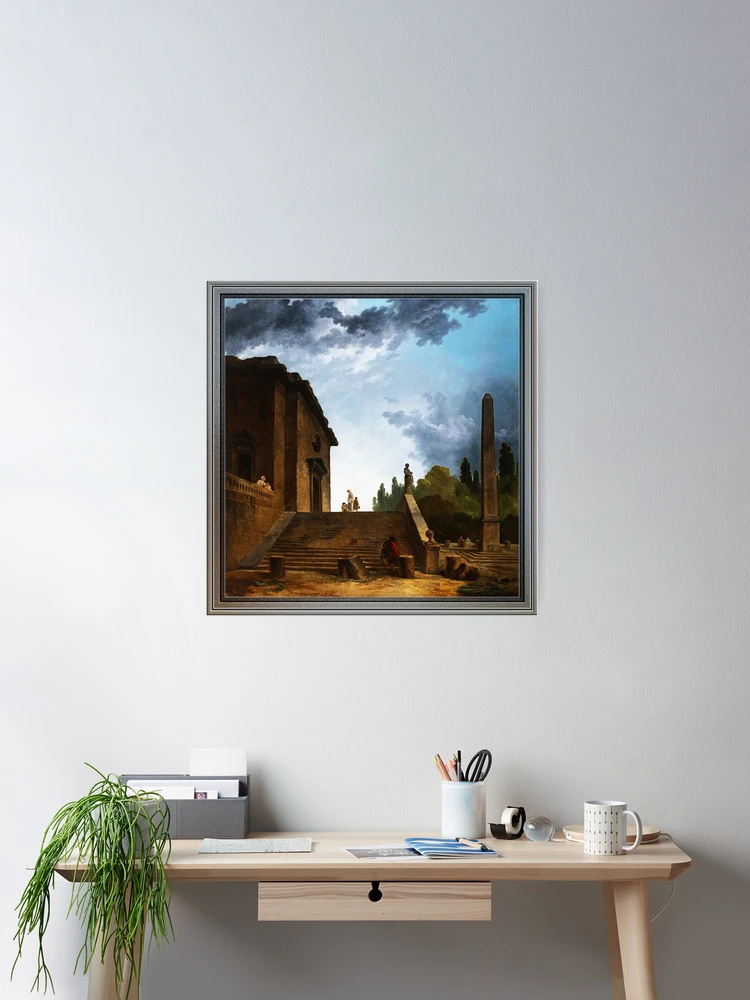
“Landscape with a Stairs and Obelisk” is a striking example of 18th-century French landscape painting, creat per Robert Hubert around 1770-1780. Known for his fascination with classical ruins and grand architectural settings, Robert (1733 – 1808) captures a scene that exemplifies the romanticized aesthetic of the period. His work blends natural and man-made elements, illustrating a harmonious coexistence between the human-crafted structures and the vast, timeless landscape. This piece invites viewers to immerse themselves in a world where history, natura, and architecture converge.
Taula de continguts
Assumpte i composició principal
The central focus of this artwork is the majestic set of stairs leading to a grand building or temple, complementat amb l'elevat obelisc al fons. Les escales en si estan patides i semblen fetes de pedra, els seus passos condueixen cap a una estructura de pedra. La presència d'aquestes escales fa pensar en un entorn antic o noble, possiblement vinculats a referències històriques o mitològiques, característica de les representacions romàntiques de Robert de les ruïnes clàssiques.
En primer pla, es representen dos individus: un assegut i un altre dret a les escales. Aparentment són irrellevants per a la grandesa de l'escenari, però encara juguen un paper vital per afegir una presència humana que contrasti amb l'arquitectura monumental.. La seva col·locació ajuda a equilibrar l'escala de la composició, proporcionant una sensació de proporció humana enmig de les estructures imponents.
L'obelisc, an ancient Egyptian monument re-imagined within a classical European setting, stands as another focal point to the right side of the composition. This object symbolizes the ancient world, evoking the sense of a lost civilization while anchoring the piece in the romantic classical themes Robert was known for. The use of the obelisk reinforces the notion of timelessness, a central theme in much of Robert’s work, where classical ruins are idealized to evoke both nostalgia and contemplation of past civilizations.
Objectes i terreny
The terrain surrounding the stairs and obelisk is lush and expansive. The ground appears to be cultivated or at least managed, with well-kept paths leading through the terrain. A la dreta, we see a few figures in the distance, seated or walking, giving the landscape a dynamic feel while reinforcing the setting’s tranquility. The backdrop of trees, with their expansive reach toward the sky, provides a striking contrast against the harsh lines of the stone architecture. The viewer’s eye is naturally drawn toward the horizon, where the trees begin to thin out, leading to a space dominated by clouds and a slightly darker sky.
The juxtaposition of human-made elements—such as the staircase, the obelisk, and the figures—and nature highlights the tension between civilization and the natural world. Robert’s careful rendering of the foliage, combined with the crisp outlines of the architectural elements, underscores the precision of his technique. This harmony between nature and architecture is a key characteristic of the Rococo and Neoclassical periods, where the human desire for understanding and order is reflected through such meticulously designed structures amid nature’s free-flowing form.
Estil i tècnica
Robert’s style in this work is distinctly Rococo with elements of Neoclassicism, blending the ornate with the classical. El seu ús de la llum, ombra, and texture creates a sense of depth and dimension, inviting the viewer to step into the landscape. The clouds in the sky seem to swirl in dramatic motion, contrasting with the stillness of the stone objects below. This use of light and dark not only adds to the mood but also enhances the sense of timelessness that pervades the entire scene.
The application of light is masterful, amb les ombres que s'arrosseguen pels graons de pedra, destacant la textura resistent a la intempèrie de l'estructura. L'obelisc, també, s'il·lumina amb suau, llum difusa, donant-li una qualitat gairebé etèria. Les figures, petit en comparació amb els objectes que l'envolten, estan subtilment ombrejats, emfatitzant encara més el seu paper secundari dins de la composició més àmplia.
La tècnica de Robert, mentre se centra en el detall naturalista, manté una interpretació idealitzada de les ruïnes. Les roques i la pedra no són simplement representacions de la decadència, sinó que estan impregnades d'una sensació de nostàlgia romàntica per una època passada.. Les pedres semblen tenir una qualitat atemporal, fent-los no només relíquies del passat, sinó símbols de bellesa perdurable.
Estat d'ànim i tema
L'estat d'ànim de la pintura és de contemplació tranquil·la. La configuració, amb les seves estructures tranquil·les però impressionants, convida els espectadors a reflexionar sobre el passat, el pas del temps, i la impermanència de les creacions humanes. The natural landscape, in its lushness and vividness, contrasts with the stone architecture, suggesting the ephemeral nature of human achievement against the vast, enduring power of nature.
The classical ruins, while not overtly ancient in this depiction, invoke the grandeur of civilizations long past, evoking a sense of nostalgia and reverence for the lost civilizations of Rome and Egypt. L'obelisc, with its Egyptian origins, stands as a reminder of these ancient powers. By choosing to depict such ruins, Robert not only preserves the legacy of these ancient structures but also elevates them, presenting them as objects of beauty rather than mere remnants of past civilizations.
The inclusion of figures adds a human touch to the scene, but their small scale and passive actions suggest that humanity, while significant, is but a fleeting moment in the timeline of history. The vast sky, dotted with dark clouds and illuminated by bursts of light, further amplifies the theme of nature’s dominance over time and human endeavors.
Conclusió
“Landscape with a Stairs and Obelisk” is a masterful example of Hubert Robert’s ability to merge the beauty of nature with the elegance of classical architecture. The scene captures a moment where the monumental and the natural coexist, creating a serene yet thought-provoking atmosphere. Robert’s meticulous attention to detail, his skillful use of light and shadow, and his celebration of classical ruins all serve to reinforce the timeless theme of nature’s dominance and the fleeting nature of human achievement. This work invites the viewer not only to admire its technical brilliance but to reflect on the deeper themes of history, temps, and memory.
Landscape with a Stairs and Obelisk is a retouched digital art old masters reproduction of a public domain image that is available as a Impressió de tela enrotllada en línia.
Artista Bio
A sota de la informació derivada de Wikipedia.org
Hubert Robert va néixer a París a Barcelona 1733. El seu pare, Nicolas Robert, va estar al servei de François-Joseph de Choiseul, marquès de Stainville, un important diplomàtic de Lorena. El jove Robert va acabar els seus estudis amb els jesuïtes al Col·legi de Navarra de 1751 i va entrar a l'atelier de l'escultor Michel-Ange Slodtz, que li va ensenyar disseny i perspectiva, però el va animar a recórrer a la pintura. En 1754 marxà a Roma en el tren d'Étienne-François de Choiseul, fill de l’empresari del seu pare, que havia estat nomenat ambaixador francès i que esdevindria secretari d 'afers exteriors de Lluís XV el 2006 1758.
Va passar onze anys a Roma, un temps notable; després que s’acabés la residència oficial del jove artista a l’Acadèmia Francesa de Roma, es va recolzar amb obres que produïa per a coneixedors visitants com l'abad de Saint-Non, que va portar Robert a Nàpols a l'abril 1760 per visitar les ruïnes de Pompeia. El marquès de Marigny, el director dels Bâtiments du Roi va estar al corrent del seu desenvolupament en correspondència amb Natoire, director de l'Acadèmia Francesa, que va instar els pensionistes a esbossar fora de casa, de la natura: Robert no necessitava cap urgència; els dibuixos dels seus quaderns de dibuixos documenten els seus viatges: Vila d'Aquest, Caprarola.
Vista del port de Rippeta a Roma, c. 1766, que mostra l'antic Panteó Romà al costat d'un port imaginari
El contrast entre les ruïnes de l’antiga Roma i la vida del seu temps va excitar el seu major interès. Va treballar durant un temps a l’estudi de Pannini, la influència de la qual es pot veure a la Imaginary View of the Ruined Louvre Gallery (il·lustració). Robert va passar el seu temps en companyia de joves artistes del cercle de Piranesi, els capricci de les ruïnes romànticament cobertes de vegetació el van influir tant que es va guanyar el sobrenom de Robert des ruines.. Els àlbums d'esbossos i dibuixos que va reunir a Roma li van proporcionar motius que va treballar en quadres al llarg de la seva carrera.