

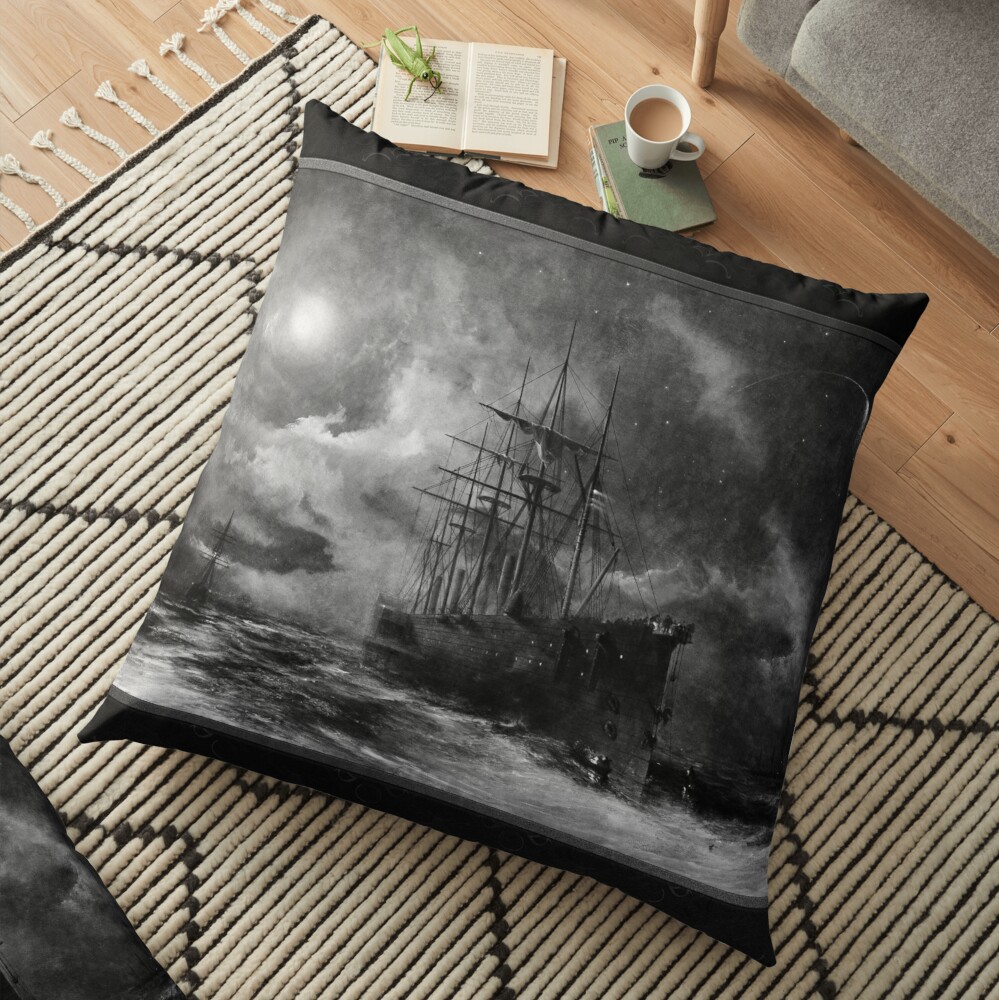
Grappling for the Lost Cable c1866
A obra de arte intitulada Grappling for the Lost Cable, criado em 1866 by British painter Robert Charles Dudley (1826 – 1909), portrays a dramatic and momentous maritime scene. Set against a tumultuous seascape, the painting captures the struggle of sailors aboard two large vessels as they attempt to recover a lost cable at sea. The cable, a critical component of the ship’s rigging, symbolizes not only the technical ingenuity required to operate these grand ships but also the human resilience against the mighty forces of nature.
Índice
The Main Subject and Objects in the Artwork
The primary subject of the maritime artwork is a grand sailing ship, perhaps representing the pinnacle of maritime engineering of its time. The ship, shown in impressive scale, is locked in a desperate grappling motion. The image of the ship rising from the turbulent waters and its sails billowing into the winds epitomizes the power and determination of man against the elements. The crew, though not depicted in intricate detail, is implied by the actions and the ropes they are handling.
The central action focuses on the dramatic struggle to recover a lost cable, which appears to have drifted away or become detached from the ship’s anchor. A secondary smaller vessel is visible on the left side of the painting, perhaps another ship in the convoy or a rescue craft, sugerindo que a recuperação do cabo não é um esforço solitário, mas um esforço coordenado de equipe. O peso do cabo perdido e sua recuperação é retratado como uma missão importante, enfatizando a dependência deste recurso vital para manter o navio flutuando e operacional.
As figuras a bordo do navio principal são recortadas contra o pano de fundo dos imponentes mastros e cordame do navio. As próprias velas são desenhadas de forma dramática, linhas arrebatadoras, sugerindo rajadas de vento e a tensão do momento. O artista capturou o clima de urgência nas ações dos marinheiros, enquanto eles se esforçam para trazer o cabo de volta a bordo.
Terreno, Materiais, and Artistic Elements
O terreno entrou Grappling for the Lost Cable é definido pela vasta, mar selvagem. O mar é retratado como belo e perigoso, com ondas batendo contra a lateral do navio e espumando em uma espuma caótica. Dudley, conhecido por sua experiência em cenas marítimas, detalhou meticulosamente as texturas da água. O mar agitado, nuvens escurecidas, e navios distantes trabalham juntos para criar uma sensação avassaladora de movimento, fazendo o espectador sentir a intensidade do poder do oceano. O navio e a tripulação parecem estar à mercê desta força imprevisível, e ainda assim eles lutam com determinação e propósito.
Os materiais que compõem o próprio mar são ricamente texturizados, com os vários tons de preto, cinza, e branco contribuindo para o clima tempestuoso. O uso do claro-escuro é proeminente, com fortes contrastes entre luz e sombra. A lua, quase invisível no canto da pintura, serves as a small but symbolic beacon of light amidst the storm, creating a sense of hope and perseverance.
Em primeiro plano, the ship’s wooden structure is painted in remarkable detail, showcasing the intricate designs of the rigging and the towering masts. The viewer can almost hear the creaking of the ship as it battles the waves, and the image of the sailors’ figures adds to the scale and magnificence of the vessel. The materials of the ship, primarily wood and canvas, are shown with great precision, invoking a sense of realism that transports the viewer into the very heart of the maritime world.
O estilo, Tema, and Mood of the Artwork
O estilo de Grappling for the Lost Cable is rooted in realism, a hallmark of British Victorian art. Robert Charles Dudley’s attention to detail in the rendering of the ship, the crew, and the tempestuous sea reflects a deep understanding of the subject matter. O mar, a symbol of both beauty and danger, is rendered with a remarkable understanding of its natural force, while the ship and its crew convey human persistence. The dynamic interplay between man-made technology and the uncontrollable sea is central to the theme of the painting, exploring the tension between civilization and nature.
The theme of struggle and resilience is embodied in the sailors’ attempt to retrieve the lost cable. The larger metaphor of grappling with forces beyond one’s control is not lost on the viewer, who might interpret the scene as a reflection of human determination to survive and thrive in the face of overwhelming adversity. The action of recovering the cable becomes a metaphor for the resilience of the human spirit, with the crew representing a community bound together by the shared task of overcoming obstacles.
The mood of the artwork is tense and dramatic, heightened by the interplay of light and dark elements. The threatening clouds and the churning sea add to a sense of urgency and desperation. The subdued moonlight offers a faint but steady symbol of hope amidst the chaos. The viewer feels the suspense of the crew’s mission and their determination to recover the lost cable, which seems essential for the survival of the ship and its crew. There is a balance in the mood between the sheer power of nature and the power of human resolve, making the painting a study in both external and internal forces.
História de arte
This painting is one of a series of six paintings created by Dudley the depicts the first successful laying of the first Transatlantic telegraph cable.
There had been three other attempts in 1857, 1858 e 1865; but all were unsuccessful until 1866.
Isto é um maritime ship painting of The Great Eastern, when at midnight September 1, 1866 it had picked up the cable; considered one of the most important and significant events of the time.
The art work was donated by Cyrus W. Field to The Metropolitan Museum of Art. Poderia 5, 1892, who was a founder of the Atlantic Telegraph Company and instrumental in the laying of the cable.
This is a retouched digital art old masters reproduction of a public domain image that is available for purchase on line as a impressão em rolo.