

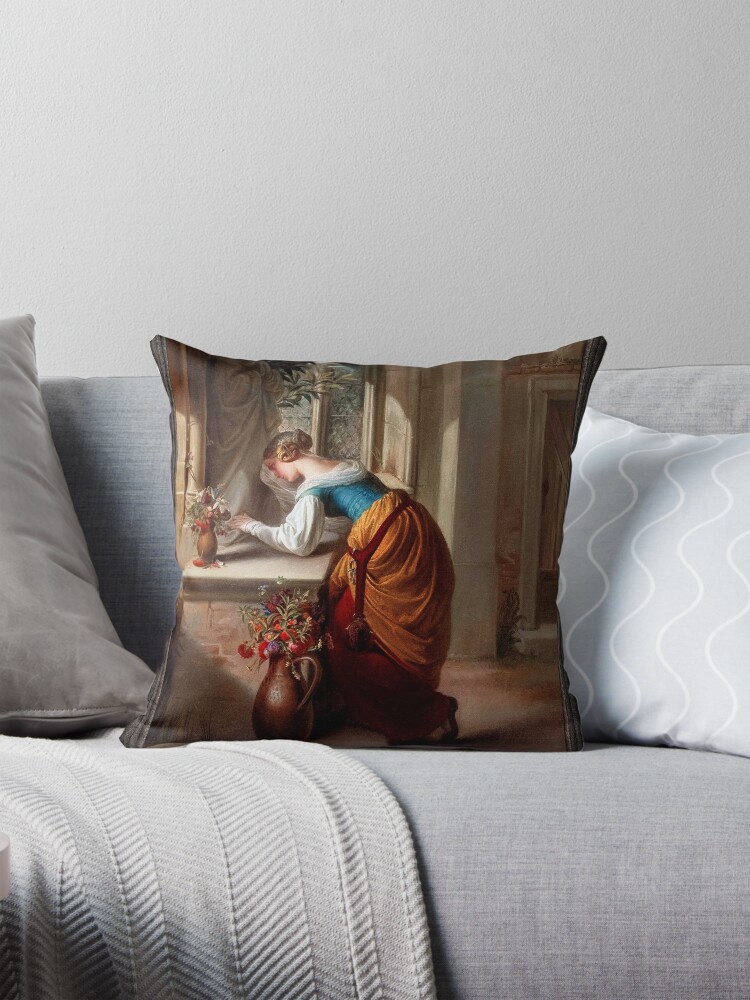
Gretchen davant de l’estàtua de Santa Maria (Gretchen davant de l’estàtua de Santa Maria) c1850
“Gretchen davant de l’estàtua de Santa Maria” és una pintura del voltant 1850 del pintor austríac Adam Vogler (1822 – 1856). L'obra d'art captura un moment íntim de contemplació i reverència, inspirant-se en temes religiosos habituals durant el segle XIX. L'artista presenta la figura central, una jove anomenada Gretchen, davant d'una estàtua de marbre de Santa Maria. L'estat d'ànim és serè i contemplatiu, evocant un sentit de devoció i connexió personal amb allò diví.
Taula de continguts
La figura central: Gretchen
A la pintura, Gretchen és retratada en un moment de reflexió tranquil·la, amb el cap lleugerament inclinat mentre mira cap a l'estàtua de Sant Maria. Va vestida amb un vestit europeu tradicional del segle XIX, una barreja de colors vibrants, incloent un cos blau i una rica faldilla taronja que contrasta amb els tons més suaus del fons.
El seu cabell ros està ben pentinat, i la seva postura transmet un aire d'humilitat i reverència. La manera com els seus dits toquen delicadament la vora de la seva roba emfatitza encara més la seva connexió amb l'estàtua., simbolitzant un gest de pregària o contemplació. Aquesta interacció suau entre la figura i la imatge religiosa convida a l'espectador a un entorn personal, moment gairebé sagrat.
L'expressió de Gretchen és pensativa, i el seu llenguatge corporal suggereix un profund compromís emocional amb l'estàtua, possiblement en estat de pregària o devoció personal. La suavitat de la seva forma contra el sòlid, l'estàtua immòbil de Santa Maria contrasta la seva joventut i força vital amb la permanència simbòlica de la figura santa, que encarna l'exploració de l'espiritualitat i la pietat de l'artista durant l'època.
L'estàtua de Santa Maria
Dominant el costat esquerre de la composició hi ha l'estàtua de Santa Maria, l'objecte religiós central de l'escena. La figura de marbre es troba a l'ombra d'un gran, marc de la finestra arquejada. Santa Maria està representada amb gràcia, les seves túnices en cascada en plecs que suggereixen l'atenció acurada de l'artista a la textura de la pedra.
L'expressió serena i la postura equilibrada de l'estàtua donen una sensació de tranquil·litat divina, una representació atemporal de la maternitat i la virtut. L'elecció de situar aquesta imatge de Santa Maria en el punt central del quadre accentua la seva importància com a figura de compassió i amor maternal..
Vogler ha detallat acuradament l'estàtua per evocar un sentit de santedat i santedat. Els plecs de la túnica de Maria estan esculpits amb precisió, destacant l'experiència tècnica de l'artista a l'hora de representar tant el teixit com la forma. Els plecs de la cortina al voltant de l'estàtua i les mans delicades de Maria, que estan a punt com si arribessin a l'espectador, convidar a una reflexió sobre la naturalesa materna del sant.
La configuració: L'Arquitectura i el Medi Ambient
L'entorn és un interior religiós tradicional, probablement una església o capella, com suggereixen els elements arquitectònics que envolten les figures centrals. La finestra arquejada darrere de l'estàtua emmarca l'escena, deixant entrar suau, diffused light that bathes the figures in a gentle glow.
The architectural features, including the stone walls and the softly lit backdrop, give the viewer the impression of a sacred space. There is a calm stillness in the environment that complements the quiet reverence of the figure of Gretchen and the statue. The artist’s meticulous attention to the detailed architecture enhances the solemnity of the scene, creating a space where religious devotion and contemplation can thrive.
The light streaming through the window, gently illuminating the figure of Gretchen and casting shadows on the walls, heightens the dramatic effect. The soft contrast between the light and shadow, especially on the textures of the stone and Gretchen’s garments, evokes a mood of introspection. The overall atmosphere is serene and contemplative, inviting the viewer to join Gretchen in her private, spiritual moment.
Els materials i la tècnica
Vogler’s use of oil paints allows for the subtle rendering of textures and the depth of emotion in his subjects. The palette is muted, with soft earth tones and pastel shades, which contribute to the overall serenity of the composition. The interplay between light and shadow is another notable feature of the painting, with the light falling gently on the figure of Gretchen and the statue, enhancing their spiritual connection.
The technique used to depict the folds of clothing, the smoothness of the statue, and the delicate flowers in the vase next to Gretchen is indicative of Vogler’s skill in capturing both human and material forms with remarkable detail. Les flors, placed near the bottom of the image, are painted with soft, almost translucent colors, adding to the sense of realism and bringing life to the scene without detracting from the spiritual focus of the painting.
L'estat d'ànim i els temes
The mood of the painting is contemplative and pious. The theme centers around devotion, espiritualitat, and the reverence of religious figures. The juxtaposition of the youthful Gretchen with the immovable, eternal statue of Saint Mary highlights the contrast between mortal life and the divine. This interaction suggests a deep, personal connection between the viewer and the divine presence, as symbolized by the statue of Saint Mary.
Al segle XIX, religious art was often used as a medium for personal reflection and devotion, and Vogler’s work is no exception. L'espectador és convidat a l'espai sagrat amb Gretchen, fomentant un sentit de connexió amb el diví. Això reflecteix el moviment cultural més ampli de l'època, on temes de pietat, humilitat, i la devoció eren fonamentals per a l'expressió artística.
Conclusió
En “Gretchen davant de l’estàtua de Santa Maria,” Adam Vogler presenta una commovedora representació de la devoció religiosa i la força tranquil·la que es troba en l'oració i la contemplació. A través de la seva acurada interpretació de la llum, textura, i forma, Vogler captura un moment serè que transcendeix el món temporal, convidant l'espectador a un espai de reflexió que fomenta la connexió espiritual. La pintura parla de temes universals de reverència, fe, i la presència eterna del diví.
Es tracta d’una reproducció de vells mestres d’art digital retocada d’una imatge de domini públic.