

Ram de flors en una urna c1724
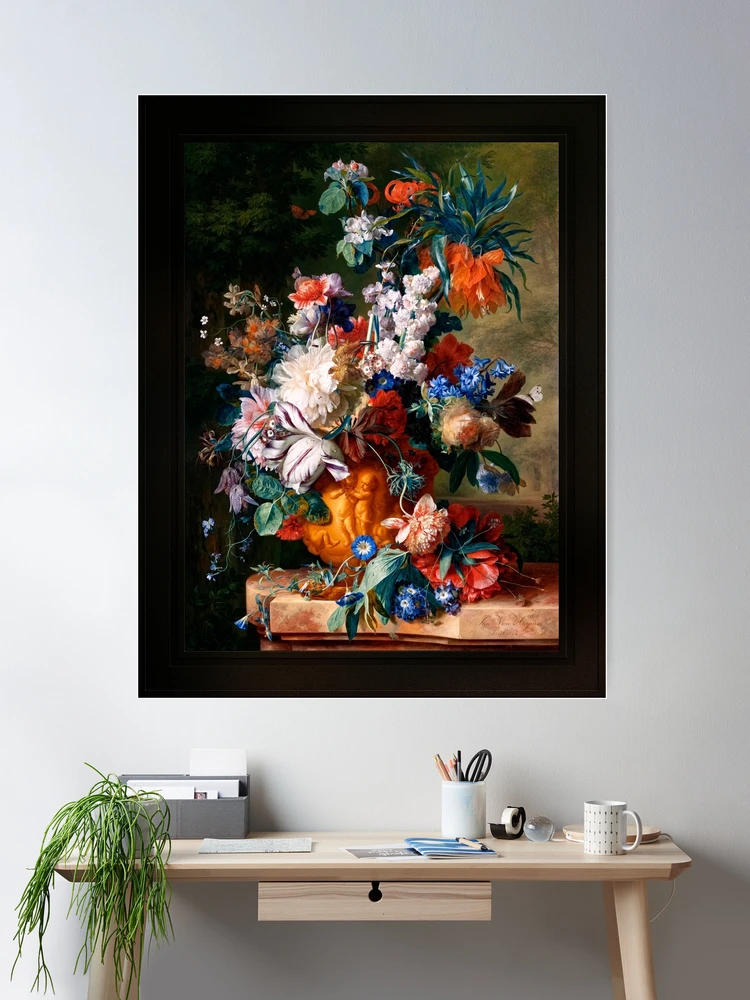
de Jan van Huysum “Ram de flors en una urna,” creat a 1724, és un exemple excel·lent del domini de la pintura de bodegons de l'edat d'or holandesa. Conegut per la seva habilitat excepcional en representació floral amb detalls realistes i colors vibrants, van Huysum (1682 – 1749) captava la bellesa de la natura amb un nivell extraordinari de finor.
Aquesta pintura en particular presenta un gran, urna ornamentada plena d'una varietat diversa i acuradament disposada de flors, capturant la delicada interacció entre la llum i l'ombra, les textures dels pètals, i els detalls complexos de cada floració. L'obra encarna el florent estil barroc holandès, on els bodegons florals no només eren símbols de riquesa i prestigi sinó també un testimoni del virtuosisme de l'artista.
Taula de continguts
Tema principal: The Flower Bouquet
At the heart of the composition lies a stunning bouquet, overflowing from the mouth of a classical urn. The flowers are presented in vivid detail, with each petal, leaf, and stem rendered in a naturalistic style that blurs the line between painting and reality.
The centerpiece of the bouquet includes lilies, tulips, roses, i violetes, each flower meticulously painted to showcase its texture and fragility. The delicacy of the petals contrasts beautifully with the rich, lush tones of the surrounding foliage, demonstrating van Huysum’s exceptional ability to portray both the softness of flowers and the robustness of their greenery.
Among the notable elements in the arrangement, the bright red-orange lily stands out, drawing the viewer’s eye due to its size and vibrant hue. Its contrasting colors, alongside the soft whites and purples of the smaller flowers, create a harmonious visual balance.
The inclusion of several varieties of flowers, some in full bloom, others just beginning to open, adds depth and variety, giving the painting a sense of dynamic movement as if the bouquet were alive and flourishing. The artist’s meticulous attention to detail is evident in the veins of the leaves, the way the light reflects off the dew drops on the petals, and the subtle shading that adds three-dimensionality to the composition.
The Urn: Symbolism and Structure
The urn that holds the bouquet is not merely a vessel but a symbol of wealth, gust, i sofisticació. Its classical form, decorated with intricate motifs, serves as a nod to ancient Greek and Roman art, drawing a link between the florals and the timelessness of classical antiquity.
The urn itself is set on a stone pedestal, which emphasizes its importance within the composition. El profund, golden yellow hue of the urn contrasts beautifully with the colorful flowers, while the urn’s smooth texture creates a sense of permanence, a subtle counterpoint to the ephemeral nature of the blooms it holds.
The urn’s material seems to have a soft gleam, almost as though it were made of fine porcelain or terracotta, adding a realistic texture that invites closer inspection. Two cherub-like figures decorate the urn’s surface, their cherubic forms subtly molded into the ceramic. These figures are rendered with graceful fluidity, their childlike faces framed by delicate foliage, acting as a soft visual link between the natural world of the flowers and the artistic world of sculpture.
Terreny i Fons
En el fons, the artist paints a soft, distant landscape of verdant trees and foliage, which gently fade into a haze of light. This gives the impression of a lush garden or private estate, adding a sense of depth and space to the painting.
The outdoor scene contrasts with the indoor focus on the flowers, suggesting that the bouquet might have been picked from a garden and brought indoors to be admired. The light that spills across the scene highlights the freshness of the flowers, creating a play between the natural world outside and the curated beauty inside the vase.
The backdrop is not overly detailed but suggests an idealized view of nature, verd i florent, intacte i serena. Aquest terreny tranquil serveix per potenciar l'esplendor visual de les flors en primer pla, fent-los semblar encara més exquisits en comparació.
Materials i Tècnica
Jan van Huysum va utilitzar pintures a l'oli, un mitjà que li va permetre captar les fines textures i la complexa interacció de llum i ombra. La seva tècnica consistia a posar en capes esmalts prims per crear profunditat, construint la superfície perquè la llum es reflecteixi de cada pètal de flor individual amb una resplendor naturalista.
Els detalls fins a les fulles, pètals, i urna demostren un domini tant de la textura com de la transparència. Transicions suaus entre la llum i la foscor, as well as the fine highlights and delicate shadows on each surface, reveal van Huysum’s virtuosity with the oil painting technique.
The artist’s use of light is particularly striking in this piece. He employs a soft, diffused light that appears to bathe the entire composition, adding warmth and emphasizing the lush vibrancy of the flowers.
This skillful treatment of light and shadow makes the bouquet feel alive, inviting the viewer to linger on the painting, marveling at the realistic rendering of each petal, leaf, and bloom. The overall effect is both calming and awe-inspiring, conveying a deep appreciation for the fleeting beauty of nature.
Estil, Tema, i l'estat d'ànim
The Dutch Baroque style, with its focus on intricate detail and realism, is fully embodied in this work. The theme of transience is hinted at through the depiction of flowers, symbols of fleeting beauty and mortality.
Van Huysum’s bouquet, with its variety of blooms, presents a visual celebration of life’s ephemeral nature. No obstant això, it also speaks to the triumph of the artist’s skill, as if capturing this temporary beauty in paint allows it to endure forever.
L'estat d'ànim de la pintura és de contemplació serena. There is a quiet elegance in the way the flowers are arranged and displayed, and the viewer is drawn into a world where nature’s beauty is appreciated and preserved in the stillness of the canvas. The juxtaposition of the fragile flowers and the enduring urn evokes a sense of quiet dignity and timelessness.
Ram de flors en una urna c1724 del pintor holandès Jan van Huysum (1682 – 1749), que pintava al rococó, Postimpressionisme i estils renaixentistes.
Això és bonic still life scene of a large bouquet of flowers of all different types comprising red flowers, flors blanques, orange flowers, blue flowers, violet flowers, gold roses, white and purple orchids, vinyes, and green plants; that have been placed in a large ceramic urn that is embossed around its perimeter with Putti (a chubby little male child, usually nude in a work of art).
The urn or vase sits on a brown and tan sculpted marble table that has been placed in a large garden or forest with trees behind it on the left and more trees on the right that are slightly faded from view along a path to indicate distance.
On the flowers and flying around them we can see several species of butterflies, ants and wasp; with some of the flowers having clearly defined droplets of water on them.
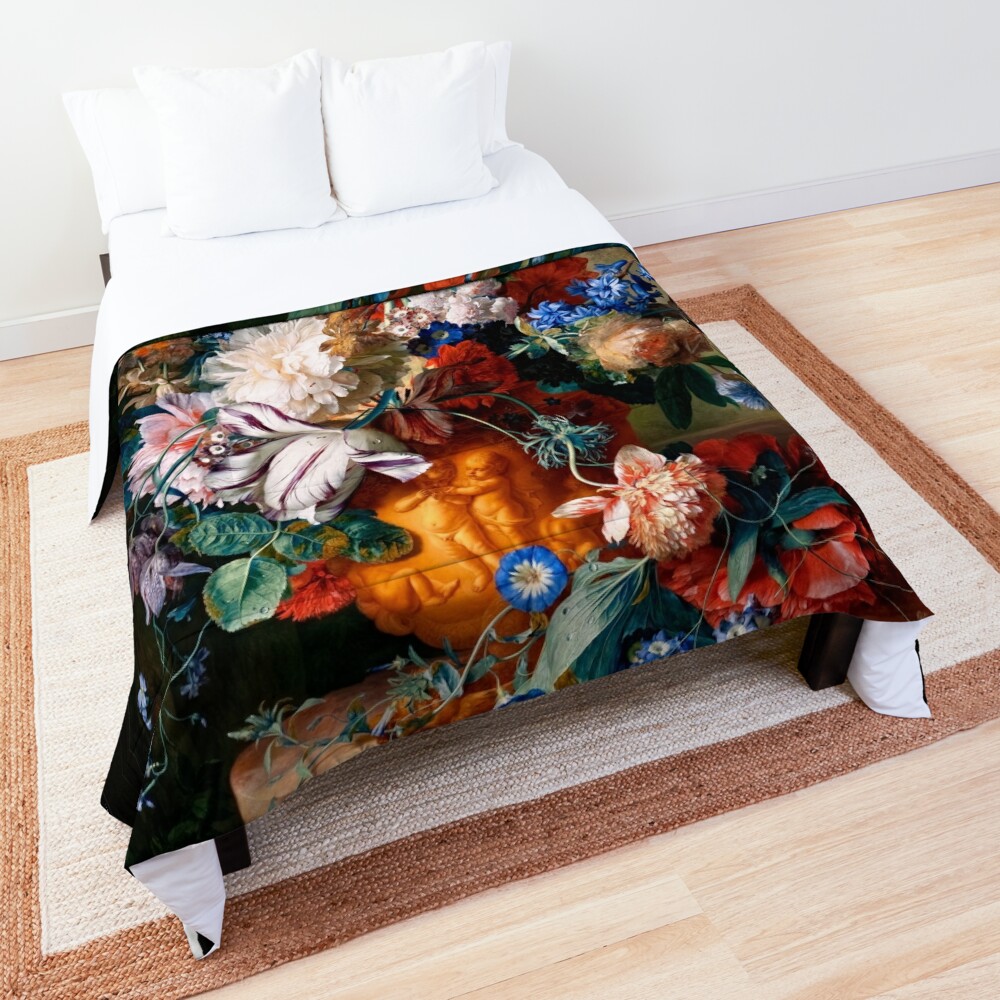
Aquesta és una reproducció de mestres antics d'art digital remasteritzada d'una imatge de domini públic que està disponible com a impressió de llenç en línia..
Artista Bio
Informació a continuació derivada de Wikipedia.org i Britannica.com
Jan van Huysum was the eldest son of Dutch Golden Age flower painter Justus van Huysum (1659 – 1716), and came from a family of artist.
His younger brother who died at the age of 22 was also an accomplished painter as was his sister Maria; and his daughter Francina Margaretha van Huysum (1707 – 1789) was also a flower painter.
Jan va estudiar sota la tutorització del seu pare i ha desenvolupat habilitats que més tard superarien les habilitats del seu pare..
La seva especialitat era la pintura de luxosos arranjaments florals, que va crear amb una precisió i delicadesa extremes.