

Gretchen vor der Statue der Heiligen Maria (Gretchen in front of the statue of Saint Mary) c1850
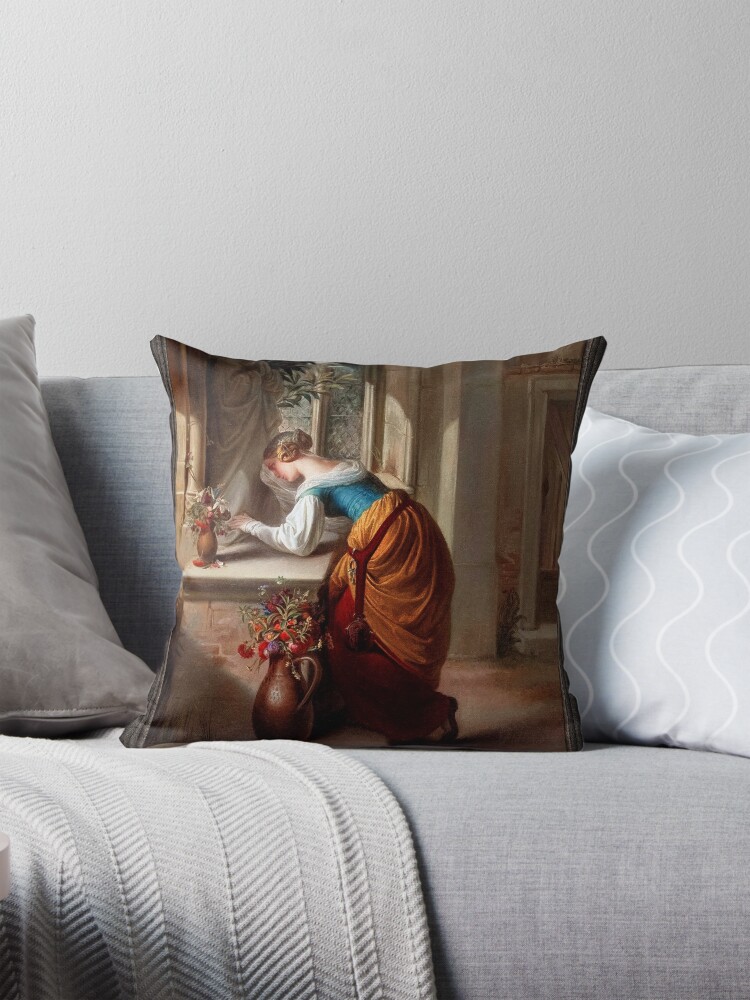
“Gretchen vor der Statue der Heiligen Maria” is a painting from around 1850 by the Austrian painter Adam Vogler (1822 – 1856). The artwork captures an intimate moment of contemplation and reverence, drawing inspiration from religious themes that were common during the 19th century. The artist presents the central figure, a young woman named Gretchen, in front of a marble statue of Saint Mary. The mood is serene and contemplative, evoking a sense of devotion and personal connection with the divine.
Edukien taula
Erdiko Irudia: Gretchen
In the painting, Gretchen is portrayed in a moment of quiet reflection, burua apur bat makurtuta, Santuaren estatuari begiratzen dio Maria. mendeko Europako soineko tradizionalez jantzita dago, kolore bizien nahasketa bat, besteak beste, gorpu urdina eta atzealdearen tonu leunenekin kontraste egiten duen gona laranja aberatsa.
Bere ile ilehoria txukun moztuta dago, eta bere jarrerak apaltasun eta begirune airea ematen du. Bere hatzek arroparen ertza fintasunez ukitzen duten moduak estatuarekin duen lotura are gehiago azpimarratzen du., otoitz edo kontenplazio keinu bat sinbolizatuz. Irudiaren eta irudi erlijiosoaren arteko interakzio leun honek ikuslea pertsonalera gonbidatzen du, ia momentu sakratua.
Gretchenen adierazpena pentsakor da, eta bere gorputz-hizkuntzak estatuarekiko konpromiso emozional sakona iradokitzen du, baliteke otoitz egoeran edo debozio pertsonalean. Bere formaren leuntasuna solidoaren aurka, Santa Mariaren estatua geldiezinak bere gaztetasuna eta bizi-indarra kontrajartzen ditu irudi santuaren iraupen sinbolikoarekin, garaian artistak espiritualtasunaren eta pietatearen esplorazioa gorpuzten duena.
The Statue of Saint Mary
Konposizioaren ezkerreko aldean Santa Mariaren estatua dago nagusi, eszenako objektu erlijioso zentrala. Marmolezko figura handi baten itzaletan dago, arkudun leiho-markoa. Santa Maria graziaz irudikatzen da, bere soinekoak harriaren ehundurari arreta handia ematen dioten tolesetan jauzika.
Estatuaren adierazpen lasaiak eta jarrera orekatuak jainkozko lasaitasun sentsazioa ematen dute, amatasunaren eta bertutearen betiko irudikapena. Santa Mariaren irudi hau margolanaren ardatzean jartzeak bere garrantzia nabarmentzen du errukiaren eta amaren maitasunaren figura gisa..
Voglerrek arreta handiz xehatu du estatua, santutasun eta santutasun sentimendua pizteko. Mariaren jantzien tolesturak zehaztasunez zizelkatuta daude, artistaren gaitasun teknikoa nabarmenduz ehuna zein forma irudikatzeko. Draperien tolesturak estatuaren inguruan eta Mariaren esku finak, ikuslearengana helduko balira bezala prest daudenak, santuaren ama izaerari buruzko hausnarketa bat gonbidatzea.
Ezarpena: The Architecture and Environment
Ingurua barrualde erlijioso tradizionala da, litekeena da eliza edo kapera, erdiko figurak inguratzen dituzten elementu arkitektonikoek iradokitzen dutenez. Estatuaren atzean dagoen arkudun leihoak eszena markatzen du, biguna sartzen utziz, diffused light that bathes the figures in a gentle glow.
The architectural features, including the stone walls and the softly lit backdrop, give the viewer the impression of a sacred space. There is a calm stillness in the environment that complements the quiet reverence of the figure of Gretchen and the statue. The artist’s meticulous attention to the detailed architecture enhances the solemnity of the scene, creating a space where religious devotion and contemplation can thrive.
The light streaming through the window, gently illuminating the figure of Gretchen and casting shadows on the walls, heightens the dramatic effect. The soft contrast between the light and shadow, especially on the textures of the stone and Gretchen’s garments, evokes a mood of introspection. The overall atmosphere is serene and contemplative, inviting the viewer to join Gretchen in her private, spiritual moment.
Materialak eta Teknika
Vogler’s use of oil paints allows for the subtle rendering of textures and the depth of emotion in his subjects. The palette is muted, with soft earth tones and pastel shades, which contribute to the overall serenity of the composition. The interplay between light and shadow is another notable feature of the painting, with the light falling gently on the figure of Gretchen and the statue, enhancing their spiritual connection.
The technique used to depict the folds of clothing, the smoothness of the statue, and the delicate flowers in the vase next to Gretchen is indicative of Vogler’s skill in capturing both human and material forms with remarkable detail. Loreak, placed near the bottom of the image, are painted with soft, almost translucent colors, adding to the sense of realism and bringing life to the scene without detracting from the spiritual focus of the painting.
Aldartea eta gaiak
The mood of the painting is contemplative and pious. The theme centers around devotion, espiritualtasuna, and the reverence of religious figures. The juxtaposition of the youthful Gretchen with the immovable, eternal statue of Saint Mary highlights the contrast between mortal life and the divine. This interaction suggests a deep, personal connection between the viewer and the divine presence, as symbolized by the statue of Saint Mary.
In the 19th century, religious art was often used as a medium for personal reflection and devotion, and Vogler’s work is no exception. Ikuslea espazio sakratura gonbidatuta dago Gretchenekin, jainkozkoarekiko lotura sentimendua sustatuz. Horrek garaiko kultur mugimendu zabalagoa islatzen du, non pietatearen gaiak, apaltasuna, eta debozioa funtsezkoak ziren arte-adierazpenean.
Bukaera
In “Gretchen vor der Statue der Heiligen Maria,” Adam Voglerrek debozio erlijiosoaren eta otoitzean eta kontenplazioan aurkitzen den indar lasaiaren irudikapen hunkigarria aurkezten du. Bere argiaren emanaldi zainduaren bidez, ehundura, eta forma, Voglerrek denborazko mundua gainditzen duen une lasaia jasotzen du, ikuslea konexio espirituala bultzatzen duen gogoeta-espazio batera gonbidatzea. Margolanak begirunearen gai unibertsalez hitz egiten du, fedea, eta jainkozkoaren betiko presentzia.
Hau arte digitala ukituta dagoen domeinu publikoko irudi baten erreprodukzioa da.