

Het Jongste Broertje (末の弟)
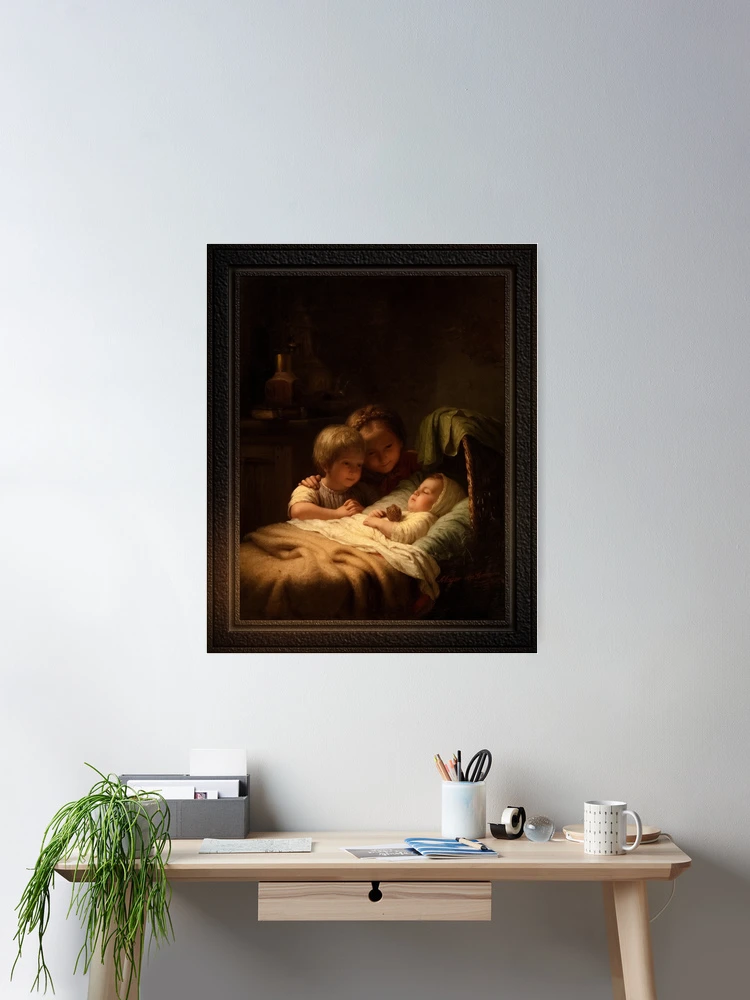
“Het Jongste Broertje” (末の弟), 描かれた 1854 by the German artist Johann Georg Meyer (1813 – 1886), captures a tender and intimate moment in a domestic setting, exemplifying the genre of sentimental realism that was prevalent in mid-19th century Europe. The painting portrays three children, their expressions imbued with innocence and affection, ソフトに対して設定します, atmospheric backdrop that enhances the emotional weight of the scene. This quiet and serene composition highlights Meyer’s attention to the subtleties of childhood emotions and familial love, rendered with a softness and warmth that invite the viewer to reflect on themes of family, care, and fragility.
目次
Composition and Figures
In the center of the composition lies the youngest child, swaddled in a light white blanket, sleeping peacefully in a cradle. ソフト, 子供の丸い顔立ち, 優しい光を浴びて, 静けさと無邪気さの感覚を呼び起こす. 眠っている幼児, おそらくこの絵のタイトルの主題, 焦点として位置付けられています, 弱さと優しさを象徴する. 彼らの目は閉じています, そして彼らの顔は穏やかです, 周囲の子供たちのよりダイナミックな表情とは対照的に、平和な雰囲気を作り出します。. 子供の小さな手は小さな物体の周りを丸めている, おそらくおもちゃか快適なアイテム, 平和と満足感をさらに高める.
ゆりかごの両側には2人の年上の兄弟がいます, 彼らの表情は赤ちゃんに対する愛情深い関心と気遣いに満ちていました. 左側の男の子, 彼の乱れたブロンドの髪と大きな目, 深い愛情を持って幼児を見つめる, while his hand rests on the edge of the cradle, gently touching the child. His posture is tender, suggestive of his role as a protective older sibling.
The girl on the right, with dark hair neatly styled in braids, leans forward with an expression of quiet joy, her lips slightly parted as though caught in a moment of reverence for the infant. The play of light and shadow on their faces suggests a shared emotional experience, one marked by familial devotion and a deep bond between the children.
Background and Atmosphere
The background of the painting is dark and indistinct, rendered with subtle brushstrokes that suggest a cozy, dimly lit room, likely part of a modest home. There are a few elements that offer hints about the interior, such as the faint outlines of a wooden cabinet or shelves, and an assortment of domestic objects, which create a sense of familiarity and comfort.
The background does not distract from the figures in the foreground, instead serving to amplify the emotional intimacy of the scene. The painter has skillfully used muted tones of brown, 金, and cream to craft an atmosphere that is both warm and quiet, invoking feelings of calm and security. The soft blending of light and shadow enhances the peacefulness of the moment, allowing the figures to emerge gently from the darkness.
カラーパレットとテクニック
Meyer’s use of color is restrained yet evocative. The palette of browns, soft greens, クリーム, and muted yellows imbues the scene with a warm, almost golden hue, reflecting the calm and comforting nature of the subject matter. The light source seems to come from the left, casting a soft glow on the children’s faces and bodies while leaving parts of the room in shadow. This play of light and shadow emphasizes the forms and textures of the figures, particularly the softness of the children’s clothing and the delicate texture of the blankets. The choice of colors suggests a deep emotional warmth, heightening the viewer’s emotional connection to the scene.
The painting’s technique is notable for its fine detail and subtle realism. Meyer uses a soft, almost velvety brushwork to depict the textures of the children’s faces, their clothing, and the folds of the bedding, creating a smooth and tender finish. The artist has a masterful command of light, 人物を照らすだけでなく、絵画の感情的なトーンを高めるためにそれを使用します。. 光は子供たちを象徴的に包み込んでいるかのようです, ケアを示唆する方法で顔や体を強調する, 保護, そして愛.
気分とテーマ
の気分 “Het Jongste Broertje” それは静かな敬意と感情的な優しさの一つです. 眠っている乳児に対する兄弟の親密さは、家族の愛と保護の感覚を呼び起こします。, 子供の頃の単純な喜びとの深いつながりだけでなく、. シーンには時代を超越した品質があります, まるで年下の兄弟を見守るという行為が普遍的な経験であるかのように, 時代や文化を超えたもの. 子どもたちの穏やかな表情, 静かな環境と相まって, 安全と調和の雰囲気を伝える, 見る人に、子供時代の貴重な性質と家族を結びつける絆について思いを巡らせるよう促します。.
The theme of childhood innocence is central to the painting, with the depiction of the infant’s peaceful sleep standing as a metaphor for the purity and vulnerability of early life. The two older children’s attentive gazes and their protective postures reinforce the idea of familial responsibility and love. Meyer’s careful rendering of the figures and their emotional expressions underscores the theme of care, making this work not only a representation of childhood but also an exploration of the intimate emotional connections between siblings.
結論
“Het Jongste Broertje” stands as an exemplary work of 19th-century sentimental realism, capturing a deeply emotional moment within a domestic setting. Johann Georg Meyer’s painting transcends mere depiction, offering a narrative that speaks to the universal experiences of childhood and family. 彼の巧みな光の使い方によって, 色, and brushwork, Meyer evokes a sense of warmth and tenderness that resonates with viewers even today. ソフト, peaceful scene reflects a bygone era when the bonds of family were cherished and protected, and childhood innocence was considered sacred.
The Youngest Brother is a retouched digital old masters reproduction of a public domain art masterpiece image.
このデジタルアート作品は、, Xzendor7 Web サイトにあるすべてのアートワークと同様に、キャンバス プリントを含むさまざまな素材形式でオンラインで購入できます。, アクリルプリント, メタルプリント, 木版, 額入りプリント, ポスター, ロール状のキャンバス プリントとしてさまざまなサイズでご利用いただけます。 12 インチから 72 インチは、実際のアートワークのサイズと、アートを購入するために選択したオンデマンド プリント ショップによって異なります。.
このアートワークは、幅広いメンズおよびウィメンズのアパレルでも利用可能です, マグカップ, トートバッグ, スカーフ, ノートや日記帳、その他多くの室内装飾品.
アーティストについて
以下の情報から派生 Wikipedia.org
Johann Meyer began his artistic studies in 1834 歳の時に 21, when he went to Düsseldorf and entered the Academy of Art, which was run by German Romantic Painter Friedrich Wilhelm Schadow (1789 – 1862), who was the son of German-Prussian sculptor Johann Gottfried Schadow (1764 – 1850).
Seven years later in 1841 Meyer his own studio in Düsseldorf, but later moved to Berlin in 1853 as his popularity and famed increased.
Though Meyer’s early interest was in creating scenes from the Bible; later on in his career he turned his attention to creating genre scenes of every day life , with a focus on Hessian peasantry, and then on the portrayal of the pathetic aspect of family life.
Such pictures as ‘The Jubilee of a Hessian Pastor’ c1843, ‘Christmas Eve,’ ‘Blindman’s Buff,’ ‘The Soldier’s Return,’ ‘The Inundation’ c1846, ‘The Repentant Daughter’ c1852, are full of intense sympathy with the “simple annals of the poor.”
He also painted other scene that took inspiration from childhood life, which included ‘The Little Flower Girl c1853’, ‘The Fairy Tale,’ ‘Children Playing Blindman’s Buff,’ ‘Grandfather and Grandchild,’ and others.
While later in his career also did paintings of yougn women, either in single or group poses; and these included ‘The Tryst’, ‘The Love Letter’ and ‘The Letter’ c1873.