

Komeetan historia (History Of A Comet) c1897
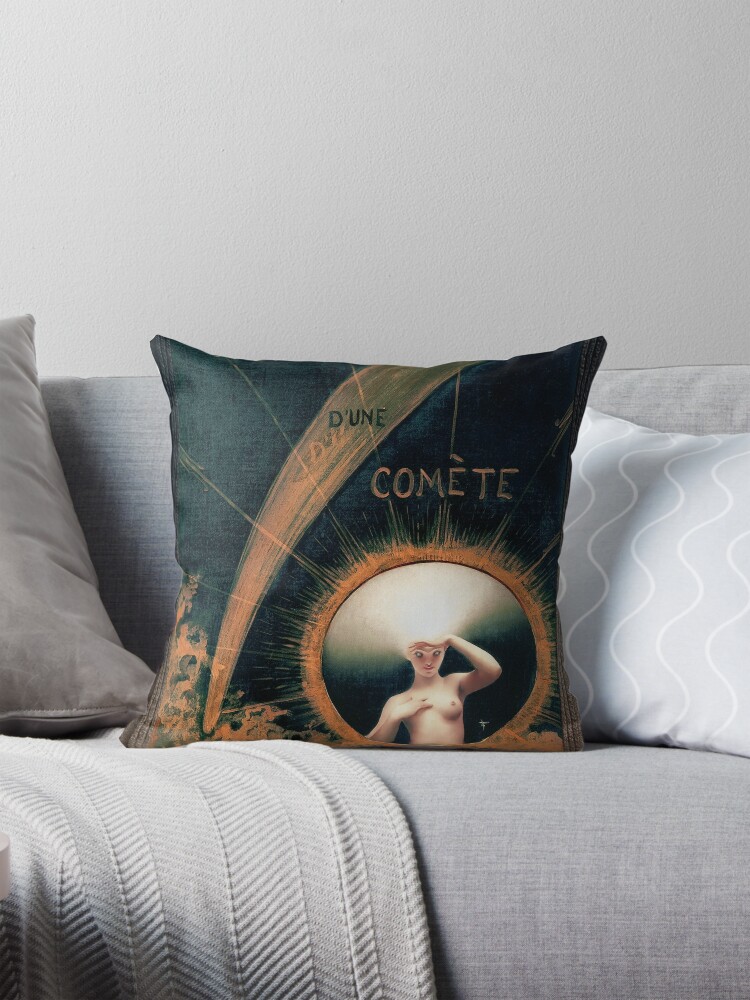
Luis Ricardo Falero‘s painting “Komeetan historia” (Komeetan historia), luotu vuonna 1897, embodies the intersection of science, mythology, ja aistillisuus, blending them into a narrative that speaks to the imagination of its time. Born in Spain in 1851 ja sisään meneminen 1896, Falero was known for his romanticized depictions of the female figure, often intertwining her with celestial themes. His works were steeped in allegory and mysticism, exploring the interplay between the human form and the cosmic. “Komeetan historia” ei ole poikkeus; it is a captivating representation of a comet’s journey, personified in the form of a celestial woman, evoking both mystery and grandeur.
Sisällysluettelo
Pääaihe ja kokoonpano
At the heart of the painting is a striking female figure, luminous and ethereal, who gazes out of the canvas, drawing the viewer into a surreal interaction. Hänen asentonsa, with one arm raised to shield her eyes, suggests that she is a cosmic being, perhaps an embodiment of the comet herself. Tämä nainen, naked and seemingly untouched by time, is framed by a glowing, otherworldly aura. Hänen kalpeansa, almost ghostly complexion contrasts sharply with the dark, textured backdrop, emphasizing her luminous quality.
The subject’s features are soft and symmetrical, characteristic of Falero’s idealized female form. Her hair is a silvery halo, säteilee ulospäin, further reinforcing her celestial nature. The figure is situated in front of a large, circular area of darkness, which serves as a portal or the center of the comet’s tail. Kirkas, jagged rays of the comet’s tail streak across the canvas, converging at the woman’s form and illuminating her silhouette. The comet is both the subject and the symbol of the artwork, offering a dual narrative of scientific discovery and mythological imagination.
Esineet, Maasto, and Symbolism
The background of the painting is a deep, velvety green that transitions into a dark, almost cosmic blue as it moves outward, creating a sense of depth and infinity. This color palette suggests the boundless nature of the universe, where the comet’s passage and the woman’s ethereal presence symbolize the intersection of the known and the unknown.
The comet’s tail itself is rendered in sweeping, fiery strokes that emanate from the upper left corner, arching across the canvas towards the woman. These strokes are not merely artistic embellishments but serve as a direct visual representation of the comet’s path through the sky. The comet is both a literal object in the painting and a symbol of the transient nature of time and existence. It embodies movement, change, and the constant passage of celestial bodies through the cosmos.
The woman’s physical nudity is not just an artistic choice but a deliberate metaphor. It suggests purity and vulnerability, making her a vessel for cosmic forces. Her raised arm, which shields her eyes, invokes the idea of revelation and discovery. The viewer, through her gaze, is invited to witness the unfolding of the comet’s story, much like how astronomers might peer through telescopes to understand the universe. The idea of revelation is further emphasized by the surrounding elements, such as the trailing streaks of the comet, which allude to the idea of a narrative unfolding through time.
Tyyli, Teema, ja mieliala
Falero’s technique in “Komeetan historia” blends elements of Romanticism and Symbolism, creating a scene that is both dreamlike and charged with emotional intensity. The exaggerated, almost mystical qualities of the comet and the woman suggest a thematic focus on the unknown and the exploration of celestial bodies. The painting’s atmospheric quality, where the celestial and human realms meet, also touches on themes of fate and destiny.
The mood of the painting is one of quiet contemplation, but it is also imbued with a sense of grandeur and awe. The woman’s serene expression and the comet’s fiery passage create an otherworldly tension between the cosmic and the human. The color contrasts—the pale figure against the dark background, the warm glow of the comet’s tail against the cool tones of the universe—enhance this sense of duality. There is an undeniable mysticism to the work, with the viewer left to wonder about the true nature of the comet and the woman, and the larger cosmic forces at play.
Falero’s choice to integrate the celestial body as both a scientific and mythological object underscores the late 19th century’s fascination with astronomy and the growing interest in the mysteries of the universe. The painting’s blending of these elements is a hallmark of the Symbolist movement, which sought to explore deeper truths beyond the material world.
Materiaalit ja tekniikka
Materiaalien suhteen, Falero likely employed oil paints on canvas, a medium that allowed for the rich layering and luminous quality that defines the work. His brushstrokes are both delicate and deliberate, adding texture and depth to the comet’s tail and the woman’s figure. The painting’s composition is highly controlled, with the central figure carefully framed by the radiating light of the comet. This control over the composition adds to the otherworldly precision of the work, heightening the sense of cosmic order and harmony.
The painting’s intricate detailing of the comet’s tail and the softness of the woman’s skin indicate Falero’s mastery of the medium. His blending of light and shadow is particularly notable in the way the comet’s rays illuminate the woman’s body, creating a dramatic contrast that draws attention to the figure while simultaneously suggesting the vast, cosmic space in which she exists.
Histoire dyyni Comete on retusoitu digitaalisen taiteen vanhojen mestarien kopio julkisesta kuvasta.
Artist Bio Derived Wikipedia.org
Falero syntyi Granadassa ja aloitti uransa Espanjan laivastossa, mutta luopui vanhempiensa pettymyksestä; kun hän päätti matkustaa Pariisiin, jossa hän opiskeli taidetta, kemia ja konetekniikka.
Aikana on kemian ja konetekniikan opintoja; hän piti suoritettavia kokeita liian vaarallisina, näin hän saa keskittymään huomionsa yksinomaan maalaamiseen.
Tämän seurauksena hänestä tuli ranskalaisen muotokuvamaalarin ja orientalistin Gabriel-Joseph-Marie-Augustin Ferrierin opiskelija (1847 – 1914). Pariisin jälkeen, hän muutti Lontooseen, missä hän jatkoi opintojaan, ja lopulta asettui.
Falero oli erityisen kiinnostunut tähtitieteestä ja sisällytti taivaalliset tähtikuviot moniin teoksiinsa, kuten “Komeetin avioliitto” ja “Twin Stars”. Hänen kiinnostuksensa ja tietämyksensä tähtitieteestä sai hänet myös kuvaamaan Camille Flammarionin teoksia.
Sisään 1896, hänen kuolemansa vuosi, Maud Harvey haastoi Faleron isyyden vuoksi. Puvussa väitettiin, että Falero vietti Harveyn hänen ollessaan 17, ensin palveli hänen sisäkkäinsä, ja sitten hänen mallinsa. Kun hän huomasi, että hän oli raskaana, hän erotti hänet.
Hän voitti tapauksen ja sai viisi shillinkiä viikossa heidän lapsensa tueksi. Falero kuoli University College -sairaalassa, Lontoo, iässä 45