

HMS Erebus and Terror in the Antarctic
HMS Erebus e Terrore nell'Antartico intorno al 1847 del pittore britannico James Wilson Carmichael (1800-1868), was a noted marine painter that started off as a sailor, then as an apprentice at a ship building firm (while doing art in his spare time); then after a while left the carpentry business and took up painting as an avocation.
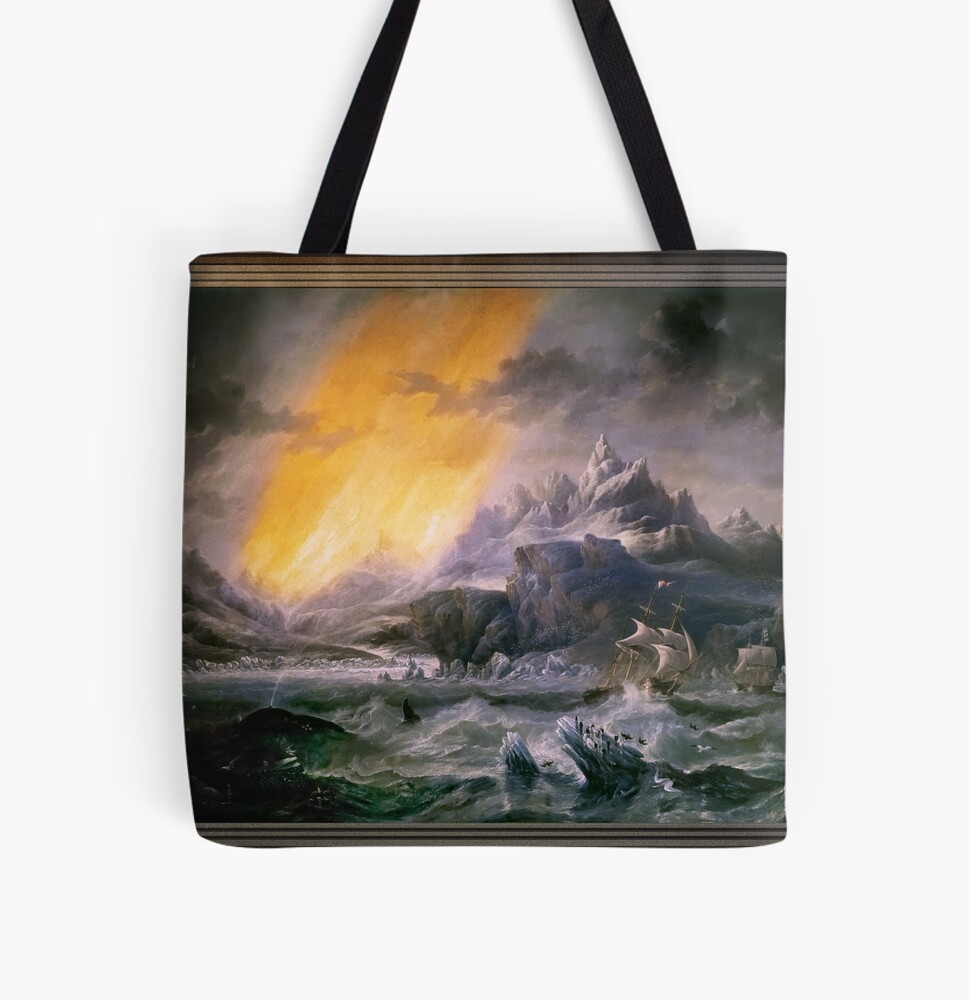
Questo maritime scene shows the HMS Erebus caught in the rough seas of the Antarctic, with another ship some distance off in calmer water amidst icebergs and mountains of ice on the land as the sun is setting.
We can also see a small colony of penguins that are relaxing on ice that is protruding from the rough waved as well as sea birds flying around them, with a large whale passing by, as more seabirds fly overhead and rest on icebergs as well.
In the far distance in front of the rays of the sun are mountains of ice and off to the right of the scene is a large colony of birds taking flight into the air.
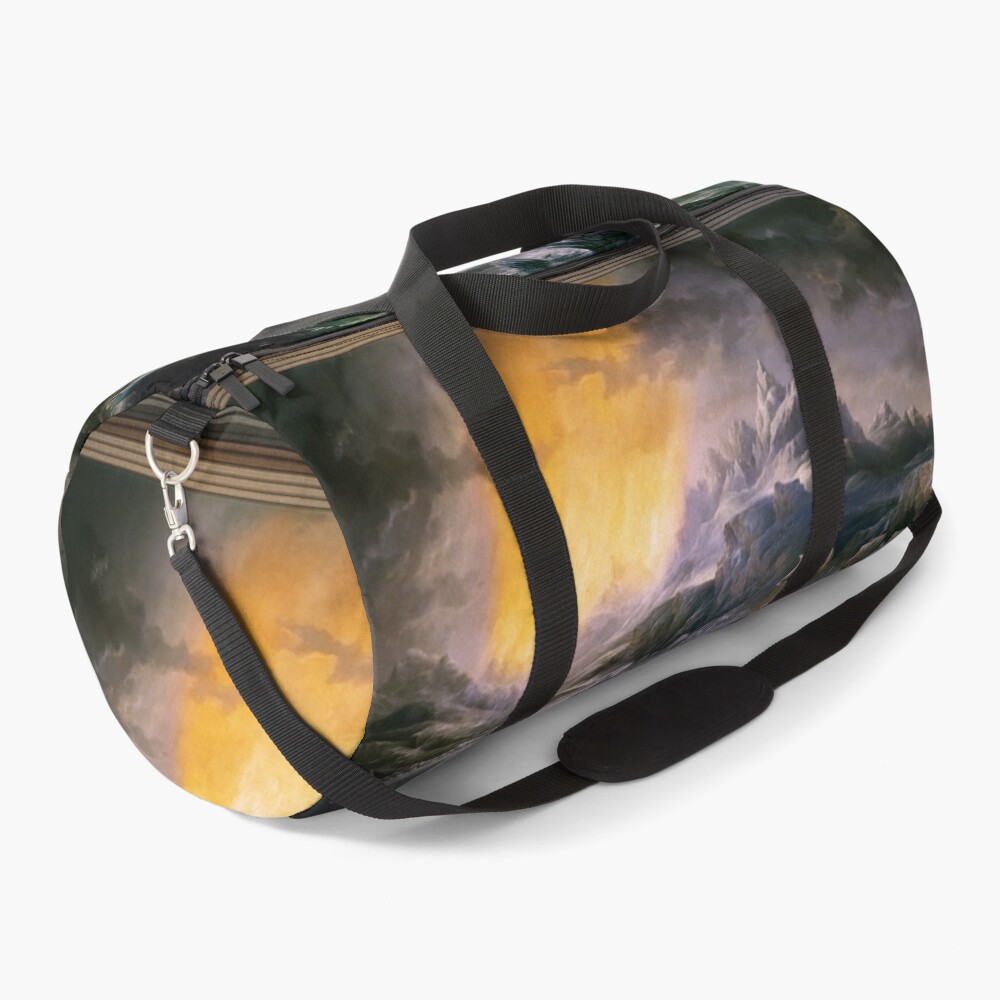
Questa è una riproduzione di arte digitale ritoccata di vecchi maestri di un'immagine di pubblico dominio disponibile come a stampa arrotolata online.
Informazioni di seguito derivate da Wikipedia.org
James was the son of ship carpenter William Carmichael and was born in Ouseburn, in Newcastle upon Tyne, Northumberland, on June 9, 1800.
At an early age he went off to sea, and spent three years sailing between ports in Spain and Portugal; after which he was apprenticed to a shipbuilding firm, and when his apprenticeship ended devoted his spare time creating art.
Since his main interest was in art, he left the shipbuilding business and set himself up as a drawing master and miniatures painter; with his first historical painting to gain public attention being “Fight Between the Shannon and Chesapeake”, followed by “Bombardment of Algiers for Trinity House, Newcastle”.
He also painted “The Heroic Exploits of Admiral Lord Collingwood in HMS “Excellent” at the Battle of Cape St. Vincent” in collaboration with George Balmer (1806 – 1846).
He also received a commission for his piece “View of Newcastle”; and also worked with architect John Dobson, during the redevelopment of the centre of Newcastle.
James also collaborated with John Blackmore to produce the illustrated book “Views on the Newcastle and Carlisle Railway” nel 1836; and published two books “The Art of Marine Painting in Water-Colours” nel 1859, e “The Art of Marine Painting in Oil-Colours” nel 1864.