

Idleness c1900
ג'ון וויליאם גודוורד, a prominent British painter known for his stunning depictions of the Classical world, created the artwork “בַּטָלָה” ב 1900. אלוהים (1861 – 1922), celebrated for his mastery in portraying women in serene, timeless poses within classical and mythological settings, paints a poignant image of stillness and leisure in this particular work. הסצנה, though filled with vibrant color and serene composition, evokes a timeless mood that blends the antique with an almost dreamlike quality. Godward’s style, often associated with the Academic tradition, is on full display in this painting, where the skillful use of light, מִרקָם, and classical elements invites the viewer into a moment frozen in time.
תוכן העניינים
הנושא
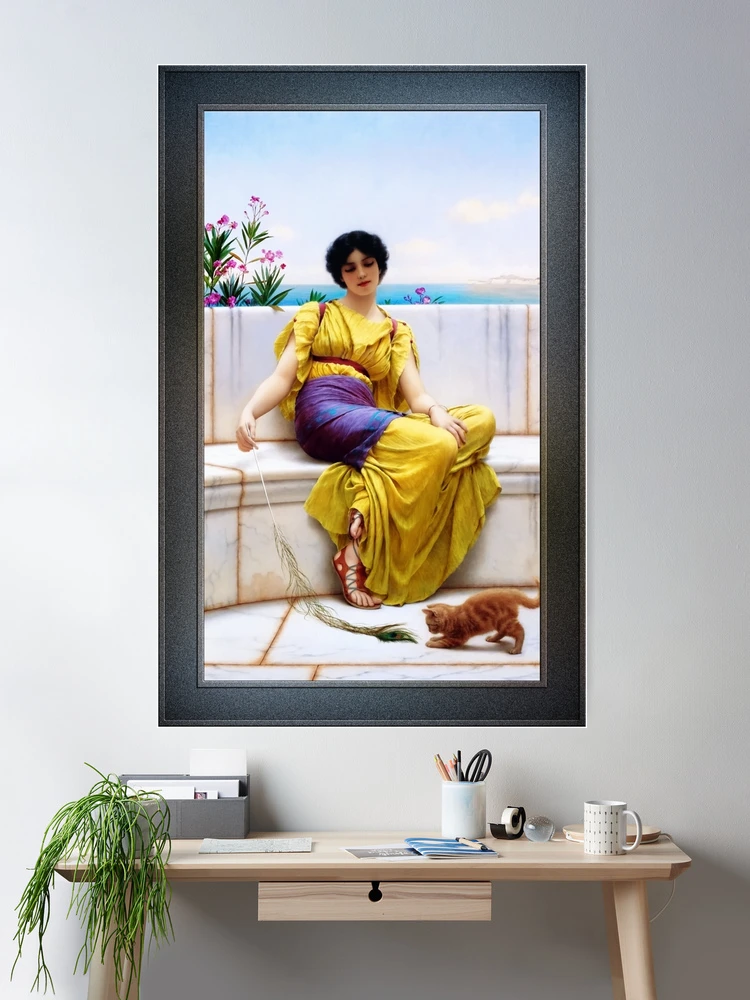
בְּבוֹעַסִים “בַּטָלָה” is the depiction of a young woman, sitting gracefully on a marble bench with a contemplative expression. Her delicate posture and the way she holds a long peacock feather, gently draped from her fingers, imply a quiet moment of repose, as she uses it to play with a kitten. הגוף שלה, draped in flowing garments of rich yellow and purple, suggests a figure both in the midst of relaxation and deep thought. The colors of her attire, set against the cool tones of the surrounding environment, add an ethereal quality to her figure, elevating her presence to that of an idealized beauty.
The woman’s dark, short hair contrasts with the golden hues of her clothing, creating a visual balance that complements the soft and inviting mood of the piece. Her facial expression is peaceful, with her gaze lowered as if lost in thought or perhaps in idle contemplation. It is an image of tranquility, drawing the viewer’s attention to the subject’s serene beauty. The slowness and grace of her movements are accentuated by the absence of any evident action or hurry in her pose, fitting the title “בַּטָלָה” perfectly. Her limbs, languidly arranged, exude a sense of stillness that enhances the theme of leisure.
חפצים וחומרים
The bench on which the young woman rests is made of polished marble, its surface smooth and lustrous, contributing to the luxurious and timeless atmosphere of the artwork. The marble’s cool, pale tones contrast beautifully with the warmer hues of her attire. The surrounding scene includes delicate touches of floral elements, with vibrant pink flowers and green foliage sprouting from pots or planters that frame the scene. These natural elements serve to soften the otherwise pristine environment, adding a touch of liveliness to the otherwise tranquil setting.
The woman’s bare feet are visible, suggesting a connection to the earth beneath her, while her sandals are softly laced, further emphasizing her relaxed state. The twine she holds seems to gently cascade from her hand, a quiet object that contrasts with the elegance of her posture. The composition overall uses these subtle details, her clothing, the marble bench, the plants, and the twine, to evoke a sense of harmony between the subject and her environment, suggesting an idyllic escape from the demands of everyday life.
שטח ורקע
The backdrop of “בַּטָלָה” features a coastal vista, with a soft blue sky and distant views of the sea. The horizon appears calm, with gentle ripples on the water’s surface that mirror the peaceful stillness of the scene. This landscape, while not highly detailed, is nonetheless a crucial element in conveying the sense of serenity and escape. The background serves as a visual reminder of the natural world and its role in providing the perfect setting for the woman’s contemplative repose.
The architecture surrounding the subject, though minimal, suggests an outdoor space—perhaps a garden or courtyard of some ancient villa. The use of white and light tones in the stonework is in harmony with the soft pastel colors of the sky, further enhancing the atmosphere of classical elegance and beauty. The gentle curves of the stonework lead the viewer’s eye towards the figure, focusing attention on the stillness of the subject amidst a tranquil, almost dreamlike, setting.
סגנון וטכניקה
Godward’s style is one rooted in the academic traditions of the 19th century, influenced by his early training under classical painters and his deep admiration for the ancient Roman and Greek worlds. ב “בַּטָלָה,” his attention to detail is evident in the texture of the woman’s gown, את הרכות של העור שלה, and the lustrous quality of the marble. Each fold of the woman’s clothing is carefully modeled to convey the weight and flow of the fabric, while the skin is rendered with a soft glow that highlights the artist’s ability to capture the nuances of light.
The use of color is one of the defining features of Godward’s style. The warm yellow of the woman’s dress contrasts beautifully with the cooler blues of the sea and sky, creating a harmonious palette that exudes calm and contentment. The juxtaposition of purple and yellow further enhances the vibrant yet restrained mood of the painting. The choice of colors is not just aesthetically pleasing but serves to emphasize the classical theme of timeless beauty and the idea of idleness as an ideal state of mind.
Godward’s meticulous brushwork and mastery of light and shadow create a sense of depth and dimension within the composition. The sunlight that softly illuminates the woman’s face and the folds of her clothing enhances the sense of warmth in the scene. This soft rendering of light and shadow contrasts with the clarity of the background, making the figure appear almost ethereal in comparison. The careful application of paint, combined with Godward’s ability to capture the texture of different surfaces, such as the smooth marble, the softness of the woman’s skin, and the delicate fabric of her dress, demonstrates his exceptional skill as an artist.
מצב רוח ונושא
מצב הרוח של “בַּטָלָה” is one of peacefulness, relaxation, and an almost reverent stillness. The figure of the young woman, with her contemplative pose and serene expression, captures the essence of the theme of idleness: a moment in time where nothing is required, and all that exists is the peaceful state of being. This sense of timeless leisure is further reinforced by the classical setting and the absence of any hurried motion in the scene. There is no sense of urgency or distraction in this moment, only the quiet, almost sacred, experience of simply being.
The theme of idleness, a concept often revered in classical art, suggests a harmonious balance between human beings and nature. It invites the viewer to reflect on the value of stillness and the simple pleasures of life. בעבודה זו, Godward celebrates the beauty of leisure, not as a fleeting or wasteful moment, but as an ideal state of existence that connects the human figure with nature and the timeless, עולם קלאסי.
Idleness is a remastered digital art old masters reproduction of a public domain image that is available as a הדפסת קנבס באינטרנט.
יצירת אמנות דיגיטלית זו, כמו כל יצירות האמנות שניתן למצוא באתר Xzendor7 זמין לרכישה אונליין במגוון פורמטים חומריים כולל הדפסי קנבס, הדפסי אקריליק, הדפסי מתכת, הדפסי עץ, הדפסים ממוסגרים, עמוד הבית של Xzendor7, וכהדפסי קנבס מגולגלים במגוון גדלים מ 12 אינצ'ים ל 72 אינצ'ים בהתאם לגודל הגרפיקה בפועל ולחנות ההדפסה לפי דרישה ממנה תבחר לקנות את האמנות.
יצירות האמנות זמינות גם במגוון רחב של בגדי גברים ונשים, ספלים, טוטס, צעיפים, מחברות ויומנים ומוצרי עיצוב לבית רבים.
על האמן
מידע למטה מ Wikipedia.org
ג'ון וויליאם גודוורד היה הבכור מבין חמישה ילדים, ונקרא על שם אביו ג'ון וסבו ויליאם.
הוא הציג באקדמיה המלכותית מ 1887. כשהוא עבר לאיטליה עם אחת הדוגמניות שלו 1912, משפחתו ניתקה אתו כל קשר ואף חתכה את דמותו מתמונות משפחתיות. גודווארד חזר לאנגליה ב 1921, מֵת בְּ 1922, ונקבר בבית הקברות ברומפטון, מערב לונדון.
אחד מציוריו הידועים ביותר הוא דולצ'ה פאר ניאנטה (1904), אשר נרכש עבור האוסף של אנדרו לויד וובר ב 1995. כמו במקרה של כמה ציורים אחרים, גודוורד צייר יותר מגרסה אחת; במקרה הזה, מוקדם יותר (ופחות מוכרים) 1897 גרסה עם גרסה נוספת 1906 גִרְסָה.
הוא התאבד בגיל של 61 ומספרים שכתב במכתב ההתאבדות שלו ש “העולם לא מספיק גדול בשביל [שניהם] אני ופיקאסו”.
משפחתו המנוכרת, שלא ראה בעין יפה את הפיכתו לאמן, התביישו בהתאבדותו ושרפו את המסמכים שלו. ידוע כי רק תצלום אחד של גודוורד שרד.
גודווארד היה ניאו-קלאסיסטי ויקטוריאני, ולכן, בתיאוריה, חסיד של פרדריק לייטון. למרות זאת, הוא קשור יותר מבחינה סגנונית לסר לורנס אלמה-תדמה, איתו חלק נטייה לעיבוד של אדריכלות קלאסית - במיוחד, מאפייני נוף סטטיים שנבנו משיש.
הרוב המכריע של התמונות הקיימות של גודווארד מציגות נשים בלבוש קלאסי מול תווי נוף; אם כי יש כמה דמויות עירומות למחצה וערומות לחלוטין הכלולים ביצירה שלו, דוגמה בולטת להיות “ב-Tepidarium c1913”.
כותרת המשותפת לציור שנוי במחלוקת של אלמא-טדמה של אותו נושא המתגורר ב “גלריית האמנות ליידי לבר”. הכותרות משקפות את מקור ההשראה של גוורוורד; שהייתה ציביליזציה קלאסית, בעיקר זו של רומא העתיקה; נושא המחייב את גוורד באופן הדוק לאלמה-טדמה מבחינה אמנותית.
בהתחשב בכך שמלגה קלאסית הייתה נפוצה יותר בקרב הקהל הפוטנציאלי לציוריו במהלך חייו מאשר בימינו, מחקר קפדני של פרטים היה חשוב בכדי להשיג מעמד כאמן בז'אנר זה.
אלמה-תדמה הייתה ארכיאולוגית וגם ציירת, שהשתתף באתרים היסטוריים ואסף חפצים שבהם השתמש מאוחר יותר בציוריו: אלוהים, גַם, למד פרטים כגון אדריכלות ולבוש, על מנת להבטיח כי יצירותיו נשאו את חותמת האותנטיות.
בנוסף, גוורוורד הציג בתשומת לב ובקפידה מאפיינים חשובים אחרים בציוריו, עורות בעלי חיים מהם הציורים “צהריים מנוחה c1910” ו “נסיגה מגניבה c1910” מכיל דוגמאות לביצועים כמו גם לפרחי בר “נריסה c1906” ו “פרחי קיץ c1903”.
הופעתן של נשים יפות בתנוחות נלמדות בכל כך הרבה מהבדים של גודוורד גורמת למצטיינים חדשים רבים בעבודותיו לסווג אותו בטעות כפרה-רפאליט., במיוחד מכיוון שלפעמים לוח הצבעים שלו הוא צבעוני ותוסס. בחירת הנושא (הציוויליזציה העתיקה מול, לדוגמה, אגדה ארתוריאנית) נכון יותר לזה של הניאו-קלאסיניסט הוויקטוריאני.
במשותף עם ציירים רבים בני זמנו, גוורוורד היה "חולם ויקטוריאני גבוה", הפקת תמונות של עולם אידיאליסטי ורומנטי, במקרה של גודוורד ואלמה-טדמה, הגיע לביקורת כתפיסת עולם של ויקטוריאנים בטוגות.
אלוהים “קבע במהירות מוניטין של ציוריו של נשים צעירות במסגרת קלאסית ויכולתו להעביר ברגישות ובשליטה טכנית את תחושת המרקמים הבשריים המנוגדים., שַׁיִשׁ, פרווה ובדים.
נטייתו של גוורד ליצירת יצירות אמנות המתרחשות בתקופה הקלאסית באה כנראה מתקופת הזמן בה נולד; כיוון שזה היה התחייה הקלאסית האחרונה בקנה מידה מלא בציורים מערביים, שפרח באנגליה משנות ה -60 ועד שנות ה -90.