

In The Grove Of The Temple Of Isis
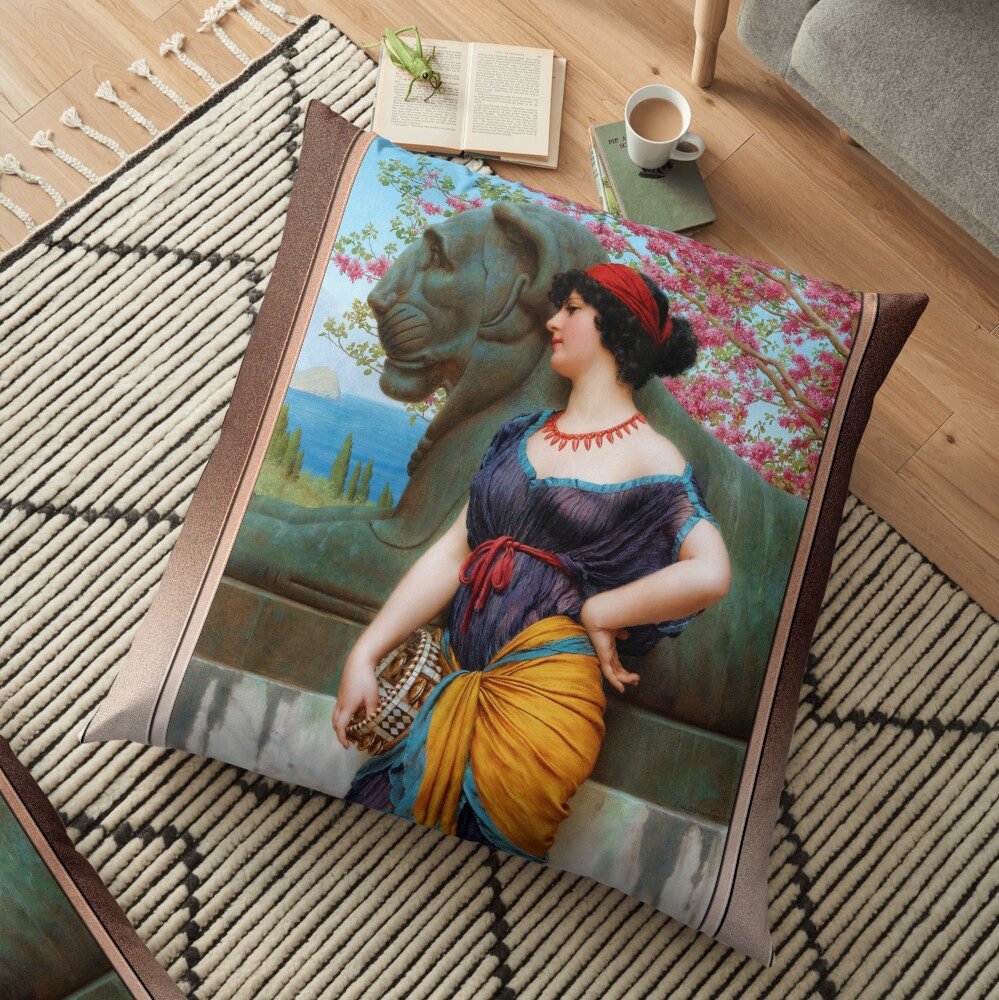
“In The Grove Of The Temple Of Isis” by the British artist John William Godward (1861 – 1922) captures an idyllic and timeless moment that transports the viewer to an ancient, classical world. Known for his expertise in depicting the serene beauty of women, classical architecture, and lush landscapes, Godward presents an image filled with grace and elegance. Godward was a prominent figure in the Neo-Classical movement, a style which focused on the revival of ancient Greek and Roman ideals, yet with an air of romanticism. This particular work, executed at the peak of his career in 1915, continues to reflect his admiration for the classical world while showcasing his mastery over texture, koloro, kaj formo.
The painting features a woman poised in the shadows of a grove within the ruins of a temple dedicated to Isis, the ancient Egyptian goddess associated with fertility, magic, and motherhood. The backdrop of the temple ruins suggests the faded grandeur of antiquity, contrasting with the vibrant and alive portrayal of the woman. This juxtaposition between the lifeless stones of the temple and the youthful energy of the female figure is a testament to Godward’s ability to capture the passage of time while simultaneously celebrating beauty and vitality.
Enhavtabelo
La Subjekto: The Woman in the Grove
The central subject of Godward’s piece is a young woman draped in flowing classical attire, reminiscent of the Greco-Roman style. Her rich, layered robes of indigo and yellow silk cascade down her figure with an intricate sense of movement. The contrast between the dark purple of the gown and the bright golden hue of the sash offers a rich, luxurious color palette that highlights the sensuality of the fabric as it clings to the woman’s curves. The light catches the delicate folds of her clothing, which seem to shimmer, as though alive with movement. Ŝia sinteno, elegant yet relaxed, reflects the calm nature of the classical world that Godward is known for capturing in his works.
The woman’s face, turned slightly toward the viewer, reveals a serene expression. Her features are finely sculpted, emphasizing the idealized beauty of women that was characteristic of Godward’s style. The small details such as her jewelry, a simple, yet elegant necklace, add to the sense of wealth and refinement. Her dark hair, pulled back and adorned with a red ribbon, complements the surrounding landscape and further enforces the sense of timeless grace. The woman appears absorbed in her surroundings, her gaze cast slightly down as if contemplating the ancient temple behind her, or perhaps reflecting on the mysteries of the past.
En ŝiaj manoj, she holds a tambourine, which further connects her to the ritualistic and ceremonial life of the ancient world. This instrument, often associated with divine and sacred practices, hints at the religious or ritualistic theme of the painting, aligning with the temple’s association with Isis. The tambourine may also symbolize a connection to music and dance, which were intrinsic to the worship practices in ancient temples.
The Temple and The Setting
The painting’s background is dominated by the crumbling remnants of a classical temple, half-obscured by lush foliage. This juxtaposition between the temple ruins and the living woman symbolizes the enduring spirit of beauty amid the passing of time. The ruins, which likely once formed part of a grand structure dedicated to Isis, appear weathered and aged, with portions of the stonework barely visible through the verdant overgrowth. This setting evokes the passage of centuries, with nature slowly overtaking human creations, but it also serves as a reminder of the power and grandeur of the ancient world.
Flanking the temple ruins are flowering trees, their pink blossoms in full bloom, creating a stark contrast to the ancient stone. The lush, almost dreamlike vegetation hints at a warm, Mediterranean climate, further connecting the work to the romanticized vision of antiquity. The flowers introduce a note of vitality, which not only enhances the visual beauty of the piece but also suggests the cyclical nature of life, with the blooming trees offering a sense of renewal in contrast to the decay of the temple. The light, soft blues and greens of the distant landscape hint at the calm, peaceful existence of the classical world, a world where nature and humanity lived in harmony.
Materialoj kaj tekniko
Godward’s technique is characterized by meticulous attention to detail, as evidenced in every brushstroke of the fabric, the woman’s skin, and the architecture. The use of oil paints gives the piece its depth and richness, allowing Godward to play with texture and light to create an almost photographic realism. The smooth finish of the woman’s skin contrasts with the rough texture of the stone, while the translucent quality of her clothing enhances the softness of her form. Godward’s handling of light in the composition is another striking feature; the sunlight filtering through the trees highlights the contours of the woman’s face and body, while also casting soft shadows that create a sense of depth and realism.
The Mood and Themes
The overall mood of the painting is one of serenity and tranquility. The woman’s calm demeanor and poised stance convey a sense of peace, as though she is at one with the ancient world surrounding her. This peacefulness is further emphasized by the gentle presence of nature, with the flowering trees and soft landscape inviting contemplation and reflection. La koloroj, primarily rich purples, oroj, and greens, create a harmonious balance that evokes a sense of timeless beauty and quietude.
Thematically, the painting touches on the idealization of ancient cultures, particularly those of Egypt and Rome, and the reverence for beauty that characterized the Neo-Classical movement. Godward’s ability to merge the ancient with the living, the mythological with the natural, brings forth an appreciation for the eternal aspects of culture and humanity. The temple ruins, la virino, and the natural landscape together create a narrative of past grandeur and present serenity, reminding the viewer that beauty endures beyond the physical.
In The Grove Of The Temple Of Isis is a remastered digital art old masters reproduction of a public domain image that is available as metal, akrila kaj kanvasaj presaĵoj rete.
Ĉi tiu cifereca arta kreaĵo, kiel kun ĉiuj artaĵoj, kiuj troveblas en la retejo de Xzendor7, estas aĉetebla interrete en diversaj materialaj formatoj inkluzive de kanvasaj presaĵoj., akrilaj presaĵoj, metalaj presaĵoj, lignaj presaĵoj, enkadrigitaj presaĵoj, afiŝoj, kaj kiel rulitaj kanvasaj presaĵoj en diversaj grandecoj de 12 colojn al 72 coloj depende de la grandeco de la reala artaĵo kaj la presaĵo laŭpeta butiko, de kiu vi elektas aĉeti la arton.
La artaĵo ankaŭ haveblas sur larĝa gamo de vestaĵoj de viroj kaj virinoj, tasoj, totoj, koltukoj, kajeroj kaj ĵurnaloj kaj multaj hejmornamaj produktoj.
Artisto Bio
Informoj Malsupre De Vikipedio.org
John William Godward estis la plej aĝa de kvin infanoj, kaj estis nomita laŭ lia patro Johano kaj avo Vilhelmo.
Li ekspoziciis ĉe la Reĝa Akademio de 1887. Kiam li moviĝis al Italio kun unu el siaj modeloj en 1912, lia familio rompis ĉian kontakton kun li kaj eĉ tranĉis lian bildon de familiaj bildoj. Godward revenis al Anglio en 1921, mortis en 1922, and is buried in Brompton Cemetery, Okcidenta Londono.
Unu el liaj plej konataj pentraĵoj estas Dolce far Niente (1904), kiu estis aĉetita por la kolekto de Andrew Lloyd Webber en 1995. Kiel en la kazo de pluraj aliaj pentraĵoj, Godward pentris pli ol unu version; en ĉi tiu kazo, pli frue (kaj malpli konata) 1897 versio kun plua 1906 versio.
Li faris memmortigon en la aĝo de 61 kaj laŭdire skribis en sia suicidletero tion “la mondo ne estas sufiĉe granda por [ambaŭ] mi mem kaj Picasso”.
Lia fremdigita familio, kiu malaprobis ke li fariĝu artisto, hontis pri sia memmortigo kaj bruligis liajn paperojn. Nur unu foto de Godward povas pluvivi.
Godward estis viktoria novklasikisto, kaj tial, en teorio, ano de Frederic Leighton. Tamen, li estas pli proksime aliancita stile al Sir Lawrence Alma-Tadema, kun kiu li partumis inklinon al la interpreto de Klasika arkitekturo - aparte, senmovaj pejzaĝaj trajtoj konstruitaj el marmoro.
La vasta plimulto de la pluekzistantaj bildoj de Godward prezentas virinojn en klasika robo pozis kontraŭ pejzaĝaj trajtoj; kvankam ekzistas kelkaj duonnudaj kaj tute nudaj figuroj inkluditaj en lia verko, rimarkinda ekzemplo estanta “En La Tepidarium c1913”.
Titolo kunhavita kun polemika Alma-Tadema pentraĵo de la sama temo kiu loĝas en la “Sinjorino Lever Artgalerio”. La titoloj reflektas la fonton de inspiro de Godward; kiu estis klasika civilizacio, plej precipe tiu de Antikva Romo; temo liganta Godward proksime al Alma-Tadema arte.
Konsiderante ke Klasika stipendio estis pli ĝeneraligita inter la ebla spektantaro por liaj pentraĵoj dum lia vivdaŭro ol en la nuntempo., zorgema esplorado de detaloj estis grava por ekhavi reputacion kiel artisto en tiu ĝenro.
Alma-Tadema estis arkeologo same kiel farbisto, kiu ekzamenis historiajn lokojn kaj kolektis artefaktojn kiujn li poste uzis en siaj pentraĵoj: Godward, ankaŭ, studis tiajn detalojn kiel arkitekturon kaj veston, por certigi, ke liaj verkoj portis la stampon de aŭtentikeco.
Krome, Godward pene kaj zorge igis aliajn gravajn ecojn en siaj pentraĵoj, bestaj feloj el kiuj la pentraĵoj “Tagmeza Ripozo c1910” kaj “Cool Retreat c1910” enhavas ekzemplojn de tia interpretado same kiel sovaĝaj floroj “Nerissa c1906” kaj “Someraj Floroj c1903”.
La aspekto de belaj virinoj en studitaj pozoj en tiel multaj el la kanvasoj de Godward igas multajn novulojn al liaj verkoj kategoriigi lin erare kiel esti antaŭrafaelita., precipe ĉar lia paletro ofte estas vigle bunta. La elekto de temo (antikva civilizo kontraŭ, ekzemple, Artura legendo) estas pli ĝuste tiu de la Viktoria Novklasikisto.
En ofta kun multaj farbistoj nuntempaj kun li, Godward estis "Alta Viktoria Revulo", produktante bildojn de idealigita kaj romantikigita mondo tio, en la kazo de kaj Godward kaj Alma-Tadema, estis kritikita kiel mondkoncepto de viktorianoj en togoj.
Godward “rapide establis reputacion por liaj pentraĵoj de junaj virinoj en klasika medio kaj lian kapablon peri kun sentemo kaj teknika majstrado la senton de kontrastaj teksturoj de karno., marmoro, felo kaj ŝtofoj.
La inklino de Godward por krei artaĵojn metita en la klasika periodo verŝajne venis de la tempoperiodo en kiu li estis naskita.; ĉar ĝi estis la lasta plenskala klasika reviviĝo en okcidentaj pentraĵoj, tio prosperis en Anglio de la 1860-aj jaroj ĝis la 1890-aj jaroj.