

Valokeilassa
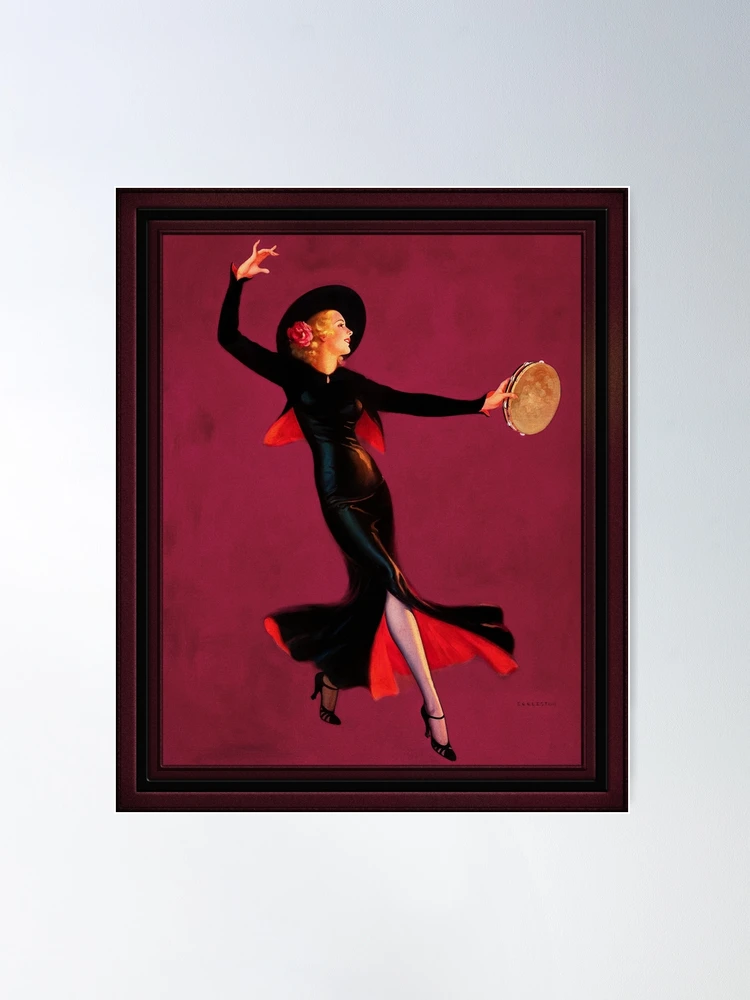
Edward Mason Egglestonin taideteoksia, Valokeilassa, luotu vuonna 1937, vangitsee aikakauden eloisan ja energisen hengen näyttävän tanssijan muotokuvan kautta. Syntynyt vuonna 1882 ja kuolee sisään 1941, Egglestonin työ heijastelee siirtymää art decon ja varhaismodernin liikkeiden välillä. Tunnettu hienostuneesta värikäytöstään ja dynaamisista koostumuksistaan, Eggleston käyttää tätä teosta tutkiakseen liikkeen teemoja, armo, ja suorituskyvyn viehätys. Maalauksessa kuvatusta naisesta tulee keskeinen hahmo kerronnassa, joka puhuttelee sekä hänen taiteellisuuttaan että näyttämön ajatonta vetovoimaa..
Sisällysluettelo
Kohde ja koostumus
Teoksen keskeinen hahmo on nainen, valmiina keskellä tanssia, pukeutunut tyylikkääseen ja vartaloa imartelevaan mustaan mekkoon. Hänen asentonsa, with one arm raised high and the other extended forward holding a tambourine, suggests a vibrant, fluid motion, bringing her to life within the confines of the canvas. Her right leg is positioned in a graceful, almost balletic stance, emphasizing the energy of the dance. Tämä asento, along with her expression of enjoyment and concentration, conveys the joy of performing. Her head is tilted slightly back, and her gaze is directed toward the upper left of the canvas, suggesting an engagement with an invisible audience or an internal immersion in the music.
Her attire is key to the artwork’s aura of elegance. The black dress, which hugs her figure closely, is adorned with a vivid scarlet red lining visible at the back, adding a touch of drama to the figure’s silhouette. The woman’s hat, jossa on musta reunus, on koristeltu yhdellä punaisella ruusulla, parantaa värien kontrastia ja samalla edistää 1930-luvun muotiherkkyyttä. Musta mekko erottuu jyrkästi kirkkaan punaisen sävyn kanssa, tehostaa työn visuaalista vaikutusta, kun taas mustat kantapäät ja asusteet lisäävät hänen kiillotettuaan, hienostunut ulkonäkö.
Väripaletti ja materiaalit
Egglestonin väripaletti sisään Valokeilassa hallitsevat rikkaat kontrastit tumman välillä, kiihkeitä sävyjä ja punaisen kirkkaita aksentteja. Syvä purppuranpunainen tausta peittää kohteen kylläisenä, lähes teatteriympäristö, korostaa tanssijan energiaa ja läsnäoloa. Taustan yksinkertaisuus, vailla vieraita elementtejä, varmistaa, että nainen pysyy maalauksen jakamattomana keskipisteenä. Hänen ihonsa näkyy valossa, pehmeät sävyt, jotka ovat kontrastia ympäröivien tummien sävyjen kanssa, antaa hänelle lähes eteerisen hehkun eloisaa punaista taustaa vasten. Hänen hiuksissaan oleva ruusu ja puvun vuori toimivat tarkoituksellisina värien kohokohtina, edistää visuaalista draamaa ja temaattista yhteyttä tanssijan säteilevään esitykseen.
Eggleston käyttää sileää, taustan lähes hehkuva tekstuuri eloisaa vasten, tanssijan vaatteiden ja asusteiden lähes koskettava kuvaus on hienovarainen mutta tehokas tapa korostaa kohteen liikettä ja energiaa. Näiden sävyjen huolellinen sekoitus lisää maalauksen emotionaalista eloisuutta, edistää sen dramaattista tunnelmaa.
Tunnelma ja teema
Maalauksen tunnelma on luottavainen, viehätys, ja taiteellista omistautumista. Maalauksen nainen ei ole vain passiivinen subjekti, vaan aktiivinen osallistuja dynaamiseen esitykseen. Hänen asennossaan on voimaannuttamisen tunne, kun hän huokuu tamburiinin ja esittämänsä tanssin hallintaa. Tamburiini itsessään toimii sekä soittimena että rytmin ja rytmin symbolina, lisäämällä tuntoelementin tanssijan liikkeisiin. Luku, uppoutunut esitykseensä, osoittaa synergiaa kehon ja musiikin välillä, jossa tanssi ja ääni yhdistyvät ainutlaatuisena luovuuden ilmaisuna.
Egglestonin tanssijakuvaus heijastelee myös 1930-luvun laajempia teemoja, aika, jolloin esittävät taiteet olivat kulttuuriilmaston kannalta ratkaisevia. Figuurin dramaattinen esitys kertoo aikakauden kasvavasta kiinnostuksesta jazzista, teatteri, ja elokuva. Tämä maalaus, siksi, ei ole vain staattinen muotokuva, vaan juhla tänä aikana kukoistaneesta tanssi- ja esityskulttuurista. Valokeila, sekä kirjaimellisesti että kuvaannollisesti, asetetaan suoraan tanssijan päälle, teki hänestä aikansa esittävän taiteen ruumiillistuksen.
Maalauksen teemana on taiteilijan esittämä esityksen fyysinen ja emotionaalinen ulottuvuus. Tanssijan virtaava liike heijastuu tasaiseen, Egglestonin siveltimen juoksevia vediä, korostaa harmoniaa tanssijan kehon ja tilan välillä, jossa hän esiintyy. This connection suggests that the performer’s art is as much about movement and grace as it is about a deeper connection with the rhythm of life.
Taiteellinen tyyli
Valokeilassa can be viewed as a product of its time, reflecting Eggleston’s mastery of precision and mood-setting within the visual constraints of the 1930s. The work embodies aspects of the Art Deco style, evident in its elegant yet exaggerated forms, as well as the dynamic interplay of geometric shapes and contrasting colors. While not strictly conforming to all Art Deco ideals, the painting does exhibit the period’s celebration of glamour and stylized representation.
Eggleston’s skillful handling of light and shadow also invites comparisons to the broader realism movement, which sought to capture not only the form of its subjects but the emotional content beneath their surfaces. Through his emphasis on color, valaistus, and movement, Eggleston’s rendering of the dancer moves beyond a simple depiction of her outward appearance to reveal something more ethereal, a moment of grace frozen in time. The soft lighting around the subject contrasts sharply with the angular, sharp details in the tambourine and dress, highlighting the sense of motion while still preserving the subject’s detailed form.
Johtopäätös
Edward Mason Eggleston’s Valokeilassa remains a timeless exploration of performance, liikettä, ja eleganssia. The artist’s masterful use of color and composition captures the essence of the dancer’s world, one of rhythm, armo, and exuberant expression. Tämän kappaleen kautta, Eggleston kutsuu katsojan astumaan näyttämön maailmaan, jossa jokainen liike on sekä visuaalinen että emotionaalinen spektaakkeli. Näin tehdessään, hän ei ainoastaan ikuistaa esiintyjän kauneutta, vaan myös itse taiteen universaalia vetovoimaa, perustuu liikkeen ja itseilmaisun voimaan.
In The Spot Light on retusoitu digitaalisen taiteen vanhojen mestarien kopio julkisesta kuvasta.
Tämä digitaalisen taiteen luomus, Kuten kaikki taideteokset, jotka löytyvät Xzendor7-verkkosivustolta, ovat ostettavissa verkosta useissa eri materiaalimuodoissa, mukaan lukien kanvasvedokset, akryyliprintit, metalliprintit, puu tulosteita, kehystetyt printit, julisteita, ja kuten rullatut kanvasprintit eri kokoja alkaen 12 tuumaa 72 tuumaa riippuen todellisen taideteoksen koosta ja tilauspainatusliikkeestä, josta haluat ostaa taiteen.
Taideteoksia on saatavana myös laajassa valikoimassa miesten ja naisten vaatteita, mukeja, totes, huivit, muistikirjat ja päiväkirjat sekä monet kodin sisustustuotteet.
Taiteilijabio
Tiedot alla osoitteesta Wikipedia.org
Edward Mason Eggleston (22 marraskuu 1882 - 14 tammikuu 1941) oli amerikkalainen taidemaalari, joka oli erikoistunut naisten kalenterimuotokuviin, muodikas ja upea.
Hän oli myös tunnettu kaupallinen kuvittaja, joka teki töitä Fisk Tire Companyn kaltaisille yrityksille, Pennsylvanian rautatie, ja Suurten järvien näyttely.
Hän osallistui Columbuksen taidekouluun Columbuksessa, Ohio ja muutti New Yorkiin noin 1915, jossa hän työskenteli kuvitellakseen lehtien kansia, matkajulisteita, mainoksia ja kalentereita.
Hän työskenteli pääasiassa öljymaaleilla kankaalle, ja myös pastellien kanssa, vesivärejä, ja guassi.
Eggleston otti amerikkalaisen suuntauksen kohti eskapistista fantasiaa 1930 -luvun suuren laman aikana.
Kuvattu nimellä “tarinankerronta,” hänen kalenteriteoksensa keskittyivät naisiin tyylikkäissä ja muodikkaissa mekoissa ja hattuissa, uimapuvut, tai pukeutunut intiaani-naisiksi, “Egyptiläiset jumalattaret,” merirosvotytöt, ja naiset Peter Panin luonteessa