

注目の的
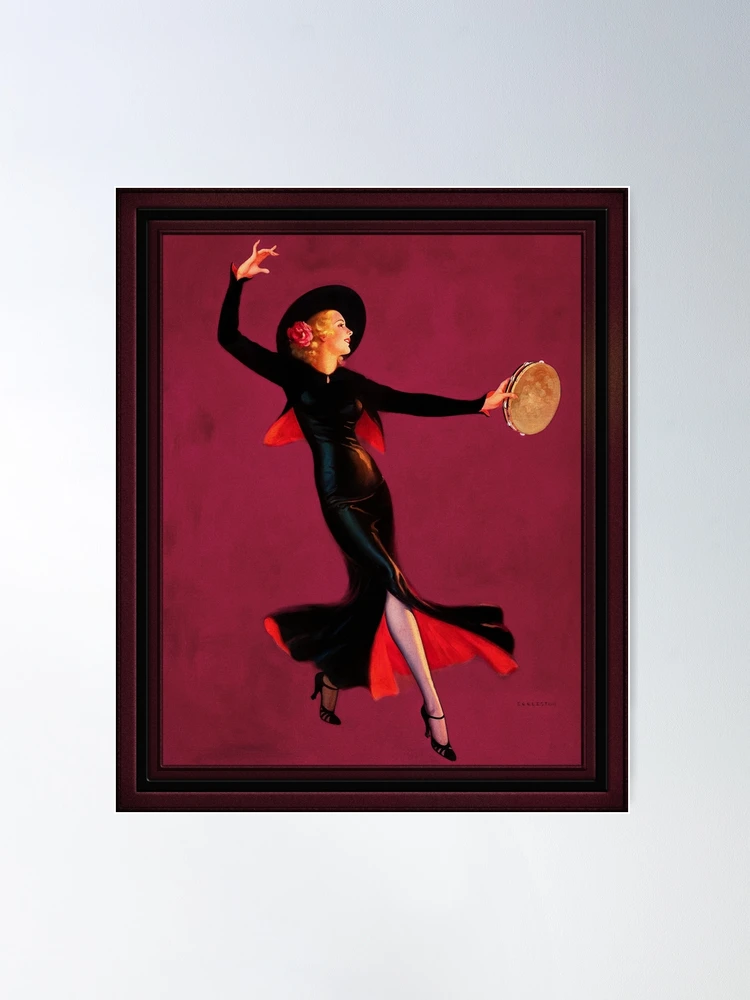
エドワード・メイソン・エグルストンのアートワーク, 注目の的, に作成されました 1937, ダンサーの印象的なポートレートを通して、時代の活気に満ちたエネルギッシュな精神を捉えています。. で生まれた 1882 そして亡くなります 1941, エグルストンの作品は、アールデコと初期の近代運動の間の移行を反映しています。. 洗練された色使いとダイナミックな構図で知られる, エグルストン この作品を使用して動きのテーマを探求します, 恵み, そしてパフォーマンスの魅力. 絵に描かれた女性は、彼女の芸術性と舞台の時代を超越した魅力の両方を語る物語の中心人物になります。.
目次
主題と構成
作品の中心人物は女性です, ダンスの途中で構える, エレガントで体型を美しく見せる黒いドレスを着ている. 彼女の姿勢, 片方の腕を高く上げ、もう片方の腕を前に伸ばしてタンバリンを持っている, 活気に満ちたものを示唆する, 流体の動き, キャンバスの中で彼女に命を吹き込む. 彼女の右足は優雅な姿勢で立っています, ほぼバレエのようなスタンス, ダンスのエネルギーを強調する. このポーズ, 楽しさと集中力の表情とともに, 演奏する楽しさを伝える. 彼女の頭は少し後ろに傾いています, そして彼女の視線はキャンバスの左上に向けられる, 目に見えない聴衆との関わり、または音楽への内なる没入を示唆する.
彼女の服装は、作品の優雅な雰囲気の鍵となります. 黒いドレス, それは彼女の姿をぴったりと抱きしめる, 背面には鮮やかな緋色の裏地が施されています, フィギュアのシルエットにドラマティックなタッチを加える. 女性の帽子, which features a black brim, is decorated with a single red rose, enhancing the contrast of colors while also contributing to the 1930s fashion sensibility. The black dress contrasts sharply with the bright red hue, intensifying the visual impact of the work, while the black heels and accessories further add to her polished, refined appearance.
カラーパレットと素材
Eggleston’s color palette in 注目の的 is dominated by rich contrasts between dark, sultry tones and vivid accents of red. The deep crimson background envelops the subject in a saturated, almost theatrical environment, emphasizing the dancer’s energy and presence. The background’s simplicity, devoid of any extraneous elements, ensures that the woman remains the undivided focus of the painting. Her skin is rendered in light, 周囲の暗い色合いと対照的な柔らかい色調, 鮮やかな赤い背景に対して、ほとんど幻想的な輝きを彼女に与えています. 彼女の髪のバラとドレスの裏地は、意図的な色のハイライトとして機能します。, ダンサーの輝かしいパフォーマンスとの視覚的なドラマとテーマのつながりに貢献します。.
エグルストンのスムースの使用, 活気に満ちた背景に対してほぼ輝くテクスチャ, ダンサーの衣服やアクセサリーのほとんど触覚的な描写は、被写体の動きとエネルギーを強調する繊細かつ強力な方法です。. これらの色合いを慎重にブレンドすることで、絵画の感情的な活気が高まります。, ドラマチックな雰囲気に貢献.
ムードとテーマ
絵の雰囲気は自信にあふれています, 魅力, そして芸術的な献身. The woman in the painting is not merely a passive subject but an active participant in a dynamic performance. There is a sense of empowerment in her posture, as she exudes control over the tambourine and the dance she is performing. The tambourine itself serves as both a musical instrument and a symbol of rhythm and beat, adding a tactile element to the dancer’s movements. フィギュア, immersed in her performance, demonstrates the synergy between the body and the music, where the dance and the sound come together as a singular expression of creativity.
Eggleston’s portrayal of the dancer also reflects the broader themes of the 1930s, a time when the performing arts were crucial for the cultural climate. The dramatic presentation of the figure speaks to the era’s growing fascination with jazz, theater, and film. この絵, したがって, is not just a static portrait but a celebration of the dance and performance culture that flourished in this period. The spotlight, both literal and figurative, is placed squarely on the dancer, making her the embodiment of the performing arts of the time.
The painting’s theme revolves around the artist’s portrayal of both the physical and emotional dimensions of performance. The dancer’s flowing motion is mirrored by the smooth, fluid strokes of Eggleston’s brushwork, emphasizing the harmony between the dancer’s body and the space in which she performs. This connection suggests that the performer’s art is as much about movement and grace as it is about a deeper connection with the rhythm of life.
芸術的なスタイル
注目の的 can be viewed as a product of its time, reflecting Eggleston’s mastery of precision and mood-setting within the visual constraints of the 1930s. The work embodies aspects of the Art Deco style, evident in its elegant yet exaggerated forms, as well as the dynamic interplay of geometric shapes and contrasting colors. While not strictly conforming to all Art Deco ideals, the painting does exhibit the period’s celebration of glamour and stylized representation.
Eggleston’s skillful handling of light and shadow also invites comparisons to the broader realism movement, which sought to capture not only the form of its subjects but the emotional content beneath their surfaces. Through his emphasis on color, ライト, そして動き, Eggleston’s rendering of the dancer moves beyond a simple depiction of her outward appearance to reveal something more ethereal, a moment of grace frozen in time. The soft lighting around the subject contrasts sharply with the angular, sharp details in the tambourine and dress, highlighting the sense of motion while still preserving the subject’s detailed form.
結論
Edward Mason Eggleston’s 注目の的 remains a timeless exploration of performance, 動き, and elegance. The artist’s masterful use of color and composition captures the essence of the dancer’s world, one of rhythm, 恵み, and exuberant expression. この作品を通して, Eggleston invites the viewer to step into the world of the stage, where every motion is both a visual and emotional spectacle. そうすることで, he not only immortalizes the beauty of the performer but also the universal appeal of art itself, grounded in the power of movement and self-expression.
スポットライトでは、パブリックドメインの画像のレタッチされたデジタルアートオールドマスターの複製です.
このデジタルアート作品は、, Xzendor7 Web サイトにあるすべてのアートワークと同様に、キャンバス プリントを含むさまざまな素材形式でオンラインで購入できます。, アクリルプリント, メタルプリント, 木版, 額入りプリント, ポスター, そしてとして ロール状のキャンバスプリント さまざまなサイズから 12 インチから 72 インチは、実際のアートワークのサイズと、アートを購入するために選択したオンデマンド プリント ショップによって異なります。.
このアートワークは、幅広いメンズおよびウィメンズのアパレルでも利用可能です, マグカップ, トートバッグ, スカーフ, ノートや日記帳、その他多くの室内装飾品.
アーティスト略歴
Wikipedia.orgからの以下の情報
エドワードメイソンエグレストン (22 11月 1882 – 14 1月 1941) 女性のカレンダーの肖像画を専門とするアメリカの画家でした, ファッショナブルで幻想的.
彼はまた、Fisk TireCompanyなどの企業で仕事をしている有名な商業イラストレーターでもありました。, ペンシルバニア鉄道, そして五大湖博覧会.
彼はコロンバスのコロンバス美術学校に通いました, オハイオ州とニューヨークに引っ越しました 1915, 彼は雑誌の表紙を説明するために働いた場所, 旅行ポスター, 広告とカレンダー.
彼は主に帆布の油絵の具を扱っていました, パステルも使って, 水の色, とガッシュ.
エグレストンは、1930年代の大恐慌時代に、現実逃避の空想に向かうアメリカの傾向を利用しました。.
記述 “ストーリーテリング,” 彼のカレンダーは、スタイリッシュでファッショナブルなドレスと帽子をかぶった女性に焦点を当てています。, 水着, またはネイティブアメリカンの女性の衣装を着た, “エジプトの女神,” 海賊の女の子, ピーターパンのキャラクターの女性