

Estiu indi
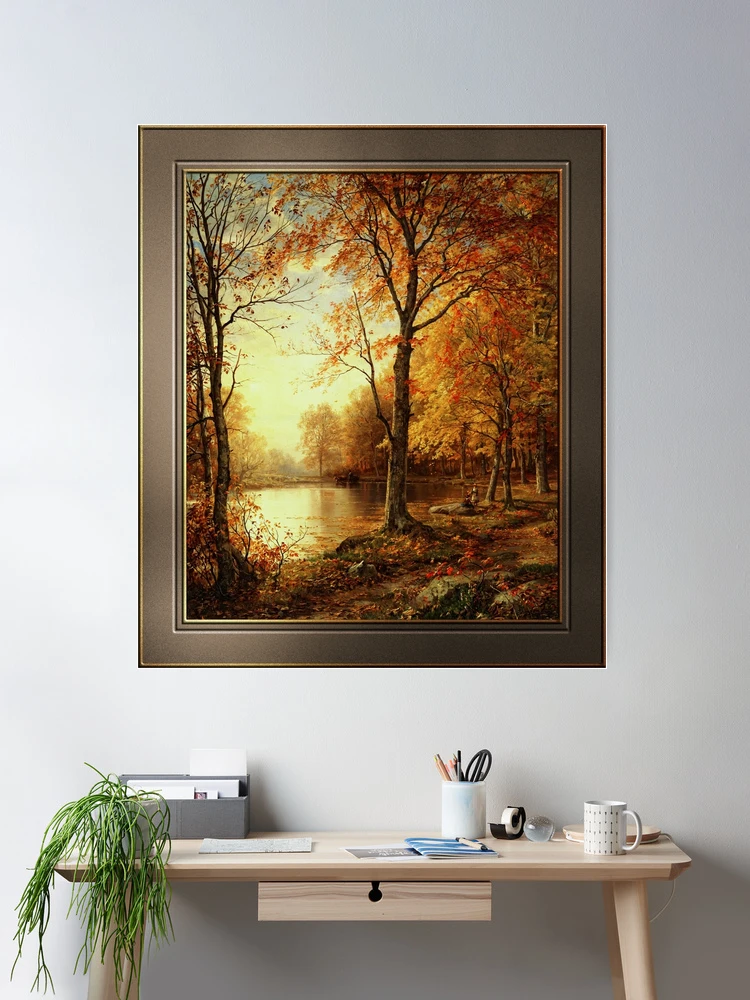
Estiu indi c1875 pel pintor nord-americà William Trost Richards (1833 – 1905), a paisatge i artista de paisatges marins que estava associat tant amb l'escola del riu Hudson com amb els moviments prerrafaelites nord-americans.
William Trost Richards era famós per les seves exquisides pintures de paisatge, amb especial atenció a la bellesa natural del paisatge nord-americà; i aquesta peça exemplifica el seu domini de les complexitats de la natura i la seva capacitat per capturar moments fugaços de bellesa al paisatge. Aquesta pintura a l'oli representa la sensació serena i nostàlgica de la tardor, reflectint la suau transició entre estacions en una escena tranquil·la i detallada.
Taula de continguts
Estil i tècnica
Estiu indi està pintat amb un estil arrelat al moviment del luminisme americà, caracteritzat per un èmfasi en la llum, atmosfera, and the fine details of nature. The work showcases the artist’s keen observation of light’s effects on the landscape and the subtle interplay of shadow and color. The luminous quality of the painting, with its soft and warm glow, highlights the fading summer warmth transitioning into the cooler tones of autumn.
The artist’s technique involves the meticulous layering of oil paints, creating depth and texture in the trees, aigua, i cel. The palette used in Estiu indi is dominated by warm tones, from the deep oranges and yellows of the autumn leaves to the soft golds and browns of the landscape, all of which evoke the late afternoon light typical of an Indian summer day.
Assumpte i composició principal
El tema central de Estiu indi is a serene rural landscape with a focus on a calm body of water, surrounded by trees shedding their autumn leaves. L'escena està banyada per la llum càlida de la tarda, creant una atmosfera pacífica però subtilment melancòlica. La composició del quadre està magistralment equilibrada, amb els grans arbres a banda i banda emmarcant l'escena mentre el camí sinuós i l'aigua reflexiva condueixen la mirada de l'espectador a la distància. La quietud de l'aigua afegeix una sensació de tranquil·litat, reflectint els arbres i el cel suau a dalt.
Els arbres, majoritàriament despullats de les seves fulles d'estiu, però encara aguantant el fullatge daurat i taronja, mantenir-se alt i destacat en la composició. Les seves extremitats arriben cap al cel, nua però delicada, permetent a l'artista mostrar els seus detalls complexos en contrast amb la càlida, fulles daurades encara s'enganxen a ells.
Les branques s'entrellacen i creen un dosser de colors, evocant la plenitud de la tardor abans que les fulles caiguin completament. Els petits tocs de verd escampats entre les tonalitats de la tardor suggereixen els vestigis persistents de l'estiu. El primer pla i el marge de la riera estan esquitxats de roques i fulles caigudes, mostrant la delicada de la natura, transicions fugaces a mesura que s'aprofundeix la tardor.
Terreny i elements naturals
El terreny dins Estiu indi és una representació del paisatge agrest però pacífic americà. L'artista se centra en les textures terroses del sòl, les roques disperses, i les primes brises d'herba, que afegeixen un sentit tàctil a la composició.
L'aigua, suau i tranquil, proporciona una superfície reflectant que reflecteix els colors dels arbres i del cel, potenciant la serenitat de l'escena. L'atenció al detall de l'artista es fa evident en la manera com les fulles suren a la superfície de l'aigua, creant un delicat contrast contra la quietud del rierol.
A la distància, a faint outline of a lone figure, likely a fisherman or wanderer, can be seen, adding a subtle human presence to the otherwise untouched natural environment. This figure is small, almost indistinguishable at first glance, yet the choice to include this solitary person suggests an intimate connection with nature and solitude, a theme that was common in American landscape painting during this era. The person seems to be absorbed in their surroundings, perhaps quietly enjoying the autumn landscape, further enhancing the mood of quiet contemplation that pervades the painting.
Estat d'ànim i atmosfera
L'estat d'ànim de Estiu indi is one of quiet reflection and peaceful solitude, invoking the feeling of a tranquil autumn afternoon. El càlid, golden tones of the foliage and the soft sunlight cast a sense of nostalgia, evoking memories of past seasons and moments of calm. The feeling of transition is palpable—the fading warmth of the summer season as it gently gives way to the cooler days of autumn. There is no rush or agitation in the scene; the slow drift of leaves on the water, the stillness of the trees, and the distant figure contribute to a sense of timelessness.
The light in the painting plays a significant role in setting the mood. The soft glow of the sun, filtering through the trees and creating long shadows on the ground, invites a sense of peacefulness. It suggests a day that is slowly coming to an end, with the promise of cooler, more introspective days ahead. The atmosphere is one of serenity, but also quiet sadness, as the year’s warmth slowly fades, leaving only the lingering beauty of autumn in its wake.
Conclusió
Estiu indi is a quintessential example of William Trost Richards’ ability to capture the subtleties of nature’s changing seasons. El seu ús de la llum, color, and texture allows the viewer to step into a moment of peaceful reflection, allowing nature itself to tell the story of transition and quiet beauty. A través d'aquesta pintura, Richards invites the viewer to experience the fleeting nature of autumn—a season that brings both the vibrancy of color and a hint of melancholy. The artwork stands as a celebration of the natural world in all its complexity, capturing a timeless, tranquil moment in nature.
Es tracta d’una reproducció de vells mestres d’art digital retocada d’una imatge de domini públic.
Sobre l'artista
La informació següent es deriva de Wikipedia.org
William was born in Philadelphia, Pennsylvania on November 14, 1833; i a l'edat de 27 up until 1855 he studied on a part-time basis with the German Painter (1823 – 1916), while he also worked as a designer and illustrator of an ornamental metalworks company.
En 1858 American Painter Albert Bierstadt (1830 – 1902) organized an exhibition in New Bedford, Massachusetts, to which William submitted his first work for public viewing.
Just 4 anys més tard en 1862 William was elected as an honorary member of the National Academy of Design; i 9 years later as an Academician.
Durant 1863 he became a member of the Association for the Advancement of Truth in Art, and three years later he left for Europe where he remained for one year.
After returning to the United States William spent the following six summers on the Eastern Coast of the United States.
In the 1870s William would go on to produce many acclaimed watercolor views of the White Mountains of New Hampshire; which are a mountain range that covers almost a quarter of the state and a small portion of Western Maine.
Des de 1861 a 1899 William exhibited his artwork at the National Academy of Design, as well as the Brooklyn Art Association from 1863 a 1885; and would continue to produce art from his house in Jamestown, Rhode Island that he built in 1881 until his death on April 17, 1905.