

Interior View of St Peters Basilica c1750
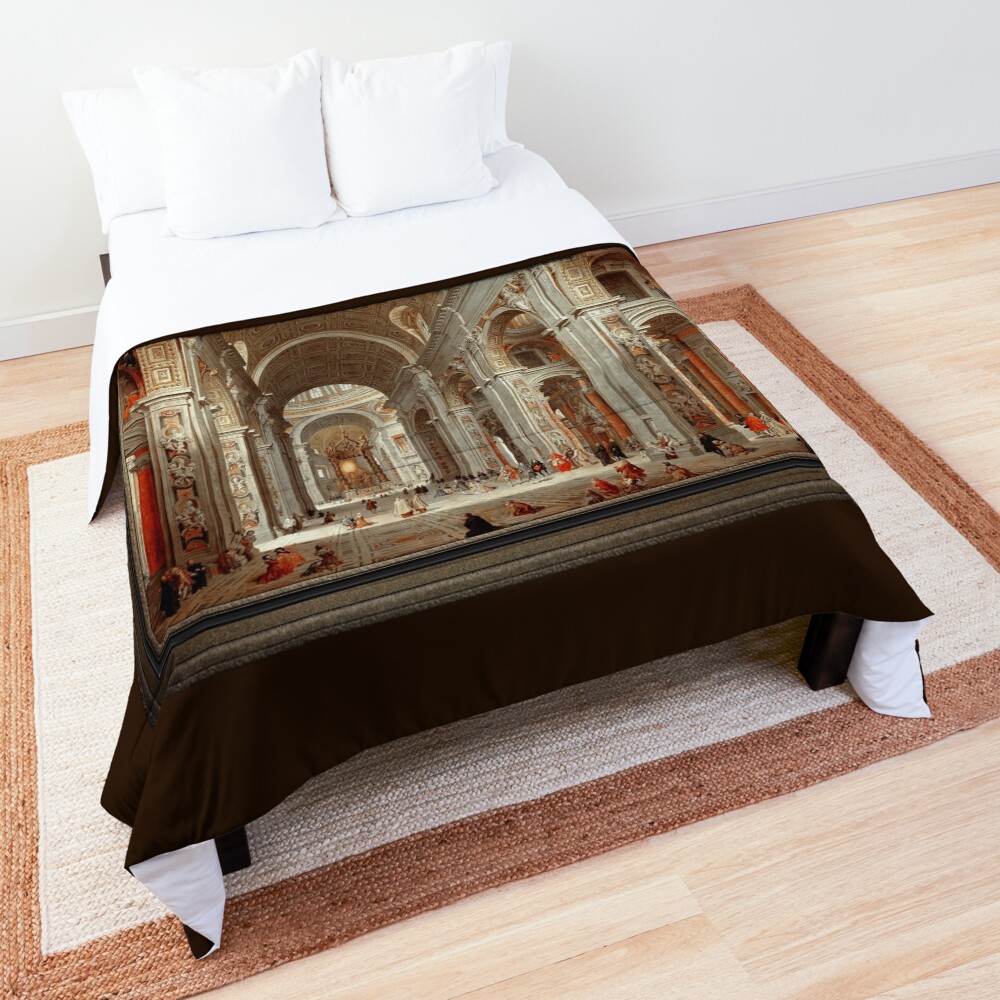
Interior View of St Peters Basilica is a magnificent painting created in 1750 by the renowned Italian artist Giovanni Paolo Pannini (1691 – 1765). This masterful work exemplifies Pannini’s extraordinary ability to capture the grandeur of arkitektura and the spirit of classical antiquity.
Through his artistic vision, Pannini offers an inside view of one of the most iconic architectural structures in the world; St. Vatikano Hiriko Pedroren basilika. The composition not only illustrates the architectural wonders of the space but also immerses the viewer in a detailed narrative of daily life in the grand cathedral during the 18th century.
Edukien taula
Gai nagusia eta osaera
Margolanaren gai nagusia St. Pedroren basilika, debozio erlijiosoaren zein bikaintasun arkitektonikoaren sinboloa. Pannini-k basilikaren nabe zabalaren ikuspegi zabala aurkezten du, zutabe handiekin, arku korapilatsuak, eta sabai zabalak, guztiak zehaztasun eta handitasun handiz errendatuak.
Ganga eta kupulak dotore altxatzen dira zerurantz, ikuslearen begirada gorantz eraraztea goitik egiturara isurtzen dela dirudien argirantz. Handiak, circular windows and the dome of the church create a contrast between the serene, soft illumination from the windows and the richly detailed interiors.
The layout of the painting mirrors the layout of the basilica itself, offering a perspective that guides the viewer’s eye from the foreground, filled with figures, toward the distant altar, which is adorned with golden rays of light. The vastness of the space is emphasized by the presence of numerous small figures scattered throughout the scene, some in worship, others in casual conversation, and still more engaged in quieter, reflective activities. This addition of human figures brings life to the artwork, making the monumental space feel more approachable, yet still awe-inspiring.
Xehetasun arkitektonikoak
The intricacy and magnificence of St. Peter’s Basilica are captured through Pannini’s detailed renderings of the basilica’s structural elements. The soaring columns of the nave are painted with sharp precision, giving the illusion of depth and grandeur. The artist incorporates exquisite details of the marble textures, particularly in the columns’ rich reddish hues and creamy veins, contributing to the sense of luxury and permanence that pervades the building. Atzealdean, elaborate arches and coffered ceilings stretch endlessly, further emphasizing the vast scale of the space.
One of the most striking features in the painting is the dome designed by Michelangelo. Pannini captures the essence of the dome’s curvature and its sculptural form, which seems to soar beyond the limits of the canvas, filling the viewer with a sense of awe. Pinturan argia eta itzala erabiltzeak ehundura ukigarria ematen die gainazalei, arkitekturari hiru dimentsioko kalitatea emanez. Koloreak aberatsak dira baina apalak, harrizko eta marmolezko lur-tonuekin, aldarearen eta erlijio-ikonoen urrezko azentuekin ederki kontrastean..
Giza irudiak eta elkarrekintza
Panniniren lanaren alderdi esanguratsu bat giza irudiak sartzea da, bestela estatikoa den espazioari eskala eta jarduera zentzua gehitzen diotenak. Pertsona hauek hainbat jarreratan irudikatzen dira, batzuk otoitzean belauniko, beste batzuk solasean aritzen ziren edo nabe handitik ibiltzen ziren. Panninik pertsonaia hauen keinu eta janzkerari askotariko arretak are gehiago aberasten du kontakizuna. Lehen planoan dotore jantzita dauden gizon-emakumeek XVIII., garaiko jantziak eta ohiturak erakutsiz.
Eszenako figuren arteko elkarrekintzek espazio sakratuaren barruan elkarbizitza baketsua iradokitzen dute. Irudi batzuk aldarearen aurrean kontenplazioan gelditzen direla dirudi, beste batzuk, berriz, agian turistak edo erromesak, miresmenez ingurura begiratu. Giza presentzia hori, txikia izan arren arkitektura zabalaren aldean, basilikaren handitasuna areagotzeko balio du. Era berean, ikuslea gonbidatzen du elizaren esanahi espiritual eta kulturalari buruz hausnartzera, fededunen zein jakin-minaren bilgune gisa..
Aldartea eta Giroa
Margolanaren aldartea begirunea eta izua da. The grandeur of the basilica’s interior creates a sense of tranquility and solemnity, while the human figures add a feeling of warmth and human presence. The use of light and shadow contributes to the overall atmosphere, with rays of light streaming through the large windows and casting a gentle glow on the figures and columns. The warm hues of the painting, combined with the serene figures in repose, create a peaceful, almost meditative environment.
There is also a sense of timelessness in the scene. The figures in the painting, while clearly of the 18th century, seem to be engaged in a kind of eternal ritual within the hallowed walls of the basilica. Arkitektura, although representing the pinnacle of 17th-century Baroque design, also seems to transcend time, suggesting that the church has stood as a witness to countless generations of worshippers. The mood is contemplative and reverent, encouraging the viewer to reflect not only on the grandeur of the basilica but also on its significance as a place of religious and historical importance.
Bukaera
Giovanni Paolo Pannini’s “San Barruko Bista. Pedroren basilika” is a breathtaking portrayal of one of the most celebrated architectural marvels in the world. Through meticulous attention to architectural detail, careful rendering of light and shadow, and the inclusion of human figures, Pannini conveys the awe-inspiring scale and spiritual significance of the basilica.
The painting serves as both a historical record and a work of art that captures the essence of 18th-century religious life. The balance between grandeur and intimacy, between architecture and humanity, allows the viewer to experience St. Peter’s Basilica not just as a monumental structure, but as a living, breathing space where art, arkitektura, and faith converge.
San Barruko Bista. Peter’s Basilica is a retouched digital art reproduction of a public domain image.
Bio artista honetatik eratorria Wikipedia.org
Giovanni Paolo Panini edo Giovanni Paolo Pannini Erroman lan egin zuen margolari eta arkitektoa izan zen eta batez ere vedutista bat bezala ezagutzen da. (“margolariak ikusi”).
Margolari gisa, Pannini Erromako ikuspegiengatik da ezaguna, bertan interes berezia hartu zuen hiriko antzinateetan.
Bere lanik ospetsuenen artean, Panteoiaren barrualdearen ikuspegia dago (Francesco Algarottiren izenean 1712 – 1764 – Polimatikoa veneziarra), eta Erromako ikuspegiak dituzten irudi-galerietako bere margolan beduteak.
Bere lan gehienak, batez ere hondakinetakoak, capriccio gaien ezaugarri den apaingarri fantasioso eta irreala dute. Horretan Marco Ricci margolari eta grabatzaile italiarraren capriccien antza dute (1676 – 1730).
Panini erretratuak ere egin zituen, tartean, Benedikto XIV.a Aita Santuaren bat (Prospero Lorenzo Lambertini jaio zen 1675 – 1758 – Eliza Katolikoaren burua 1740 – 1758).
Erroman, Panini-k jauregien dekoratzaile gisa lortu zuen izena. Bere lanetako batzuk Villa Patrizi c1719/25, Carolis jauregia c1720, eta Erromatar Seminarioa c1721/22).
In 1719, Panini Congregazione dei Virtuosi al Pantheon-en onartu zuten. Erroman irakatsi zuen Accademia di San Luca-n eta Académie de France-n, bertan Jean-Honoré Fragonard-en eragina izan omen zuen. In 1754, printze gisa aritu zen (zuzendaria) San Lucako Akademiakoa.