

Interior View of St Peters Basilica c1750
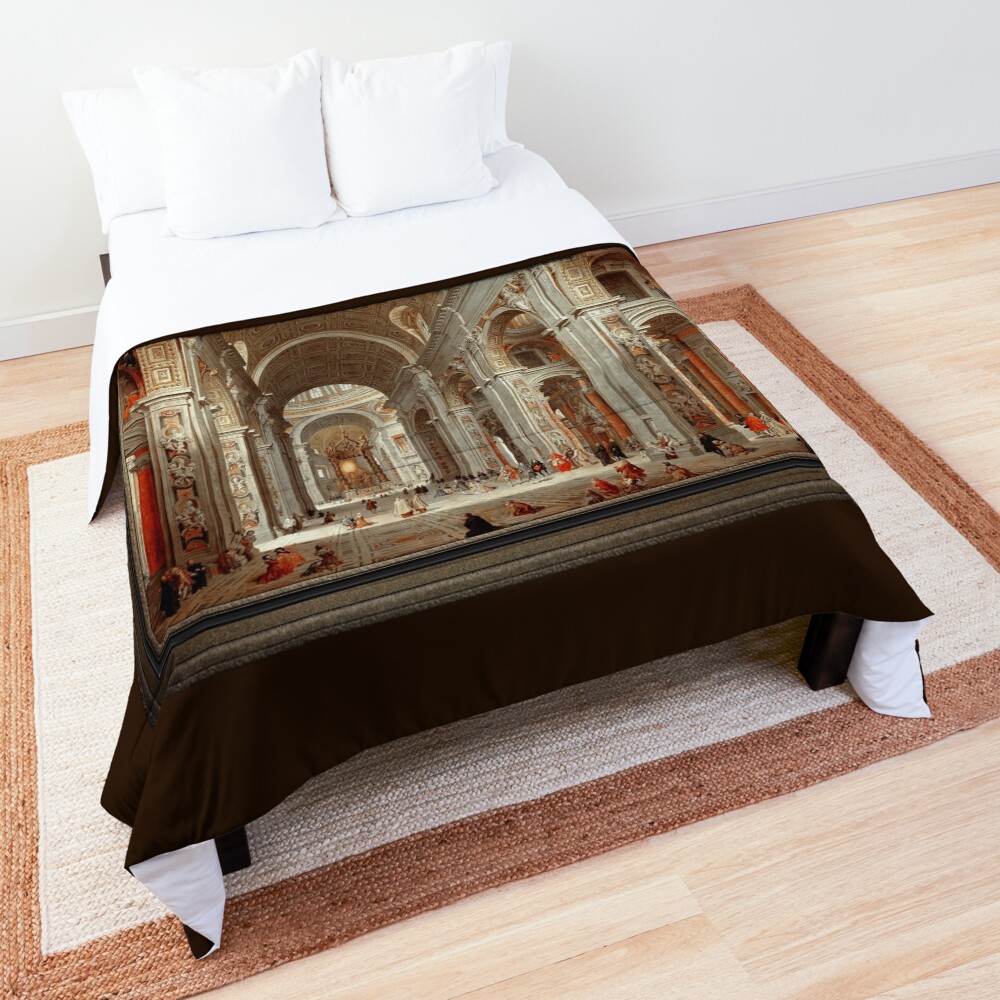
Interior View of St Peters Basilica is a magnificent painting created in 1750 by the renowned Italian artist Giovanni Paolo Pannini (1691 – 1765). This masterful work exemplifies Pannini’s extraordinary ability to capture the grandeur of 건축물 and the spirit of classical antiquity.
Through his artistic vision, Pannini offers an inside view of one of the most iconic architectural structures in the world; 성. Peter’s Basilica in Vatican City. The composition not only illustrates the architectural wonders of the space but also immerses the viewer in a detailed narrative of daily life in the grand cathedral during the 18th century.
목차
주요 주제 및 구성
The painting’s primary subject is the interior of St. 성 베드로 대성당, a symbol of both religious devotion and architectural excellence. Pannini presents a sweeping view of the basilica’s vast nave, with towering columns, intricate arches, and expansive ceilings, all rendered with great precision and grandeur.
The vaults and domes rise majestically toward the heavens, drawing the viewer’s gaze upward toward the light that seems to pour into the structure from above. 큰, circular windows and the dome of the church create a contrast between the serene, soft illumination from the windows and the richly detailed interiors.
The layout of the painting mirrors the layout of the basilica itself, offering a perspective that guides the viewer’s eye from the foreground, filled with figures, toward the distant altar, which is adorned with golden rays of light. The vastness of the space is emphasized by the presence of numerous small figures scattered throughout the scene, some in worship, others in casual conversation, and still more engaged in quieter, reflective activities. This addition of human figures brings life to the artwork, making the monumental space feel more approachable, 그래도 여전히 감동적이다.
건축 세부 사항
The intricacy and magnificence of St. Peter’s Basilica are captured through Pannini’s detailed renderings of the basilica’s structural elements. The soaring columns of the nave are painted with sharp precision, giving the illusion of depth and grandeur. The artist incorporates exquisite details of the marble textures, particularly in the columns’ rich reddish hues and creamy veins, contributing to the sense of luxury and permanence that pervades the building. 백그라운드에서, elaborate arches and coffered ceilings stretch endlessly, further emphasizing the vast scale of the space.
One of the most striking features in the painting is the dome designed by Michelangelo. Pannini captures the essence of the dome’s curvature and its sculptural form, which seems to soar beyond the limits of the canvas, filling the viewer with a sense of awe. The use of light and shadow in the painting gives a tangible texture to the surfaces, lending a three-dimensional quality to the architecture. The colors are rich yet subdued, with earthy tones of stone and marble contrasting beautifully with the golden accents of the altar and religious icons.
Human Figures and Interaction
A significant aspect of Pannini’s work is the inclusion of human figures, which add a sense of scale and activity to the otherwise static space. These individuals are depicted in various poses—some kneeling in prayer, others engaged in conversation or walking through the grand nave. Pannini’s attention to the varied gestures and clothing of these figures further enriches the narrative. The elegantly dressed men and women in the foreground offer a glimpse into the social life of the 18th century, showcasing the attire and customs of the time.
The interactions among the figures in the scene suggest a peaceful coexistence within the sacred space. Some figures seem to pause in contemplation before the altar, while others, perhaps tourists or pilgrims, look around with admiration. This human presence, though small in comparison to the vast architecture, serves to enhance the grandeur of the basilica. It also invites the viewer to reflect on the spiritual and cultural significance of the church as a gathering place for both the faithful and the curious.
분위기와 분위기
The mood of the painting is one of reverence and awe. The grandeur of the basilica’s interior creates a sense of tranquility and solemnity, while the human figures add a feeling of warmth and human presence. The use of light and shadow contributes to the overall atmosphere, with rays of light streaming through the large windows and casting a gentle glow on the figures and columns. The warm hues of the painting, combined with the serene figures in repose, create a peaceful, almost meditative environment.
There is also a sense of timelessness in the scene. 그림의 인물, while clearly of the 18th century, seem to be engaged in a kind of eternal ritual within the hallowed walls of the basilica. 아키텍처, although representing the pinnacle of 17th-century Baroque design, also seems to transcend time, suggesting that the church has stood as a witness to countless generations of worshippers. The mood is contemplative and reverent, encouraging the viewer to reflect not only on the grandeur of the basilica but also on its significance as a place of religious and historical importance.
결론
Giovanni Paolo Pannini 's “성 내부 모습. 성 베드로 대성당” is a breathtaking portrayal of one of the most celebrated architectural marvels in the world. Through meticulous attention to architectural detail, careful rendering of light and shadow, and the inclusion of human figures, Pannini conveys the awe-inspiring scale and spiritual significance of the basilica.
The painting serves as both a historical record and a work of art that captures the essence of 18th-century religious life. The balance between grandeur and intimacy, between architecture and humanity, allows the viewer to experience St. Peter’s Basilica not just as a monumental structure, but as a living, breathing space where art, 건축물, and faith converge.
성 내부 모습. Peter's Basilica는 퍼블릭 도메인 이미지를 수정한 디지털 아트 복제품입니다..
유래 된 아티스트 바이오 Wikipedia.org
Giovanni Paolo Panini 또는 Giovanni Paolo Pannini는 로마에서 일한 화가이자 건축가였으며 주로 vedutisti 중 한 명으로 알려져 있습니다. (“화가 보기”).
화가로서, Pannini는 로마의 풍경으로 가장 잘 알려져 있습니다., 그는 도시의 고대 유물에 특별한 관심을 보였습니다..
그의 가장 유명한 작품 중에는 판테온의 내부에 대한 그의 견해가 있습니다. (프란체스코 알고로티를 대신하여 1712 – 1764 – 베네치아의 수학), 로마의 전경을 담고 있는 갤러리의 베두테 그림.
그의 작품 대부분, 특히 폐허의 것들, 카프리치오 테마의 환상적이고 비현실적인 장식이 있습니다.. 이것에서 그들은 이탈리아 화가이자 판화 제작자 Marco Ricci의 capricci와 비슷합니다. (1676 – 1730).
파니니는 초상화를 그렸습니다., 교황 베네딕토 14 세를 포함하여 (Prospero Lorenzo Lambertini 탄생 1675 – 1758 – 가톨릭 교회 수장 from 1740 – 1758).
로마에서, 파니니는 궁전 장식가로서 자신의 이름을 얻었습니다.. 그의 작품 중 일부에는 Villa Patrizi c1719 / 25가 포함되었습니다., Palazzo de Carolis c1720, 그리고 Seminario Romano c1721 / 22).
에 1719, 파니니는 Virtuosi al Pantheon의 Congregation of the Congregation of the Virtuosi al Pantheon에 승인되었습니다.. 그는 로마의 산 루카 아카데미아와 프랑스 아카데미에서 가르쳤습니다., 장 오노레 프라고나르에게 영향을 주었다고 한다.. 에 1754, 그는 왕자를 역임했다 (감독) 아카데미아 디 산 루카.