

Juno Asking Aeolus To Release The Winds
Juno Asking Aeolus To Release The Winds c1769 by French Painter Francois Boucher (1703 – 1770), marrazkilari eta grabatzaile bikaina ere izan zena. Rococo estiloan lan egin zuen eta bere gai klasiko idilikoengatik da ezaguna, pastoral eszenak eta dekorazio alegoriak.
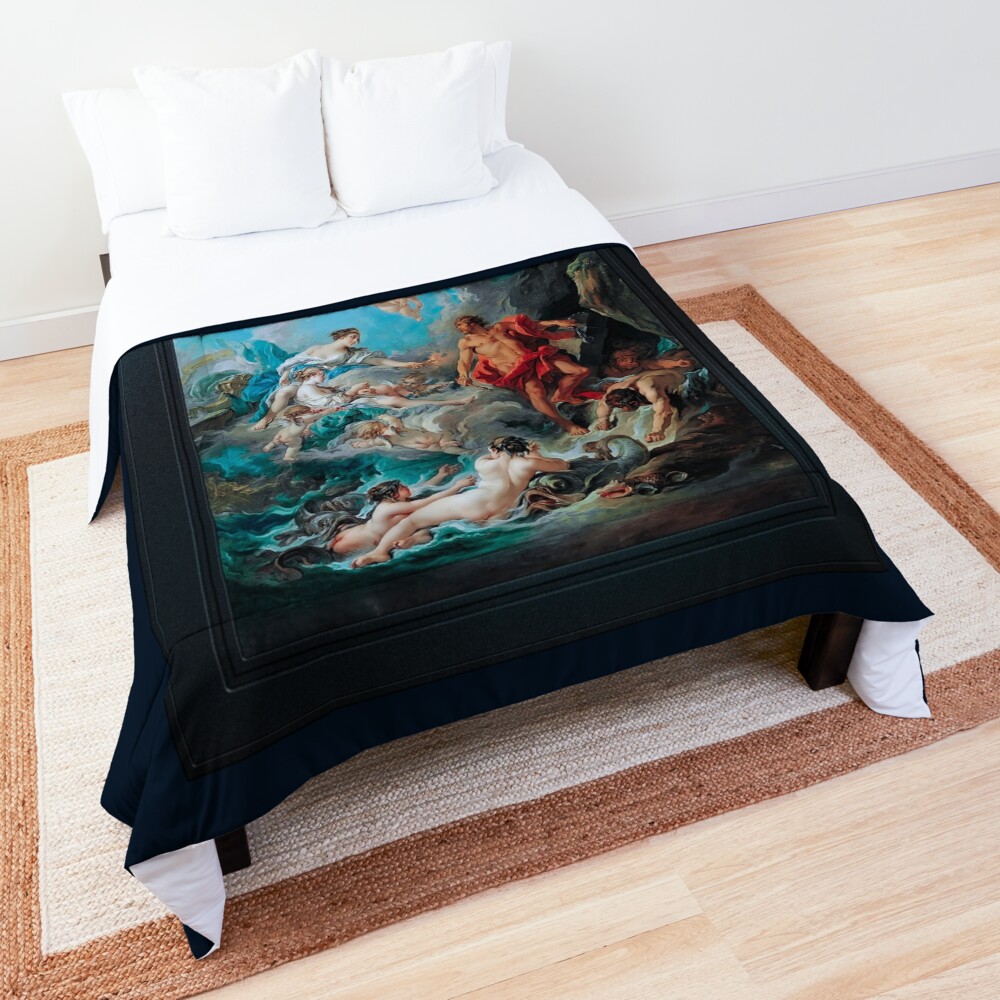
This is a depiction of the Greek-Roman Mythological tale of Juno (Chief Goddess akin to the Greek Hera) visiting Aeolus (King of the mythical, floating island of Aiolia or Aeolia), who is the keeper of the winds and urging him to release these mythological creatures so that their fury and might, may provoke a violent storm at sea, which would result in the destruction of the Aeneas’s Fleet.
Things don’t turn out as Juno expects, even though she has offered Aeolus her most beautiful nymph Deiopea in marriage; and aiming her torch strait at his heart, the love struck Aeolus does as she ask.
Then Cupid unsheathes an arrow to target the compliant nymph Deiopea, that has her wrist bound with pearls; but the power God of the Sea Neptune interferes and prevails over the winds that were released from the cavernous island interior, by rendering the waters of the sea into a calm state.
To complete the scene we find cherubs flying in the air and some floating on a cloud above the water and two other sea nymphs in the water surround by very large gulping fish.
Juno Asking Aeolus To Release The Winds is a remastered digital art old masters reproduction of a public domain image that is available as a mihise inprimatu sarean.
Informazioa Behean Deribatua Wikipedia.org
Pariskoa jaiotzez, Francois Boucher was the son of a lesser known painter Nicolas Boucher, hark eman zion lehen prestakuntza artistikoa. Hamazazpi urterekin, Boucheren margolan bat miresten zuen François Lemoyne margolariak. Geroago, Lemoynek Boucher izendatu zuen bere ikastun, baina hiru hilabeteren buruan, Jean-François Cars grabatzailearentzat lanera joan zen.

In 1720, elite Grand Prix de Rome margolaritzagatik irabazi zuen, baina ez zuen Italian ikasteko ondoriozko aukera aprobetxatu bost urte geroago arte, Pintura eta Eskultura Errege Akademian izandako arazo ekonomikoengatik.[1] Italian ikasketetatik bueltan Académie de peinture et de sculpture on birfundatu zenean onartu zuten 24 Azaroa 1731. Bere harrera pieza (harrera pieza) bere Rinaldo eta Armida zen 1734.
Boucher Marie-Jeanne Buzeaurekin ezkondu zen 1733. Bikoteak hiru seme-alaba izan zituen elkarrekin. Boucher fakultateko kide bihurtu zen 1734 eta bere ibilbidea bizkortu egin zen puntu horretatik aurrera, Akademiako Errektore eta Katedradun izendatu baitzuten, Royal Gobelins Manufactory-ko ikuskatzaile bihurtuz eta, azkenik, Premier Peintre du Roi (Erregearen lehen margolaria) urtean 1765. Marie-Louise O'Murphyren erretratua c. 1752
Boucher hil zen 30 Maiatza 1770 bere jaioterrian Parisen. Bere izena, bere patroiaren Madame de Pompadourarekin batera, Frantziako Rococo estiloaren sinonimo bihurtu zen, Goncourt anaiak idaztera eramanez: “Mende bateko zaporea adierazten duten gizon horietako bat da Boucher, adierazten dutenak, pertsonifikatu eta gorpuztu.”
Boucher famatua da natura dela esateagatik “berdeegiak eta gaizki argituta” (berdeegi eta gaizki argituta).
Boucher Jacques Guay harribitxi grabatzailearekin lotuta zegoen, marrazten irakatsi zion. Martin Ferdinand Quadal margolari moravia-austriarrari eta Jacques-Louis David margolari neoklasikoari ere tutore izan zituen. 1767.[4] Geroago, Boucherrek Guayren lanen marrazki sorta bat egin zuen, Pompadour andreak ondoren grabatu eta ederki loturiko bolumen gisa banatu zituen gortesain gogokoei.