

Artizarraren Jaiotza: A Celebration of Classical Beauty
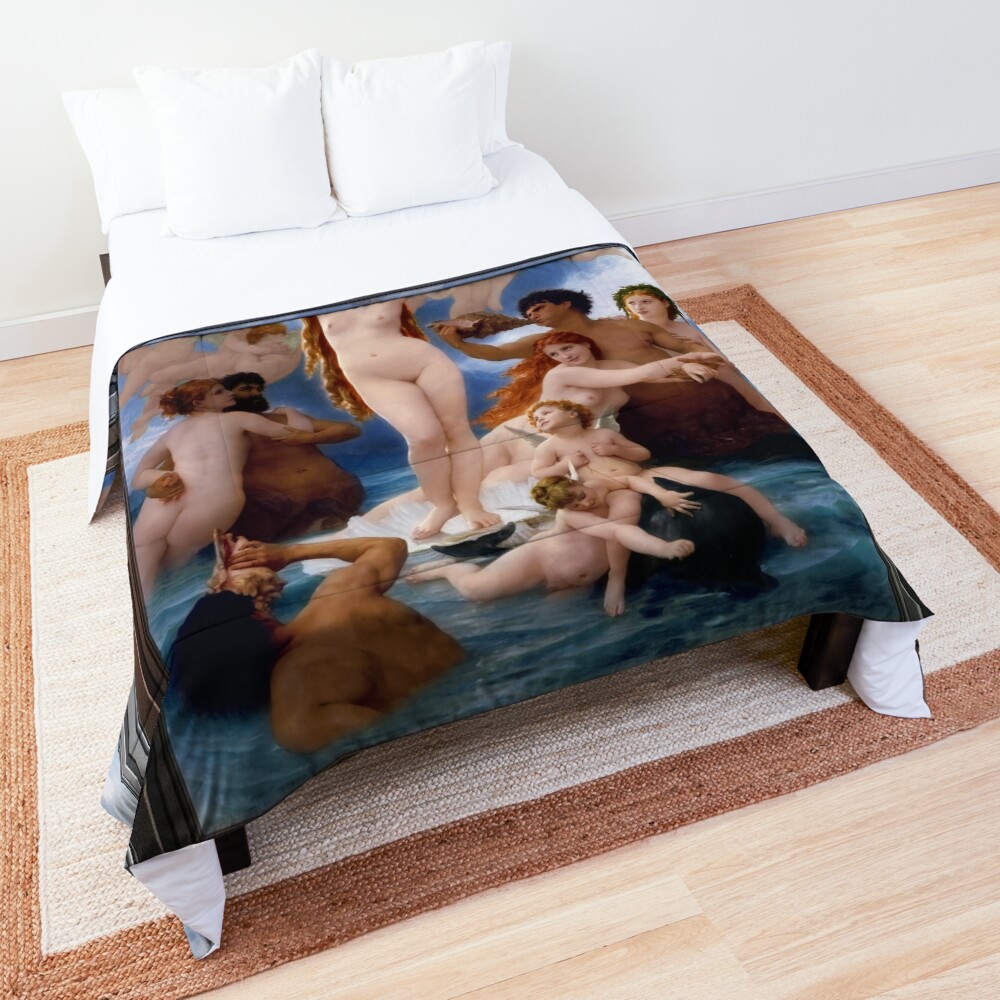
Artizarraren Jaiotza c1879 by French Painter William-Adolphe Bouguereau (1825 – 1905), stands as a quintessential example of Academic art, embodying the principles of idealized beauty and technical mastery prevalent in mid-19th century France. This large-scale oil painting draws heavily from classical mythology, depicting the arrival of the goddess Venus (Aphrodite to the Greeks) upon the shores of Cyprus. Alabaina, Bouguereau’s interpretation is far removed from earlier depictions; instead of a dramatic or tempestuous emergence, he presents a scene of serene grace and gentle unfolding.
Edukien taula
Konposizio Egitura & Narrazio Fluxua
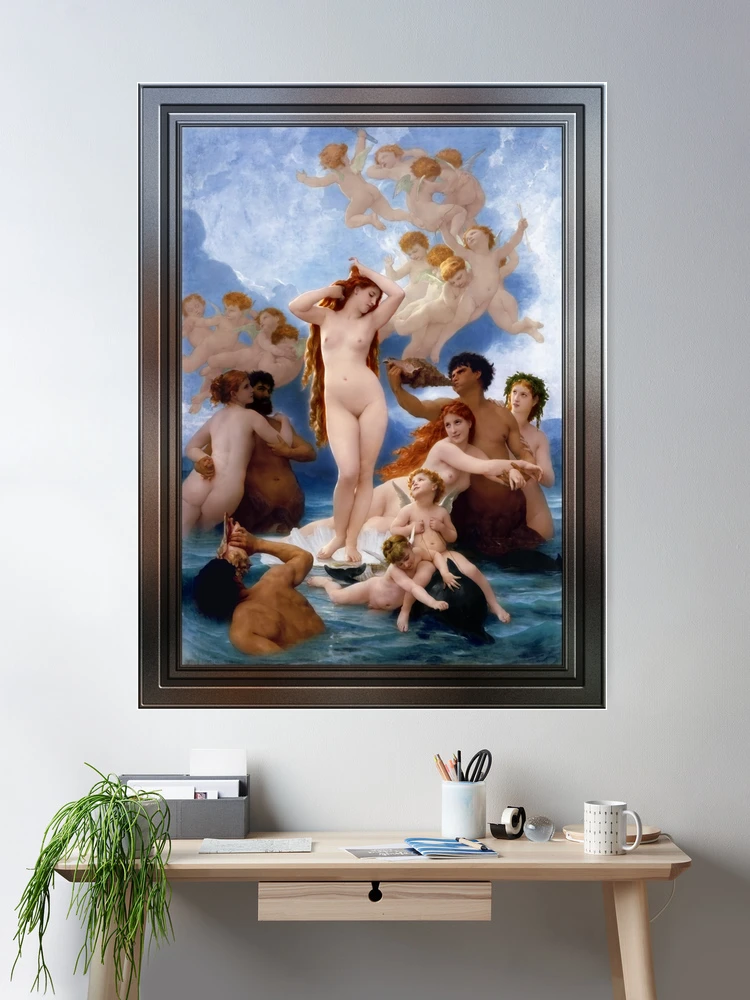
The composition is meticulously structured around Venus herself, positioned centrally within the canvas. She stands upon a massive scallop shell, which serves as her floating pedestal, gently approaching the shoreline. The arrangement isn’t haphazard; it’s carefully orchestrated to guide the viewer’s eye. Bere ezkerrera, a figure representing Zephyr, the west wind, and his consort Chloris, blow Venus towards the shore, their bodies intertwined in a dynamic pose that conveys movement and gentle force. Eskuinean, a nymph, likely Hora, awaits with a floral garland, ready to welcome the goddess. The figures surrounding Venus are not merely decorative; they contribute to the narrative flow, illustrating the forces that brought her into being and the welcoming reception she receives.
Anatomical Precision & Idealized Form
Bouguereau’s reputation rested on his exceptional skill in depicting the human form with anatomical accuracy. In “Artizarraren Jaiotza,” this is evident in every curve and contour of the figures. The bodies are rendered with a smooth, ia portzelana antzeko kalitatea, showcasing an idealized beauty that adheres to classical standards. There’s no attempt at realism in the sense of portraying imperfections; horren ordez, Bouguereau elevates the human form to a state of perfect harmony and proportion. Venus’s pose is particularly striking – she stands with one foot slightly raised, creating a sense of poised elegance and effortless grace. The subtle modeling of her flesh, achieved through delicate gradations of light and shadow, further enhances the illusion of three-dimensionality and tactile realism.
Kolore Paleta & Atmospheric Effects
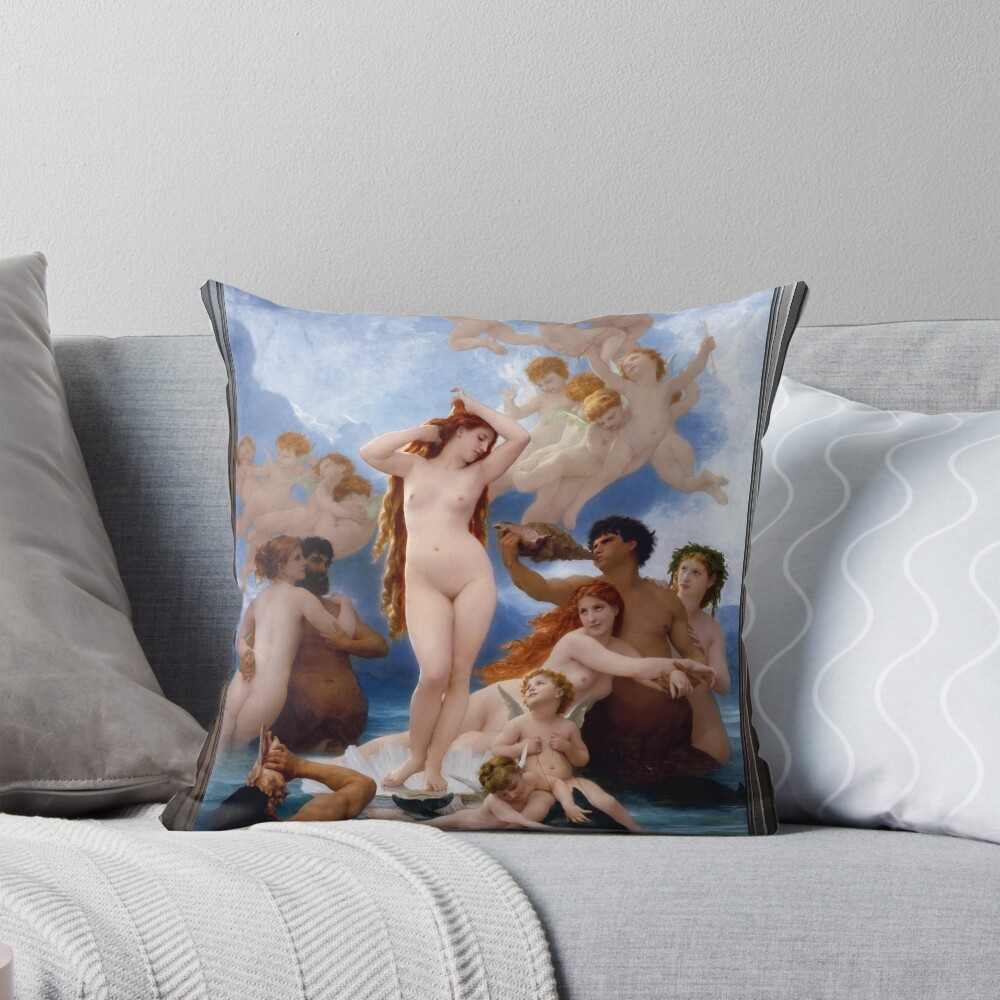
The color palette employed in “Artizarraren Jaiotza” is predominantly soft and harmonious. Pale blues and greens dominate the seascape, creating a sense of tranquility and ethereal beauty. The sky is rendered with swirling clouds, suggesting a gentle breeze and an atmosphere of otherworldly calm. Venus’s skin tones are luminous, contrasting beautifully with her flowing auburn hair, which cascades down her shoulders in loose waves. The warm hues of the flesh tones are balanced by the cooler colors of the surrounding environment, creating a visually pleasing contrast that draws attention to the central figure. Bouguereau masterfully uses light and shadow to create depth and volume, enhancing the overall sense of realism and beauty.
Sinbolismoa & Classical Allusions
Beyond its aesthetic appeal, “Artizarraren Jaiotza” is rich in symbolism and classical allusions. The scallop shell upon which Venus stands is a recurring motif associated with her birth in mythology – born from sea foam (Greek: aphros), hence her name Aphrodite. Zephyr and Chloris represent the gentle forces of nature that guide Venus’s arrival, while Hora symbolizes welcome and celebration. The floral garland offered by the nymph signifies beauty and fertility. These symbolic elements contribute to the painting’s overall meaning, reinforcing its connection to classical mythology and celebrating the goddess as a symbol of love, edertasuna, and renewal.
Bouguereau’s Artistic Legacy & Academic Tradition
Bouguereau was a leading figure in the Academic art movement, which emphasized technical skill, idealized forms, and adherence to established artistic conventions. “Artizarraren Jaiotza” exemplifies these principles perfectly. The painting’s popularity during its time reflects the public’s appreciation for classical themes and the mastery of traditional techniques. While later generations would critique Academic art for its perceived lack of originality and emotional depth, Bouguereau’s work remains admired for its technical brilliance and enduring beauty. “Artizarraren Jaiotza” continues to captivate viewers with its serene atmosphere, idealized forms, and celebration of classical mythology. It stands as a testament to the power of artistic skill and the enduring appeal of timeless themes.
Artistaren bio adeitasuna Wikipedia.org
William Adolphe Bouguereau La Rochellen jaio zen, Frantzia, on 30 Azaroa 1825, ardo eta oliba olio merkatarien familia batean.[4] Théodore Bouguereauren semea (jaioa 1800) eta Marie Bonnin (1804), Adeline izenez ezaguna, William katoliko hezi zen. Anaia nagusi bat zuen, Alfred, eta ahizpa txiki bat, Marie (Hanna izenez ezagutzen dena), zazpi urte zituela hil zena.
Familia Saint-Martin-de-Ré-ra joan zen bizitzera 1832. urtean beste anai-arreba bat jaio zen 1834, Kitty. Urtean 12, Bouguereau Mortagnera joan zen bere osaba Eugènerekin egotera, apaiza eta naturarekiko maitasuna garatu zuen, erlijioa eta literatura.
In 1839, Ponseko kolegio katoliko batera apaizgaia ikastera bidali zuten. Hemen Louis Sage-k marrazten eta margotzen irakatsi zion, Ingresekin ikasi zuena. Bouguereauk gogoz kontra utzi zituen ikasketak bere familiara itzultzeko, orain Bordelen bizi da.
Bertan bertako artista bat ezagutu zuen, Charles Marioneau, eta Marrazketa eta Pintura Udal Eskolan hasi zen azaroan 1841. Bouguereau dendako laguntzaile gisa ere aritu zen, litografiak eskuz margotu eta kromolitografia erabiliz erreproduzitzen ziren koadro txikiak egitea.
Bere klaseko ikaslerik onena izan zen laster, eta Parisen artista izatea erabaki zuen. Mugimendua finantzatzeko, erretratuak saltzen zituen - 33 olioak hiru hilabetetan. Guztiak sinatu gabe zeuden eta bakarra aurkitu da. Zahartuta heldu zen Parisera 20 martxoan 1846.
Heriotzaren aurreko berdintasuna (Hil aurretik berdintasuna), 1848, olioa mihise gainean, 141 × 269 cm (55.5 × 105.9 urtean), Orsay museoa, Paris. Berdintasuna da Bouguereauren lehen koadro nagusia, Pariseko Arte Ederretako Eskolan bi urteren ondoren ekoitzi zuen 23.
Bouguereau École des Beaux-Arts-eko ikaslea izan zen.[4] Marrazketan duen prestakuntza formala osatzeko, disekzio anatomikoetara joan zen eta jantzi historikoak eta arkeologia ikasi zituen.
François-Édouard Picot-en estudioan onartu zuten, bertan pintura ikasi zuen estilo akademikoan. Dante eta Virgilio infernuan (1850) bere lan neoklasikoen lehen adibidea izan zen.
Pintura akademikoak gai historiko eta mitologikoetan jarri zuen estatus gorena, eta Bouguereauk Prix de Rome irabaztea erabaki zuen, horrek hiru urteko bizilekua irabaziko zion Erromako Villa Medicin, Italia, non ikasgai formalez gain Berpizkundeko artistak eta haien maisulanak bertatik bertara aztertu ahal izan zituen, baita greziera ere, Etruskoa, eta antzinate erromatarrak.
The Birth Of Venus is a retouched digital art old masters reproduction of a public domain image that is available online as a ijetzitako mihise inprimatua.