

Júpiter sob o disfarce de Diana, and the Nymph Callisto
Júpiter sob o disfarce de Diana, and the Nymph Callisto c1759 by French Painter François Boucher (1703 – 1770); also known as a draftsman, engraver and decorator in the French Rococo style, that was well known for his lavish mythological, allegorical and erotic motifs and was the court painter of Louis XV and a favorite of the Marquise de Pompadour.
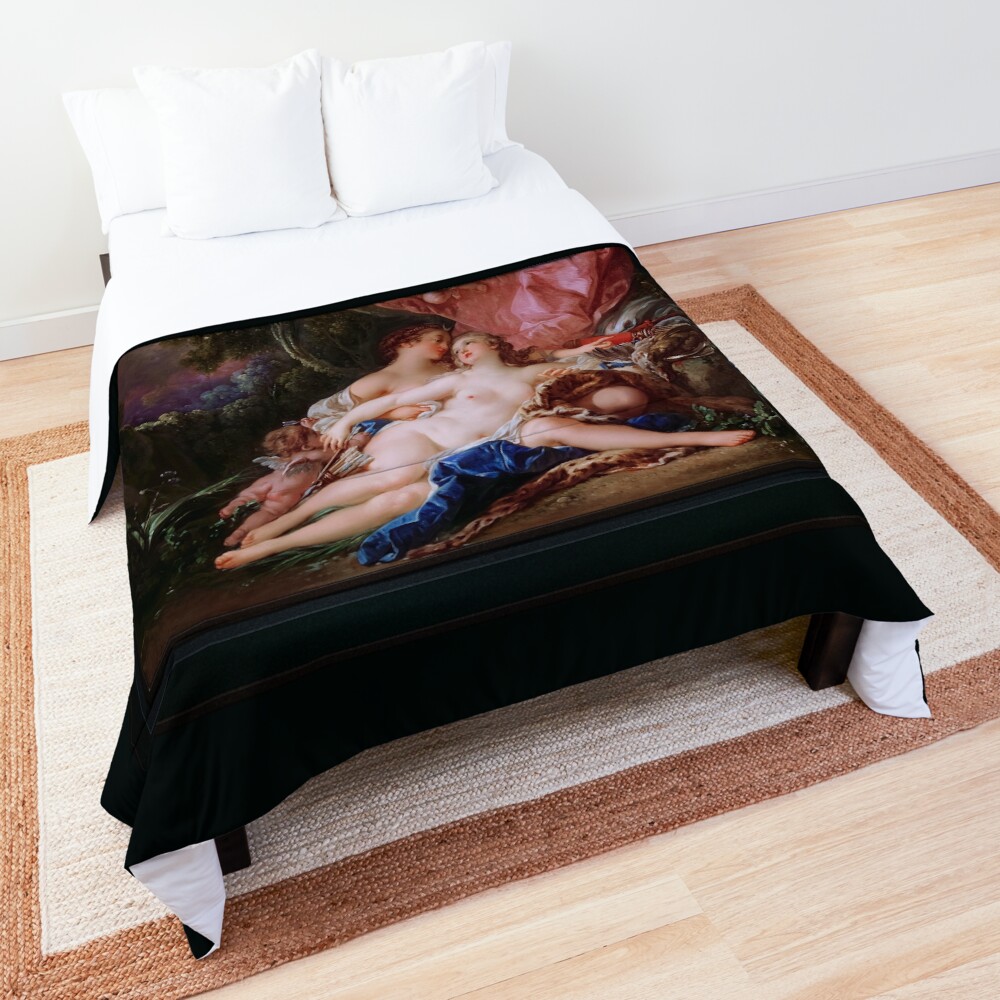
This is a beautiful scene depicting the characters from Roman mythology Jupiter (The Eagle), Diana (Goddess of the Hunt), and Callisto the favorite Nymph of Diana.
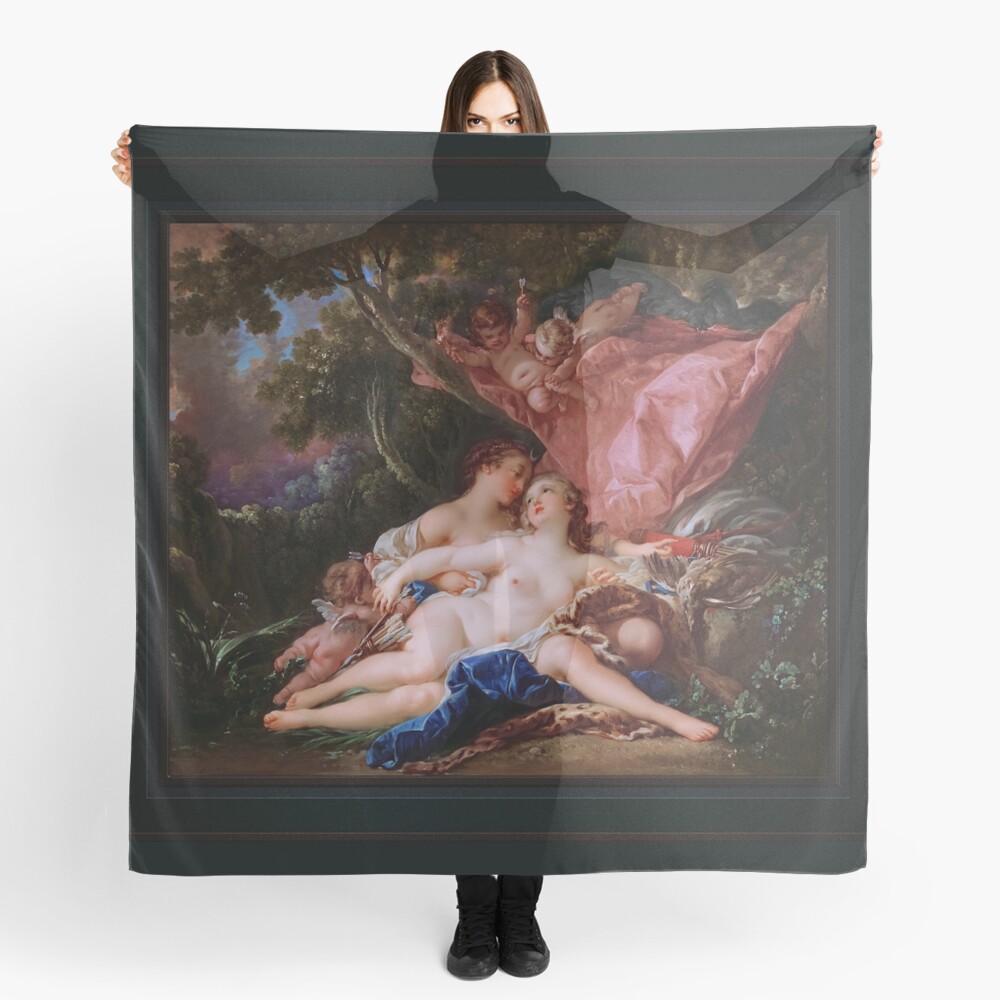
In this forest scene we can see six figures, two cherubs in a tree with a large rose drape hanging from one of its outstretched limbs, near the eagle Jupiter looking down on what appears to be Diana and her Nymph Callisto, with one holding an arrow in his left hand; with another on the ground by the pond that Diana and her Nymph Callisto are laying near with an arrow in its left hand and a quiver filled with arrows by its right side.
Jupiter, the King of the Gods taken by the beauty of Callisto, disguises himself as the huntress Diana to seduce her; embracing her while they relax by the pond on a cushion of leaves, a blue garment and leopard skin.
By the couple is a boulder that has on it a brown bird resting on the chest of light colored bird that has had its throat cut, with blood staining the rock.
Behind the birds is a red quiver filled with arrows and a bow and another wrapped up grey colored garment, that rest just under the pink drape and the eagle Jupiter.
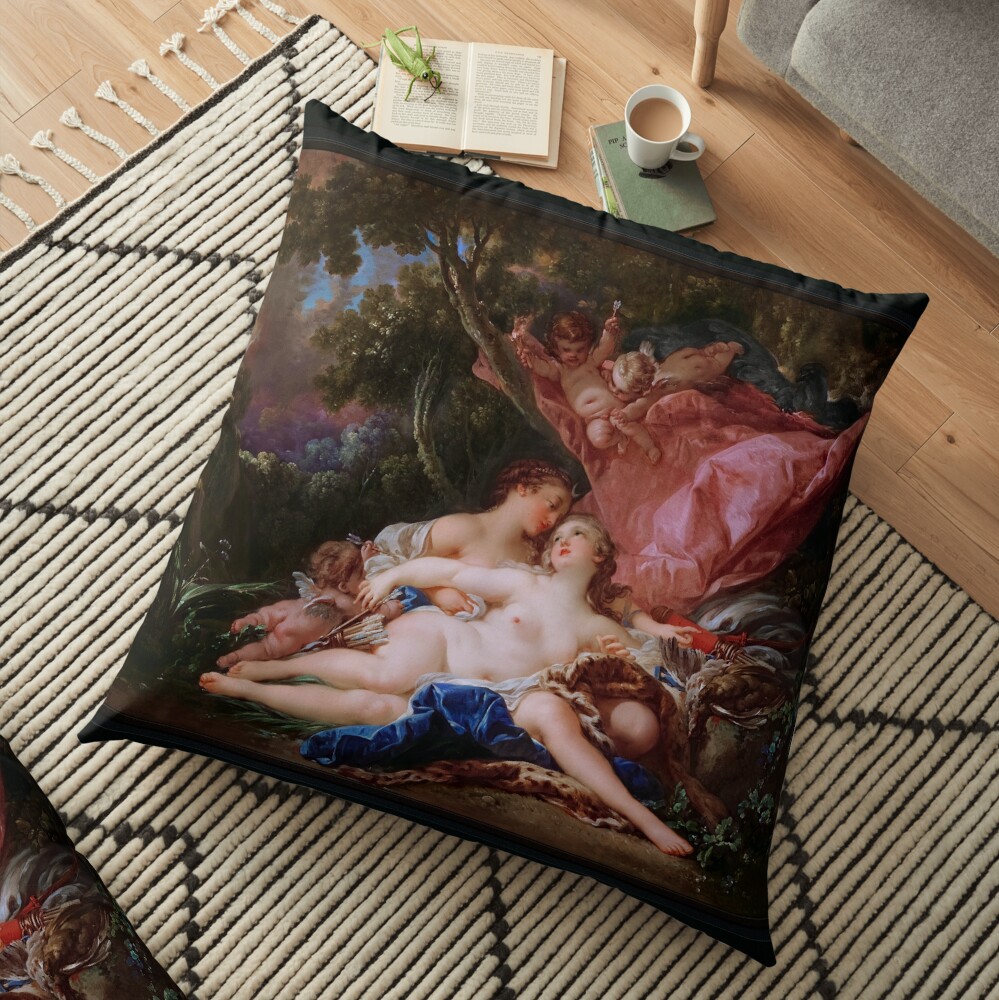
In the background is a colorful forest of many different hues and a light blue sky filled with many colored clouds, that seems to be illuminated by a setting sun.
Júpiter sob o disfarce de Diana, and the Nymph Callisto is a remastered digital art old masters reproduction of a public domain image that is available as a impressão em tela on-line.
Informações abaixo derivadas de Wikipédia.org
Natural de Paris, Boucher era filho de um pintor menos conhecido Nicolas Boucher, que lhe deu a sua primeira formação artística. Aos dezessete anos, uma pintura de Boucher foi admirada pelo pintor François Lemoyne. Lemoyne mais tarde nomeou Boucher como seu aprendiz, mas depois de apenas três meses, foi trabalhar para o gravador Jean-François Cars.
Em 1720, ele ganhou o Grande Prêmio de Roma de elite de pintura, mas só aproveitou a consequente oportunidade de estudar na Itália cinco anos depois, devido a problemas financeiros na Royal Academy of Painting and Sculpture.[1] Ao retornar dos estudos na Itália, foi admitido na refundada Académie de peinture et de escultura em 24 novembro 1731. Sua peça de recepção (peça de recepção) foi seu Rinaldo e Armida de 1734.
Boucher casou-se com Marie-Jeanne Buzeau em 1733. O casal teve três filhos juntos. Boucher tornou-se membro do corpo docente em 1734 e a sua carreira acelerou a partir deste ponto quando foi promovido Professor e depois Reitor da Academia, tornando-se inspetor da Royal Gobelins Manufactory e finalmente Premier Peintre du Roi (Primeiro Pintor do Rei) em 1765. Retrato de Marie-Louise O'Murphy c. 1752
Boucher morreu em 30 Poderia 1770 em sua cidade natal, Paris. Seu nome, junto com o de sua patrona Madame de Pompadour, tornou-se sinônimo do estilo rococó francês, levando os irmãos Goncourt a escrever: “Boucher é um daqueles homens que representam o gosto de um século, quem expressa, personificá-lo e incorporá-lo.”
Boucher é famoso por dizer que a natureza é “muito verde e mal iluminado” (muito verde e mal iluminado).
Boucher foi associado ao gravador de pedras preciosas Jacques Guay, quem ele ensinou a desenhar. Ele também foi mentor do pintor morávio-austríaco Martin Ferdinand Quadal, bem como do pintor neoclássico Jacques-Louis David em 1767.[4] Mais tarde, Boucher fez uma série de desenhos de obras de Guay que Madame de Pompadour então gravou e distribuiu como um volume lindamente encadernado para cortesãos favorecidos.