

Viattomuuden riisuttu oikeus ja Prudence taputtaa
Justice Yielding to Innocence: A Lagrenee Masterpiece
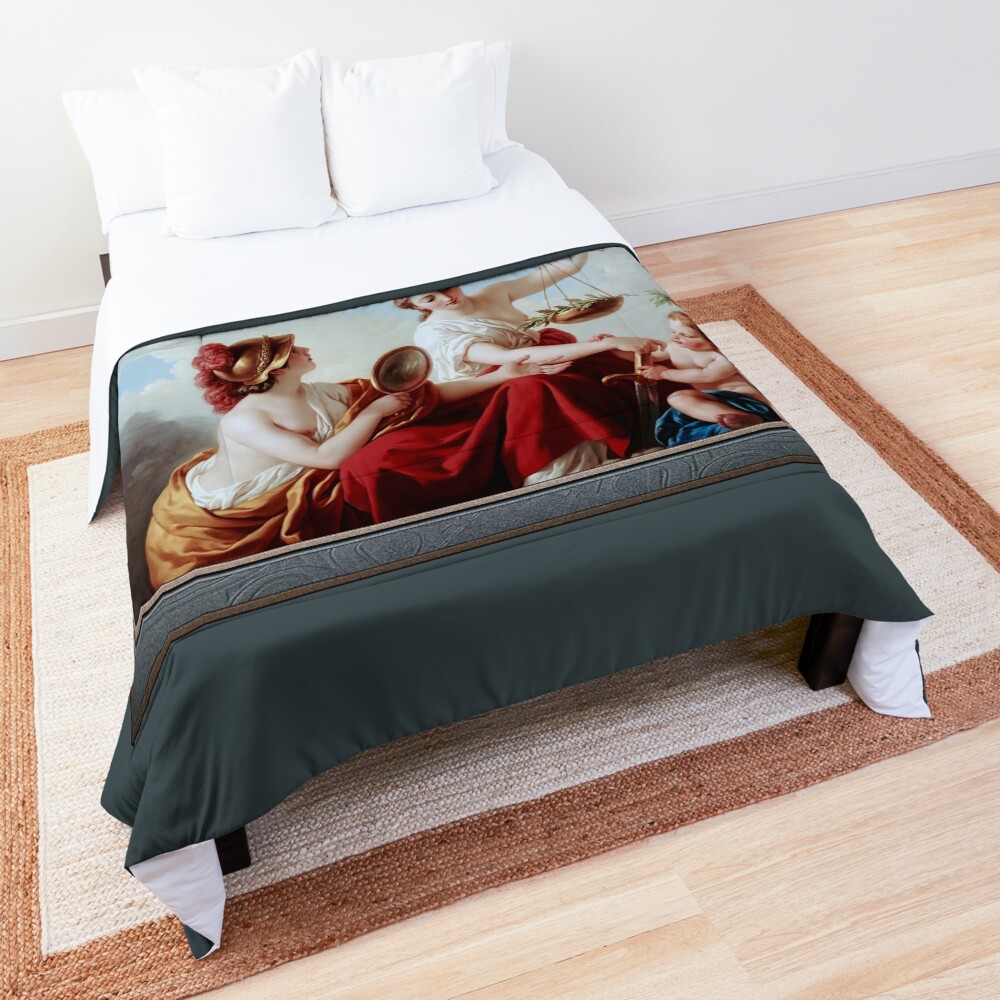
Louis-Jean-François Lagrenee’s “Justice Disarmed by Innocence and Applauded by Prudence,”Maalattu ympäri 1766, exemplifies the Rococo style prevalent in French art of the mid-18th century. This allegorical painting, currently housed within a private collection, presents a captivating scene brimming with classical references and symbolic meaning. Lagrenee, known for his graceful figures and vibrant color palettes, masterfully depicts a moment of transition where established order encounters youthful purity. The artwork’s enduring appeal lies in its harmonious composition, herkkää sivellintyötä, and the compelling interplay between its personified virtues.
Sisällysluettelo
Koostumuksellinen harmonia & Rokokoon estetiikka
The painting’s structure is carefully balanced, employing a pyramidal arrangement that draws the viewer’s eye towards the central figure of Justice. This compositional technique was common during the period, lending stability and grandeur to the scene. The background features a soft, atmospheric landscape with billowing clouds and hints of distant foliage, creating depth and enhancing the ethereal quality of the subject matter. Lagrenee’s Rococo style is evident in the painting’s emphasis on elegance, keveys, ja koristeelliset yksityiskohdat. The flowing drapery, the gentle curves of the figures, and the overall sense of movement contribute to this aesthetic.
Personification of Virtues: Oikeudenmukaisuus, Viattomuus & Prudence
The core narrative revolves around three personified virtues: Oikeudenmukaisuus, Viattomuus, and Prudence. Oikeudenmukaisuus, traditionally depicted as a blindfolded woman holding scales, is shown relinquishing her sword – a symbol of legal authority – to a youthful figure representing Innocence. This act signifies the triumph of purity and naiveté over established systems.
Viattomuus, portrayed as a fair-skinned young man with flowing hair, gently guides Justice’s hand, his expression conveying tenderness and reassurance. Oikealle, Prudence, an older woman adorned in rich fabrics, observes the scene with a knowing smile, offering her silent approval. Her presence underscores the wisdom inherent in embracing innocence and adapting to changing circumstances.
Symbolic Details & Taiteellinen tekniikka
Lagrenee’s meticulous attention to detail enhances the painting’s symbolic richness. The scales held by Justice are perfectly balanced, suggesting impartiality and fairness. The laurel wreath adorning Innocence alludes to victory and honor. Prudence’s attire, rich in color and texture, speaks to her experience and discernment. Lagrenee’s technique is characterized by a delicate application of paint, creating soft transitions between colors and highlighting the figures’ smooth skin tones. He skillfully uses light and shadow to model forms and create a sense of depth, further enhancing the painting’s visual appeal. The artist’s use of warm hues – golds, voiteet, and rosy pinks – contributes to the overall feeling of warmth and serenity.
Historical Context & Lagrenee’s Legacy
Lagrenee was a prominent figure in the French art world during the reign of Louis XV. His work often reflected the prevailing philosophical currents of the Enlightenment, emphasizing reason, hyve, and humanism. “Justice Disarmed by Innocence and Applauded by Prudence” can be interpreted as an allegory for societal change and the potential for renewal through embracing new perspectives.
Lagrenee’s legacy extends beyond his individual works; he influenced a generation of artists with his elegant style and skillful depiction of classical subjects. His paintings remain highly regarded for their beauty, technical mastery, and insightful commentary on human nature. The painting is an excellent example of how allegorical art was used to convey complex ideas in a visually engaging manner during the 18th century.
A Timeless Representation of Virtue
“Viattomuuden riisuttu oikeus ja Prudence taputtaa” remains a captivating work of art, inviting viewers to contemplate the enduring power of virtue and the importance of embracing change. Lagrenee’s masterful execution and thoughtful symbolism ensure that this painting continues to resonate with audiences centuries after its creation. It stands as a testament to the artist’s skill and the enduring appeal of allegorical art within the Rococo tradition.
Taiteilija Bio on johdettu Wikipedia.org
Louis syntyi Pariisissa, Ranska sisällä 1724, ja oli vanhin kahdesta veljestä, molemmista on määrä tulla tunnetuiksi ranskalaisiksi maalareiksi; ja osoitti pienestä pitäen kykynsä piirtää ja maalata.
Louis aloitti taiteensa Royal School of Protected Pupils -koulun tai Royal School for Protected Pupilsin kautta, joka perustettiin vuonna 1748 Charles Antoine Coypelin johdolla (1694 – 1752) Ranskan kuningas Ludvig XV.
Ranskan kuninkaallisen akatemian maalarimestarit tarjosivat yleisölle nimellistä korvausta vastaan taidekurssia piirtämisestä sekä taiteen periaatteista ja tekniikoista.; tämä antaisi mestareille mahdollisuuden valita kurssille ilmoittautuneiden joukosta, kuusi lahjakkainta henkilöä vuosittain, joille tarjotaan ilmaista opetusta ja pieni stipendi kolmeksi vuodeksi; ja valmistaa oppilaita Prix de Rome -kilpailuihin.
Sen jälkeen kun hänet valittiin ohjelmaan, Louis aloitti harjoittelunsa Carle van Loon ohjauksessa (1705 – 1765); ja ensimmäisellä yrittämisellään sisään 1749 voitti Prix de Rome -palkinnon raamatullisella maalauksellaan “Joosef tulkitsee faraon unia”.
Ranskan akatemiassa Roomassa Louis omistautui aikansa barokkimaalaustayylille; joka on saanut inspiraationsa Bolognese-koulusta ja italialaisen taidemaalarin Francesco Albanin teoksista (1578 – 1660) ja Guido Reni (1575–1642).
Neljä vuotta myöhemmin hän palasi Ranskaan, ja aloitti työskentelyn Kentaur Nessuksen suorittamassa Dejaneiran sieppauksessa; teoksen valmistuttua 2 vuotta myöhemmin vuonna 1755, se ansaitsi hänet yksimielisellä äänestyksellä, Taidemaalaus- ja kuvanveistoakatemian jäsen; teki hänestä merkittävän taidemaalarin.
Tästä lähtien Louis sai monia toimeksiantoja merkittäviltä suojelijalta, kasvavan talousyhteisön jäseniä, samoin kuin kuninkaalliset; kun hän kiinnitti Elizabeth Petrovnan huomion, Venäjän keisarinna, WHO, sisään 1760, nimitti hänet hovimaalariksi ja Pietarin akatemian johtajaksi. Pietari.
Tämä on remasteroitu digitaalisen taiteen vanhojen mestareiden kopio julkisessa käytössä olevasta kuvasta, joka on saatavilla a rullattu kangasprintti verkossa.