

Infanta Luisa Fernanda de Borbón, Duquesa de Montpensier
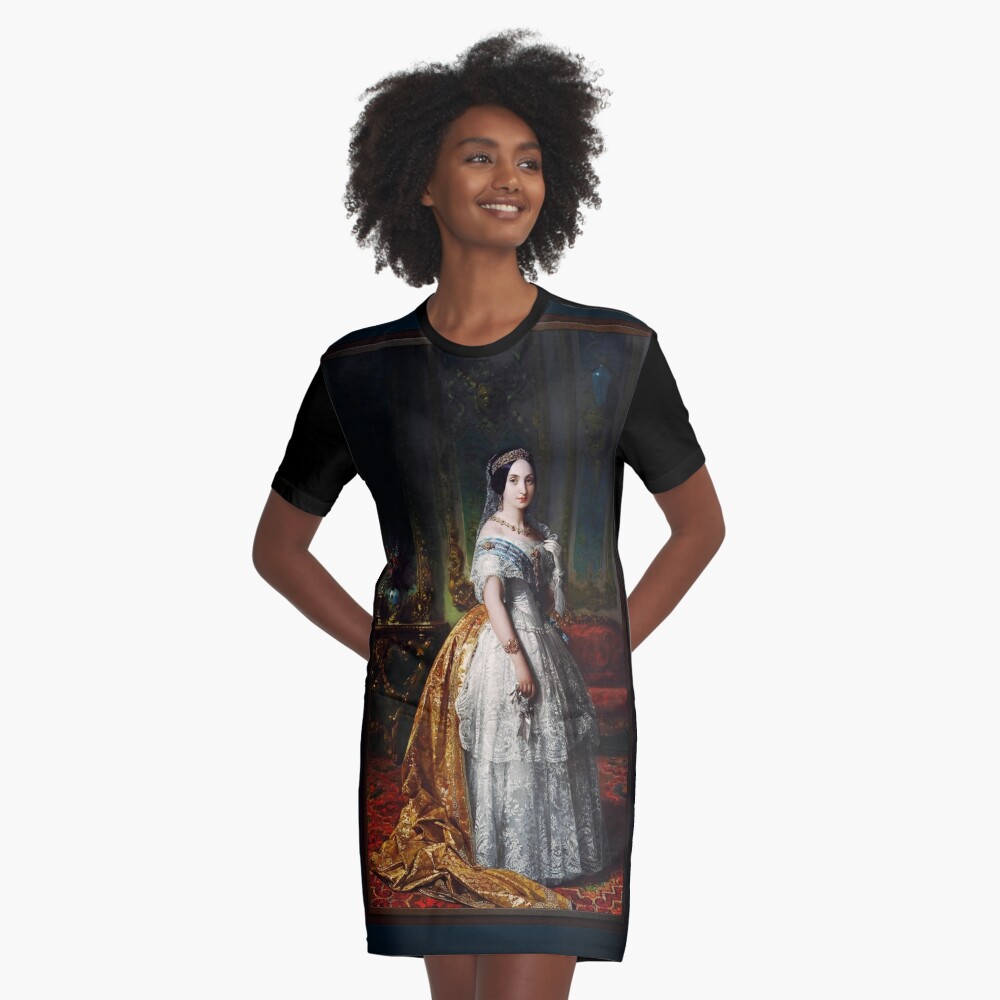
Infanta Luisa Fernanda de Borbón, Duquesa de Montpensier c1851 by Spanish Painter Federico de Madrazo y Kuntz (1815 – 1894); also a lithographer, writer and politician.
This is an elegant portrait of Luisa Fernanda de Borbón (1832 – 1897) the youngest daughter of King Ferdinand VII (1784 – 1833) of Spain and is fourth wife Maria Christina (1806 – 1878) of the Two Sicilies, the queen-regent, who also happened to be his niece.
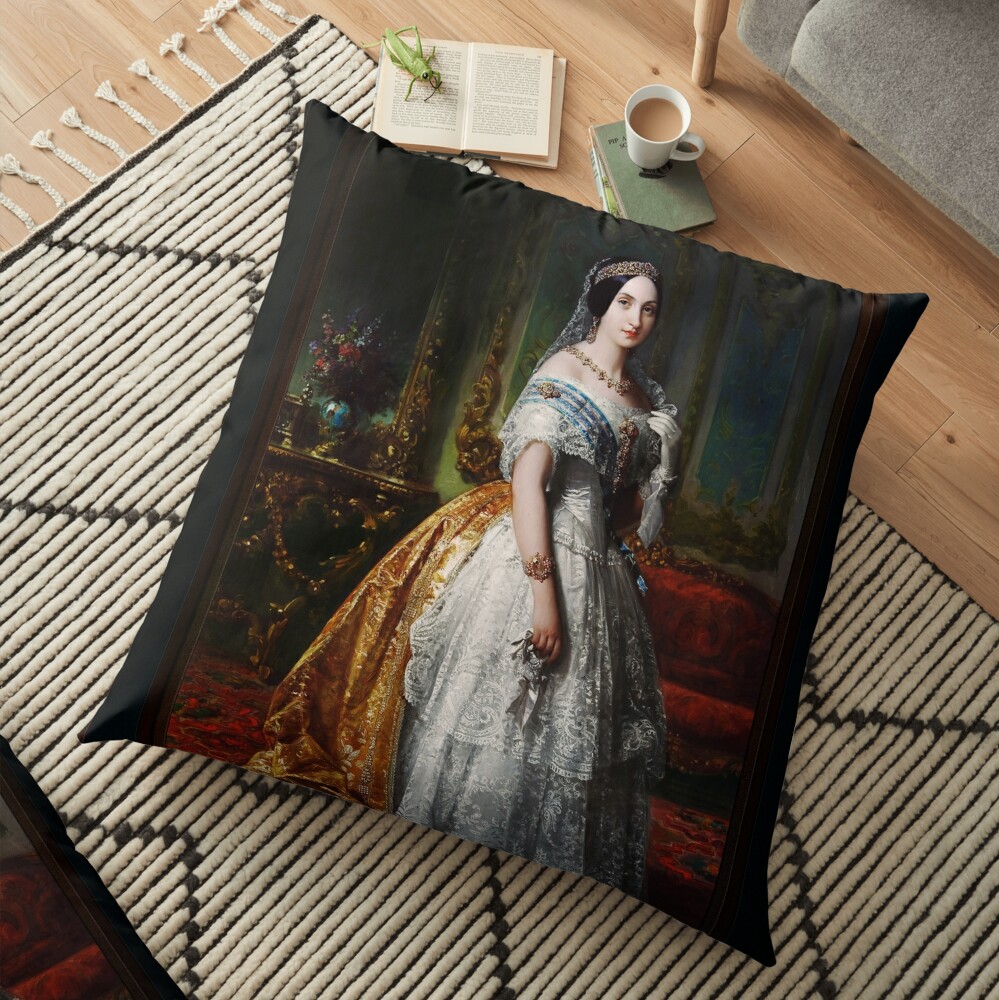
She is posed in a large lavish room standing on a colorfully patterned red carpet, which has in the background to the left of the image, a large wall mirror with gold accent gilding, that is positioned over an elaborately carved gold gilded table that has on top of it a decorative gold box, a beautiful blue spherical vase with a floral gold stand containing a bouquet of flowers.
In the middle wall panel is more decorative gilded wood work and a sculpted face high up; and on the last wall panel that has more decorative wood work is a decorative wall shelf with a blue vase on it and below that a decorative love with a gilded wood border.
Luisa is shown wearing a full length white embroidered lace gown that is complemented by a gold tail like trailing material with silver floral embroidered details and pearls, that flows from the back of her dress at the waist and wraps around to her right side on the floor.
She has a royal blue, white and pink sash that carries from her right shoulder down to the left side of her waist with an attached blue and white ribbon hanging from her left side.
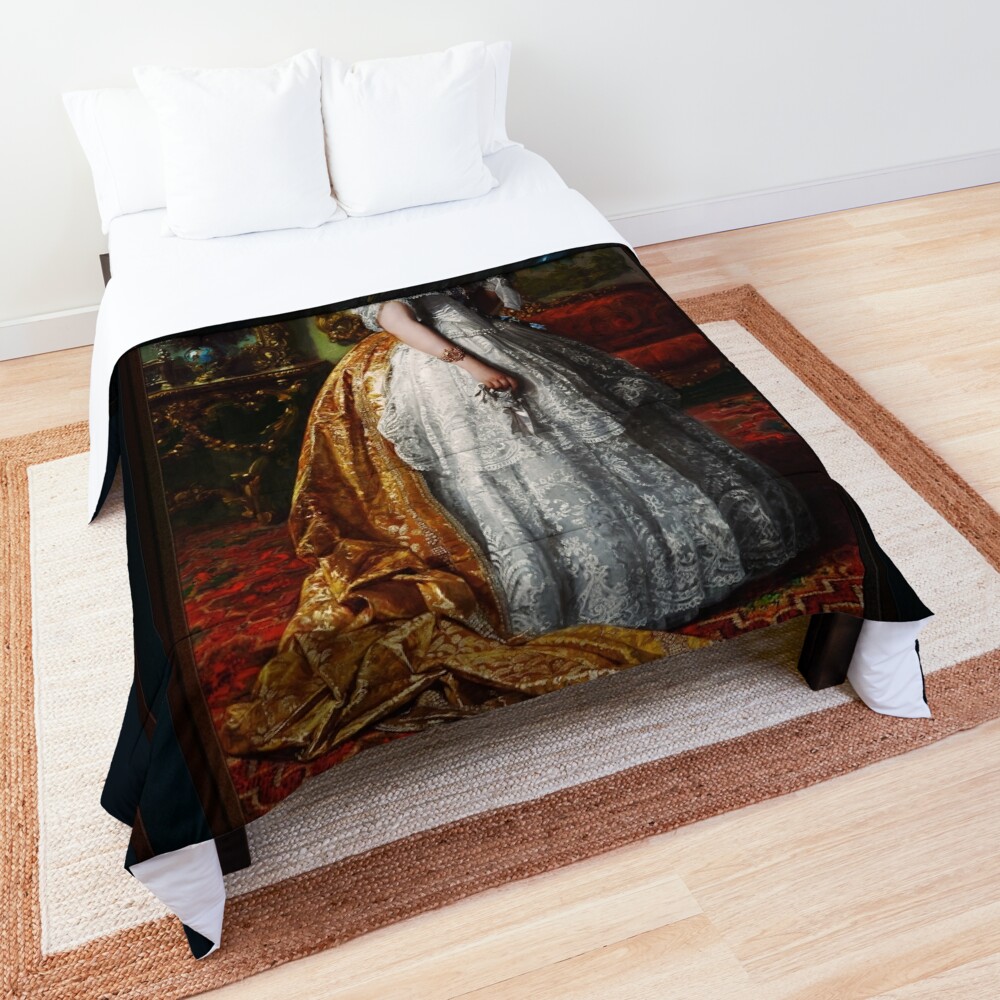
On her left hand which is positioned near the left side of her chest has a white silk evening glove on to and sheer handkerchief tucked into it; while her right hand holds the other evening clove to the right side of her body.
On her black hair, hang from the back she has a silk white lace kerchief that matches her dress; and around her head she is wearing a tiara comprised of silver and gold, with ruby gemstone.
The tiara is complemented with earrings, a necklace, a bracelet, in grutte broche op 'e foarkant fan har jurk en twa lytsere op' e skouders fan 'e jurk dy't itselde en ferlykber patroan hawwe.
Infanta Luisa Fernanda de Borbón, Duquesa de Montpensier is in remastered digitale keunst âlde masters reproduksje fan in ôfbylding yn it iepenbier domein dy't beskikber is as in metaal, acryl, bosk, canvas print online.
Ynformaasje hjirûnder ôflaat fan Wikipedia.org
Federico waard berne yn Rome oan José de Madrazo y Agudo (1781 – 1859), in skilder en earder direkteur fan it Prado Museum; en wie diel fan in rige fan grutte keunstners, dat befette syn pake oan memmekant; Tadeusz Kuntze (1733 – 1793), in Poalske skilder.
Oare leden fan dizze kreative famylje omfetsje syn bruorren, dy't de skilder Luis de Madrazo wiene (1825 – 1897), Pedro de Madrazo (1816 – 1898), in keunstkritikus en Juan de Madrazo (1829 – 1880), in arsjitekt.
Under Federico syn bern wiene de skilder Ricardo de Madrazo (1851 – 1917), Raimundo de Madrazo y Garreta (1841 – 1920) en Cecilia de Madrazo y Garreta (1846 – 1932) dy't troude mei de grutte Orientalistyske keunstner, Maria Fortuny (1838 – 1874).
The Madrazo family has been described as one of the most important painting Spanish painting dynasties of the 19th century; which completely dominated painting in Spain during that period.
Federico begon artistike les te nimmen fan syn heit, en wylst noch bywenje oan de Royal Academy of San Fernando, skildere syn earste foto The Resurrection of Christ c1829; dat waard kocht troch keninginne Christina.
Koart nei dat skilderij makke hy Achilles yn syn tinte, en dêrnei presintearre oan de Akademy The Continence of Scipio, dy't him talitten as lid soarge “foar fertsjinste”.
Trije jier letter gie Federico nei Parys, dêr't er studearre oan de Franz Winterhalter en portretten skildere fan Baron Taylor en Ingres (in Frânske neoklassisistyske skilder).
Yn 1837 hy krige in opdracht om in skilderij te meitsjen foar de galery yn Versailles, dêr't er foar skildere “Godfried de Bouillon útroppen ta kening fan Jeruzalem”; koart dêrnei gie er werom nei Rome en naam er projekten oan it meitsjen fan portretten foar de Spaanske aristokrasy.