

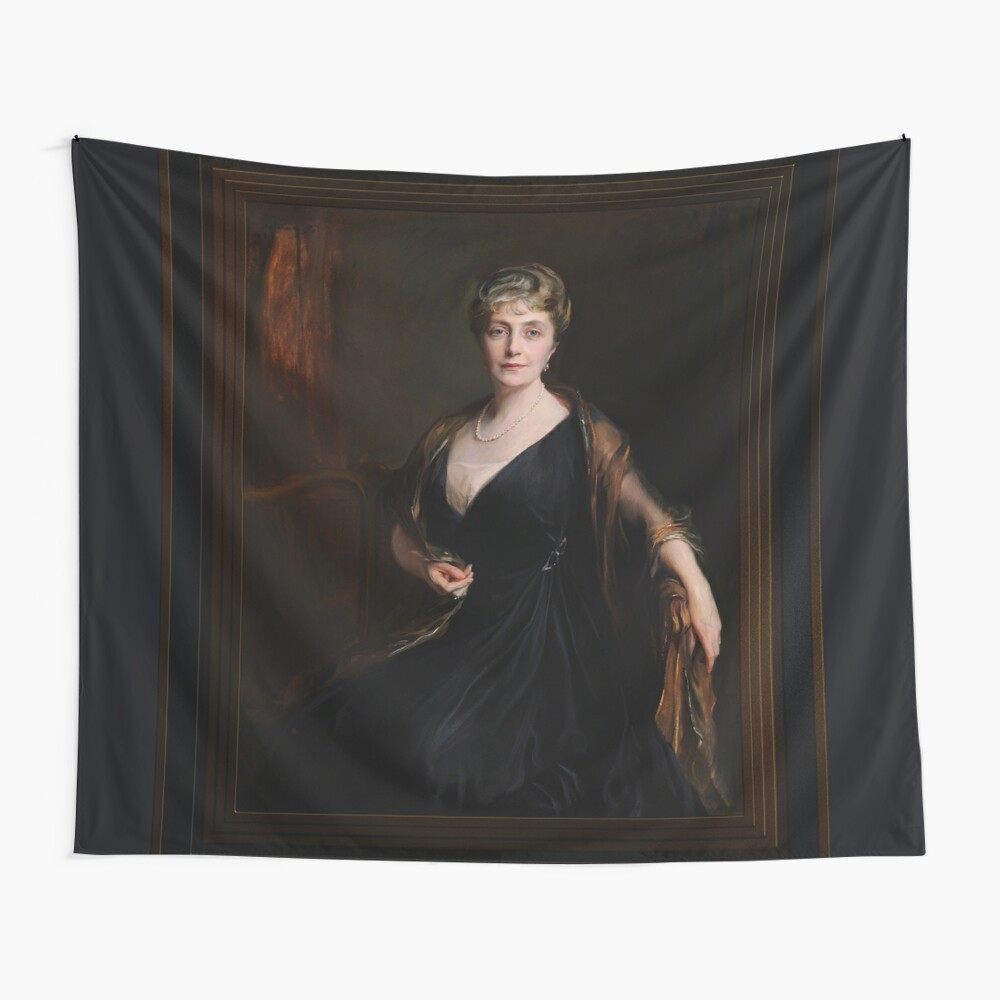
Lady Orr-Lewis, née Maude Helen Mary Booth c1917
Maleriet med titlen “Lady Orr-Lewis, née Maude Helen Mary Booth (1869 – 1937) c1917,” by Hungarian painter Philip Alexius de László (1869 – 1937), captures the dignified elegance of a Canadian aristocrat from the early 20th century. Dette portræt, skabt omkring 1917, exudes an air of refinement and strength, showcasing the sitter’s poise and the artist’s masterful technique.
Emnet for maleriet, Maude Helen Mary Booth, is depicted in a moment of quiet contemplation, her expression both serene and resolute. The artist’s meticulous attention to detail reveals not only the aristocratic grace of the sitter but also the prevailing atmosphere of high society during the period.
This is an elegant portrait of Lady Orr-Lewis At the age of 48; the wife of Canadian businessman Sir Frederick Orr-Lewis, 1st Baronet (1860 – 1921); who was instrumental in creating Canadian Vickers Limited, an aircraft and shipbuilding company that operated in Canada.
Indholdsfortegnelse
The Subject and Her Expression
The central figure of the artwork is Lady Orr-Lewis, née Maude Helen Mary Booth, who was a prominent socialite and philanthropist during her lifetime. The portrait presents her with a calm, composed demeanor. She sits gracefully, her body slightly turned to the side, but her head facing forward, exuding a sense of confidence and aristocratic authority.
The subtlety in her facial expression reflects both the upper-class stoicism and an inner depth of character. Hendes øjne, while soft, appear to have a knowing intensity, suggesting a woman of intellect and influence.
She wears a dark gown, the fabric of which appears to catch the light in an almost palpable way. The deep hue of her dress contrasts beautifully with the delicate skin tone of her face and neck, highlighting her refined features. The use of light on her face is exquisite, emphasizing her high cheekbones and delicate jawline. Her pearl necklace, a timeless symbol of elegance and wealth, rests delicately around her neck, further emphasizing her high social standing.
Clothing and Accessories
Maude Booth’s attire is a key feature of the painting, reflecting the high fashion of the period. Hendes kjole, made from what seems to be a luxurious fabric, possibly satin or silk, drapes elegantly over her figure. The garment is designed with a deep, plunging neckline and a bodice that is structured, accentuating the contours of her body. The flowing sleeves of her dress are adorned with subtle detailing, such as fine embroidery or fabric embellishments, which are highlighted by the soft light falling upon them.
In addition to her pearl necklace, she wears a golden bracelet on her left wrist, which glints under the light, suggesting wealth and a taste for refined accessories. The bracelet’s warmth contrasts with the cooler tones of her dress and the background, adding depth and visual interest to the composition.
A shawl or delicate outer layer, which drapes around her shoulders, further enhances the richness of her ensemble. It seems to be made from a material that catches the light in a way that suggests it is a fabric of fine quality, perhaps velvet or silk.

The Background and Mood
The background of the portrait is characterized by a muted, darker color palette. The soft gradient of warm tones, dybe brune, burgundies, and soft golds, creates a subtle yet powerful contrast to the figure of Lady Orr-Lewis. The dark background suggests a sense of timelessness, ensuring that the viewer’s attention remains firmly on the subject. There are no overt distractions; the artist uses these neutral tones to highlight the lady’s attire and her serene expression.
The mood of the portrait is one of quiet dignity. There is no overt display of emotion or dramatic gesture in Lady Orr-Lewis’ pose or expression. I stedet, the painting conveys a sense of reserved sophistication, a woman who embodies the ideals of her class: composed, elegant, and poised. The subdued lighting further enhances the calm, almost contemplative mood of the painting, lending a quiet sense of intimacy to the viewer. The warm tones of the background seem to echo the soft light cascading from the upper left of the canvas, bathing her figure in a gentle glow.
Artistic Technique and Style
Philip Alexius de László was renowned for his portraits of high society, capturing not just the physical likeness of his subjects but their psychological depth as well. His style is rooted in realism, and he was a master of rendering textures and light with incredible precision. I dette portræt, his brushwork is smooth and refined, almost ethereal in some areas, particularly in the rendering of Lady Orr-Lewis’ face and skin. The subtle transitions of light and shadow on her face are skillfully done, giving the painting a sense of depth and vitality.
The overall color palette used in the piece is refined and muted, with warm earthy tones of browns, guld, and reds dominating the background and contrasting with the cool, dark tones of Lady Orr-Lewis’ gown. The soft transitions between light and shadow on her face create a lifelike quality, as if she could speak at any moment. Baggrunden, although rich and detailed, does not compete for attention with the subject; snarere, it acts as a harmonious complement to the subject’s presence, enhancing the aura of grace that surrounds her.
Konklusion
“Lady Orr-Lewis, née Maude Helen Mary Booth (1869 – 1937) c1917” by Philip Alexius de László is a portrait that transcends mere representation. It captures the essence of a woman of high social standing during the early 20th century, yet it also conveys a deeper, more personal insight into her character.
Through László’s masterful use of light, farve, og sammensætning, the portrait not only reflects the physical likeness of the subject but also suggests a story of sophistication, nåde, og stille styrke. The elegance of Lady Orr-Lewis is immortalized in this painting, creating a timeless image of aristocratic beauty and dignity.
Dette er en remastered digital art old masters reproduktion af et offentligt domæne billede, der er tilgængeligt som en lærred print online.
Kunstner Bio
Info nedenfor stammer fra Wikipedia.org
László blev født under ydmyge omstændigheder i Budapest som Fülöp Laub, den ældste søn af Adolf og Johanna Laub, en skrædder og syerske af jødisk oprindelse. Fülöp og hans yngre bror Marczi ændrede deres efternavn til László i 1891.
I en tidlig alder, Philip kom i lære hos en fotograf, mens han studerede kunst, og fik til sidst en placering på National Academy of Art, hvor han studerede under Bertalan Székely og Károly Lotz; og ville senere fortsætte sine studier i München og Paris.
I 1900 László besøgte Vatikanet og mødtes med den aldrende pave Leo XIII og malede i løbet af det år et portræt af pave Leo XIII, som blev udstillet på Paris International Exhibition, tjene ham en stor guldmedalje.
I 1903, László flyttede fra Budapest til Wien; derefter ind 1907, han flyttede til England og blev i London resten af sit liv; selvom de rejser meget rundt om i verden for at opfylde kommissioner.
I 1909, László blev investeret i MVO af Edward VII, og i 1912, han blev adlet af kong Franz Joseph af Ungarn; hans efternavn blev derefter “László de Lombos”, men han brugte snart navnet “de László”.