

Paysage Dans Les Hautes Montagnes
Le tableau intitulé Landscape in the High Mountains by Dutch painter Alexandre Joseph Daiwaille (1818 – 1888) invites the viewer into a tranquil and timeless scene set in the majestic highlands of an alpine world. Created in the mid-19th century, this masterpiece exemplifies Daiwaille’s exceptional ability to capture the natural beauty and atmospheric depth of mountainous terrains, invoking a sense of serene grandeur and distant isolation.
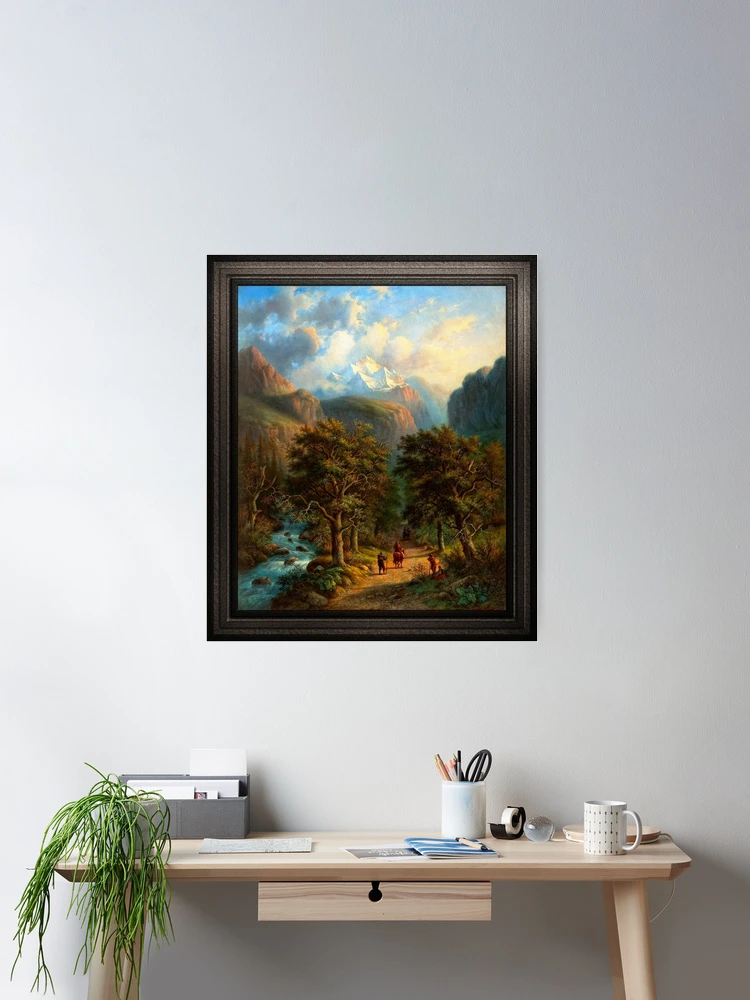
Table des matières
The Main Subject and Composition
At the heart of this painting lies the expansive mountainous landscape, with towering peaks bathed in soft, lumière dorée. The viewer’s gaze is drawn toward the snow-capped summits in the background, their jagged edges sharply contrasting with the smooth, rolling slopes below. These mountains stand like silent sentinels, guarding the verdant valley and lush forests that stretch beneath them. The artist masterfully uses atmospheric perspective, with the distant mountains rendered in paler tones, progressively fading into the horizon, creating a depth that is both striking and immersive.
Au premier plan, the focus shifts to the path meandering through a forested area, leading the viewer’s eye from the bottom-left corner toward the distant peaks. Le doux, winding road curves through the middle of the composition, inviting the viewer to follow the trail as it gently disappears around the bend, suggesting an unexplored world beyond. Along this road, two figures can be seen traveling on horseback, their forms small yet significant, perhaps signifying the quiet, humble passage of time within the vastness of nature. Their presence in the painting suggests a subtle narrative of journey or migration, enhancing the timelessness of the scene.
The Terrain and Landscape Details
Daiwaille’s attention to the terrain is meticulous and adds great realism to the landscape. Au premier plan, a gently flowing stream runs parallel to the path, its water tumbling over smooth stones, reflecting the surrounding greenery. The clear water creates a reflective surface, which contrasts beautifully with the darker tones of the forest, further enhancing the visual depth of the painting. The presence of the stream also adds a sense of serenity and calm, inviting the viewer to imagine the gentle sounds of the babbling brook as they explore the landscape in their mind.
The surrounding forest, lush with trees, is a careful blend of oak and pine, their textured bark and vibrant green foliage contrasting against the golden hue of the sky. The trees are densely packed in some areas, their branches intertwining to create a natural canopy, while in others, the trees stand apart, allowing glimpses of the rocky terrain and the road below. The artist’s careful rendering of light and shadow within the forest creates an atmosphere of mystery, as if the forest holds secrets known only to the land and sky.
The presence of distant mountain ranges beyond the valley suggests a world that is vast and uncharted. The foreground serves as a small window into this grand and untamed wilderness, with the path and stream acting as symbolic routes into the unknown, encouraging exploration. This juxtaposition between the familiar and the distant is part of the charm of Daiwaille’s work, as it instills a sense of wonder and adventure.
Matériaux et Techniques
Daiwaille was known for his skillful use of oil paints, and this work is no exception. Les riches, luminous quality of the paint brings an almost three-dimensional quality to the landscape, allowing the viewer to feel the textures of the trees, rochers, and flowing water. The artist’s ability to manipulate light and color creates an ethereal atmosphere, particularly in the depiction of the sky and its soft interplay of warm, golden tones that gently blend into the cool blues of the higher altitudes. This use of color heightens the emotional depth of the painting, evoking a mood of peaceful solitude.
The brushwork in this piece is confident and refined, with broader strokes used in the depiction of the sky and mountains, while more detailed, intricate strokes are employed in the rendering of the foliage, the figures, and the winding path. This technique contrasts the broad expanse of nature with the delicate presence of humanity, reinforcing the painting’s overarching theme of harmony between man and nature.
L'ambiance et le thème
L'ambiance de Landscape in the High Mountains is one of tranquility and awe. There is a palpable stillness in the air, a quiet reverence for the natural world that envelops the entire composition. The colors and light in the painting evoke a sense of peace, yet there is also an undercurrent of grandeur, as the sheer scale of the mountains and the sweeping vistas provoke feelings of awe and humility. The figures traveling through the valley are small against the vast backdrop of nature, suggesting a theme of human insignificance in comparison to the enduring and timeless beauty of the natural world.
This theme of human solitude amidst the overwhelming power and beauty of nature is central to the Romantic movement, which sought to explore the relationship between humans and the sublime. Daiwaille, as a Romantic painter, captures not just the physical beauty of the landscape, but also its emotional and philosophical weight. The path through the forest is not just a route for the travelers; it symbolizes the journey of the soul, the personal quest for understanding and connection with the vast and mysterious world around us.
Il s'agit d'une reproduction de maîtres anciens d'art numérique retouchée d'une image du domaine public.
Biographie de l'artiste dérivée de Wikipedia.org
Alexandre était le fils du portraitiste Jean Augustin Daiwaille (1786 – 1850) et est né à Amsterdam aux Pays-Bas en janvier 21 de 1818.
Bien que, comme son père, Alexander se soit spécialisé dans le portrait au début de sa carrière; il finirait par passer à la peinture de paysages des Pays-Bas et de l'Allemagne.
Il a peint des scènes aux Pays-Bas, qui comprenait Hilversum de 1833 – 1834, la Haye de 1840 – 1848; puis en Allemagne, y compris à Clèves 1834 – 1835 et 1840 – 1848.
Il a également travaillé avec son beau-frère Barend Cornelis Koekkoek (1803 – 1862) un peintre paysagiste et lithographe néerlandais.