

Landscape with a Stairs and Obelisk
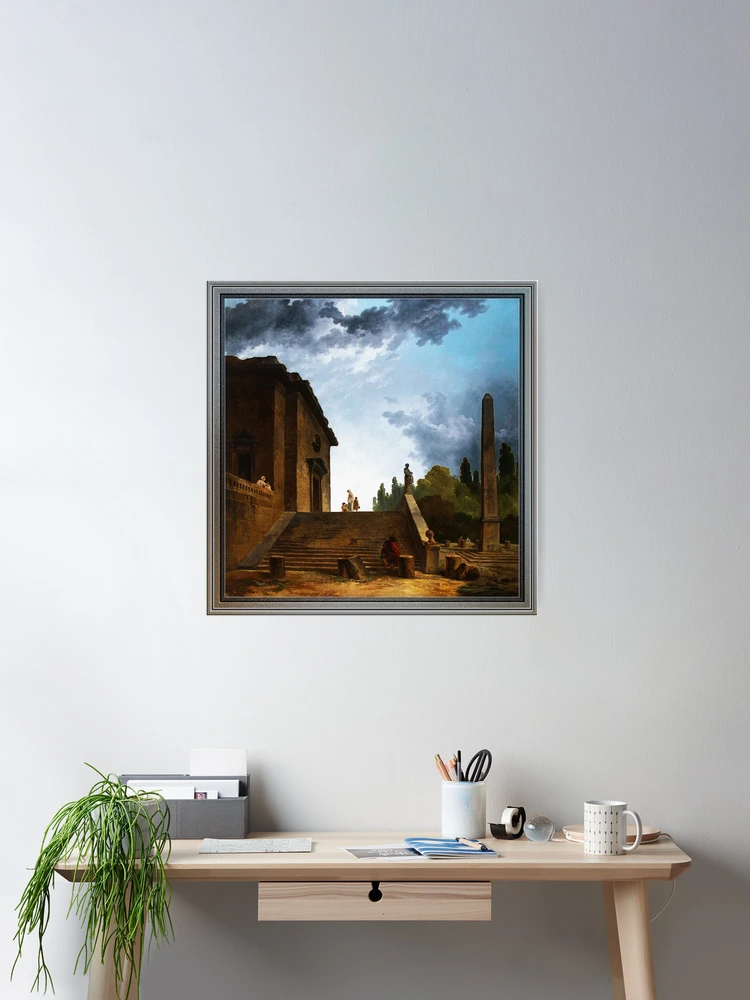
“Landscape with a Stairs and Obelisk” is a striking example of 18th-century French landscape painting, criado por Hubert Robert em volta 1770-1780. Known for his fascination with classical ruins and grand architectural settings, Robert (1733 – 1808) captures a scene that exemplifies the romanticized aesthetic of the period. His work blends natural and man-made elements, illustrating a harmonious coexistence between the human-crafted structures and the vast, timeless landscape. This piece invites viewers to immerse themselves in a world where history, natureza, and architecture converge.
Índice
Assunto principal e composição
The central focus of this artwork is the majestic set of stairs leading to a grand building or temple, complemented by the towering obelisk in the background. The stairs themselves are weathered and appear to be made of stone, their steps leading upward toward a stone structure. The presence of these stairs suggests an ancient or noble setting, possibly linked to historical or mythological references, characteristic of Robert’s romanticized depictions of classical ruins.
Em primeiro plano, two individuals are depicted—one seated and another standing on the stairs. They are seemingly inconsequential to the grandeur of the setting but still play a vital role in adding a human presence that contrasts with the monumental architecture. Their placement helps balance the scale of the composition, providing a sense of human proportion amid the towering structures.
The obelisk, an ancient Egyptian monument re-imagined within a classical European setting, stands as another focal point to the right side of the composition. This object symbolizes the ancient world, evoking the sense of a lost civilization while anchoring the piece in the romantic classical themes Robert was known for. The use of the obelisk reinforces the notion of timelessness, a central theme in much of Robert’s work, where classical ruins are idealized to evoke both nostalgia and contemplation of past civilizations.
Objetos e Terreno
The terrain surrounding the stairs and obelisk is lush and expansive. The ground appears to be cultivated or at least managed, with well-kept paths leading through the terrain. On the right, we see a few figures in the distance, seated or walking, giving the landscape a dynamic feel while reinforcing the setting’s tranquility. The backdrop of trees, with their expansive reach toward the sky, provides a striking contrast against the harsh lines of the stone architecture. The viewer’s eye is naturally drawn toward the horizon, where the trees begin to thin out, leading to a space dominated by clouds and a slightly darker sky.
The juxtaposition of human-made elements—such as the staircase, the obelisk, and the figures—and nature highlights the tension between civilization and the natural world. Robert’s careful rendering of the foliage, combined with the crisp outlines of the architectural elements, underscores the precision of his technique. This harmony between nature and architecture is a key characteristic of the Rococo and Neoclassical periods, where the human desire for understanding and order is reflected through such meticulously designed structures amid nature’s free-flowing form.
Estilo e técnica
Robert’s style in this work is distinctly Rococo with elements of Neoclassicism, blending the ornate with the classical. His use of light, sombra, and texture creates a sense of depth and dimension, inviting the viewer to step into the landscape. The clouds in the sky seem to swirl in dramatic motion, contrasting with the stillness of the stone objects below. This use of light and dark not only adds to the mood but also enhances the sense of timelessness that pervades the entire scene.
The application of light is masterful, with shadows creeping along the stone steps, highlighting the weathered texture of the structure. The obelisk, também, is illuminated with soft, diffuse light, giving it an almost ethereal quality. Os números, small in comparison to the surrounding objects, are subtly shaded, further emphasizing their secondary role within the larger composition.
Robert’s technique, while focused on naturalistic detail, maintains an idealized interpretation of the ruins. The rocks and stone are not simply representations of decay but are infused with a sense of romantic nostalgia for an era gone by. The stones seem to have a timeless quality, making them not just relics of the past, but symbols of enduring beauty.
Humor e tema
The mood of the painting is one of quiet contemplation. A configuração, with its peaceful yet awe-inspiring structures, invites viewers to reflect on the past, the passage of time, and the impermanence of human creations. The natural landscape, in its lushness and vividness, contrasts with the stone architecture, suggesting the ephemeral nature of human achievement against the vast, enduring power of nature.
The classical ruins, while not overtly ancient in this depiction, invoke the grandeur of civilizations long past, evoking a sense of nostalgia and reverence for the lost civilizations of Rome and Egypt. The obelisk, with its Egyptian origins, stands as a reminder of these ancient powers. By choosing to depict such ruins, Robert not only preserves the legacy of these ancient structures but also elevates them, presenting them as objects of beauty rather than mere remnants of past civilizations.
The inclusion of figures adds a human touch to the scene, but their small scale and passive actions suggest that humanity, while significant, is but a fleeting moment in the timeline of history. The vast sky, dotted with dark clouds and illuminated by bursts of light, further amplifies the theme of nature’s dominance over time and human endeavors.
Conclusão
“Landscape with a Stairs and Obelisk” is a masterful example of Hubert Robert’s ability to merge the beauty of nature with the elegance of classical architecture. The scene captures a moment where the monumental and the natural coexist, creating a serene yet thought-provoking atmosphere. Robert’s meticulous attention to detail, his skillful use of light and shadow, and his celebration of classical ruins all serve to reinforce the timeless theme of nature’s dominance and the fleeting nature of human achievement. This work invites the viewer not only to admire its technical brilliance but to reflect on the deeper themes of history, tempo, and memory.
Landscape with a Stairs and Obelisk is a retouched digital art old masters reproduction of a public domain image that is available as a impressão em tela enrolada.
Biografia do artista
Abaixo informações derivadas de Wikipedia.org
Hubert Robert nasceu em Paris em 1733. O pai dele, Nicolas robert, estava a serviço de François-Joseph de Choiseul, marquês de Stainville, um importante diplomata da Lorena. O jovem Robert terminou seus estudos com os Jesuítas no Collège de Navarre em 1751 e entrou no ateliê do escultor Michel-Ange Slodtz, que lhe ensinou desenho e perspectiva, mas o encorajou a se dedicar à pintura. Dentro 1754 ele partiu para Roma no trem de Étienne-François de Choiseul, filho do patrão de seu pai, que havia sido nomeado embaixador da França e se tornaria secretário de Estado das Relações Exteriores de Luís XV em 1758.
Ele passou onze anos completos em Roma, um período de tempo notável; depois que a residência oficial do jovem artista na Academia Francesa em Roma acabou, ele se sustentou por obras que produziu para conhecedores visitantes, como o abade de Saint-Non, que levou Robert para Nápoles em abril 1760 visitar as ruínas de Pompeia. O marquês de Marigny, o diretor dos Bâtiments du Roi manteve a par de seu desenvolvimento em correspondência com a Natoire, diretor da academia francesa, que incitou os pensionistas a esboçar ao ar livre, da natureza: Robert não precisava de incentivo; desenhos de seus cadernos de desenho documentam suas viagens: Villa d'Este, Caprarola.
Vista do porto de Rippeta em Roma, c. 1766, mostrando o Panteão Romano Antigo próximo a um porto imaginário
O contraste entre as ruínas da Roma antiga e a vida de seu tempo despertou seu maior interesse. Ele trabalhou por um tempo no estúdio da Pannini, cuja influência pode ser vista na Imaginary View of the Ruined Louvre Gallery (ilustração). Robert passou seu tempo na companhia de jovens artistas do círculo de Piranesi, cujos caprichos de ruínas romanticamente crescidas o influenciaram tanto que ele ganhou o apelido de Robert des ruines. Os álbuns de esboços e desenhos que ele montou em Roma forneceram-lhe motivos que ele transformou em pinturas ao longo de sua carreira.