

Laundry Maid Ironing c1785
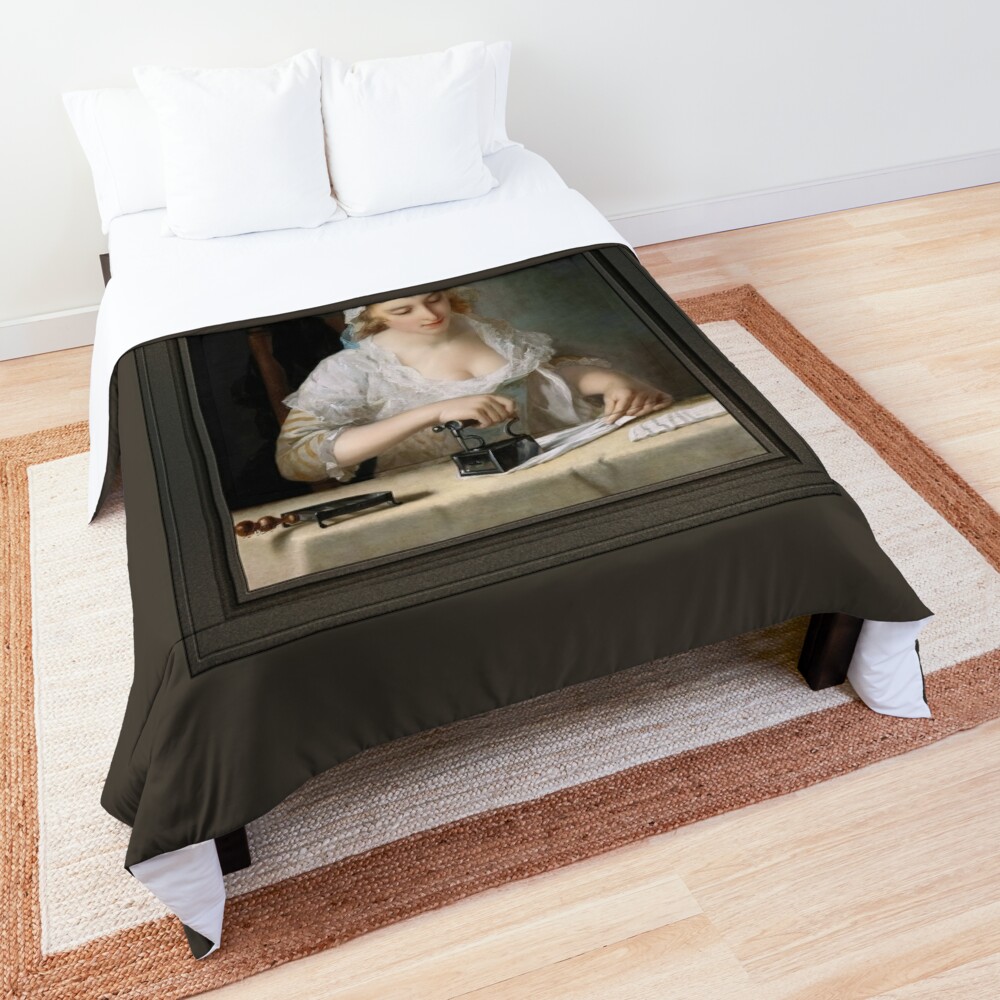
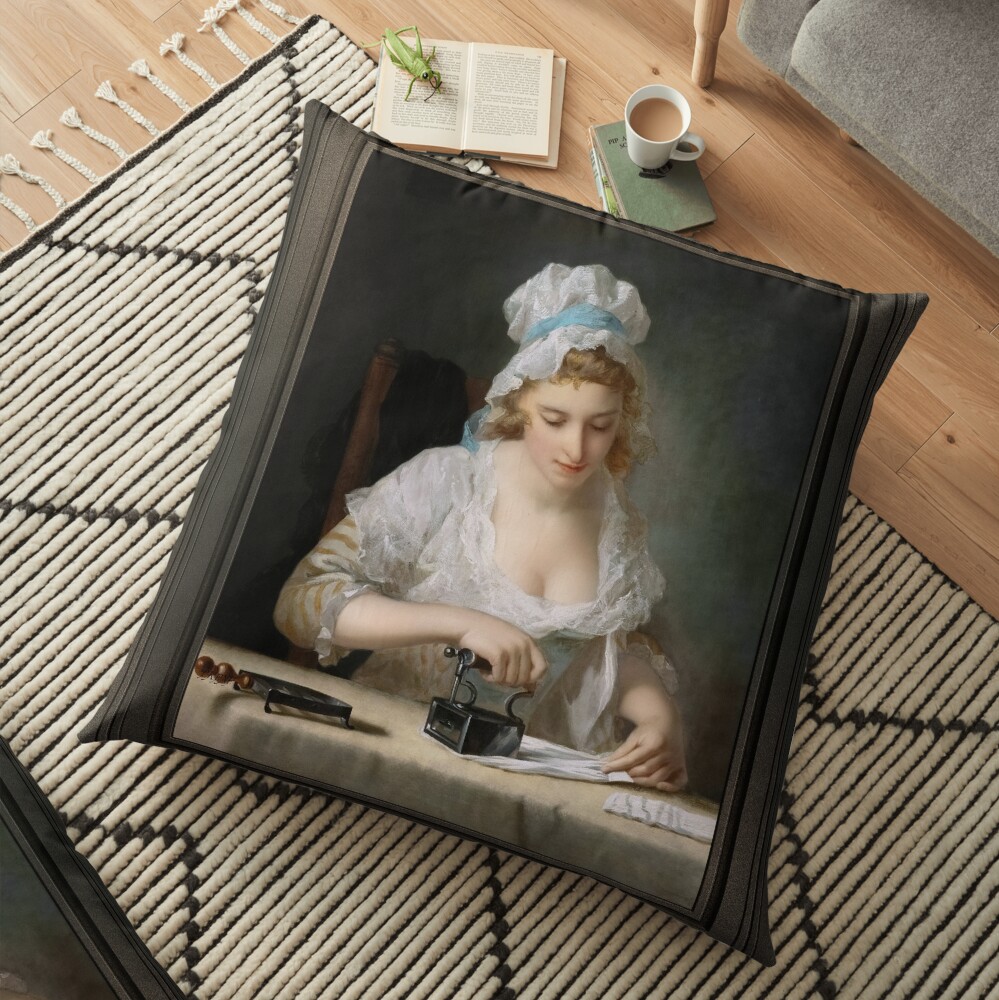
というタイトルの絵の中で、 Laundry Maid Ironing c1785, British painter Henry Robert Morland (1716-1797) captures a serene and intimate moment in a domestic setting. The painting portrays a young woman, dressed in the simple yet functional attire of a maid, ironing a piece of linen. This piece embodies the themes of daily domestic labor, gender roles, and the quiet dignity found in everyday chores. The artist’s ability to infuse life into the scene through delicate use of light and shadow reveals both his technical mastery and his keen understanding of human behavior.
目次
Subject and Main Character
The central figure in the painting is a young woman, likely a domestic servant, who is carefully ironing a sheet or piece of cloth. She is portrayed with attention to detail, capturing her natural beauty and the softness of her facial features. Her gaze is directed downward, focused on her task with an expression of quiet concentration. The woman’s delicate features are framed by the lace cap she wears, and the slight blush on her cheeks adds warmth to her otherwise pale complexion. 彼女の姿勢, while humble, conveys a sense of dignity in her task.
The maid’s attire is modest and functional, suggesting that she is part of the working class. Her white dress, made of light fabric, is complemented by a blue sash tied at her waist, creating a subtle contrast with the warm tones in the background. The choice of a light dress and the blue sash also emphasizes her youth and innocence, while the lace cap atop her head further conveys the domestic and labor-intensive nature of her role.
The Setting and Atmosphere
The setting of the painting is intimate and domestic, likely in a private home or estate where the maid performs her duties. The background is dark and somewhat indistinct, suggesting that the focus is entirely on the maid and her task. This subtle use of dark tones creates an atmospheric mood, emphasizing the quiet, solitary nature of the maid’s work. The contrast between the dark background and the soft light falling on the maid’s face and hands further directs the viewer’s attention to the central subject.
On the table in front of the maid, a piece of linen is laid out, アイロンをかけたての. 小さいもの, 生地の繊細なディテールが質感を表現, 布の折り目とアイロンの滑らかさとのコントラスト. 設定のシンプルさが静粛性を高めます, 現場の和やかな雰囲気. 豪華な小道具や気を散らす要素はありません; その代わり, 焦点はメイドと彼女が行う地味な仕事にあります.
The Ironing Process and the Object of the Iron
シーンの中心となるオブジェクトは、メイドが生地をプレスするために使用しているアイロンです。. アイロンは小さいです, 18世紀に典型的な金属製の楽器, シンプルかつ機能的なデザインで. それはテーブルの上に座っています, 生地を滑らかにするメイドの手でそっと小さなハンドルを握ります。. アーティストは、鉄の反射面を非常に正確に捉えており、光の中でかすかに輝いているように見えます。, adding depth and realism to the painting. The object itself is a symbol of domestic labor and the meticulous care that goes into household tasks.
The process of ironing is depicted with great attention to detail. The maid’s movements, though gentle and controlled, suggest a sense of practiced skill. 彼女の体の位置付け, with one hand on the iron and the other steadying the linen, reveals the ease with which she performs her task, as though it has become second nature. This portrayal of labor, though physically demanding, also conveys a sense of order and method, elevating the mundane chore into an act of quiet reverence.
スタイル, 技術, と気分
Morland’s style in this piece is characterized by soft, ほとんど光る光, which creates a mood of tranquility and reflection. The use of light and shadow in the painting is masterful, with the light falling gently across the maid’s face and hands, highlighting her movements and expressions. This effect gives the work a certain intimacy, as if the viewer is a silent observer in the room, watching the maid as she goes about her daily routine.
The brushwork in the painting is delicate and detailed, lending the scene a lifelike quality. Morland’s technique allows for subtle variations in texture, from the smoothness of the maid’s skin to the delicate fabric of her dress and the rougher texture of the iron. The artist’s careful rendering of these textures conveys a sense of realism, while also adding a certain warmth to the piece. The mood of the artwork is calm and serene, 日常生活の時代を超越した性質と目の前の仕事のシンプルさを反映しています.
結論
Laundry Maid Ironing c1785 ヘンリー ロバート モーランドによる、18 世紀の家庭生活を美しく描いた作品. 彼の細部への細心の注意によって, アーティストはシンプルなものを改良する, 日常の仕事を優雅さと静かな尊厳の瞬間に変える. 若い女性, 彼女の控えめな服装と集中力のある態度で, 忍耐と勤勉の美徳を体現している. 絵画の柔らかな照明, リアルなテクスチャ, 親密な環境が静けさを生み出します, 人生の平凡な瞬間に見出される美しさについて考えるように見る人を誘います。. この作品は、人間の経験を優しさと真実味をもって捉えるモーランドのスキルの証しです。.
これは、リマスターされたデジタルアートのオールドマスターであり、パブリックドメインの画像を複製したものです。 キャンバスプリントオンライン.
アーティスト略歴
以下の情報から Wikipedia.org
ヘンリー・ロバート・モーランドはイギリスの肖像画家, ジョージ3世の肖像で最もよく知られている, 動物画家のジョージ・モーランドの父として.
父は風俗画家ジョージ・ヘンリー・モーランド, ヘンリー・ロバートもアートのキャリアを続けました, 肖像画や家庭の主題の画家になる, 油とクレヨンの両方で.
彼はいくつかを展示した 118 から動作します 1760 に 1791 芸術家協会で, 自由社会, そしてロイヤルアカデミー. モーランドもメゾチントで彫刻, 復元された絵画, アーティスト用品の販売, 自作のクレヨンも含めて.
モーランドはしばらくの間、非常に成功し、ジョージ 3 世の肖像画を描いたことさえありました。, 直接座っている王。[2] 一時は大金持ちになったものの, 彼はほとんどのお金を失った, 後年は倒産することが多かった.